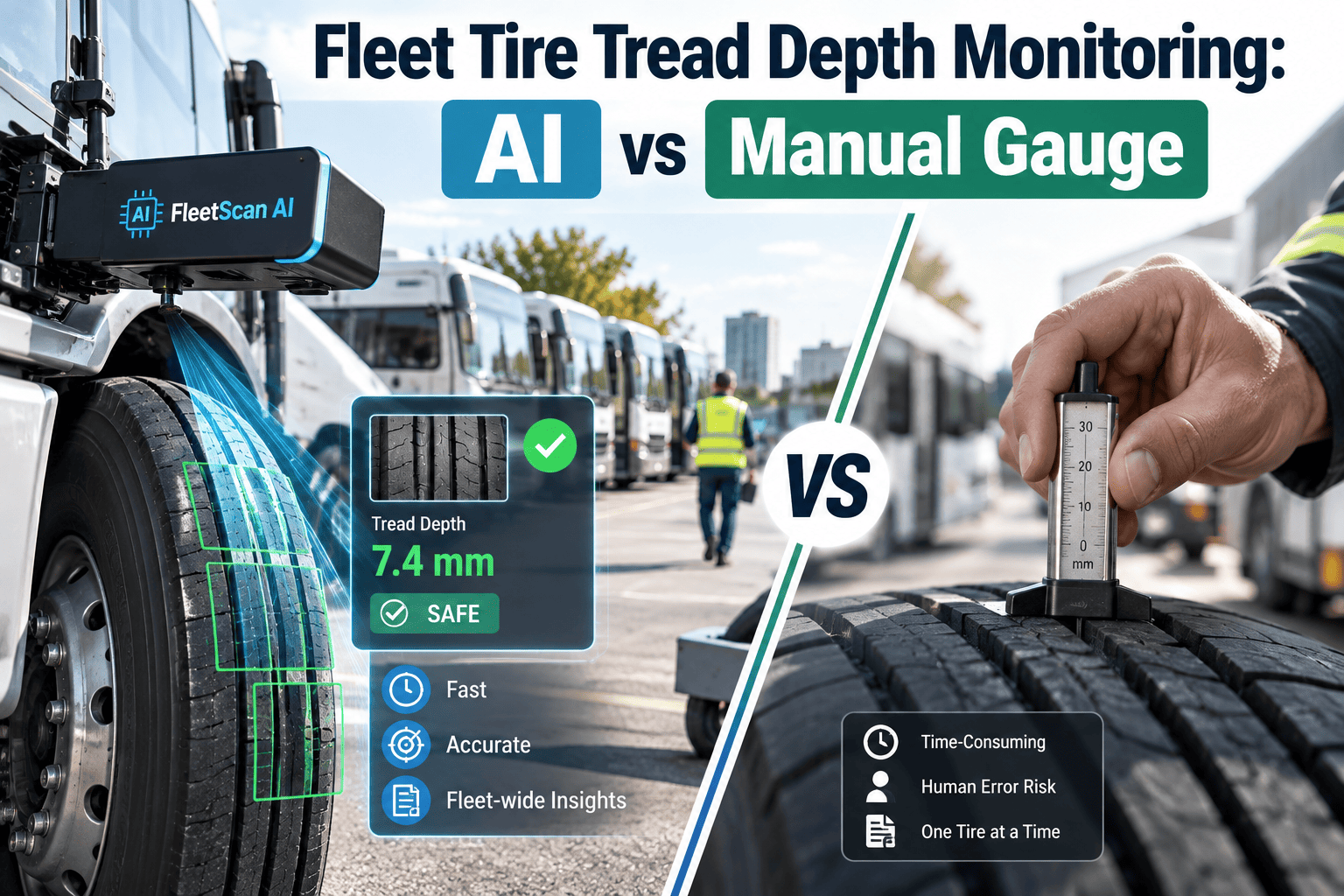
A tread depth check takes thirty seconds with a manual gauge — if someone remembers to do it, does it correctly on every position, and writes the number down before moving to the next vehicle. Across a fleet of fifty or a hundred trucks, that "if" is where tire-related violations, blowouts, and preventable accidents actually come from, not from a shortage of gauges sitting in the shop. AI-based tread depth scanning removes the "if" entirely by measuring every tire, every time, with a camera instead of a memory. This page compares how manual gauging and AI tread monitoring actually perform in daily fleet operations, and where the accuracy, speed, and liability gap between the two shows up in practice. See how automated tread scanning fits into a real maintenance workflow by taking OxMaint for a free trial.
Tire Safety · AI Monitoring · 2026 Comparison
Fleet Tire Tread Depth Monitoring: AI Scanning vs the Manual Gauge
Where hand-held gauges fall short on coverage and consistency, what AI vision scanning actually measures instead, and how the gap between the two shows up in violations, blowouts, and replacement cost across a fleet running dozens or hundreds of vehicles every day.
26%
Of roadside out-of-service violations tied to tire and tread condition
2mm
Federal minimum tread depth commonly enforced on steer tires
8x
Faster per-vehicle inspection speed for AI scanning versus a manual gauge
92%
Typical measurement consistency of AI vision scans across different technicians
How Manual Tread Depth Checks Actually Work — and Where They Break Down
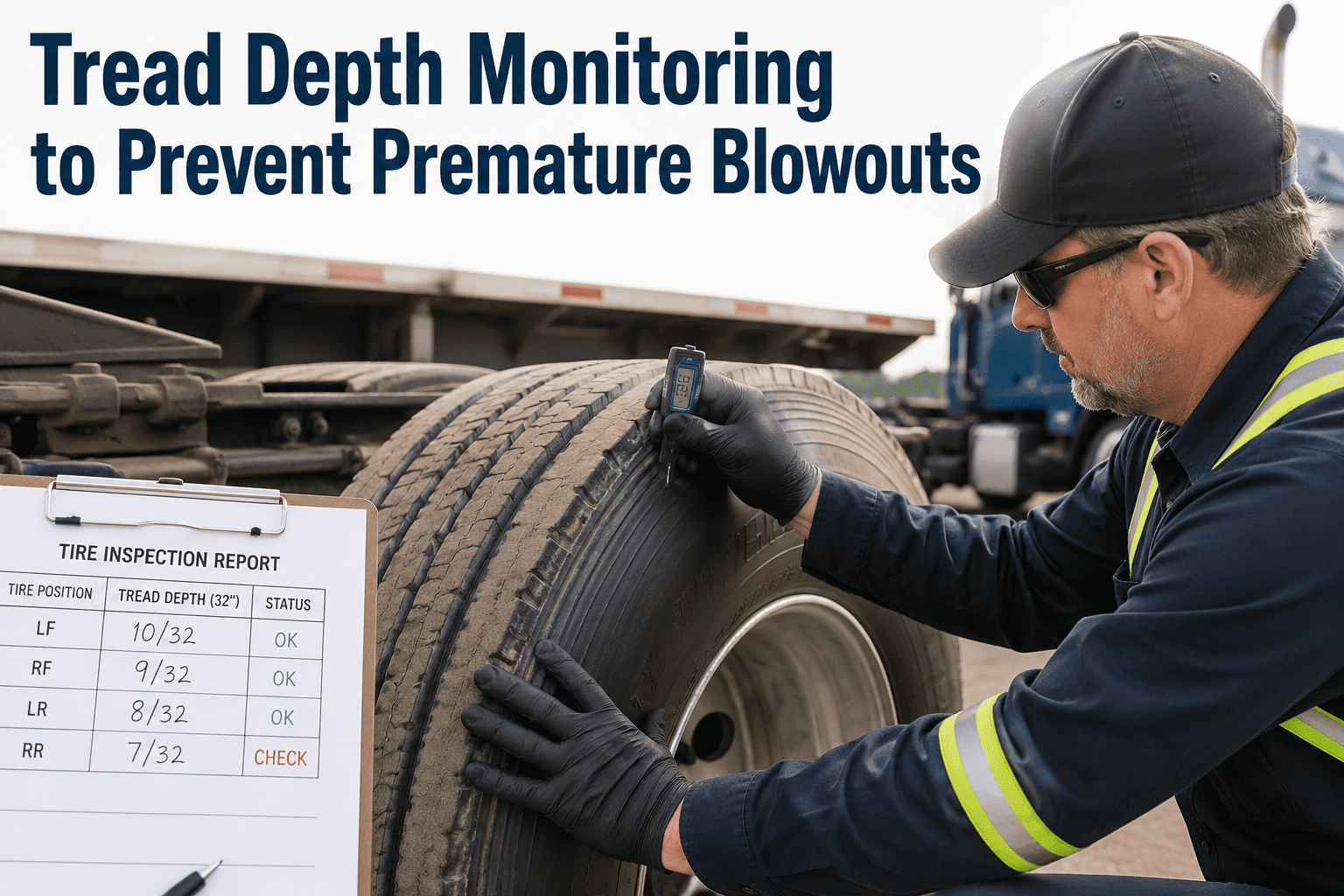
A manual gauge is accurate at the exact point where it touches a tire. The problem fleets run into is not the tool itself, it is what happens around the tool during a real shift — time pressure, technician variability, and a recording process that separates the number from the vehicle the moment it leaves the clipboard and gets copied somewhere else.
Technician Variability
A tread depth gauge only measures where it is placed, and different technicians press at different angles, depths, and tire positions. Two people checking the same tire can legitimately report different numbers, and neither reading is technically wrong, which makes it difficult to trust a fleet-wide comparison built from many different hands.
Sampling Instead of Full Coverage
Most manual checks sample one or two points per tire rather than the full circumference, because checking every groove on every tire of a multi-axle truck is not realistic under time pressure. Uneven wear between the sampled points and the rest of the tire goes undetected until it is severe enough to be obvious even at a glance.
Paper or Spreadsheet Recording
A reading written on a clipboard or typed into a spreadsheet afterward is disconnected from the vehicle, the date, and the technician the moment it leaves the source of truth. Reconstructing tread history for an audit turns into a manual research project across binders, emails, and whoever happens to remember the details.
No Trend Visibility
A single tread reading shows the tire's condition today, not its wear rate. Without consistent historical data, fleets cannot forecast which tires will cross the replacement threshold in two weeks versus two months, so replacement stays reactive instead of planned, and budgeting for new tires becomes a guessing game.
What AI Tread Depth Scanning Measures Differently
AI tread scanning does not replace the physics of measuring rubber, it changes how consistently and completely that measurement gets taken. A camera and a trained vision model apply the same measurement logic to every tire on every vehicle, without fatigue, time pressure, or a clipboard in between, and the result is a record that looks the same whether it came from the newest hire or the most experienced technician on the team.
01
Full-Surface Imaging
A camera-based scan captures the entire tread surface in a single pass, not just the two or three points a hand gauge can physically reach, catching uneven wear from misalignment or underinflation that spot checks routinely miss, even on tires that otherwise look fine at a glance.
02
Consistent Measurement Logic
The same computer vision model measures every tire the same way regardless of which technician is standing nearby, removing the human variability that makes manual readings inconsistent between shifts and locations.
03
Automatic Threshold Flagging
Tires approaching the legal or policy minimum are flagged automatically the moment a scan detects them, instead of waiting for a technician to notice a number is getting close to the line during a busy shift.
04
Wear Rate History
Because every scan is timestamped and tied to the specific tire and vehicle, fleets can see wear trend lines over months rather than a single point-in-time reading, and predict replacement timing before a tire becomes a roadside violation.
What Uneven Tread Wear Is Actually Telling You
Tread depth alone is only half the picture. The pattern of wear across a tire's surface points to a specific mechanical cause, and that pattern is exactly the kind of detail a full-surface AI scan captures automatically while a two-point manual check usually misses entirely.
Center Wear
Faster wear down the middle of the tread than along the edges is a common sign of overinflation. Left unaddressed, it reduces the tire's usable life and changes how the vehicle handles under braking.
Edge Wear
Faster wear along both outer edges compared to the center typically points to underinflation. This pattern also increases rolling resistance and can quietly raise fuel costs across a fleet before anyone notices the tires themselves.
Cupping or Scalloping
A wavy, uneven pattern around the tire's circumference usually signals a suspension or balancing issue rather than an inflation problem. It is one of the hardest patterns to catch with a spot-check gauge because it requires viewing the full surface.
One-Sided Wear
Heavier wear on one side of the tread than the other is a classic alignment symptom. It often develops gradually, which is exactly why a wear-trend history matters more than any single reading taken in isolation.
Building a Practical Tread Monitoring Program
A tread monitoring program does not need to be complicated to work — it needs to be consistent. The fleets that get the most value out of tread data are not necessarily running the most advanced hardware, they are the ones who scan every vehicle on a fixed schedule and actually act on what the data shows before a tire crosses the line.
That usually means tying scans to an event that already happens on a schedule, such as a fueling stop, a wash bay pass, or a preventive maintenance visit, rather than treating tread checks as a standalone task competing for a technician's time. It also means someone owns the alerts — a tire flagged as approaching the legal minimum should trigger a specific next step, whether that is scheduling replacement during the next planned maintenance window or pulling the vehicle from service immediately if the wear is severe. Programs that stop at "we collect the data" without a defined action step tend to accumulate readings nobody acts on, which defeats the purpose of monitoring in the first place. The strongest programs also close the loop back to purchasing decisions — if a particular tire brand, tread pattern, or route consistently wears faster than expected, that trend should influence what gets bought and where it gets deployed next, not just when the next replacement gets scheduled.
Tire Safety · AI Monitoring · OxMaint
Catch Tread Wear Before It Becomes a Roadside Violation
OxMaint pairs tread scan data with your maintenance schedule automatically, flagging tires approaching the legal minimum before a driver ever leaves the yard, not after a roadside inspector finds it first.
Manual Gauge vs AI Scanning, Side by Side
Neither method is complicated on its own — the difference shows up in how each one performs at fleet scale, across dozens or hundreds of vehicles, week after week, without anyone deciding to skip a step. The table below lines the two approaches up directly across the factors that actually matter to a safety manager preparing for an audit or a roadside inspection.
What Properly Monitored Fleets Report
26%
Fewer Tire-Related Violations
Fleets that switch to automated scanning consistently report fewer tire-related out-of-service findings during roadside inspections, largely because problems surface before a driver ever leaves the yard.
$1,200+
Average Cost Avoided Per Incident
Estimated cost avoided per prevented blowout-related roadside incident, including towing, downtime, emergency repair premiums, and the driver hours lost sitting on the shoulder.
8x
Faster Inspection Time
Per-vehicle inspection speed compared to manual gauging, freeing technician hours for actual repair work instead of routine checks.
60 sec
Tread History Export Time
Time to pull a complete tread-wear history report for any vehicle at audit, renewal, or resale time.
How OxMaint Fits Tread Monitoring Into Daily Fleet Operations
The biggest barrier to consistent tread monitoring has never been the technology, it has been fitting one more task into an already full shift. OxMaint solves that by attaching tread scanning to activities that already happen every day rather than creating a new stop on the schedule that competes with everything else a driver or technician is already trying to get done.
01
Scan During Routine Stops
Capture tread images during fueling, washing, or a scheduled preventive maintenance visit, without adding a separate inspection stop to the driver's or technician's day, so coverage stays consistent even during the busiest weeks.
02
Automatic Measurement and Logging
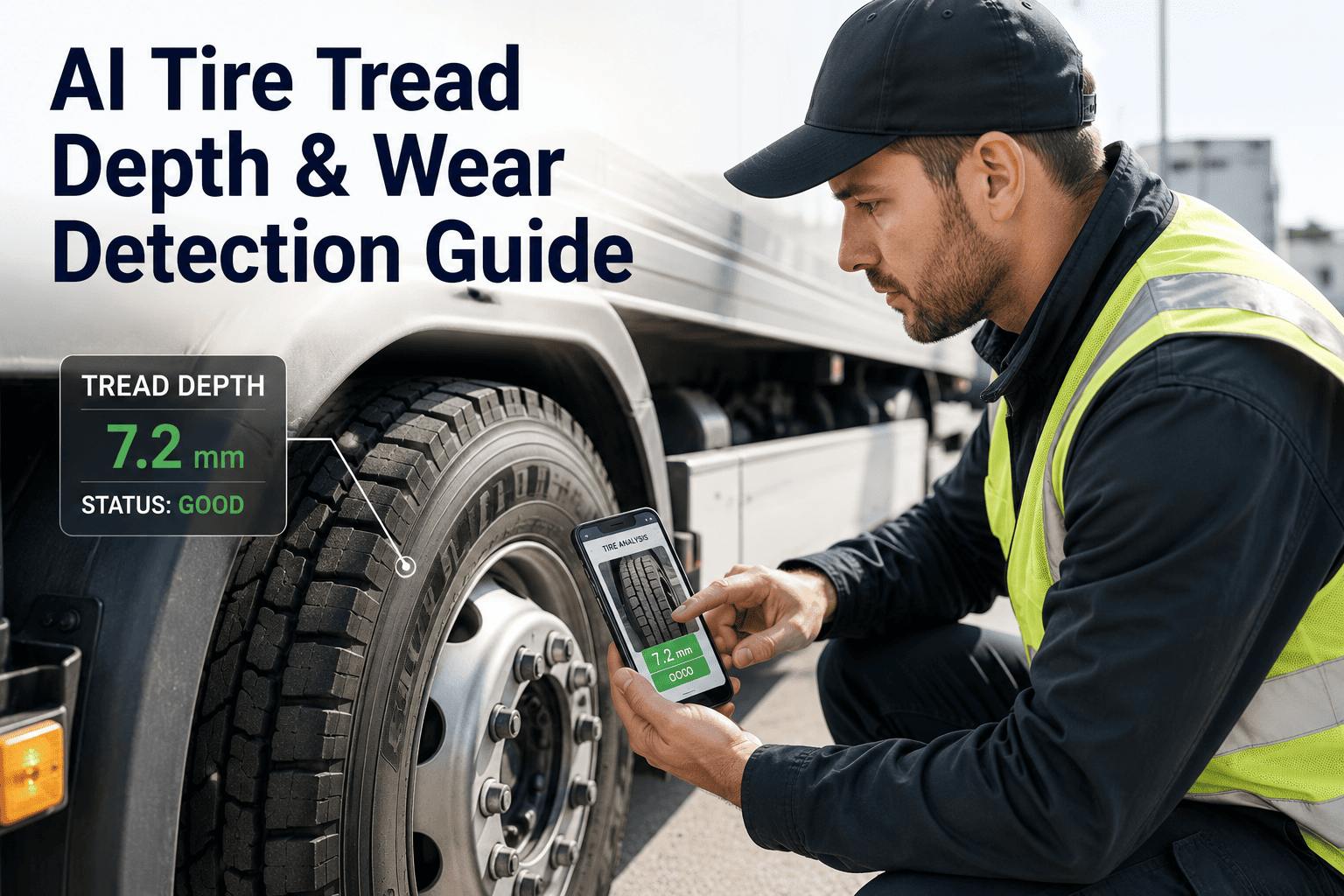
Scan data converts into per-tire tread depth readings and logs automatically to the vehicle's maintenance record, with no manual data entry required from anyone on the team.
03
Threshold Alerts to the Right Person
When a tire crosses a configurable warning threshold, the fleet manager and the shop are notified automatically, well before the tire reaches the legal minimum.
04
Replacement Planning, Not Reaction
Wear trend data lets fleets schedule tire replacement during planned maintenance windows instead of responding to failures out on the road, which keeps both the repair bill and the vehicle downtime lower.
Full Coverage · Every Tire · Every Scan
Replace Spot Checks With Full Tread Coverage on Every Vehicle
See how OxMaint captures, measures, and logs tread depth automatically as part of the stops your fleet already makes — no added inspection time, no missed positions.
Tread Depth Monitoring Questions — Answered
What is the legal minimum tread depth for commercial vehicles?
+
Steer tires commonly need at least 4/32 of an inch, while other positions are typically held to 2/32 of an inch under widely enforced commercial vehicle standards. Requirements can vary slightly by jurisdiction, vehicle class, and axle position, so fleets operating across multiple regions should confirm the exact figures that apply to each of their routes rather than assuming one number covers every vehicle.
How accurate is AI tread depth scanning compared to a manual gauge?
+
AI vision scanning measures the full tread surface using calibrated imaging, which typically produces more consistent readings across technicians than spot checks with a hand gauge. The advantage is less about single-point precision and more about eliminating the variability between who is doing the measuring and where on the tire they happen to place the gauge that day.
Can AI tread scanning replace manual inspections entirely?
+
AI scanning handles tread measurement extremely well, but a full pre-trip inspection still covers items like lights, brakes, and fluid levels that a tread scan does not address. Most fleets run both together rather than removing manual inspection steps entirely.
Start a free trial to see how the two fit into one workflow.
How often should commercial tires be scanned or measured?
+
Many fleets scan tread depth at every preventive maintenance visit at minimum, with higher-mileage or long-haul vehicles benefiting from more frequent checks tied to fueling or wash stops. The right cadence depends on route type, load weights, climate, and how quickly a fleet's tires typically wear under those specific operating conditions.
How does OxMaint integrate tread scanning into existing maintenance workflows?
+
Scan data flows directly into the vehicle's existing maintenance record and triggers automatic alerts when a tire crosses a warning threshold, without a separate system or manual entry step.
Book a demo to see it running against your own fleet's tire program.
OxMaint · Tire Safety · AI Monitoring
Full Tread Coverage on Every Tire, Every Time — Not Just the Ones Someone Remembered to Check
OxMaint automatically scans, measures, and logs tread depth across your entire fleet during stops that already happen, flagging tires approaching the legal minimum before they become a roadside violation, a blowout, or a liability claim. The data lives with the vehicle permanently, so wear history, replacement timing, and audit documentation are always one lookup away instead of a spreadsheet someone has to go find.


-for-commercial-fleets.png)

