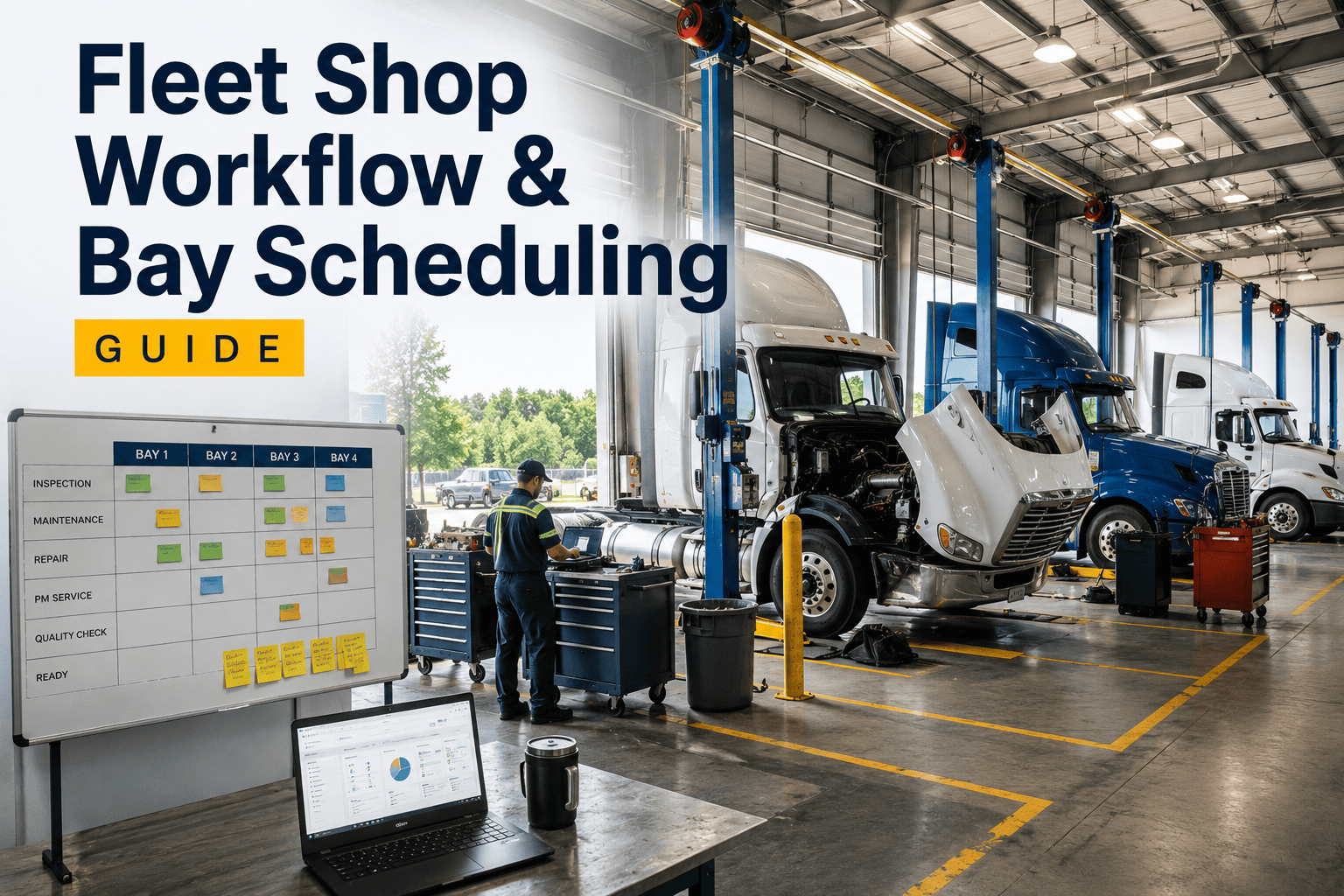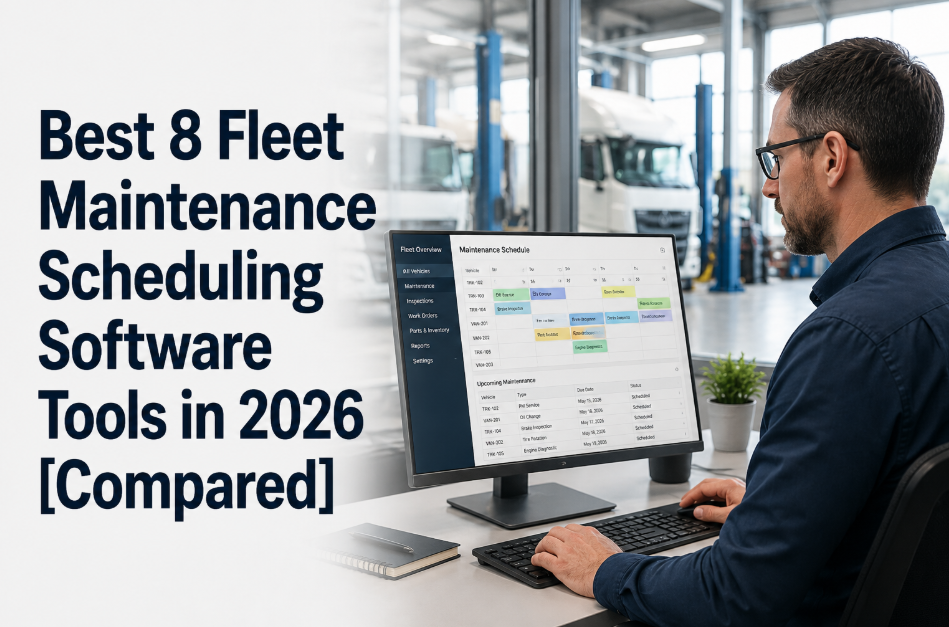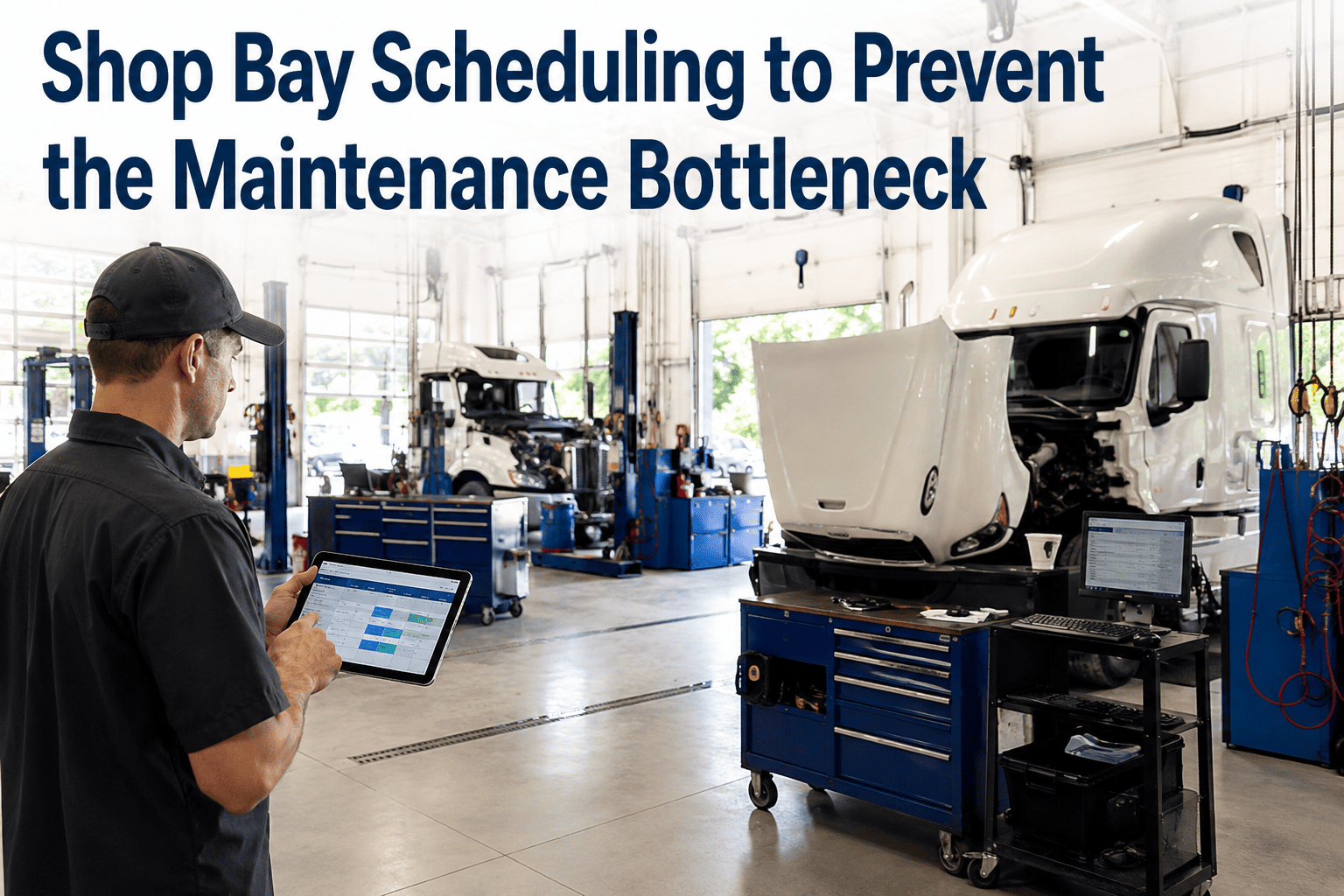
Shop bay scheduling is the operational discipline that prevents vehicles from queuing for available lift space, which is its own form of downtime. A fleet shop with 12 bays and 20 technicians running 24 planned PMs plus 8 unplanned repairs on Monday will bottleneck at bay capacity, not labor capacity, because the right equipment, tools, and skills must converge simultaneously. Fleet shop capacity planning requires matching work orders to bays with the required equipment, such as lifts, alignment racks, tire mounts, brake presses, and aftertreatment tools, while coordinating technician availability. By optimizing fleet bay scheduling, maintenance leaders can eliminate the bottleneck, boost wrench time, and reduce asset downtime. Ready to stop queuing assets and start maximizing wrench time? Start Free Trial to see how OxMaint digitizes your shop capacity planning for 2026.
Fleet Bay Scheduling 2026
Is your fleet shop capacity limited by the number of bays, or by how you schedule them?
When 12 bays handle 32 work orders in a single day, uncoordinated scheduling turns your shop into a parking lot. Bay scheduling optimization ensures lifts, alignment racks, and aftertreatment tools are matched to the right work orders, preventing queuing vehicles from compounding your downtime.
The Shop Capacity Problem
Why fleet shop capacity planning fails without bay scheduling
In a fleet shop managing 24 planned PMs and 8 unplanned repairs on a Monday, labor utilization often sits at 85%, while bay utilization skyrockets to 120% — creating an invisible bottleneck that costs hours of productive wrench time every day.
The Monday Morning Bottleneck
Real-World Scenario
A regional fleet operator runs a 12-bay shop with 20 technicians. At 6:00 AM, 24 PMs are scheduled. By 8:00 AM, 8 unplanned repairs arrive. The alignment rack is double-booked, two heavy-duty lifts are occupied by vehicles waiting for parts, and 6 technicians are standing idle because no bays with aftertreatment tools are available.
The Cost of Uncoordinated Bays
Impact Analysis
Without structured bay scheduling, shops experience an average of 30% lost wrench time. Vehicles waiting for a specific lift or alignment rack are not just delayed — they occupy staging space, block traffic flow, and force technicians to context-switch between tasks, driving an error rate increase of up to 18% on rushed repairs.
Bay Assignment Framework
How to match work orders to bays, equipment, and technician skills
Effective fleet bay scheduling requires a systematic framework that considers equipment requirements, tooling availability, technician skill levels, and job duration estimates. Here is the five-factor model that eliminates the guesswork from daily shop capacity planning.
Equipment Requirement Mapping
Every work order is tagged with the specific bay equipment it demands: heavy-duty lift, alignment rack, tire mount machine, brake press, or aftertreatment diagnostic tools. A PM on a Class 8 truck needs a 40-ton lift, while a brake job on a van requires a standard 2-post lift. Matching work orders to equipped bays eliminates the 45-minute average lost to reassigning vehicles mid-repair.
Technician Skill Alignment
A bay is only productive when the technician assigned to it holds the right certifications. An aftertreatment system regeneration requires an EPA-compliant technician with emissions training, while a transmission rebuild demands a specialist with heavy-drive train experience. Skill-based bay assignment reduces rework by 22% and ensures compliance with FMCSA and DOT inspection standards.
Duration Estimation and Slot Blocking
Each work order is assigned a time block based on historical labor standard data. A PM takes 2.5 hours, an unplanned brake chamber replacement takes 1.5 hours, and an alignment rack session runs 45 minutes. By blocking bay time slots with historical accuracy, shops reduce overlap conflicts by 40% and prevent a single delayed job from cascading through the entire day.
Priority and SLA Buffering
Not all work orders carry the same urgency. A vehicle hauling a time-critical load requires a priority bay slot, while a routine PM can flex into an open window. Effective shop bay scheduling reserves 15-20% of daily bay capacity for unplanned repairs, preventing the queue from backing up when breakdowns inevitably arrive.
Parts Availability Pre-Check
A bay occupied by a vehicle waiting for parts is a bay generating zero value. Before assigning a work order to a bay, the scheduling system verifies that all required spare parts — filters, brake chambers, aftertreatment sensors — are in stock. This pre-check alone reduces bay dwell time by 28% and prevents the dreaded "vehicle stuck on the lift" scenario.
Bay Capacity Planning Formula
How to calculate fleet shop bay capacity for 2026
Shop capacity planning starts with a straightforward formula. Understanding your theoretical maximum bay-hours versus your actual productive bay-hours reveals exactly where scheduling inefficiencies are costing you money.
Daily Bay Capacity Formula
Available Bay Hours = (Number of Bays) x (Operating Hours) x (Utilization Target)
Worked Example: 12-Bay Fleet Shop
12 bays × 10 operating hours × 0.85 utilization target = 102 productive bay-hours per day
With 32 work orders averaging 3.2 hours each = 102.4 required bay-hours
Your shop is at 100.4% capacity — without scheduling optimization, at least 8 vehicles will queue.
| Bay Type | Count | Avg Job Duration | Daily Capacity (Jobs) | Common Bottleneck |
|---|---|---|---|---|
| Heavy-Duty Lift (40-ton) | 4 | 3.5 hrs | 11 | Aftertreatment tool access |
| Standard 2-Post Lift | 5 | 2.0 hrs | 25 | Parts availability delays |
| Alignment Rack | 1 | 0.75 hrs | 13 | Single-unit contention |
| Tire Mount Bay | 1 | 1.5 hrs | 6 | Skill-matched tech shortage |
| Brake Press / Specialty | 1 | 2.5 hrs | 4 | Certification requirements |
OxMaint Solution
How OxMaint AI-powered CMMS solves fleet shop bay scheduling
OxMaint transforms shop bay scheduling from a whiteboard exercise into a dynamic, AI-driven allocation engine. By integrating work order management, asset tracking, parts inventory, and maintenance analytics, OxMaint ensures every bay is matched to the right job, the right technician, and the right parts — every time.
Smart Bay Assignment Engine
OxMaint automatically tags every work order with required equipment, tools, and skill levels, then assigns it to the optimal bay slot based on real-time availability. Outcome: reduce bay queue time by 35-50% and recover 2-3 productive hours per bay per day.
Predictive Maintenance Scheduling
AI-driven predictive models forecast when assets will need service, allowing you to pre-book bay slots before failures occur. This shifts unplanned repairs into planned bay windows, smoothing daily load. Outcome: cut unplanned downtime by 30-50% and stabilize bay utilization.
Integrated Parts Pre-Check
Before a work order enters the bay queue, OxMaint verifies spare-parts inventory across all stocking locations. If a part is missing, the job is held until stock arrives — keeping bays clear. Outcome: eliminate parts-related bay dwell time and recover up to 28% of wasted bay-hours.
Real-Time Capacity Analytics
Live dashboards show bay utilization, technician wrench time, and queue depth in real time, with historical trend reports that expose recurring bottlenecks. Outcome: data-driven shop capacity decisions that improve OEE and justify capital expenditure on new bays or equipment.
Implementation Timeline
Step-by-step guide to implementing bay scheduling in your fleet shop
Transitioning from reactive shop management to structured bay scheduling takes 4 weeks when following a proven implementation framework. Here is the timeline that fleet maintenance leaders use to go from spreadsheet chaos to optimized bay capacity.
Bay Audit and Equipment Mapping
Catalog every bay's equipment specifications, lift capacities, specialized tools, and current condition. Document technician certifications and skill matrices. This baseline reveals hidden capacity — most shops find 15% of bay-hours are lost to unmapped or underutilized equipment.
Work Order Standardization
Tag every recurring PM and repair type with required equipment, estimated duration, parts list, and technician skill level. OxMaint's work order templates automate this process, ensuring every job carries the metadata needed for intelligent bay assignment.
Digital Scheduling Deployment
Launch OxMaint's bay scheduling module with a 15% buffer reserved for unplanned work. Run the system parallel to your existing whiteboard for 5 days, comparing actual throughput to identify calibration gaps in duration estimates and skill assignments.
Optimization and Analytics Review
Review the first 20 operational days of data to identify persistent bottlenecks. Adjust buffer percentages, rebalance technician assignments, and refine duration estimates. Most shops see a 25-35% improvement in daily bay throughput by week four.
See OxMaint optimize your shop bays in real time
Stop losing productive hours to bay scheduling conflicts. Book a 30-minute demo and watch how OxMaint matches work orders to the right bays, technicians, and parts — automatically.
Frequently Asked Questions
Fleet shop bay scheduling questions, answered
What is fleet shop bay scheduling and why does it matter in 2026?
Fleet shop bay scheduling is the process of assigning work orders to specific service bays based on equipment requirements, technician skills, and time availability. In 2026, as fleet complexity grows with EV transitions and stricter emissions regulations, uncoordinated bay scheduling can cost a 12-bay shop over $7,800 per week in lost productivity. Structured scheduling ensures every lift, alignment rack, and specialty tool is used at peak efficiency.
How do I calculate my fleet shop's bay capacity?
Calculate bay capacity by multiplying the number of bays by operating hours by a realistic utilization target (typically 0.80-0.85). For example, 12 bays running 10 hours at 85% utilization yields 102 productive bay-hours. Compare this against your daily work order volume multiplied by average job duration to determine if you are over or under capacity. OxMaint's analytics dashboard automates this calculation in real time — Start Free Trial to see your numbers instantly.
How much can bay scheduling optimization reduce fleet downtime?
Fleet maintenance teams that implement structured bay scheduling with a CMMS typically reduce asset queue time by 35-50% and recover 2-3 productive hours per bay per day. For a 12-bay shop, that translates to 24-36 additional labor hours daily, effectively adding the capacity of 2-3 bays without any capital investment in new facilities or equipment.
What equipment should I consider when planning fleet bay capacity?
Every bay must be mapped by lift type and capacity (2-post, 4-post, heavy-duty 40-ton), specialized tools (alignment rack, tire mount, brake press), diagnostic equipment (aftertreatment scanners, OBD readers), and safety fixtures. Additionally, consider technician certification requirements — a bay with an alignment rack is only productive if an alignment-certified technician is assigned to it.
How long does it take to implement OxMaint for shop bay scheduling?
Most fleet shops are fully operational on OxMaint's bay scheduling module within 4 weeks. Week one covers the bay and equipment audit, week two standardizes work order templates, week three deploys digital scheduling, and week four optimizes based on live data. Book a demo at calendly.com/oxmaintapp/30min to see a customized implementation plan for your shop.
Stop queuing assets. Start optimizing bay capacity.
Every hour a vehicle waits for a bay is an hour of lost revenue. OxMaint's AI-powered CMMS eliminates the scheduling bottleneck, matches the right work to the right bay, and gives you real-time visibility into shop capacity. Join the fleet leaders who have cut downtime by 30-50%.
Free 14-day trial · No credit card