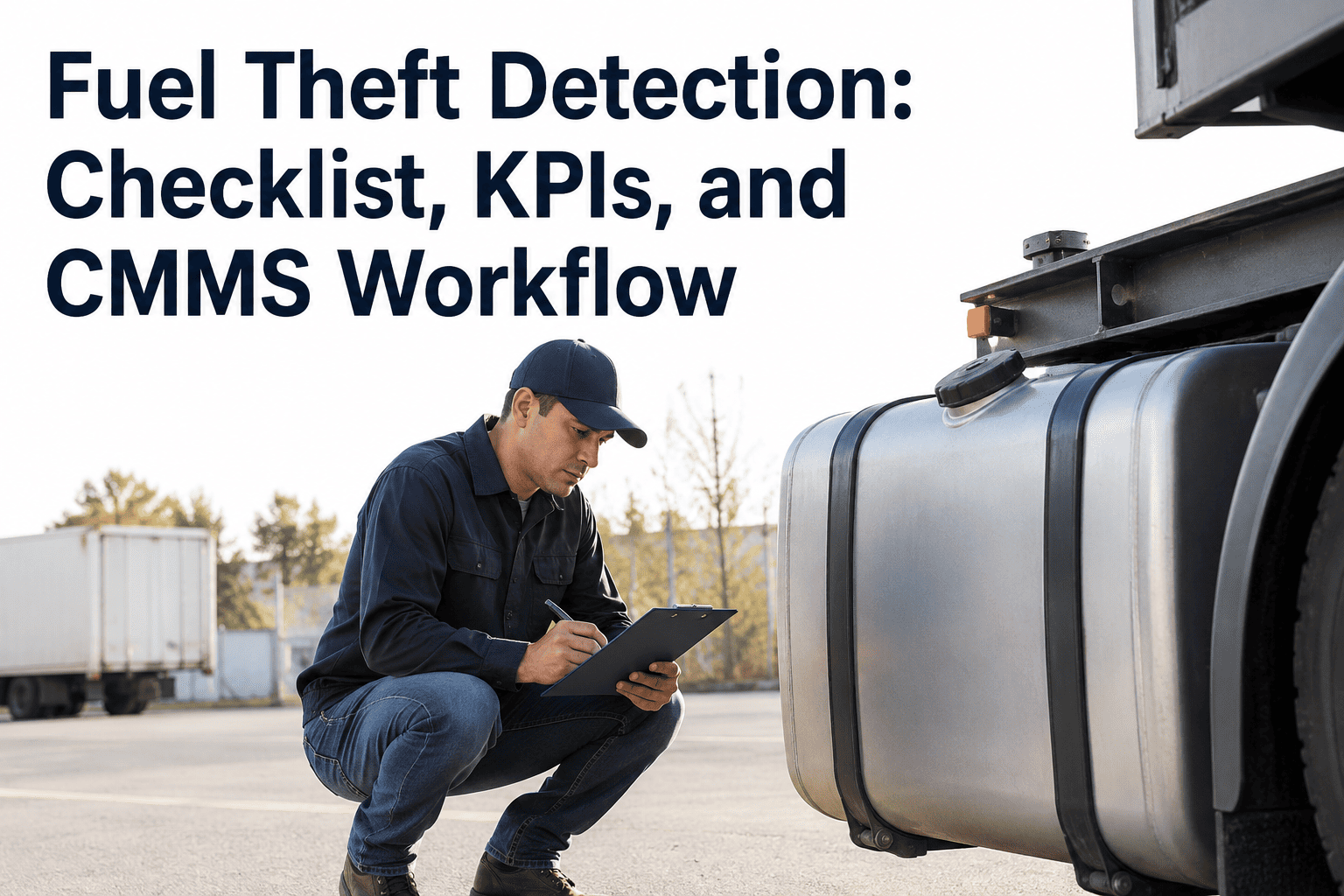
Fuel is consistently one of the top three operating costs in commercial fleet management — and industry data shows that between 5% and 10% of fleet fuel spend is lost to theft, misuse, and undetected leakage every year. The problem is rarely dramatic: it is a few extra litres on every fill, a fuel card used at 11 PM when the vehicle was parked, a tank that empties faster than the route can explain. Without a structured detection workflow, these losses go unnoticed for months before the cumulative variance catches someone's attention. A rigorous fuel theft detection checklist, tied to real-time CMMS alerts and fuel card transaction monitoring, can cut unexplained fuel losses by 60–80% within the first quarter of implementation. OxMaint's Inspection Management module connects fuel card data, telematics mileage, and OBD consumption readings to flag anomalies in real time — so your team catches theft on the day it happens, not at month-end reconciliation. See how OxMaint detects fuel anomalies across your fleet.
Find Out Where Your Fuel Is Going
OxMaint cross-references fuel card transactions against GPS location and OBD tank data — and alerts your team the moment a transaction doesn't match where your vehicle actually was.
Understanding Where Fuel Theft Happens
Fuel theft in commercial fleets takes three distinct forms, and each requires a different detection method. Card-based theft happens when a fuel card is used for non-fleet vehicles, personal fill-ups, or sold to a third party — it shows up as a transaction with no matching vehicle movement. Physical siphoning removes fuel directly from the vehicle tank between runs — it shows up as an unexplained tank level drop without a corresponding OBD fuel consumption event. Driver misuse covers personal use, unapproved top-ups at non-contracted stations, and quantity inflation — it shows up as fill volume exceeding tank capacity or a fill at a location the vehicle GPS never reached.
Fuel Theft Detection — Master Checklist
Work through this checklist to establish your fuel theft detection controls. Items marked as ongoing should be reviewed on the defined cycle — the checklist is not a one-time setup.
Cards assigned to vehicles, not individuals, allow GPS cross-referencing. A card tied to a driver with no vehicle link cannot be validated against location data. Setup — day one
Set maximum fill volume at 110% of the vehicle's tank capacity. Any transaction exceeding this limit is automatically blocked and flagged — a single control that eliminates volume inflation fraud entirely. Configure in fuel card system
Restrict cards to fuel product codes only. Cards open to all products are routinely used for food, tobacco, and personal purchases at pay-at-pump terminals — a low-risk, high-frequency fraud vector. Card restriction
This is the single most important control in the program. OxMaint matches every card transaction timestamp and station location against the vehicle's GPS track — flagging any transaction where the vehicle was not physically present. Critical integration
Set alerts for fuel transactions outside the vehicle's operating hours window. An 11 PM fill on a vehicle parked at the depot since 6 PM is a fraud signal. OxMaint flags these immediately rather than at month-end review. Alert configuration
Review OxMaint's automated exception report each morning — focusing on after-hours fills, location mismatches, and volume outliers. Reviewing daily catches fraud within 24 hours instead of 30 days. Daily review
Calculate litres per 100 km (or MPG) for each vehicle weekly. Any vehicle consuming 15%+ more fuel than its type baseline gets flagged for investigation — it could be engine fault, driver behaviour, or tank drainage. Weekly KPI
OxMaint reads OBD fuel level before and after each fill event and compares the actual level increase against the card transaction volume. Disparity between purchased litres and tank increase is the signature of siphoning or resale. Automated reconciliation
Any vehicle flagged for unexplained tank level drops should receive a physical inspection — checking for aftermarket drain valves, fuel tank damage, and signs of forced entry near the fuel cap. Log inspection in OxMaint. On-alert inspection
Within two weeks of connecting our fuel card data to OxMaint, we identified three vehicles with regular after-hours transactions at a station 40 km from their routes. Our old monthly review process would have caught this after four months of losses. The telematics match caught it on day nine.
Fuel Theft Detection KPIs — What to Track
Measuring fuel theft requires comparing what your records say happened against what your telematics and OBD data confirms happened. These KPIs are the gap between those two data sources.
Real-Time Fuel Anomaly Detection — Not Month-End Surprises
OxMaint's inspection management platform cross-references telematics, OBD, and card data to detect fuel theft the day it happens. See the full detection workflow in a live demo.
How OxMaint Inspection Management Detects Fuel Theft
OxMaint does not just report what happened — it flags it when it happens. The platform ingests fuel card transaction feeds, GPS position streams, and OBD tank level data simultaneously, running automated reconciliation checks that would take a human analyst hours to complete manually. When a mismatch appears — a transaction at a station the vehicle never reached, a tank drain without a fuel card event, a fill volume that exceeds tank capacity — OxMaint raises an inspection flag and assigns it to the responsible manager for review. Every flag is documented in the vehicle's audit trail with timestamp, evidence, and resolution status.
Frequently Asked Questions
Common questions from fleet managers setting up fuel theft detection programs and CMMS integration.
Every Litre Accounted For. Every Transaction Verified.
OxMaint closes the gap between what your fuel cards record and what your vehicles actually consumed. Start your free trial and connect your first vehicle today.