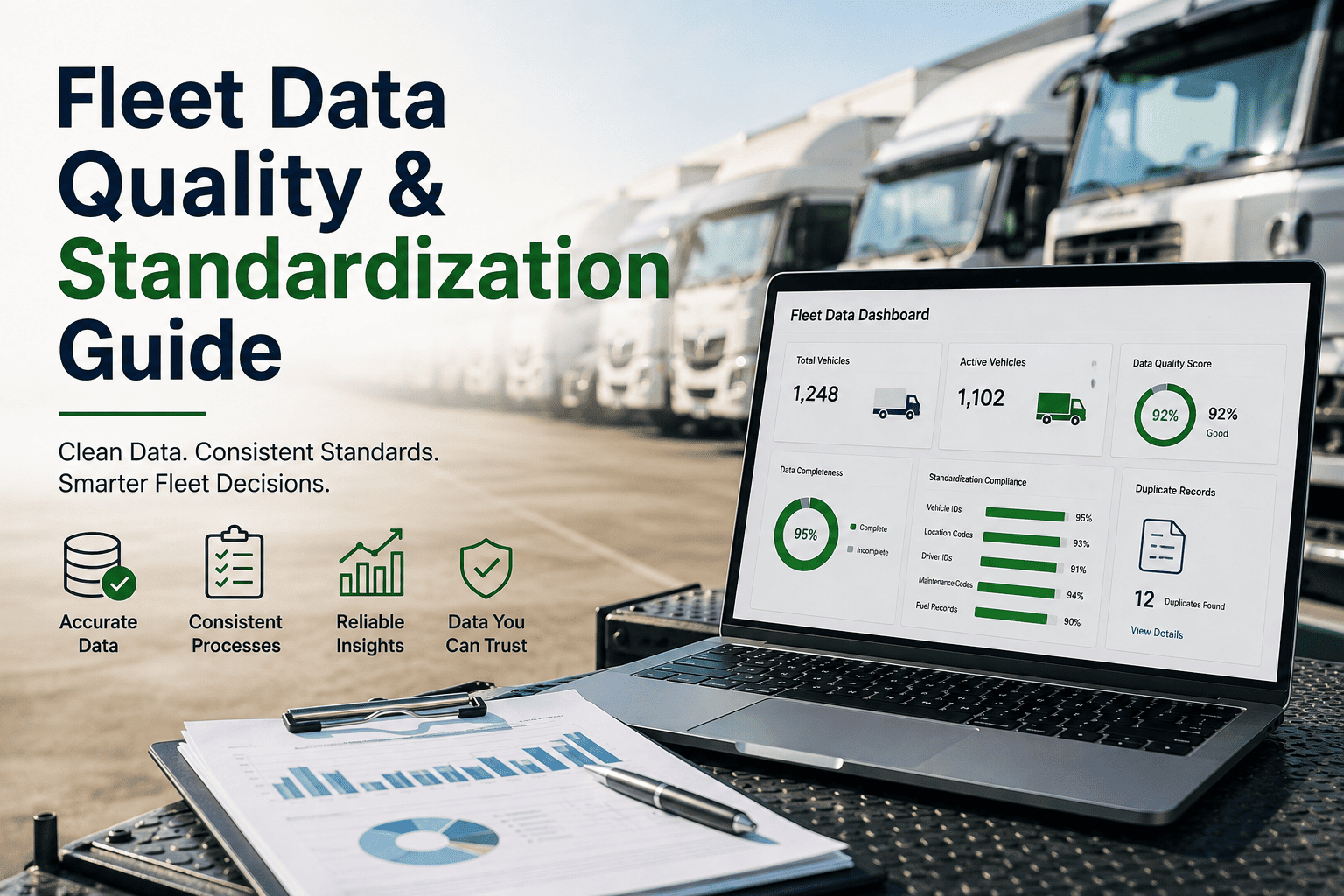
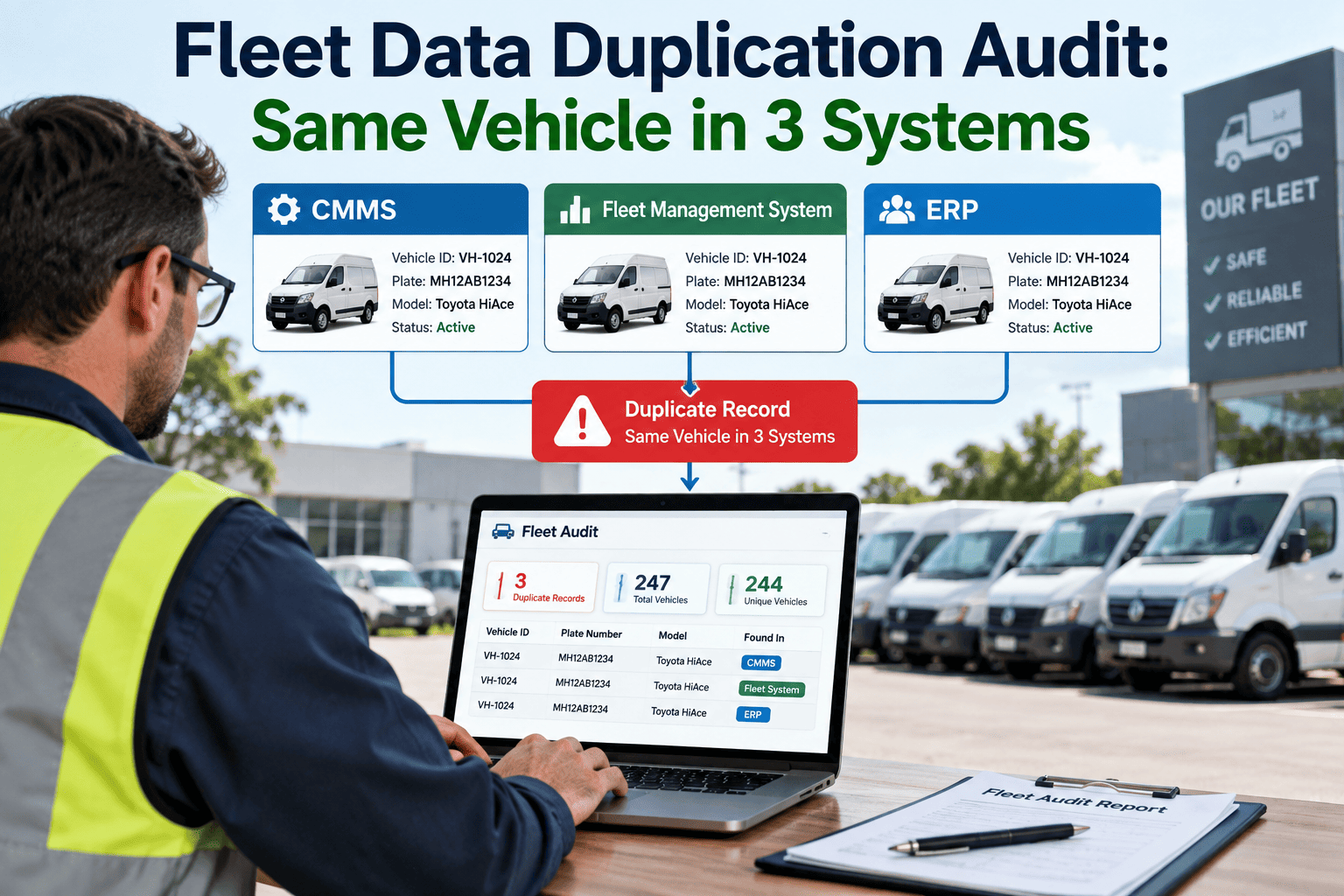
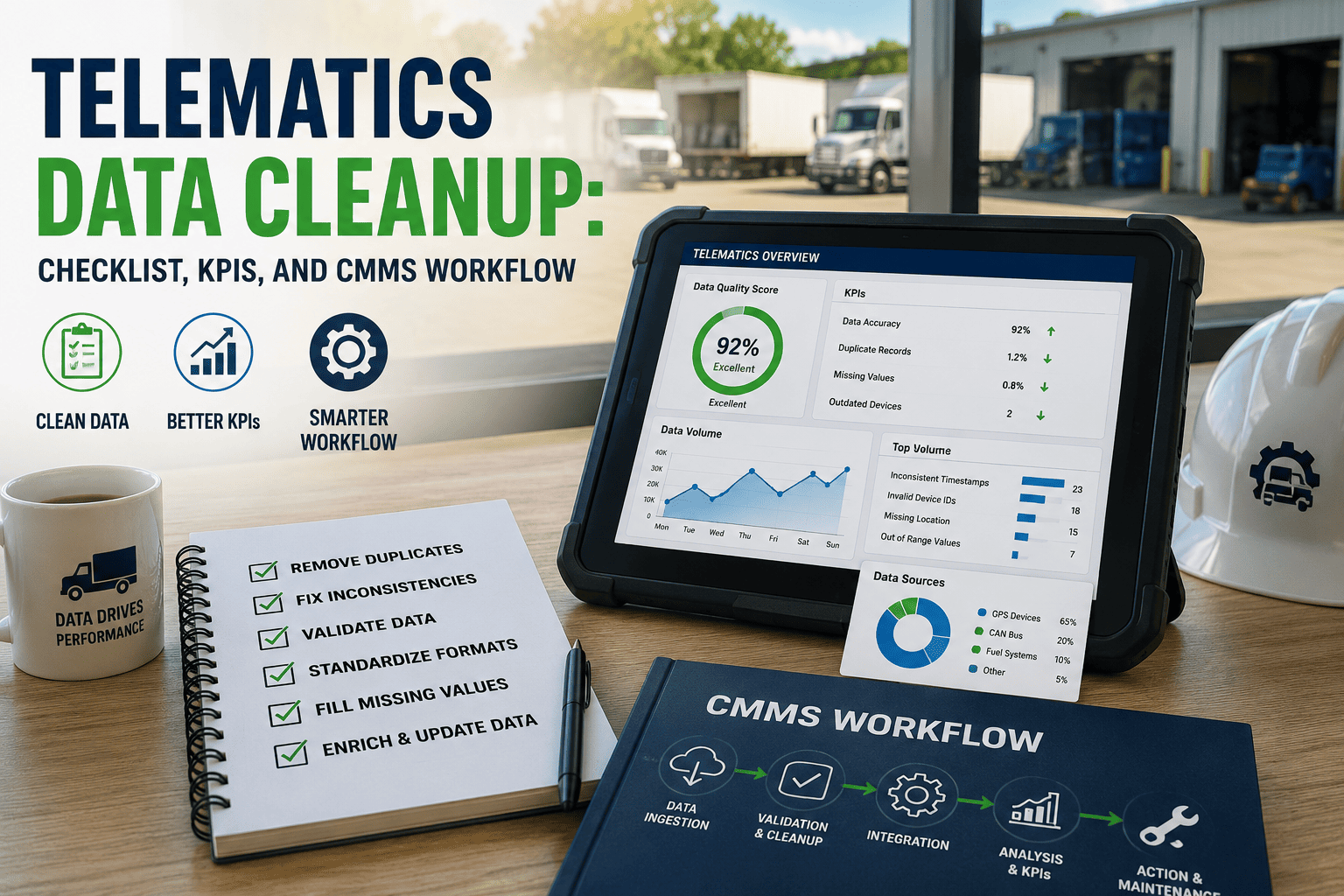
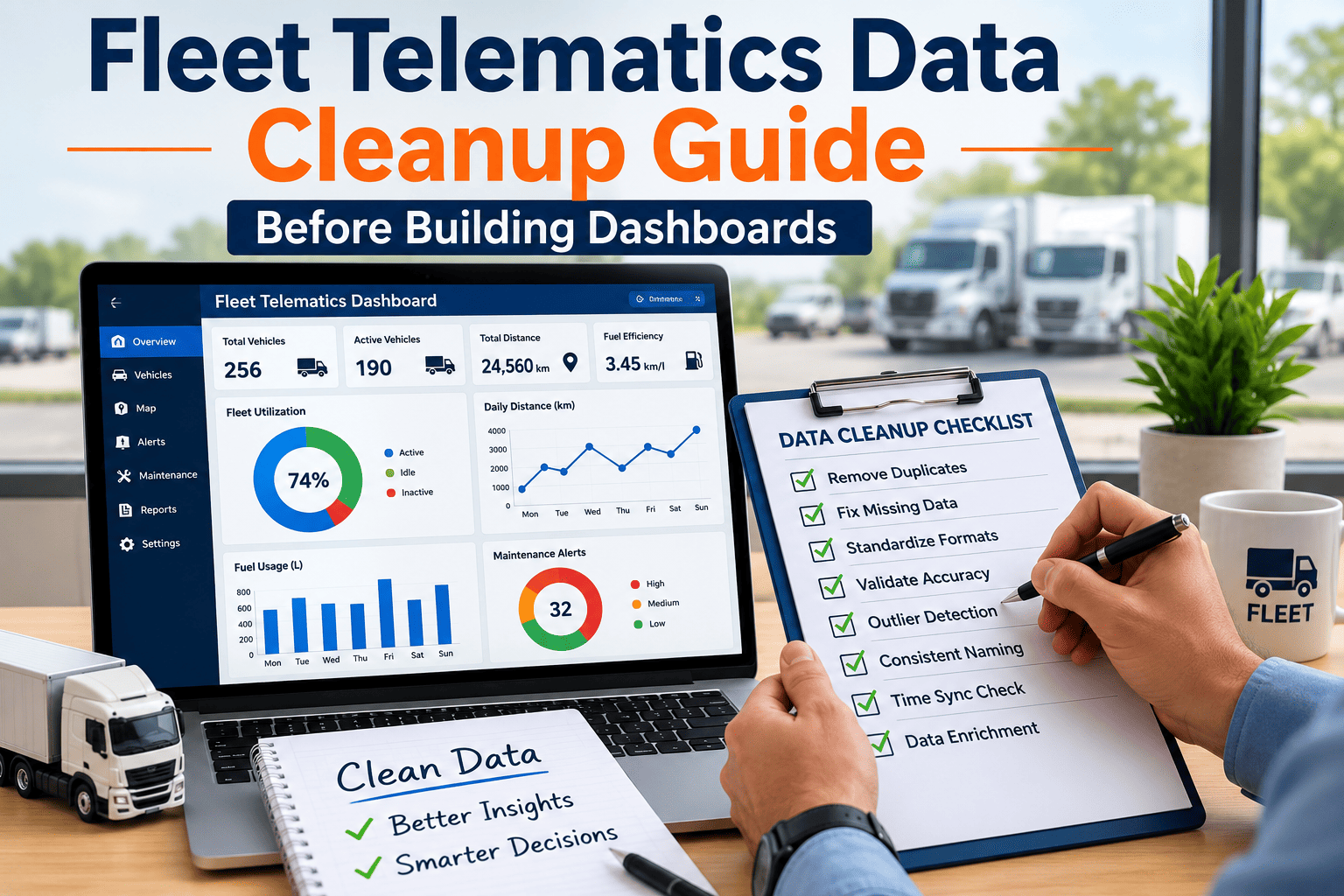
Fleet data quality and standardization is the boring foundation every downstream report, benchmark, and automation workflow quietly depends on. A single vehicle logged three different ways across three systems — one full VIN, one truncated unit number, one nickname a dispatcher typed in years ago — is enough to make an otherwise accurate fuel report understate consumption by an entire truck. Dirty data does not announce itself; it just makes every number a little bit wrong until someone builds a decision on top of it. Fleets that treat data standardization as a one-time cleanup project watch the problem creep back within a year, because the root cause was never the data itself but the lack of rules governing how it gets entered. Sign in to OxMaint to see how a standardized fleet data model keeps records clean at the point of entry, or book a demo to review your current data structure against a governance framework built for fleet operations.
Data Governance · Fleet Standardization
Clean Fleet Data Is Not a Cleanup Project — It Is a Standard You Enforce
Every report, every benchmark, and every AI model built on fleet data is only as reliable as the records feeding it. A standardization framework fixes the naming conventions and entry rules that keep data clean permanently, instead of just once.
1 in 5
records
contain a duplicate or inconsistent asset entry in a typical fleet
30%
of hours
analysts spend reconciling data instead of analyzing it
12 mo
relapse
typical time before an uncleaned data cleanup problem returns
90%+
accuracy
target once naming conventions are enforced at entry
The Real Cost of Dirty Fleet Data
Bad data rarely causes a single dramatic failure. Instead it erodes trust in every report until nobody believes the dashboard anymore, and decisions quietly move back to gut instinct. The cost shows up in four places most fleets underestimate.
Unreliable Reporting
Cost-per-mile and downtime reports built on inconsistent asset records produce numbers that shift depending on who ran the query, undermining confidence in the data itself.
Broken Benchmarking
Comparing performance across sites or against industry benchmarks is meaningless when each location classifies the same equipment type under a different name.
Unreliable Automation
AI models and automated alerts trained on inconsistent data inherit that inconsistency, producing false positives that erode trust in the automation itself.
Wasted Analyst Hours
Skilled analysts spend a disproportionate share of their week reconciling duplicate records and mismatched fields instead of producing insight from the data.
Stop Cleaning the Same Data Twice
OxMaint enforces naming conventions, field formats, and asset taxonomy at the point of entry — so fleet data stays clean permanently instead of needing another cleanup project next year.
Where Fleet Data Breaks Down
Most data quality problems trace back to a small set of recurring root causes. Recognizing these patterns is the first step toward fixing them at the source rather than downstream in a spreadsheet.
Inconsistent Asset Naming
The same vehicle referred to by VIN, unit number, and nickname across three systems, with no single source of truth.
Free-Text Entry Fields
Open text fields for asset type, location, and failure cause invite spelling variations that make filtering and reporting unreliable.
Duplicate Records
Assets entered twice under slightly different names during onboarding, system migrations, or multi-site data entry inflate counts silently.
Orphaned Historical Data
Work orders and readings linked to assets that were later renamed or merged, leaving history disconnected from the current record.
Inconsistent Units & Formats
Mileage logged in miles at one site and kilometers at another, or dates entered in conflicting formats across regions.
No Ownership of Data Rules
Without a named data owner enforcing entry standards, every new hire invents their own convention and the drift starts again.
Before and After — What Standardization Actually Changes
Standardization is not a cosmetic exercise. It changes whether the reports built on top of the data can be trusted, and whether an AI model or automation rule can be deployed on it with confidence.
Unstandardized
Standardized
Asset identification
Multiple names per asset across systems
Single unique ID enforced fleet-wide
Reporting confidence
Numbers vary depending on who runs the query
Consistent output regardless of who pulls it
Cross-site benchmarking
Not comparable — different taxonomies per site
Directly comparable across the whole portfolio
Automation readiness
High false-positive rate from inconsistent input
Reliable enough to trigger automated work orders
Analyst time spent cleaning
Recurring — every reporting cycle
One-time setup, then enforced at entry
The Standardization Framework
Standardizing fleet data is a five-step process that establishes rules once and then enforces them permanently, rather than repeating a manual cleanup on a recurring schedule.
1
Audit Current State
Every naming variation, duplicate record, and inconsistent field is catalogued across all sites and systems before any rule is written.
2
Define the Taxonomy
A single asset naming convention, category structure, and field format is agreed on and documented as the fleet-wide standard.
3
Deduplicate & Reconcile
Duplicate and orphaned records are merged, with historical work orders reattached to the correct surviving asset record.
4
Enforce at Entry
Dropdowns, required fields, and validation rules replace free text so new data entered from this point forward stays clean automatically.
5
Assign Ownership
A named data owner reviews new entries periodically and updates the taxonomy as the fleet adds equipment types or sites.
Data Governance Maturity — Where Does Your Fleet Sit?
Most fleets can place themselves on this scale honestly, and the gap between levels is usually smaller to close than it looks — the biggest jump is simply naming an owner and enforcing entry rules.
Level 1
Ad Hoc
No naming convention exists. Every user enters data their own way. Reports require manual cleanup before anyone trusts them.
Level 2
Managed
A naming convention is documented but not enforced by the system. Compliance depends on individual discipline and slowly drifts.
Level 3
Standardized
Dropdowns and validation rules enforce the taxonomy at entry. New records stay clean, though legacy records may still need reconciliation.
Level 4
Governed
A named data owner reviews entries, updates the taxonomy as the fleet evolves, and the data supports automation and cross-site benchmarking confidently.
Frequently Asked Questions
What is fleet data standardization, exactly?
It is the practice of enforcing one naming convention, one field format, and one asset taxonomy across every system and site, so the same vehicle is described the same way everywhere.
How long does a fleet data cleanup project take?
Initial deduplication and reconciliation typically takes four to eight weeks depending on fleet size, but the real work is enforcing entry rules afterward.
Book a demo to scope a cleanup for your fleet.
Why does clean data matter for AI and automation?
AI models and automated alerts trained on inconsistent records inherit that inconsistency, producing false positives that make teams stop trusting the automation entirely.
Who should own fleet data quality standards?
A named data owner — often a fleet analyst or operations lead — should review new entries and update the taxonomy, since standards without an owner drift back to inconsistency within a year.
Can data standardization work across multiple sites with different systems?
Yes, as long as the taxonomy is defined centrally and enforced through validation rules rather than left to individual site discretion.
Sign in to OxMaint to set up a fleet-wide taxonomy.
How to Measure Whether Standardization Is Working
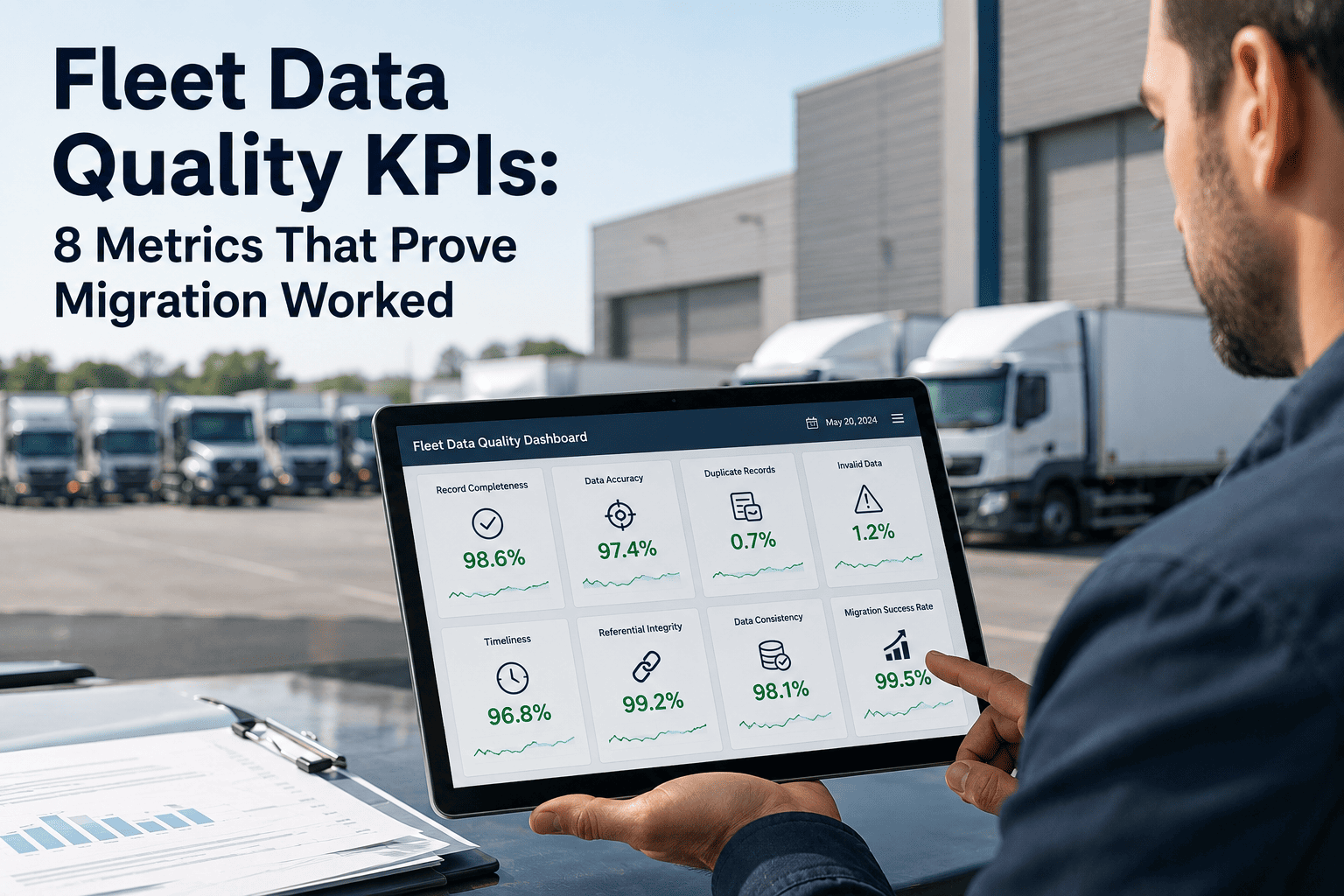
A standardization effort should be judged against measurable indicators, not a general sense that things feel cleaner. These five indicators show whether the rules are actually holding once the initial cleanup project ends.
Duplicate Rate
The percentage of assets with more than one active record should trend toward zero and stay there after enforcement rules go live.
Free-Text Field Usage
A falling share of records entered through open text fields versus dropdowns signals that validation rules are actually being used, not bypassed.
Reconciliation Time
The hours analysts spend cleaning data before a report can run should shrink month over month as entry-point rules take hold.
Cross-Site Match Rate
The share of equipment types classified identically across sites indicates whether the taxonomy is actually shared or just documented on paper.
New Record Compliance
Auditing a sample of newly created records each month catches taxonomy drift early, before it accumulates into another full cleanup project.
Automation False-Positive Rate
A falling rate of incorrect automated alerts is one of the clearest signs that the underlying data has become reliable enough to act on.
Clean Data Is a Standard You Enforce, Not a Project You Finish
OxMaint builds naming conventions, validation rules, and ownership into the platform itself — so fleet data stays standardized permanently instead of drifting back into a mess within a year.