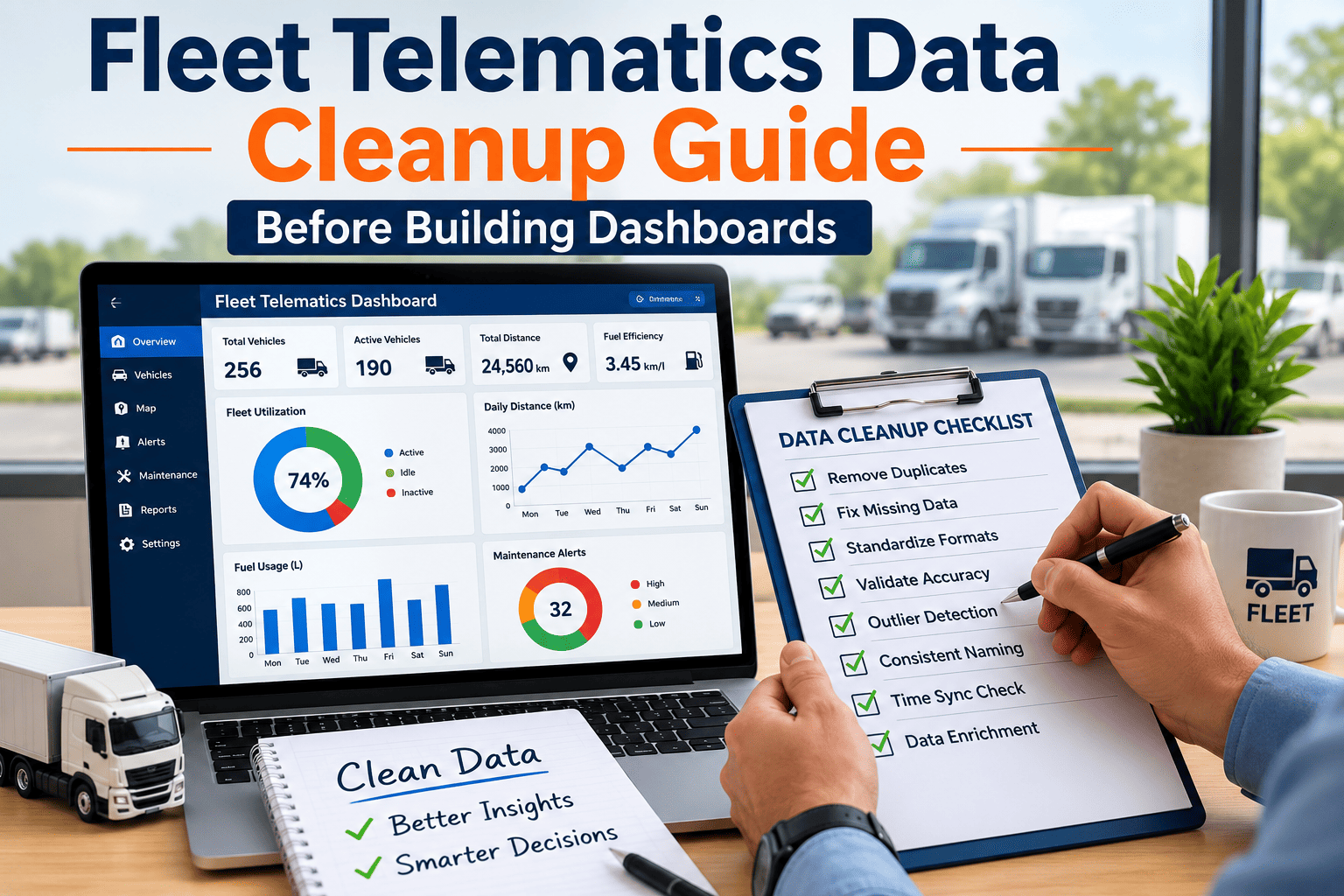
A telematics data cleanup program is not a one-time spreadsheet fix — it is an ongoing operational habit, and fleets that skip building one keep reacting to breakdowns that good data would have predicted weeks earlier. Predictive maintenance built on trustworthy telematics can reduce equipment downtime by 35-45% and catch a large share of failures through early fault detection, but that only works when the underlying readings are accurate. Most fleets never get there because cleanup happens once, after a complaint, instead of running as a standing program with owners, checkpoints, and a review cadence. This template lays out exactly how to build that program in four phases, so your team stops firefighting bad data and starts using it to prevent downtime, with OxMaint handling the validation layer underneath it.
A Four-Phase Program to Turn Messy Telematics Into Fewer Breakdowns
Copy this framework directly into your own rollout plan — phase owners, weekly checkpoints, and the metrics that prove the program is actually reducing downtime.
Why a One-Time Cleanup Never Sticks
Teams that treat data cleanup as a single project find the same problems back within a quarter. New devices get installed, drivers get reassigned trucks, and firmware updates silently change how a sensor reports — without a standing program, every one of those events reopens the same mess.
The Four-Phase Program Template
Each phase has a clear owner, a defined output, and a checkpoint before moving to the next one. Run phase one for two weeks minimum before touching phase two.
Assign one owner to catalog every telematics device, sensor, and data feed in the fleet, along with install date, last calibration, and current accuracy against a manual sample.
Define acceptable bounds for speed, fuel burn, idle time, and engine temperature per vehicle class, then configure automatic flagging for anything outside those bounds before it reaches a report.
Connect telematics, fuel card, and work order systems into one feed, reconciling vehicle IDs weekly during this phase to catch every mismatch before it compounds into a maintenance trigger error.
Set a monthly review where fleet ops, maintenance, and IT check flagged outliers, adjust validation bounds as fleet composition changes, and track downtime trend against the cleanup program.
Program Roles — Who Owns What
A cleanup program fails when one person owns everything. Split ownership across these four roles so the program survives staff turnover and busy maintenance seasons.
| Role | Primary Responsibility | Review Cadence |
|---|---|---|
| Fleet Operations Lead | Owns validation rules and vehicle ID reconciliation | Weekly |
| Maintenance Manager | Confirms flagged readings against physical inspections | Weekly |
| IT or Systems Admin | Maintains integration uptime across data sources | Bi-weekly |
| Program Sponsor | Tracks downtime trendline and reports to leadership | Monthly |
How OxMaint Supports Every Phase
Instead of building validation rules and reconciliation logic from scratch, OxMaint gives the program a working foundation from day one — connecting telematics feeds directly into preventive maintenance triggers.
Device-to-asset mapping stays synced with your live register, removing the manual weekly check from Phase 3.
Set bounds once per vehicle class and let outliers route automatically to a review queue instead of a report.
Validated readings feed directly into preventive maintenance schedules, closing the loop from sensor to technician.
Ready to run this program with a platform built to support every phase? Start a free trial or book a demo to see the validation layer in action.
Stop Reacting to Breakdowns Your Data Already Predicted
A structured cleanup program turns telematics from a noisy dashboard into a working early-warning system for your maintenance team.
Frequently Asked Questions
How long does it take to see downtime reduction after starting this program?
Can a small fleet run this same four-phase program?
What happens if validation rules are set too strict or too loose?
Does this program require replacing existing telematics hardware?
Put This Program on Rails From Day One
OxMaint gives your team the validation, reconciliation, and work order triggers this program needs — so Phase 1 starts with infrastructure already in place, not a blank spreadsheet.