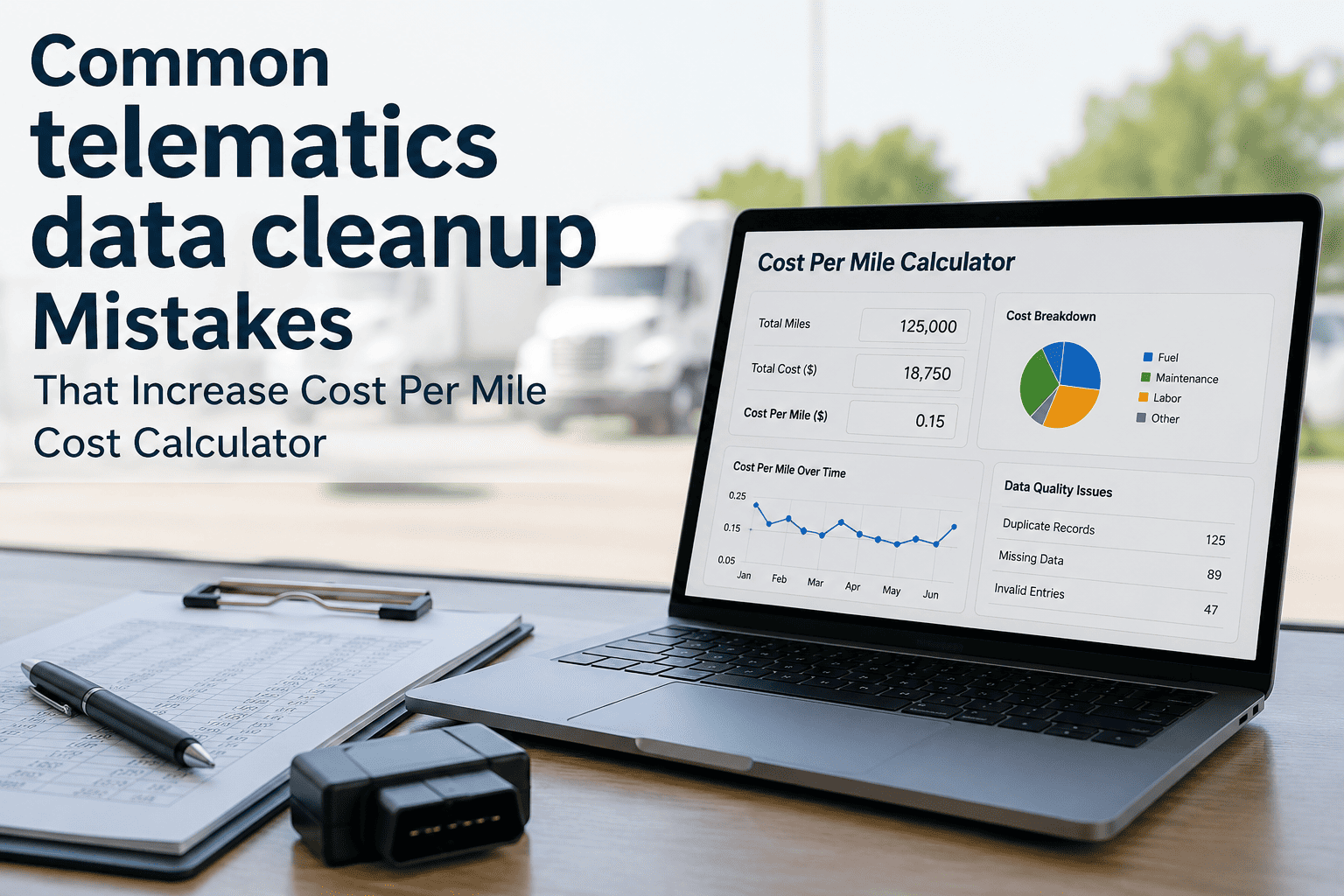
Telematics systems generate more data than most fleets ever use. GPS pings, fault codes, harsh-braking events, and fuel logs pour in constantly, but without a cleanup process, that data becomes noise — duplicate vehicle IDs, stale sensor feeds, and fault codes that never get matched to a work order. The result is not just clutter, it is money: a fleet acting on incomplete or duplicated telematics data makes maintenance decisions later than it should, and cost per mile absorbs the difference. Cleaning up telematics data is not a one-time project, it is an ongoing discipline that most fleets underinvest in. Here is what the common mistakes cost, and how to start a free trial or book a demo to fix them.
What Bad Telematics Data Hygiene Actually Costs Your Fleet
Dirty telematics data does not just clutter a dashboard — it delays the maintenance decisions that keep cost per mile down. Here is where the money leaks.
Five Telematics Data Mistakes and Their Price Tag
Each of these mistakes is common, quiet, and expensive. None of them require new sensors or hardware to fix — they require the data that already exists to be matched, deduplicated, and routed correctly.
| Data Cleanup Mistake | Annual Cost Impact | Why It Happens | How Oxmaint Fixes It |
|---|---|---|---|
| Duplicate VIN or asset records | $310 / vehicle | Multiple systems, no shared ID | Single source of truth per asset |
| Fault codes not mapped to work orders | $740 / vehicle | No automated routing rule | Auto work order on qualifying code |
| Stale sensor feeds unnoticed | $190 / vehicle | No feed-health monitoring | Feed status alerts on the dashboard |
| Inconsistent mileage across systems | $260 / vehicle | Manual entry vs telematics mismatch | Telematics as the mileage source of truth |
| Historical data lost on system switch | Variable | No migration process | Structured import during onboarding |
Clean Data Is the Difference Between a Dashboard and a Warning System
A dashboard full of duplicate assets and orphaned fault codes looks busy but tells a manager very little. Oxmaint deduplicates vehicle records, matches fault codes to the correct asset, and flags stale feeds automatically — turning telematics data into decisions instead of noise.
Messy Telematics Feed vs. a Cleaned, Connected One
Six Reasons Telematics Data Turns Into Noise
None of these causes are unusual — they are the default outcome of running telematics, maintenance, and fuel systems separately without a shared identifier tying them together.
Telematics, maintenance software, and fuel cards each assign their own vehicle ID, splitting one van into three disconnected records.
A fault code with nowhere to go sits in a telematics dashboard until someone happens to check it manually.
A GPS unit or fault sensor that stops reporting looks identical to a healthy vehicle unless feed status is actively monitored.
Odometer figures typed into a spreadsheet fall out of sync with live telematics mileage within a matter of weeks.
Switching maintenance platforms without a structured import leaves years of fault and repair history stranded in the old system.
Without someone responsible for catching duplicates and gaps, the data quietly degrades every time a vehicle is added or retired.
How Oxmaint Keeps Telematics Data Clean By Default
Rather than a one-time cleanup project, Oxmaint enforces data hygiene continuously as new vehicles, fault codes, and readings flow in.
Telematics, maintenance, and fuel data all map back to one vehicle record instead of three disconnected ones.
Qualifying fault codes generate a prioritized work order automatically, closing the gap between detection and repair.
A dashboard flag fires the moment a vehicle's telematics feed stops reporting, instead of going unnoticed for weeks.
PM triggers pull mileage directly from telematics, eliminating drift caused by manual odometer entry.
Onboarding includes a structured import of historical work orders and fault history from any prior system.
New vehicles and readings are checked against existing records automatically, preventing duplicate assets from forming.
What Fleets See After Cleaning the Data Pipeline
Once duplicate records stop splitting alerts across two vehicle IDs
Annual cost avoided by closing the fault-to-work-order gap
Typical fault response time once codes auto-route to a work order
Historical records preserved through a structured onboarding import
Frequently Asked Questions
What does telematics data cleanup actually involve?
Why do duplicate vehicle records happen in the first place?
How long does a telematics data cleanup take?
Does this replace our existing telematics provider?
Can old historical data be recovered after a system switch?
Turn Telematics Noise Into a Real Warning System
Oxmaint deduplicates vehicle records, routes fault codes to work orders automatically, and keeps mileage consistent across every connected system — so your telematics data finally does what it was supposed to do.