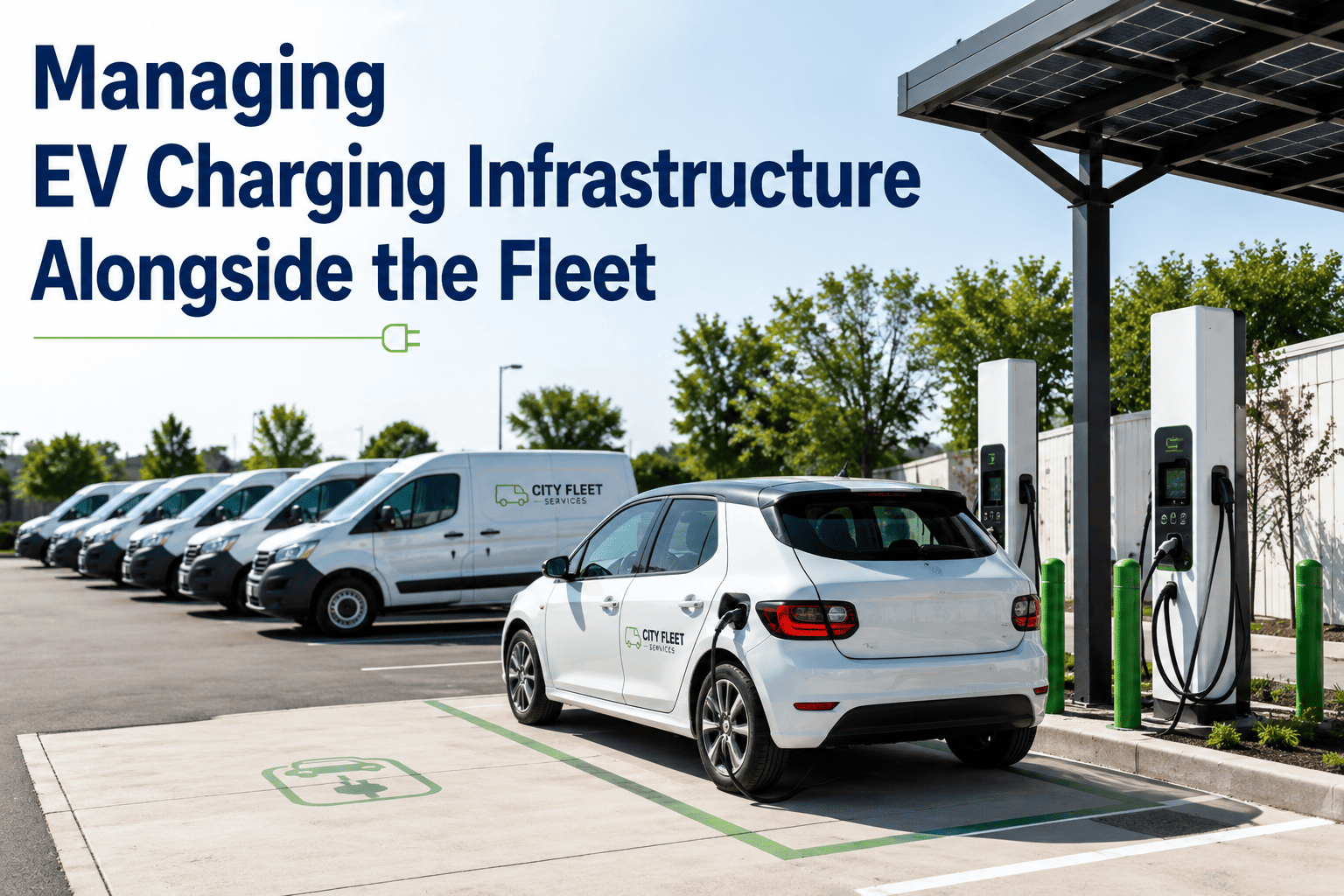
Managing EV charging infrastructure alongside the fleet is the next operational hurdle for electrification-focused maintenance teams, because every charging station is a fleet-critical asset that demands scheduled upkeep, uptime monitoring, and lifecycle tracking independent of the vehicles it powers. This 2026 guide breaks down how to structure preventive maintenance, track electrical capacity, and optimize utility costs across your depot. By treating chargers as a second high-value fleet within your CMMS, you eliminate the reactive breakdowns that cascade into missed routes and lost revenue. Explore how OxMaint unifies this workflow and start your Start Free Trial to future-proof your maintenance strategy.
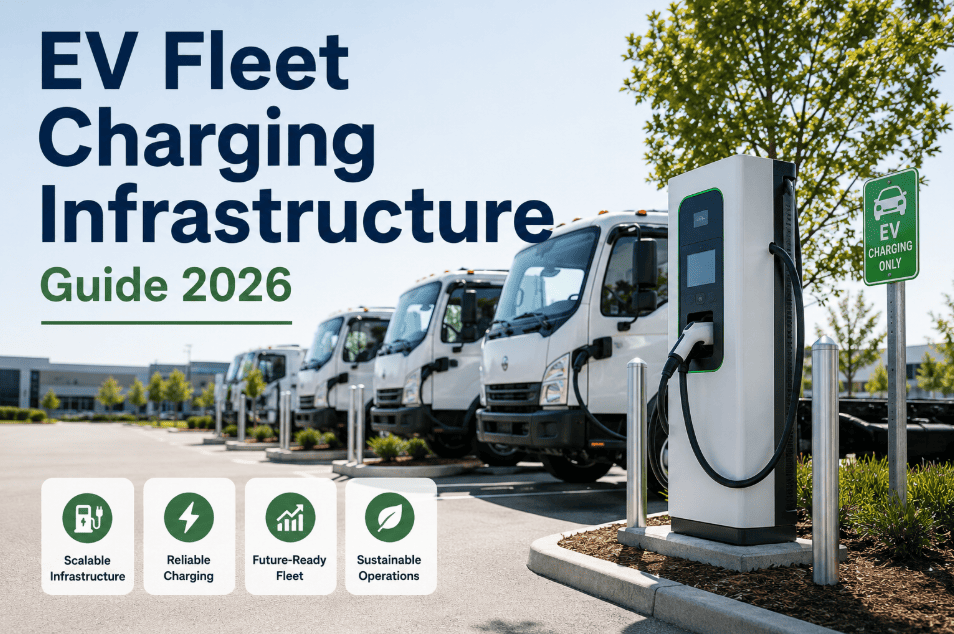
EV CHARGING GUIDE 2026
Are Your EV Chargers Operating as an Unmanaged Second Fleet?
A depot running 20 electric vehicles relies on 20 charging stations — a secondary, high-value asset class that requires its own preventive maintenance strategy. One offline charger can sideline an entire route within 48 hours.
FLEET EV INFRASTRUCTURE
What Makes Up Your EV Charging Infrastructure?
A fully electrified depot manages five distinct layers of infrastructure. Treating these as standalone assets rather than passive electrical outlets is the foundation of reliable fleet EV charging in 2026.
Charging Stations
Level 2 AC (7–19 kW) for overnight top-offs, DC fast chargers (50–150 kW) for mid-route boosts, and heavy-duty DC (150–350 kW) for Class 8 EV tractors requiring rapid energy delivery.
Upstream Electrical
Transformers, switchgear, panels, and site distribution lines handle massive continuous loads. Failure here doesn't just disable one charger — it can take the entire depot offline.
Energy Management
Software-driven load balancing and demand response systems prevent peak-load penalties by distributing power dynamically across active charging sessions.
Network Connectivity
Modern chargers rely on cellular or WiFi networks to report session data, error codes, and uptime metrics to a cloud management platform for remote diagnostics.
Cables & Connectors
High-voltage cables and connectors are the primary physical wear points. Daily coupling and environmental exposure degrade insulation and contact pins over time.
PREVENTIVE MAINTENANCE CHECKLIST
EV Charger Preventive Maintenance Schedule & Checklist
Unplanned charger downtime directly limits vehicle availability. Adhering to a strict PM schedule ensures reliable charging fleet operations and prevents cascading route failures.
- Connector visual inspection and contact-pin cleaning
- Cable strain-relief and jacket wear assessment
- Display screen and keypad functionality test
- Ground-fault indicator and safety interlock verification
- Full cable integrity check and continuity testing
- Network connectivity and modem signal strength audit
- Ventilation and cooling fan operation inspection
- Enclosure weather-seal and gasket degradation check
- Insulation resistance and ground continuity testing
- Internal wiring and torque verification on terminals
- Firmware updates applied per manufacturer specs
- Liquid-cooled thermal management service for DC units
- Firmware patches following manufacturer releases
- Error code investigation and component replacement
- Utility demand-response integration recalibration
- Post-severe-weather physical damage assessment
| Asset Layer | Failure Mode | Inspection Frequency | Risk if Ignored |
|---|---|---|---|
| Level 2 AC Charger | Connector pin degradation | Monthly | Slow charging / incomplete overnight charge |
| DC Fast Charger | Coolant pump failure | Quarterly | Thermal shutdown, 48-hour depot gap |
| Switchgear & Panel | Loose torque / arc fault | Annual | Site-wide power loss, fire hazard |
| Charging Cables | Insulation cracking | Quarterly | Electrical shock risk, vehicle damage |
| Network Modem | Signal degradation | Quarterly | Loss of remote diagnostics and billing data |
REAL-WORLD SCENARIO
The Hidden Cost of Reactive Fleet EV Charging
Consider a regional logistics depot operating 20 Class 8 EV tractors on 20 networked DC fast chargers. When maintenance is tracked on spreadsheets, infrastructural decay goes unnoticed until a failure occurs.
- 2 DC fast chargers suffer thermal shutdown from un-serviced liquid cooling.
- 2 assigned EVs cannot complete a full charge cycle overnight.
- 2 morning routes are delayed by 4 hours waiting for available chargers.
- Depot incurs $4,800 in delayed delivery penalties and driver overtime.
- Automated quarterly PM triggers coolant system service automatically.
- API integration detects early thermal error codes before shutdown.
- Maintenance is dispatched during low-demand evening windows.
- 0 routes delayed. $4,800 in penalties avoided in a single event.
HOW OXMAINT HELPS
How OxMaint Manages EV Infrastructure Alongside the Fleet
OxMaint tracks EV charging infrastructure as a distinct asset class within your CMMS, connecting charger network APIs, PM schedules, and utility analytics into one maintenance workflow.
Real-Time Uptime Monitoring
Pull live uptime data, session history, and error codes directly from charger network APIs. Dispatch work orders automatically when a fault is detected, reducing response time by up to 60%.
Automated PM Scheduling
Build distinct preventive maintenance schedules for Level 2, DC fast, and heavy-duty chargers. Eliminate missed quarterly coolant checks and annual insulation tests with automated triggers.
Unified Asset Lifecycle Tracking
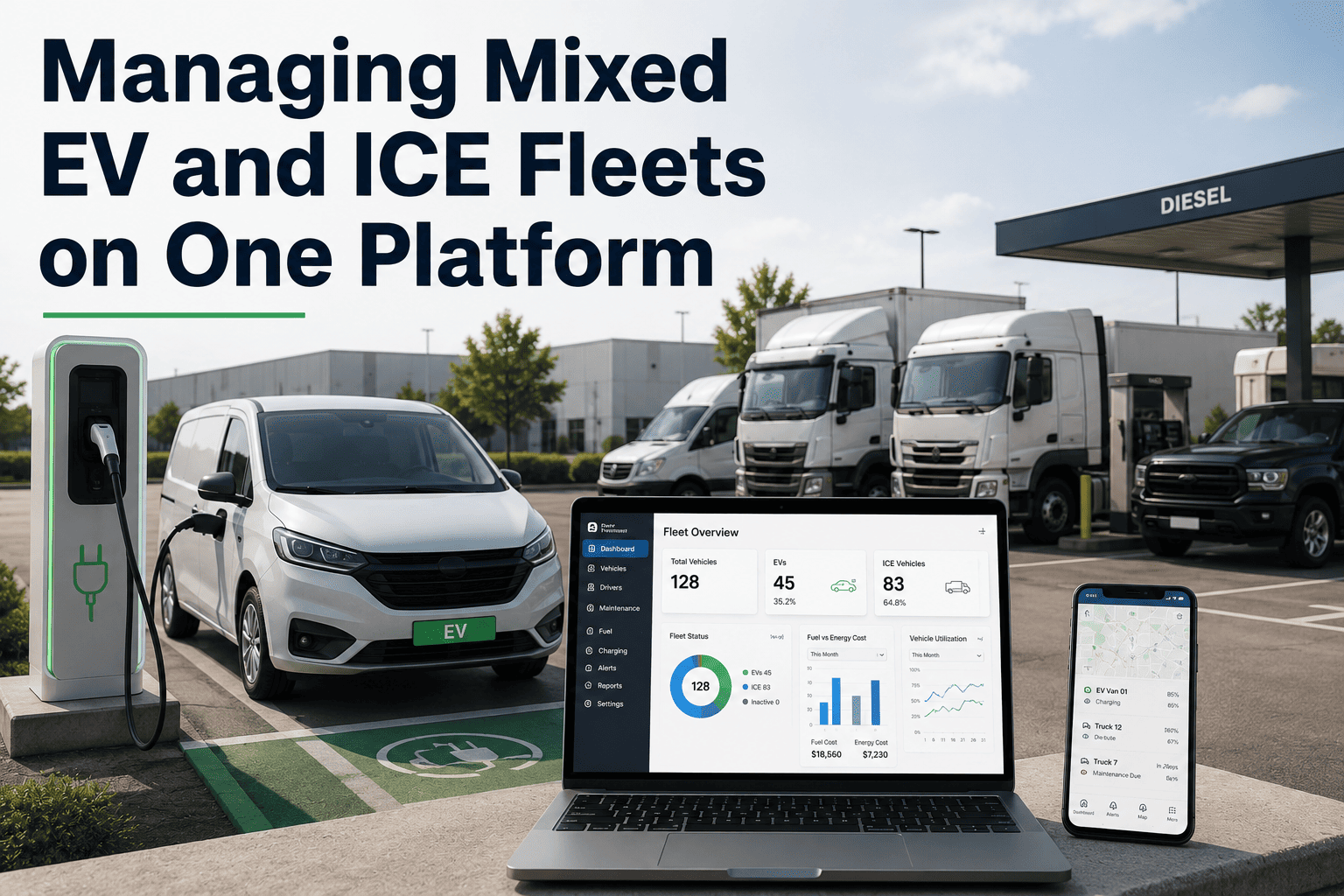
Track vehicles and chargers in a single EAM platform. View complete lifecycle costs, warranty status, and depreciation for your entire electrified operation side-by-side.
Utility Cost & Demand Analytics
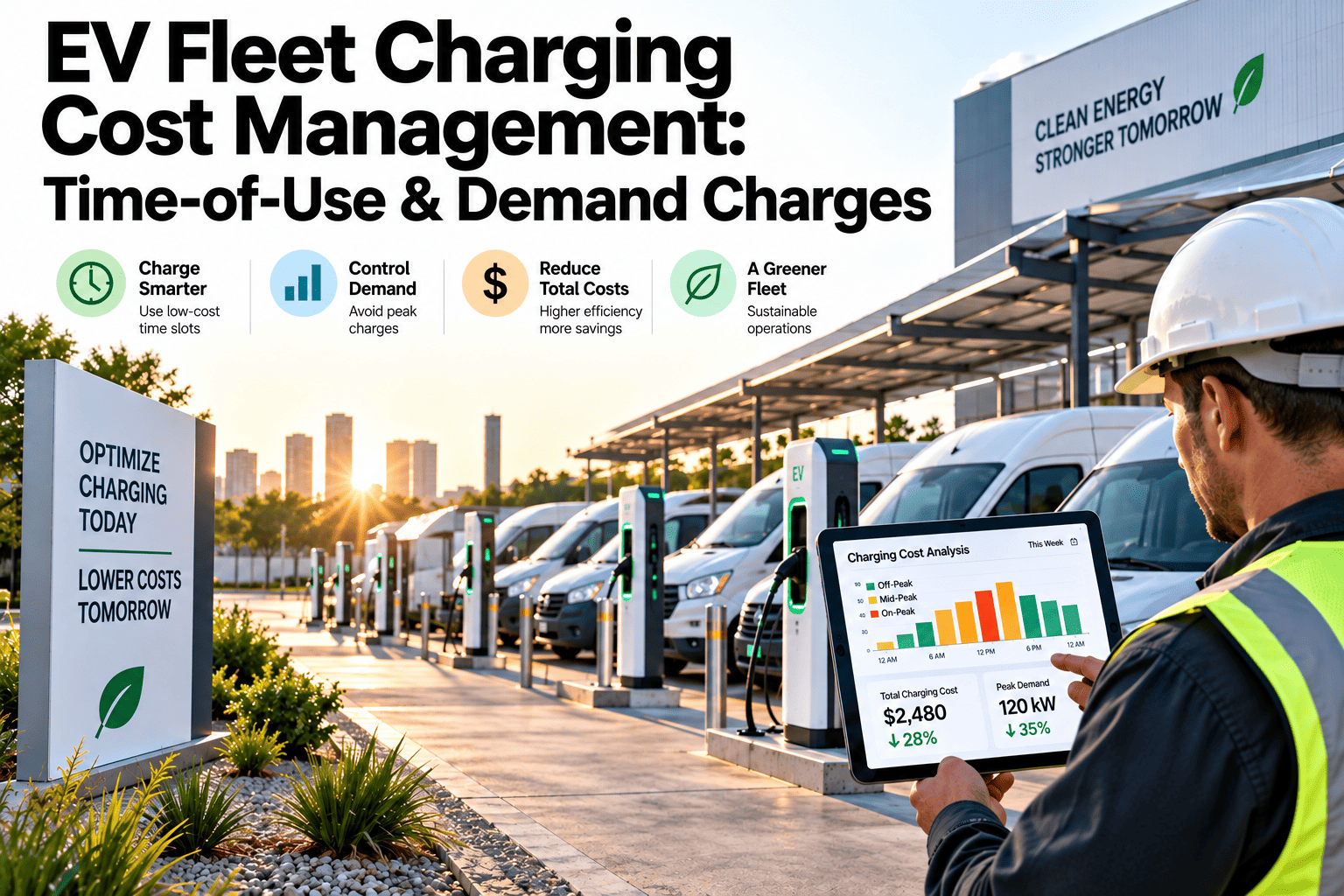
Monitor time-of-use pricing and demand charges alongside maintenance workflows. Optimize charging windows to cut peak utility penalties by up to 30% without sacrificing vehicle readiness.
See OxMaint on Your Charger Assets — Book a 30-Min Demo
Stop tracking critical depot infrastructure on spreadsheets. Discover how an AI-powered CMMS unifies fleet vehicles and EV charging stations into one proactive maintenance workflow.
FAQ
EV Fleet Charging Infrastructure FAQs
How do you maintain EV charging infrastructure for a fleet?
Maintaining EV charging infrastructure requires treating each charger as a fleet-critical asset. This involves monthly connector inspections, quarterly cable integrity checks, annual electrical testing, and continuous uptime monitoring via network APIs. Using a CMMS like OxMaint automates these PM schedules and tracks lifecycle costs.
What is the difference between maintaining Level 2 and DC fast chargers?
Level 2 AC chargers (7–19 kW) require standard electrical and connector inspections. DC fast chargers (50–350 kW) demand additional thermal management system servicing, including liquid-cooling checks, due to the massive heat generated during high-voltage transfer. You can Start Free Trial to easily separate these PM templates in OxMaint.
How does charger downtime affect fleet EV availability?
Charger downtime directly cascades into vehicle downtime. A DC fast charger offline for 48 hours means its assigned EVs cannot complete charging cycles, leading to delayed routes, missed deliveries, and cascading scheduling failures across the depot.
Can a CMMS integrate with EV charging network platforms?
Yes. Modern CMMS platforms like OxMaint pull uptime data, session history, and real-time error codes directly from charger network APIs via cellular or WiFi connections. This allows maintenance teams to dispatch technicians automatically when a fault is detected, rather than waiting for a driver report.
What electrical infrastructure must be tracked alongside fleet chargers?
Beyond the chargers, fleets must track upstream transformers, switchgear, site distribution panels, and energy management systems. Failure in these upstream components can take an entire depot offline. Tracking them in an EAM ensures load balancing and demand response programs function correctly without overloading the grid.
Unify Your Fleet and Charging Infrastructure Today
Take control of your depot's electrification transition with AI-powered asset tracking, automated PM scheduling, and real-time charger monitoring.
Free 14-day trial · No credit card required


.png)