Electric vehicle fleet integration has reached a critical inflection point in 2025. With over 134,000 medium and heavy-duty electric vehicles committed or ordered since the Inflation Reduction Act and a 35% compound annual growth rate in EV fleet adoption, the transition from diesel to electric is no longer experimental—it's strategic necessity. Yet despite this momentum, fleet managers face a complex web of challenges: upfront investment hurdles that can exceed diesel equivalents by 40-60%, charging infrastructure deployment delays stretching 12-18 months, and operational uncertainties ranging from weather-related range degradation to unpredictable electricity demand charges.
The stakes are substantial. Organizations that successfully navigate these electrification challenges are documenting 60% lower combined energy and maintenance costs, while those caught unprepared face the "DIY trap"—attempting independent infrastructure management only to encounter crippling utility fees and unreliable charging that disrupts daily operations. This comprehensive guide examines the five critical challenge domains every fleet manager must master: infrastructure deployment, energy cost management, operational adaptation, technology integration, and financial optimization. Whether you're piloting 20 vehicles or transitioning 3,000, the frameworks here will help you avoid common pitfalls and accelerate ROI. Sign up today to access EV fleet management tools designed specifically for the unique demands of electric vehicle operations.
The Electrification Challenge Landscape
2025 data reveals the gap between EV fleet commitment and successful deployment. Understanding these hurdles is the first step to overcoming them:
Source: Arval Mobility Observatory 2025, Electrada Fleet Analysis, EDF Energy Exchange 2025
Challenge 1: Charging Infrastructure Complexity
Charging infrastructure represents the most significant barrier to fleet electrification, with deployment timelines often exceeding vehicle acquisition schedules by months. Unlike diesel refueling that requires minimal infrastructure, EV fleets demand sophisticated electrical upgrades, utility coordination, and strategic equipment selection that can transform a simple parking lot into a complex energy management hub.
The infrastructure challenge manifests across multiple dimensions. Site preparation requires assessing electrical capacity, often necessitating transformer upgrades and dedicated medium-voltage connections that can cost $50,000-$500,000 depending on fleet size. Equipment selection involves choosing between Level 2 chargers (ideal for overnight depot charging with 8-12 hour fill times) and DC fast chargers (essential for mid-shift charging with 30-60 minute top-ups but requiring significantly more power and investment). Networked charging systems add another layer of complexity, requiring internet connectivity for smart scheduling and usage tracking, yet providing the critical ability to manage demand charges and time-of-use rates.
Successful fleets avoid the "DIY trap" by engaging specialized infrastructure partners early. These partners navigate utility interconnection processes, manage permitting timelines, and design scalable systems that accommodate future growth without complete rebuilds. For example, installing extra conduit and circuit capacity during initial deployment costs 40% less than retrofitting later. Book a demo to see how integrated infrastructure planning tools can reduce your deployment timeline by up to 30% through automated utility coordination and equipment specification.
Infrastructure Decision Framework
Level 2 Depot Charging
- Best for: Vehicles with 8+ hour dwell times
- Cost: $2,000-$5,000 per port
- Power: 7-19 kW per vehicle
- Installation: Lower electrical requirements
DC Fast Charging
- Best for: Mid-shift charging, high utilization
- Cost: $50,000-$150,000 per station
- Power: 50-350 kW shared capacity
- Installation: Requires utility upgrades
Mixed Strategy
- Best for: Diverse fleet with varying routes
- Cost: Balanced capital deployment
- Benefit: Load balancing across sites
- Flexibility: Scales with fleet growth
Challenge 2: Energy Cost Management & Demand Charges
Electricity pricing complexity represents a hidden cost iceberg that sinks many unprepared electrification projects. Unlike diesel with relatively stable per-gallon pricing, commercial electricity rates include demand charges—fees based on peak 15-minute power usage that can constitute 30-50% of total charging costs. A single instance of simultaneous fast charging across multiple vehicles can trigger demand charges that persist for the entire billing cycle, even if the peak occurs only once.
Time-of-use rates add another variable, with peak-hour electricity costing 3-4 times more than off-peak overnight rates. Fleets charging during business hours face rates of €0.20/kWh compared to €0.05/kWh for overnight charging—a 75% cost differential that directly impacts TCO calculations. Without intelligent charge management, fleets inadvertently maximize their energy expenses during the very periods when vehicles are available for charging.
Smart charging algorithms solve this through dynamic load management (DLM) and time-of-use optimization. DLM software monitors total site power consumption in real-time, automatically throttling individual charger outputs when approaching capacity limits. This allows fleets to install more charging ports than their electrical service would theoretically support, delaying costly utility upgrades while ensuring vehicles receive adequate charge. Time-of-use optimization schedules charging sessions to begin automatically during low-rate periods, ensuring full batteries by morning departure without manual intervention. Start your free trial to implement smart charging algorithms that have reduced energy costs by 40-60% for early adopting fleets.
Audit Rate Structures
Analyze utility tariffs to identify demand charges and time-of-use differentials
Deploy Smart Scheduling
Implement automated charging windows during lowest-rate periods
Monitor Peak Demand
Use dynamic load management to cap simultaneous power draw
Challenge 3: Operational Adaptation & Range Management
Electric vehicle operation requires fundamental restructuring of fleet logistics, particularly for heavy-duty applications. Range anxiety—the fear of depleting battery before completing routes—remains the primary psychological barrier for drivers and dispatchers, despite modern EVs offering 200-300+ mile ranges. The reality is more nuanced: actual range varies 25-50% based on temperature, payload, terrain, and driving behavior, requiring sophisticated planning tools that traditional dispatch systems lack.
Cold weather presents the most significant operational challenge. Battery chemistry slows in low temperatures, reducing available energy while cabin heating draws additional power from the pack. A vehicle rated for 250 miles might deliver only 150 miles in winter conditions—a reduction that strands unprepared fleets. Conversely, hot weather extends charging times and degrades battery efficiency, reducing daily vehicle availability.
Route optimization software specifically designed for EVs addresses these variables by integrating real-time battery state-of-charge, weather forecasts, elevation changes, and charging station availability into dispatch decisions. These systems automatically adjust routes to include charging stops when needed, swap vehicles between drivers to balance battery depletion, and predict arrival charges with 95% accuracy. Schedule your consultation to evaluate how AI-powered route optimization can eliminate range anxiety while maximizing vehicle utilization across your specific operational profile.
Weather Impact Mitigation Strategies
Challenge 4: Technology Integration & Data Management
EV fleets generate exponentially more data than diesel operations—battery health metrics, charging session details, energy consumption patterns, and telematics streams that require specialized software platforms to synthesize into actionable insights. The absence of unified systems creates "data silos" where charging networks, vehicle telematics, and fleet management systems operate independently, forcing manual reconciliation and delaying critical decisions.
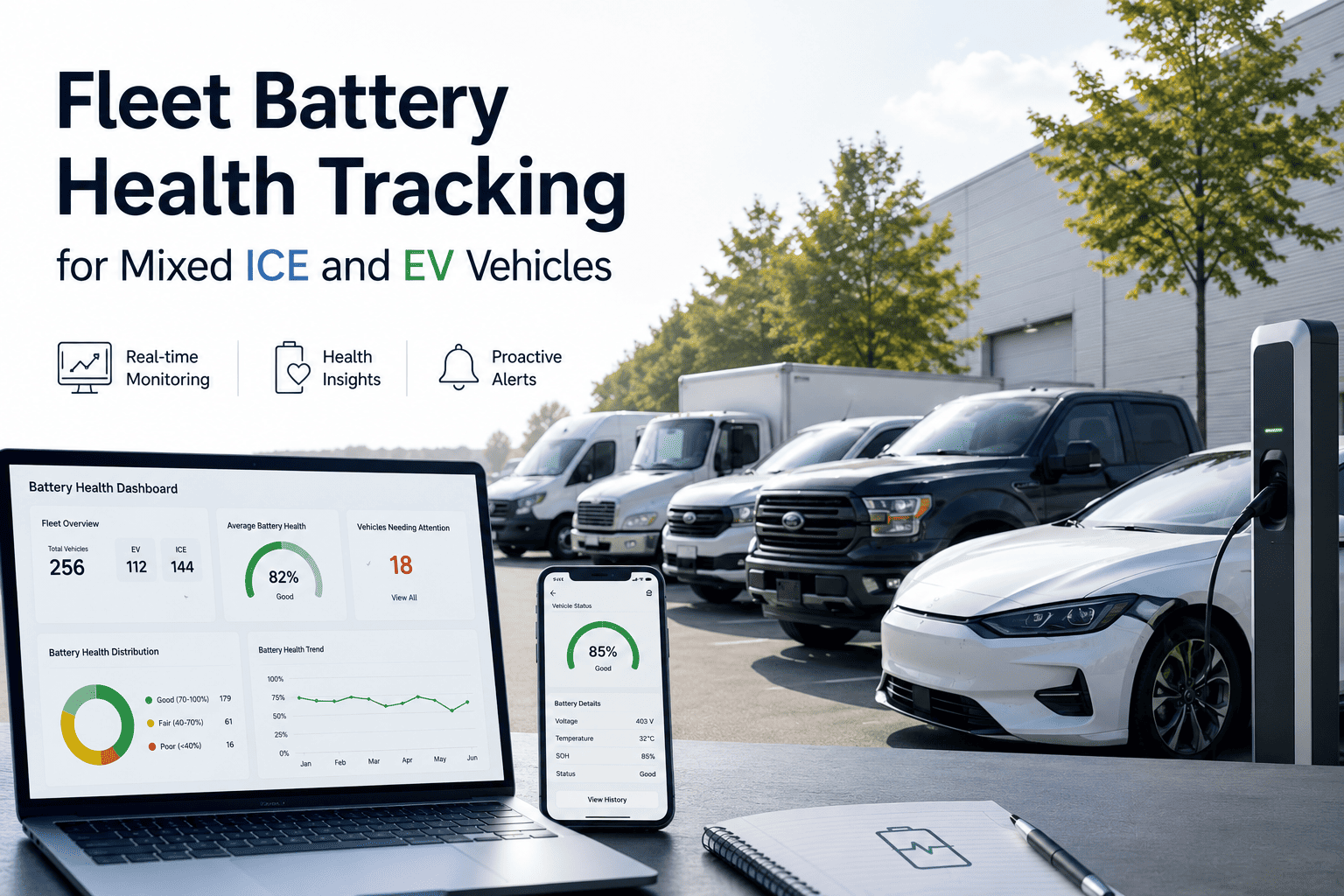
Modern EV fleet management software serves as the central nervous system, integrating OCPP-compliant charging stations, vehicle telematics, energy management systems, and dispatch platforms into unified dashboards. These systems provide real-time visibility into battery state-of-charge across the fleet, automate charging session initiation based on departure schedules, and generate compliance reports for sustainability tracking. Advanced platforms offer predictive analytics that forecast battery degradation, enabling proactive replacement planning that avoids unexpected range loss.
Cybersecurity emerges as a critical concern as fleets become increasingly connected. EV charging networks and telematics systems represent potential attack vectors for data breaches and operational disruption. Enterprise-grade platforms implement encryption, access controls, and network segmentation to protect sensitive operational data while maintaining system availability. Create your account to experience unified EV fleet management that consolidates charging, maintenance, and telematics data into a single secure platform designed for enterprise scalability.
Ready to Eliminate EV Fleet Complexity?
Join the fleets that have successfully navigated electrification challenges with Oxmaint's integrated EV management platform. From smart charging to predictive battery analytics, we provide the infrastructure intelligence you need to scale confidently.
Challenge 5: Financial Optimization & TCO Analysis
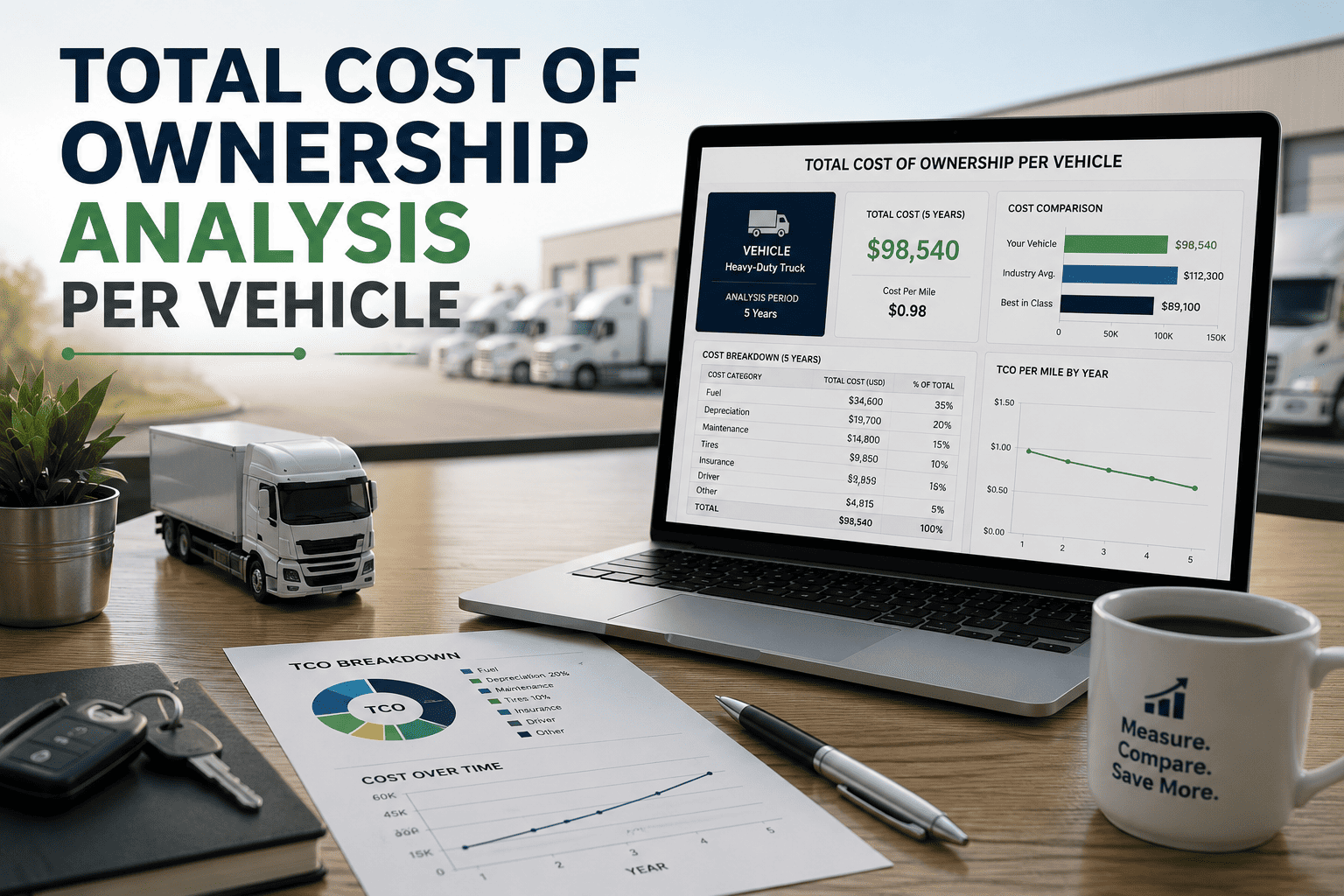
The financial case for fleet electrification has shifted dramatically. With combustion vehicle taxes now representing 28% of TCO—nearly double historical levels—and battery costs declining 90% over the past decade, electric vehicles achieve cost parity at 80,000-100,000 kilometers for light-duty applications. However, realizing these savings requires sophisticated financial modeling that accounts for incentives, residual value uncertainty, and operational adaptations.
Upfront capital requirements remain the primary barrier, with electric trucks commanding 40-60% purchase premiums over diesel equivalents. Successful fleets leverage layered incentive strategies: federal tax credits up to $40,000 for commercial EVs, state rebates ranging $5,000-$100,000 depending on vehicle class, and accelerated depreciation allowances that improve cash flow in early ownership years. When combined with 60% lower fuel costs and 40% reduced maintenance expenses, payback periods typically range 3-5 years despite higher acquisition costs.
Residual value uncertainty poses financing challenges, as lenders unfamiliar with EV technology often assume near-zero battery values at end-of-lease, inflating monthly payments. Data from early deployments now demonstrates that well-maintained EV batteries retain 70-80% capacity after 5 years, supporting stronger residual values than initially projected. Talk to our electrification specialists about TCO modeling tools that identify your optimal vehicle replacement timing and maximize available incentives for your fleet profile.
TCO Comparison: Diesel vs. Electric (Light-Duty, 4-Year Ownership)
Note: With federal tax credits ($7,500) and state incentives, EV TCO becomes favorable by Year 3. Heavy-duty trucks show 20% savings over 48 months in applicable states.
Implementation Roadmap: From Pilot to Scale
Successful electrification follows a phased approach that validates assumptions before committing capital to full-scale deployment. The most effective implementations begin with pilot programs that test real-world performance in controlled conditions, generating data that informs broader rollout decisions.
Phase 1: Pilot Deployment (Months 1-6)—Select 10-20 vehicles for high-frequency, predictable routes with return-to-base patterns. Install basic Level 2 charging infrastructure and establish baseline metrics for energy consumption, charging patterns, and driver satisfaction. This phase identifies operational adjustments needed before scaling.
Phase 2: Infrastructure Expansion (Months 7-12)—Based on pilot data, design scalable charging architecture with future growth capacity. Implement smart charging management to optimize energy costs. Expand to 50-100 vehicles across diverse route types to test operational flexibility.
Phase 3: Full Integration (Months 13-24)—Deploy enterprise-grade fleet management software integrating charging, telematics, and dispatch. Optimize routes using AI-powered algorithms that account for battery state-of-charge. Evaluate heavy-duty electrification for appropriate applications. Get started with your pilot program using Oxmaint's EV transition planning tools that guide you from initial assessment through full-scale deployment.
Transform Your Fleet Electrification Journey
Don't let infrastructure complexity and energy cost uncertainty stall your sustainability goals. The tools for seamless EV fleet integration are available now—smart charging, predictive analytics, and unified management platforms that turn electrification challenges into competitive advantages.
Frequently Asked Questions
What is the biggest challenge in electric vehicle fleet integration?
Charging infrastructure deployment represents the most significant hurdle, requiring 12-18 months for utility coordination, permitting, and installation. The "DIY trap"—attempting independent infrastructure management—leads to unexpected demand charges and reliability issues. Successful fleets partner with specialized providers who navigate utility relationships and design scalable systems that grow with vehicle adoption.
How do demand charges impact EV fleet operating costs?
Demand charges based on peak 15-minute power usage can constitute 30-50% of total electricity costs. A single instance of simultaneous fast charging can trigger monthly fees persisting for the entire billing cycle. Dynamic load management software prevents these spikes by automatically throttling charger outputs when approaching capacity limits, typically reducing energy costs by 40-60%.
What range reduction should fleets expect in extreme weather?
Cold temperatures reduce EV range by 25-50% depending on conditions, as battery chemistry slows and cabin heating draws power. Hot weather extends charging times and degrades efficiency. Successful fleets implement preconditioning (warming cabins while plugged in), garage parking in climate-controlled facilities, and maintain 10% backup vehicle reserves for extreme weather days.
How long does it take to achieve ROI on EV fleet investments?
With available incentives and smart charging optimization, light-duty EVs typically achieve payback in 3-4 years despite 40-60% higher upfront costs. Heavy-duty trucks show 20% TCO savings over 48 months in states with favorable electricity rates. The key is maximizing off-peak charging and leveraging federal tax credits up to $40,000 for commercial vehicles.
What software capabilities are essential for EV fleet management?
Critical features include OCPP-compliant charging station integration for remote session control, real-time battery state-of-charge monitoring across all vehicles, dynamic load management to prevent demand charge spikes, and AI-powered route optimization that factors in weather, terrain, and charging station availability. Unified platforms that consolidate these functions reduce administrative overhead by 80% compared to siloed systems.
Should fleets choose Level 2 or DC fast charging for depot infrastructure?
Level 2 charging (7-19 kW) is optimal for overnight depot charging with 8-12 hour dwell times, costing $2,000-$5,000 per port with lower electrical requirements. DC fast charging (50-350 kW) is essential for mid-shift charging or high-utilization fleets with short turnarounds, but costs $50,000-$150,000 per station and requires significant utility upgrades. Most successful deployments use mixed strategies: Level 2 for overnight fills and limited DC fast charging for opportunity charging.
Electric vehicle fleet integration represents one of the most significant operational transformations in modern fleet management. While challenges surrounding infrastructure, energy costs, and operational adaptation are substantial, they are surmountable with systematic planning and specialized technology. The fleets thriving in 2025 are those that approached electrification not as a vehicle replacement exercise, but as a comprehensive infrastructure and energy management strategy. With combustion taxes rising and battery costs declining, the economic window for electrification is open—success depends on executing with the precision and tools that match the complexity of the challenge.