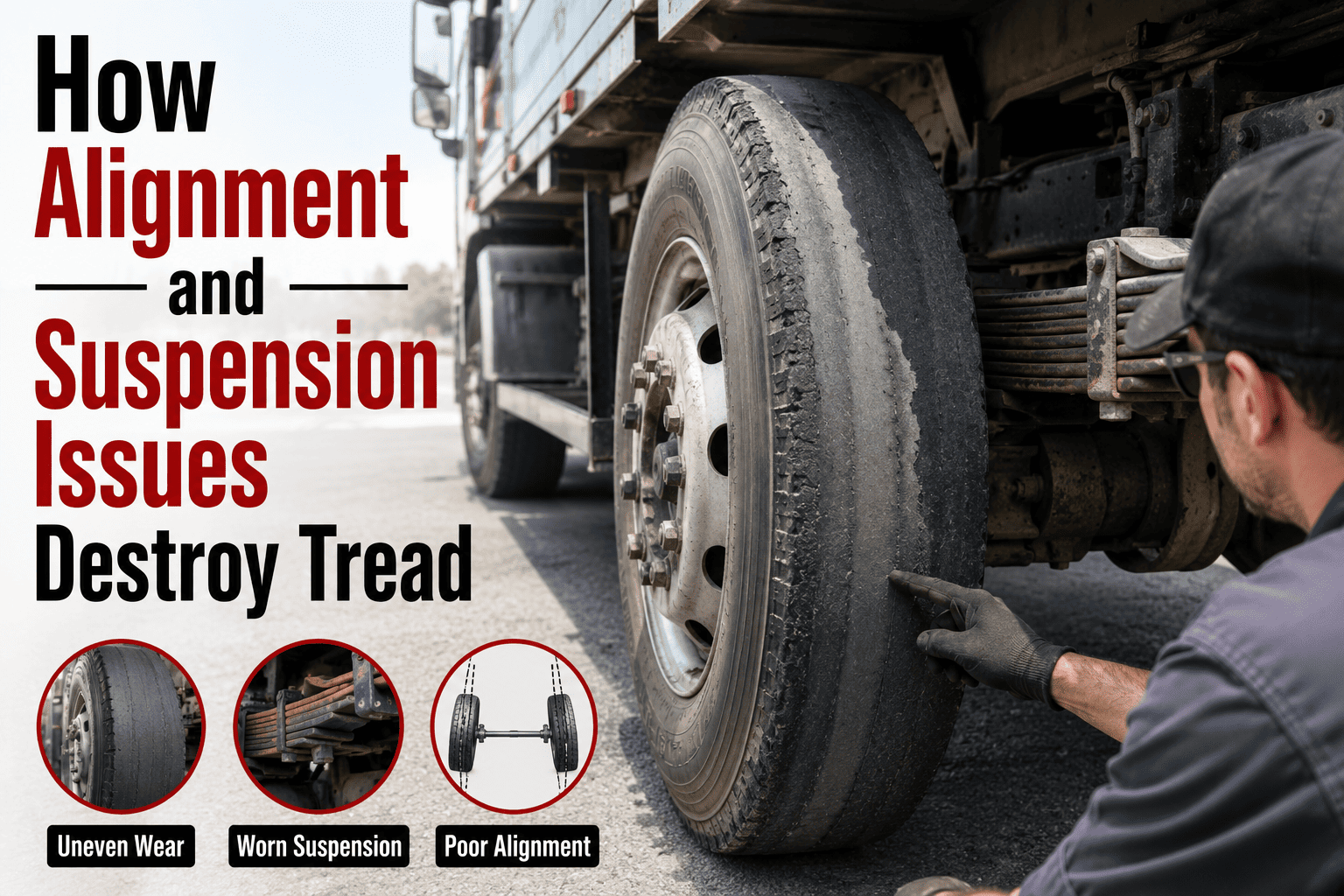
A tire that wears out in eight months instead of eighteen is rarely a tire problem. In most fleets, tread destruction traces back to a suspension component that shifted or an alignment angle that drifted out of spec weeks before anyone noticed the tread. A toe misalignment of just 0.3 degrees can cut tire life by roughly 25%, and a single misaligned truck can burn through $3,000 to $6,000 in extra tire spend a year. The tread pattern itself is the earliest warning sign, and reading it correctly is what separates fleets that catch drift early from fleets that replace tires on a loop. Tools like OxMaint turn that pattern-reading into a scheduled, trackable process instead of a guess.
How Alignment and Suspension Issues Destroy Tread
Every wear pattern on a tire is a diagnostic clue. This guide breaks down what each pattern means, what it costs when ignored, and how a structured inspection schedule catches the drift before it becomes a full tire replacement.
Read the Tread: What Each Wear Pattern Is Telling You
Technicians who can read a wear pattern on sight catch root causes before a second tire fails the same way. Here is the diagnostic map every fleet maintenance team should have on the shop wall.
The crown of the tire carries most of the load, wearing a strip down the middle while the shoulders stay fuller. Check inflation against the load chart, not a flat guess.
Both shoulders wear faster than the center because the tire is riding on its edges. Left uncorrected, underinflation alone can cut tire life by 10 to 15%.
One shoulder wears noticeably faster than the other across the whole tire face. This is a camber angle problem, not a rotation problem — rotating will not fix it.
Tread blocks feel sharp on one edge and rounded on the other when you run a hand across the tire. This is the clearest sign of a toe angle that needs correcting.
Dips and high spots appear around the tire circumference. This points to worn shocks, struts, or bushings that are letting the tire bounce instead of tracking flat.
A diagonal scrub pattern across drive tires signals the drive axle itself is out of true, not just the steer axle. This one needs a full geometry check, not a spot fix.
Alignment Drift vs. Suspension Wear: They Are Not the Same Problem
Fleet managers often treat alignment and suspension as one line item. They compound each other, but they fail differently, get caught differently, and cost differently when missed.
| Comparison Point | Alignment Drift | Suspension Wear |
|---|---|---|
| How It Starts | Pothole hits, curb strikes, normal mileage drift on toe and camber angles | Gradual fatigue of shocks, struts, bushings, and control arms over time |
| First Visible Sign | Feathering or one-side shoulder wear | Cupping, scalloping, or a rougher ride the driver reports |
| Detection Method | Alignment rack reading against manufacturer spec angles | Physical inspection of shocks, struts, and bushings for play or leaks |
| Typical Fix Cost | $75 to $400 per alignment service | Varies by component — struts and control arms cost more than an alignment |
| Cost If Ignored | Accelerated tire wear and higher fuel burn from rolling resistance | Increased stopping distance and accelerated wear on every downstream part |
| Recommended Check Interval | Every PM cycle plus after any impact event | Every PM cycle plus annually for a full suspension inspection |
Stop Guessing Which Truck Needs an Alignment Check
OxMaint lets your team log wear patterns against each vehicle, trigger alignment work orders automatically on a mileage or event basis, and see which units are trending toward premature tire replacement before it happens.
The Compounding Cost of Ignoring Early Wear Signs
Misalignment rarely stays a single-line-item cost. Each month it goes uncorrected, it pulls more systems into the failure.
A misaligned angle concentrates load on part of the tread instead of spreading it evenly, cutting expected tire life well before the scheduled replacement point.
The engine works harder to push a tire that is not tracking straight, and fuel economy drops by 3 to 5% on affected units without any obvious dashboard warning.
Tie rods, king pins, ball joints, and wheel bearings carry the asymmetric load, wearing faster than their rated service life.
Uneven steer tire wear reduces braking effectiveness, and severe cases give DOT inspectors grounds to place the vehicle out of service on the spot.
Frequently Asked Questions
How often should fleet vehicles get an alignment check?
Can bad suspension parts cause uneven tire wear even with correct alignment?
What is the fastest way to tell alignment wear from suspension wear?
How much does ignoring misalignment actually cost a fleet?
Can maintenance software actually prevent alignment-related tire loss?
Catch the Drift Before It Costs You a Tire
OxMaint schedules alignment and suspension checks by mileage and event, logs wear patterns against every vehicle, and flags units trending toward premature tire replacement — so tread loss stops being a surprise line item.