Electric fleet vehicles don't wear tires the way diesel and gasoline trucks do, and most maintenance teams find that out the expensive way — through tires pulled at 25,000 miles instead of 50,000. Regenerative braking shifts stress toward the front axle, and instant torque loads the tread in ways combustion vehicles never did, so the rotation schedule that worked for years quietly stops working. The wear itself is silent — no warning light, no noise, just thinner tread every week until a stack of unplanned replacement invoices lands on a fleet manager's desk. Fleets that adjust their tire program to match EV behavior instead of copying their old ICE schedule see meaningfully longer tread life and fewer surprise removals. This guide breaks down exactly how regenerative braking reshapes tire wear and where a platform like OxMaint fits into keeping tread life on schedule.
How Regenerative Braking Changes EV Tire Wear
Electric vehicles put torque and braking force through tires in a completely different pattern than combustion vehicles. Here's the science behind it, what it costs fleets that ignore it, and the maintenance program that keeps EV tread life on track.
The Forces Behind EV Tire Wear
EV tires aren't wearing out because they're worse — they're absorbing forces that combustion tires never had to handle. Four mechanical factors combine to create a wear pattern fleet teams need to plan around.
Electric motors deliver full torque the moment the accelerator is pressed, with no gradual power band. That immediate load scrubs tread on every launch, especially on front-wheel-drive layouts.
Battery packs add several hundred kilograms over a comparable combustion vehicle. That extra load presses tread harder into the road on every mile, not just under acceleration.
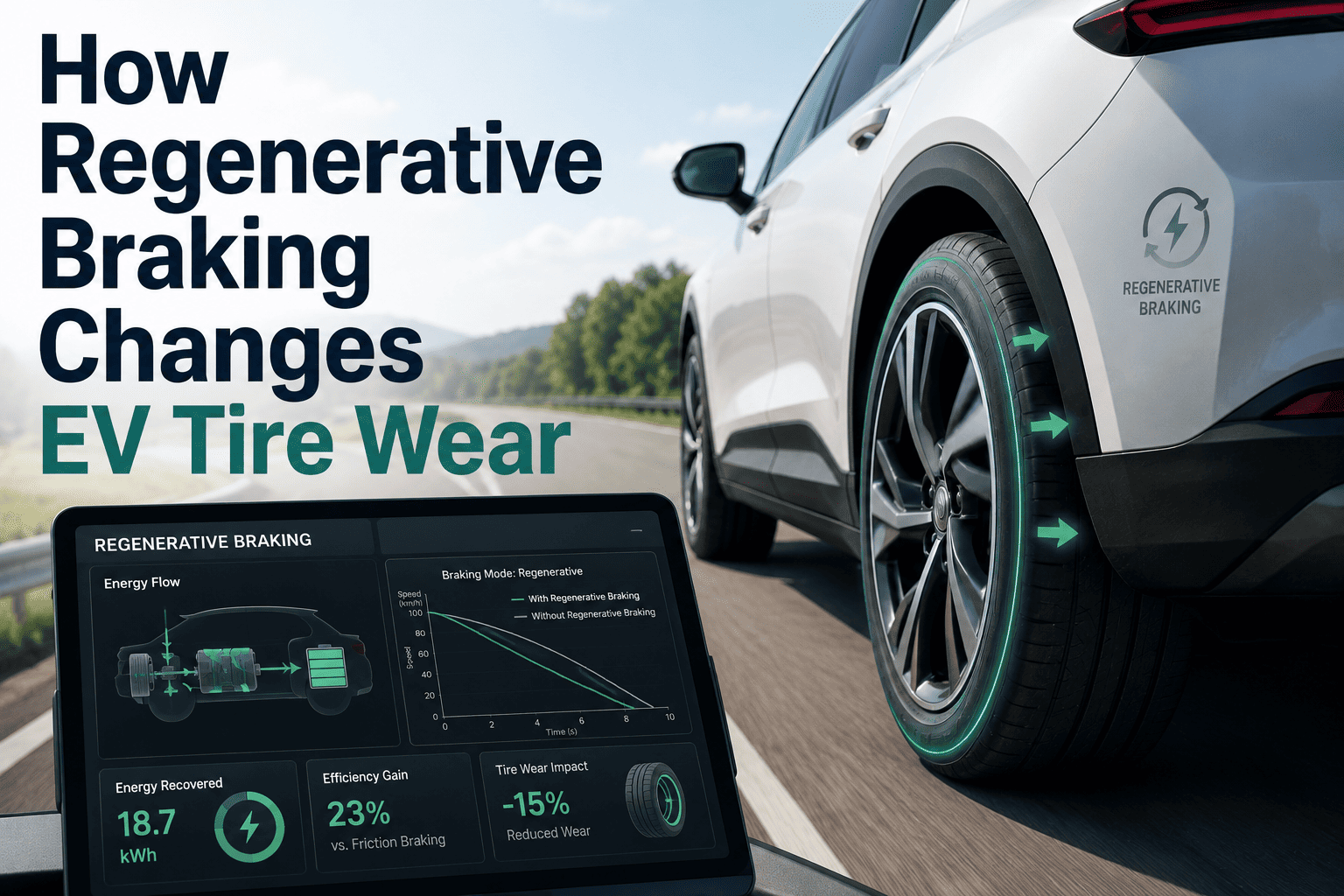
Regen braking uses the motor, not friction pads, to slow the vehicle. That force is applied through the drive axle, concentrating wear on the front tires far more than traditional braking does.
Drivers who lean on strong regen settings for constant deceleration repeat that front-axle load hundreds of times a day, compounding scrub wear well beyond occasional braking.
Most EV tires use softer, low-resistance compounds to protect range. That efficiency trade-off comes at the cost of tread longevity compared to standard commercial tires.
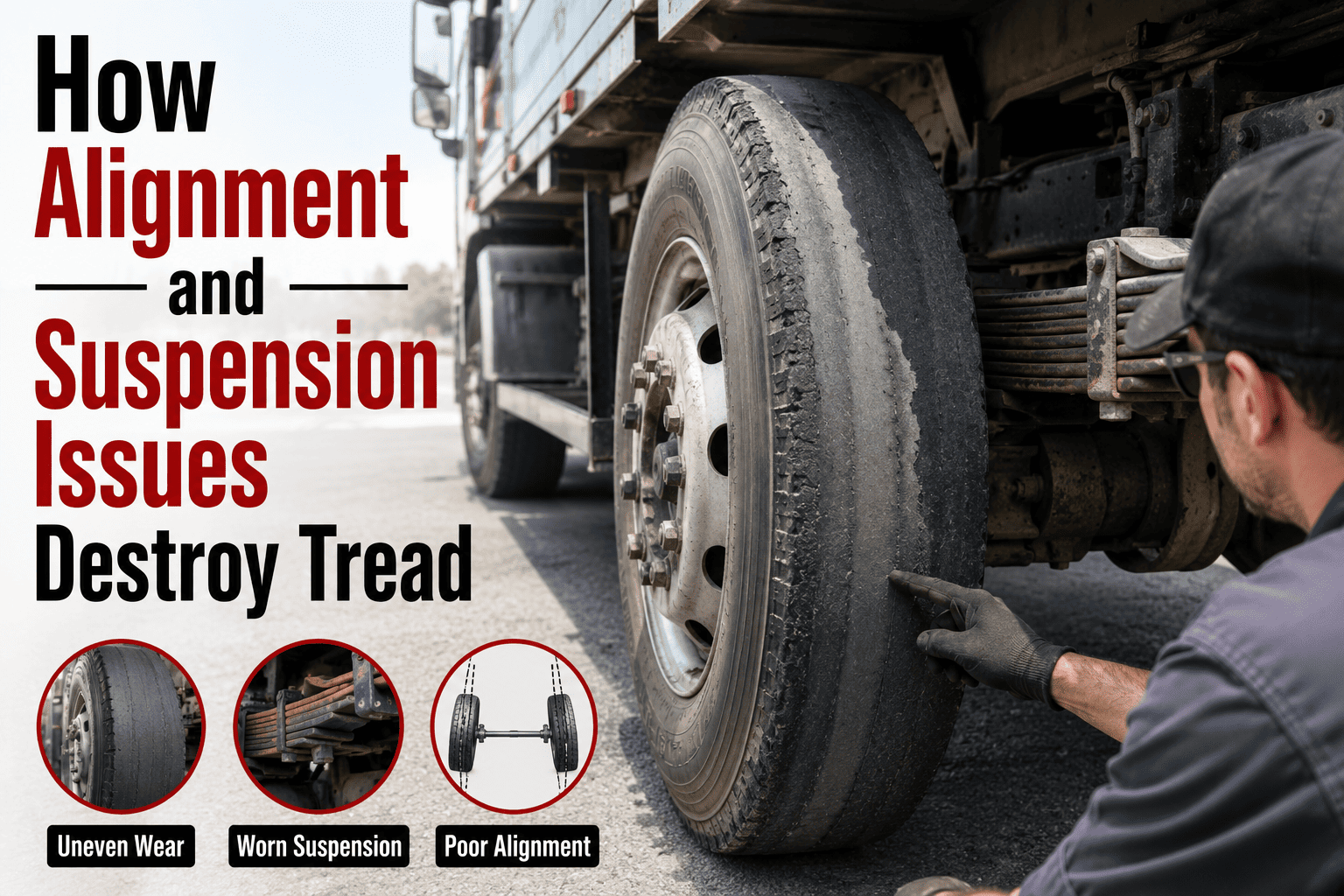
A misalignment that would cause slow, even wear on a combustion vehicle gets amplified by EV torque. The same defect can cut tread life by a third or more on an electric vehicle.
Front-Axle Wear Bias — Visualized
Regenerative braking routes deceleration force through the drive motor, which on most single-motor EVs means the front axle absorbs both acceleration torque and braking load. The result is a wear split that looks nothing like a combustion vehicle's tires.
On single-motor front-drive EVs, front tires commonly need replacement well before rears — a pattern fleet teams should track per axle, not per vehicle.
EV vs Combustion Vehicle Tire Wear — Side by Side
Here's how the core tire maintenance variables compare between electric and combustion fleet vehicles.
| Maintenance Variable | Combustion Vehicle | Electric Vehicle |
|---|---|---|
| Average Replacement Mileage | 50,000+ miles | 25,000–35,000 miles |
| Primary Wear Axle | Fairly even, front and rear | Front-heavy on most models |
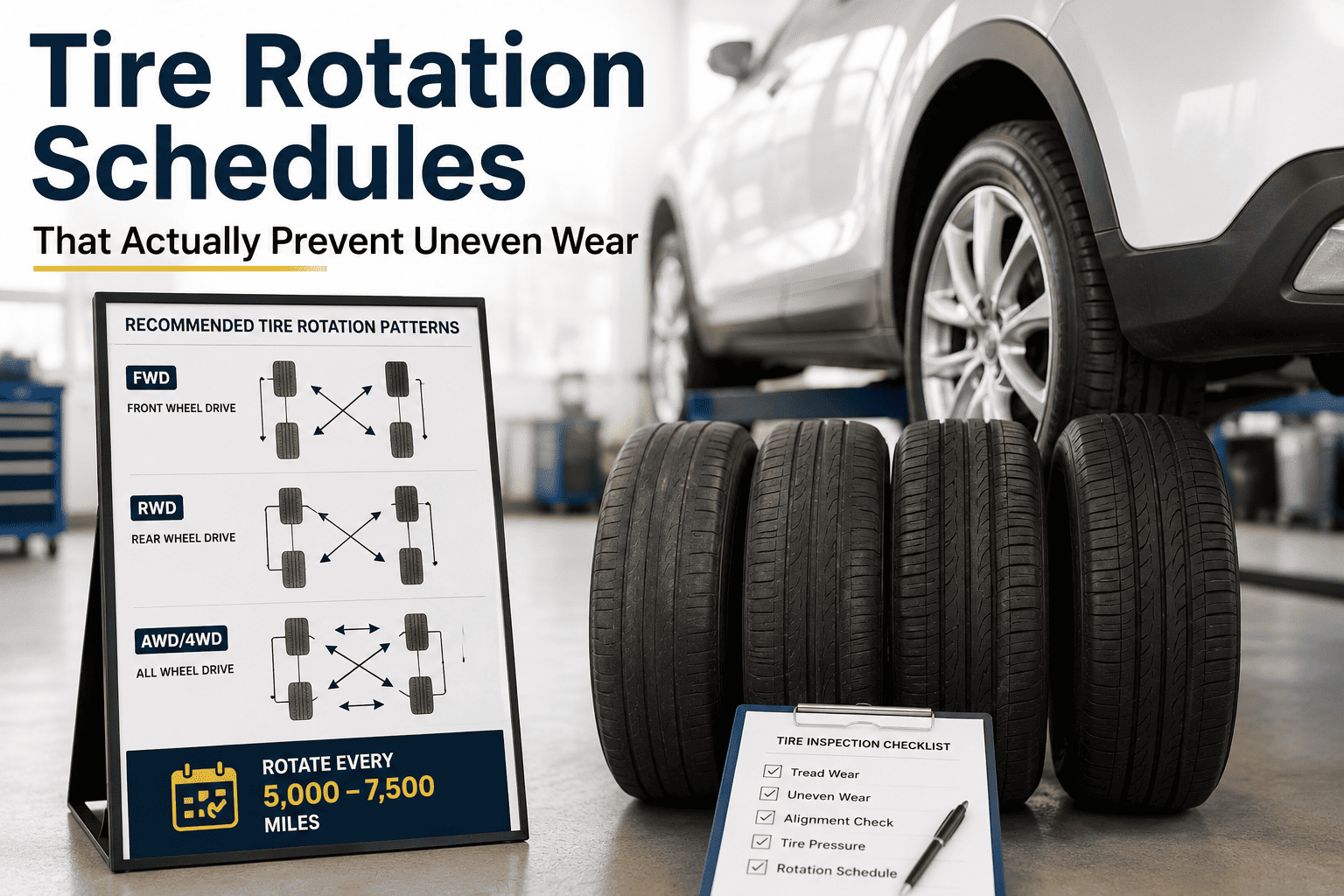
| Recommended Rotation Interval | 6,000–8,000 miles | 5,000 miles |
| Impact of Misalignment | Gradual, moderate wear increase | Up to 30–50% tread life loss |
| Main Wear Driver | Friction braking, mileage | Torque, weight, regen braking |
| Early Warning Visibility | Noticeable brake and tire noise | Silent until inspection or blowout |
Stop Finding Out About Tire Wear After It's Expensive
OxMaint tracks tread depth, alignment schedules, and axle-level wear trends for every EV in your fleet — so replacements happen on your terms, not on the side of the road.
The EV Tire Maintenance Playbook for Fleets
Extending EV tread life isn't about buying better tires — it's about running a maintenance program built around how electric vehicles actually wear them.
Shorter rotation intervals redistribute front-axle scrub wear before it becomes irreversible, keeping all four tires aging at closer to the same rate.
Because EV torque amplifies the effect of misalignment, a pothole or curb strike that was harmless on an ICE vehicle can cost a third of an EV tire's life if left unchecked.
Front and rear tires wear at different rates on most EVs. Logging depth separately catches early front-axle wear before it forces an unplanned full-set replacement.
Drivers using maximum one-pedal regen put more repeated front-axle load on tires than drivers using moderate settings. A consistent policy reduces wear variance across the fleet.
Since EV tires wear on a tighter mileage window than combustion tires, manual tracking easily misses the replacement point. Automated alerts close that gap before a tire fails on the road.
Frequently Asked Questions
Why do EV tires wear out faster than gas vehicle tires?
Does regenerative braking increase or reduce tire wear?
How often should fleets rotate tires on electric vehicles?
Can poor alignment really cut EV tire life in half?
How can fleet software help manage EV tire wear?
Build an EV Tire Program That Matches How EVs Actually Wear
OxMaint gives fleet teams axle-level tread tracking, automated rotation scheduling, and alignment alerts built specifically for electric vehicle wear patterns — so tires get replaced on schedule, not on the shoulder of the highway.