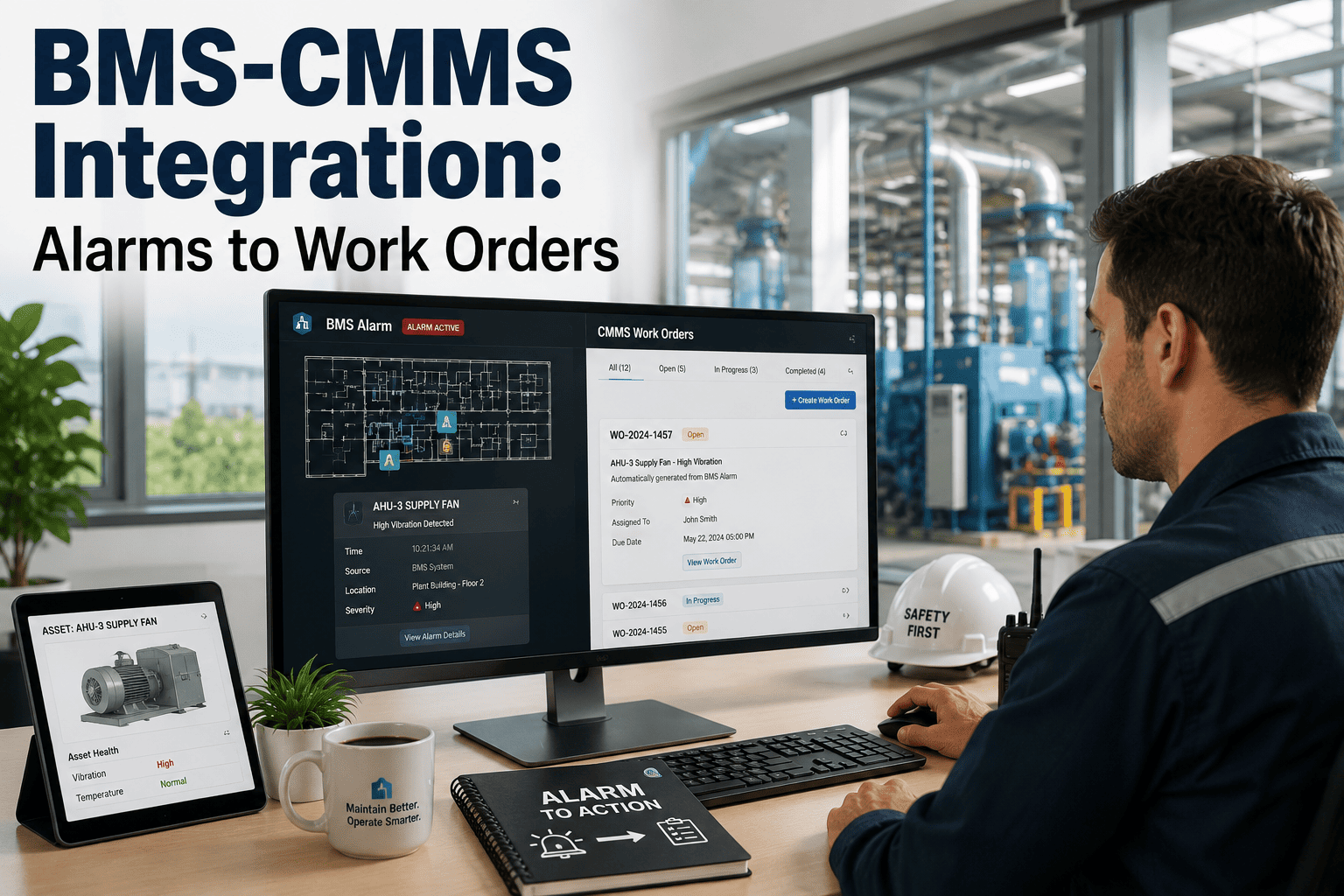
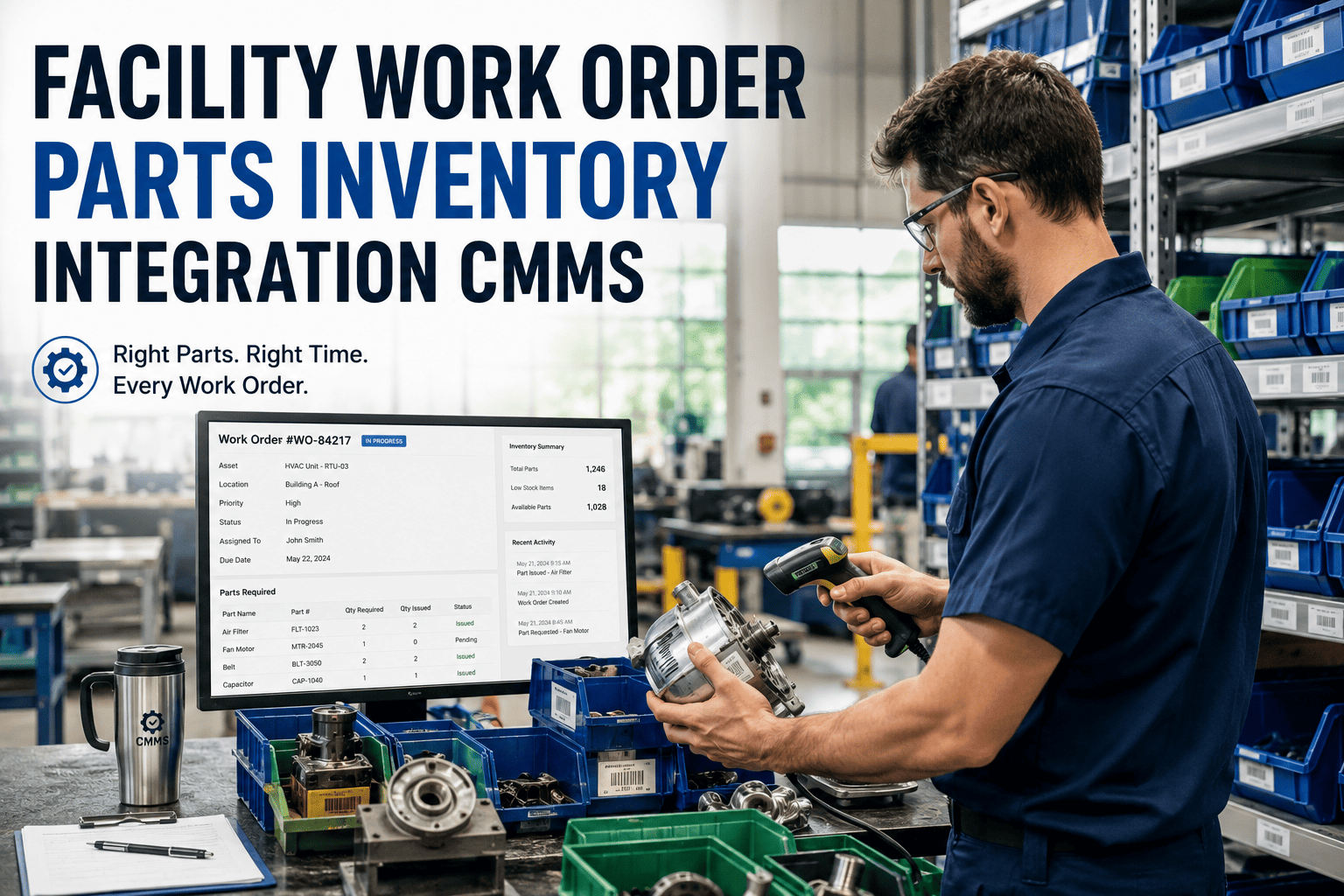
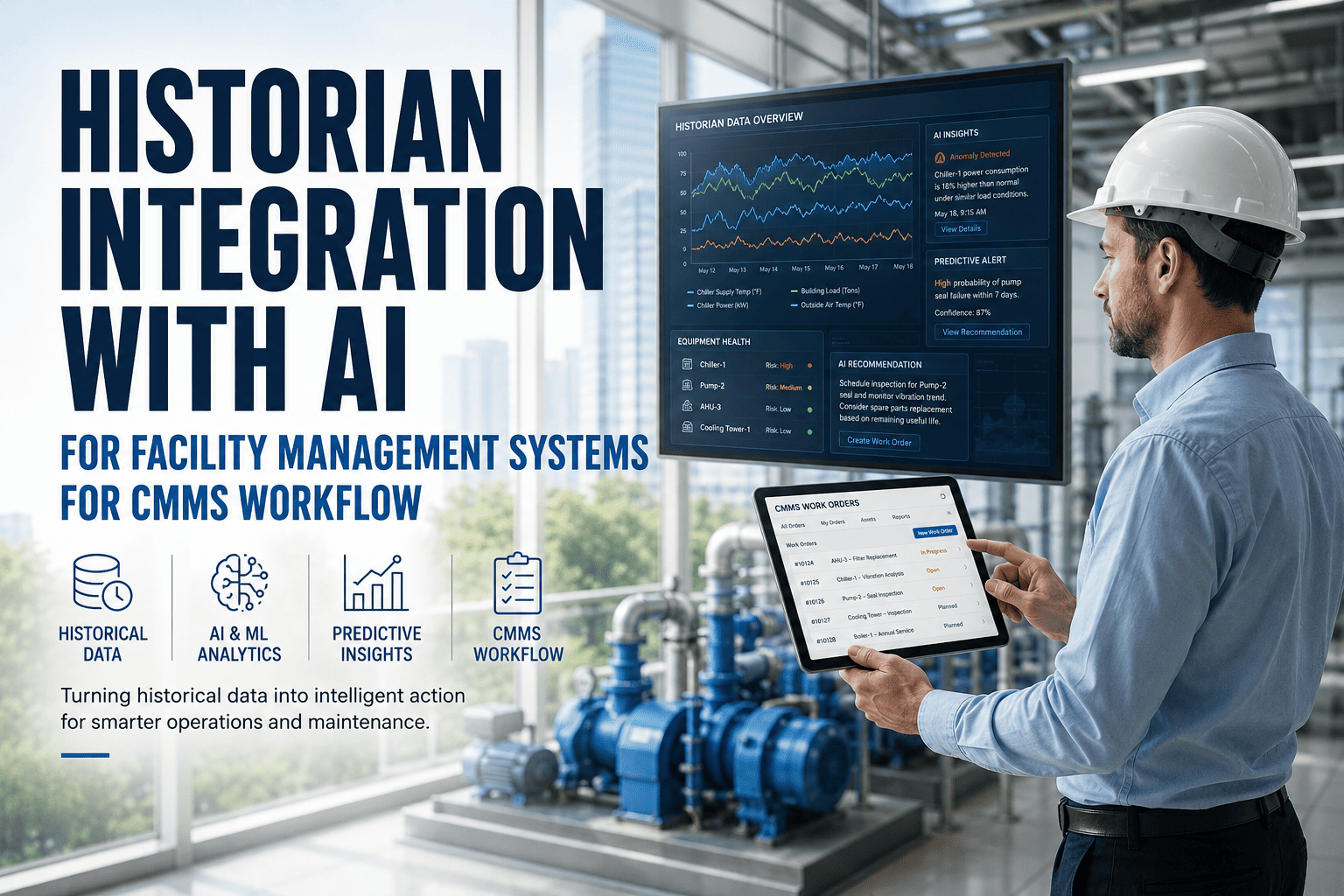
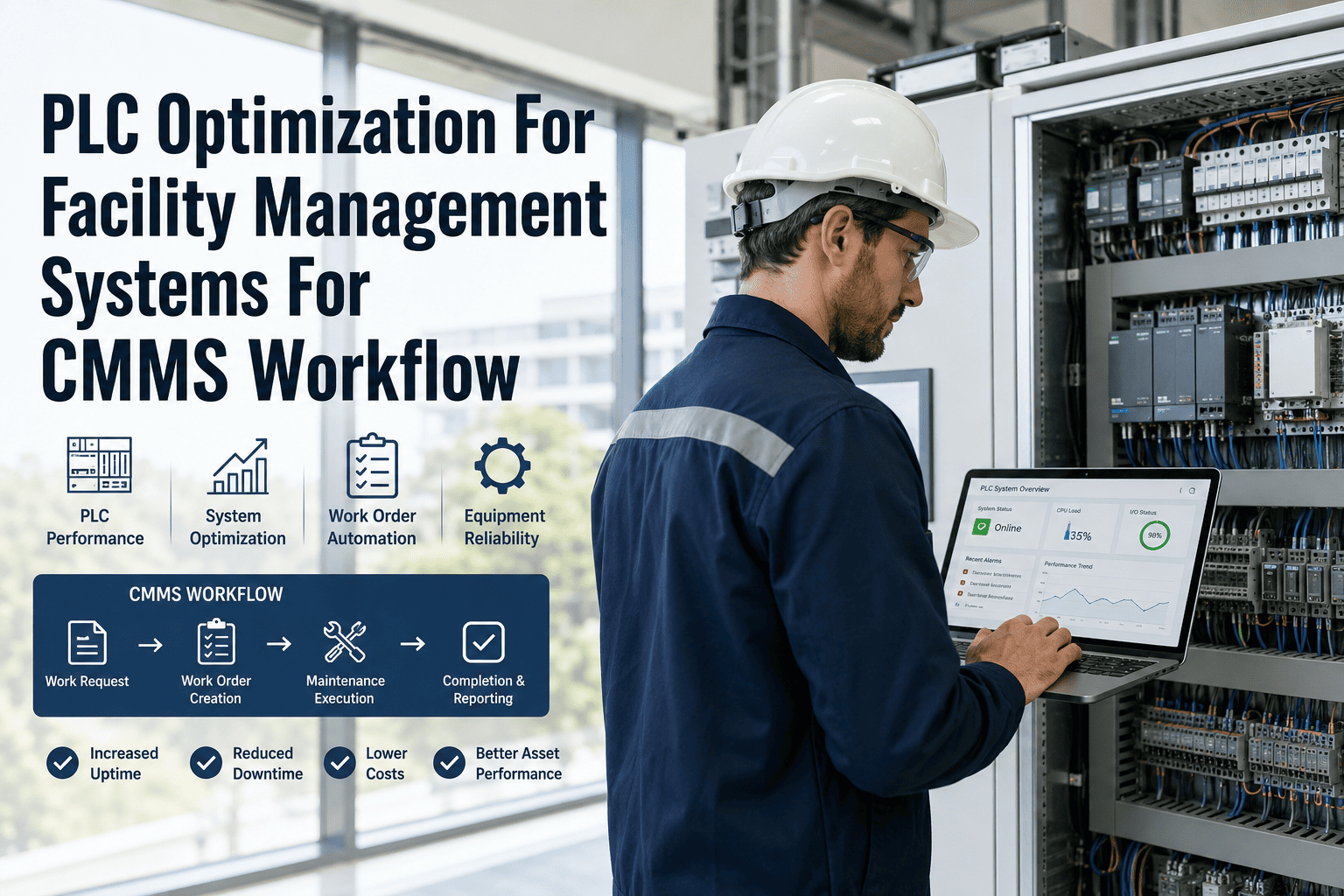
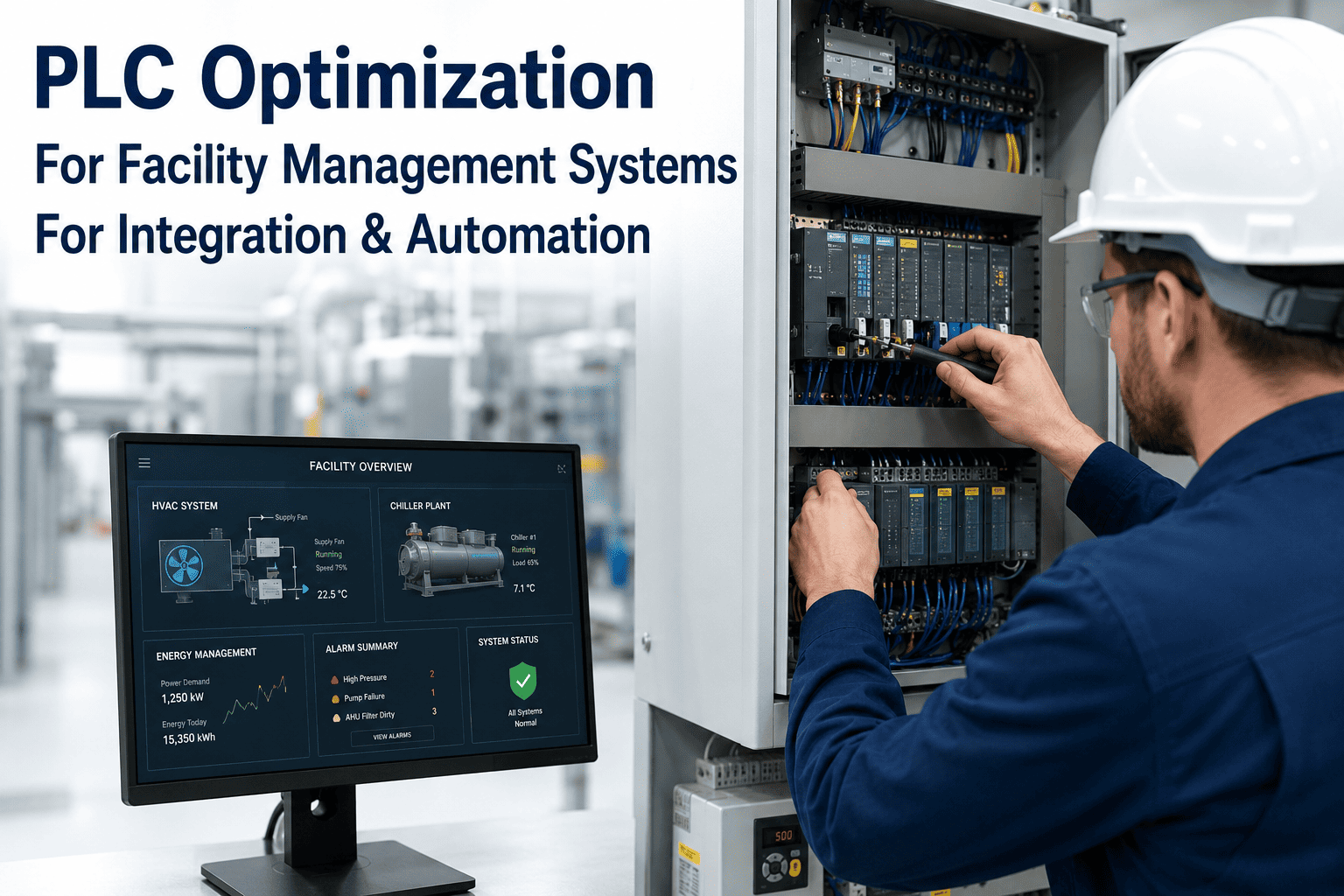
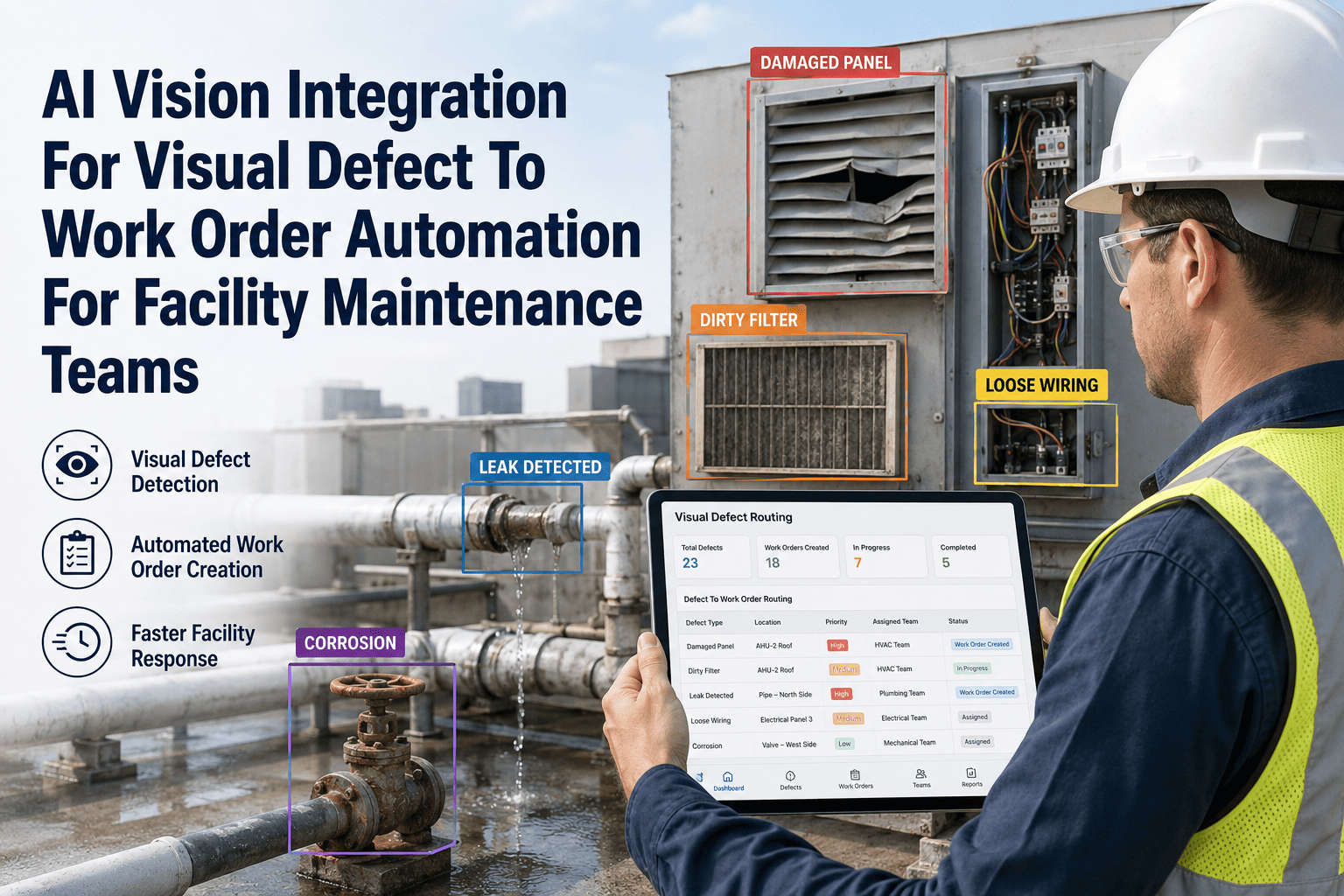
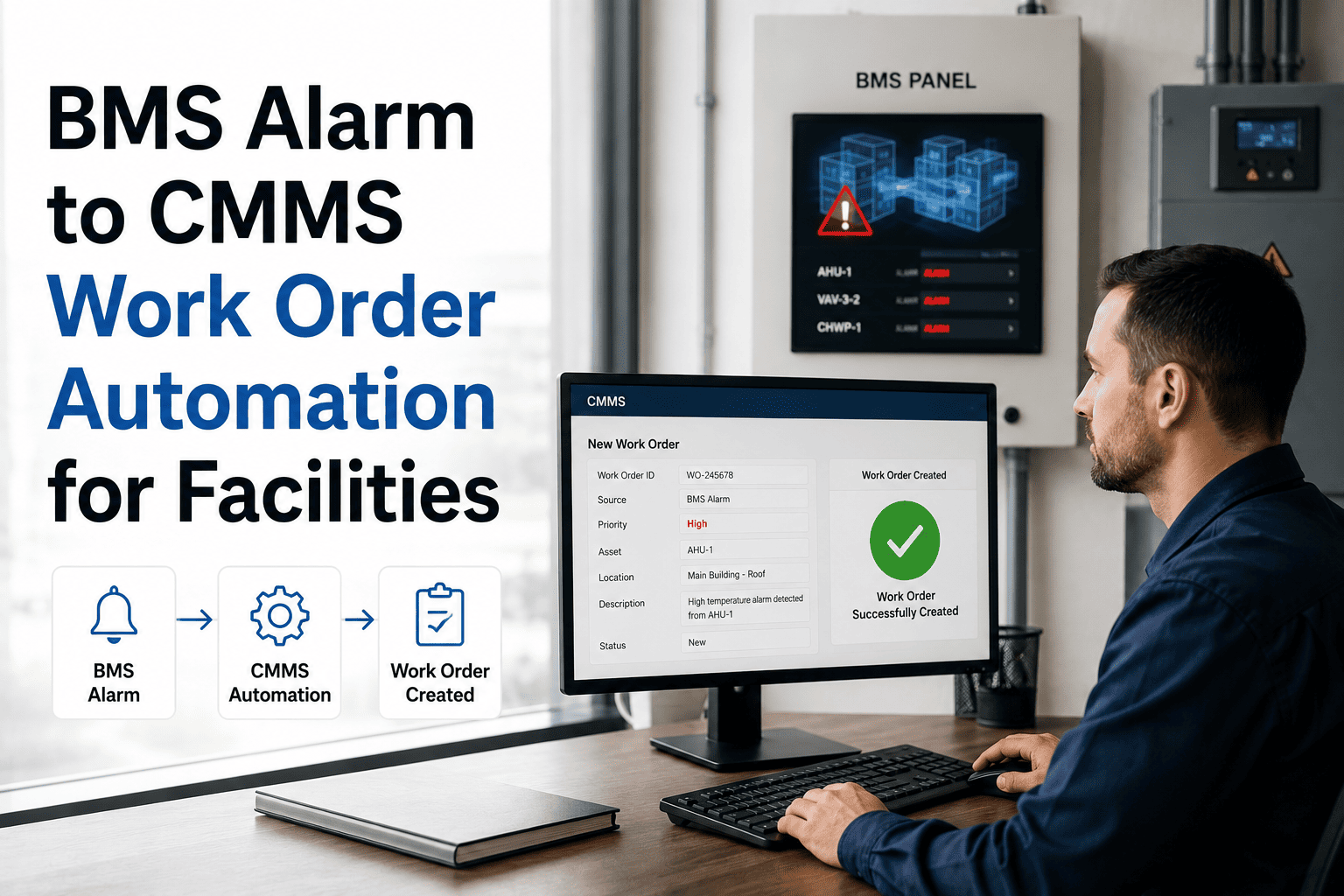
Programmable Logic Controllers quietly govern the mechanical heartbeat of every modern facility — controlling HVAC sequences, pump cycles, lighting zones, access systems, and dozens of other critical building functions. Yet in most facility maintenance programs, PLC performance data sits isolated in control panels and SCADA screens, never reaching the maintenance dashboard where technicians plan repairs and track asset health. OxMaint bridges that gap by connecting PLC optimization signals to facility management workflows — so when a PLC alarm fires, a threshold is exceeded, or a sequence anomaly is detected, a maintenance work order is created, assigned, and tracked automatically, without a technician needing to notice it on a panel display at the right moment.
73%
of facility equipment failures are preceded by detectable PLC alarm patterns
4.2x
faster mean-time-to-repair when alarms auto-trigger work orders vs. manual notice
38%
average reduction in unplanned downtime after CMMS-PLC integration deployment
FACILITY MANAGEMENT INTELLIGENCE
Turn PLC Signals Into Maintenance Actions — Automatically
OxMaint connects your PLC and BMS infrastructure to a maintenance dashboard that creates, assigns, and tracks repairs from every alarm signal your facility generates.
Building Systems OxMaint Connects to PLC Optimization Workflows
HVAC
Air Handling Units
PLC controls supply air temperature, damper positions, and fan speed. OxMaint receives deviation alerts and creates filter checks, belt inspections, or coil cleaning work orders based on configurable thresholds.
PUMPS
Chilled Water & Condenser Loops
Flow rate, pressure differential, and runtime hour signals from pump PLCs trigger PM schedules for seal inspection, bearing lubrication, and impeller clearance checks before cavitation or seal failure occurs.
POWER
Electrical Distribution & UPS
Transfer switch events, load imbalance signals, and UPS battery state-of-health readings push directly into OxMaint — generating immediate corrective work orders before critical power interruptions occur.
ACCESS
Door Controllers & Elevators
Door hold-open faults, elevator motor temperature alarms, and access control panel errors create maintenance notifications that route to the right vendor or internal technician automatically.
FIRE
Fire & Life Safety Systems
Supervisory signals, low battery alerts, and suppression system trouble codes create compliance work orders that are tracked to completion with technician sign-off for regulatory audit trails.
WATER
Domestic Water & Cooling Towers
Conductivity levels, blowdown cycle counts, and chemical dosing pump runtime data trigger water treatment PM work orders — keeping Legionella and scale risk within compliance boundaries.
How PLC Optimization Connects to OxMaint — Integration Architecture
FACILITY LAYER
PLC / RTU
BAS / SCADA
BACnet / Modbus / OPC-UA
OXMAINT LAYER
Work Order Engine
Asset Health Dashboard
PM Schedule & Alerts
PLC Signal-to-Work-Order Rules — What You Can Configure in OxMaint
| PLC Signal / Condition |
OxMaint Action |
Assigned To |
Priority |
| Supply air temp deviation > 3°F for 15 min |
Create HVAC inspection WO |
HVAC Technician |
High |
| Pump runtime > 8,760 hours since last service |
Trigger bearing replacement PM |
Mechanical Team |
Standard |
| UPS battery below 80% state of health |
Create battery replacement WO |
Electrical Team |
Critical |
| Fire panel supervisory signal active |
Create compliance inspection WO |
Fire Safety Vendor |
Critical |
| Cooling tower conductivity > 2,500 µS/cm |
Trigger blowdown & water treatment WO |
Water Treatment |
High |
| Elevator door cycle fault logged 3x in 24 hrs |
Create elevator service call WO |
Elevator Contractor |
High |
EXPERT REVIEW
David Osei, PE, CEM
Certified Energy Manager & Facility Controls Engineer — 22 Years BAS/PLC Integration
PLC optimization in isolation is a control engineering problem. PLC optimization connected to a CMMS is a facility reliability strategy. The two disciplines have historically operated in silos — BAS engineers maintained the control layer, maintenance teams responded to whatever they noticed. Integrating OxMaint with the control layer closes that feedback loop. When a PLC trend shows a chiller approaching surge conditions, your maintenance team knows about it the same day — not after the surge trip takes the system offline and fills a building with warm tenants.
Connect Your Facility PLCs to One Maintenance Dashboard
See how OxMaint's integration layer converts BAS signals into real work orders — live in 30 minutes.
Frequently Asked Questions
What protocols does OxMaint support for PLC and BAS integration?
OxMaint integrates with facility control systems via REST API, webhooks, and MQTT broker connections. Most modern BAS platforms (Siemens Desigo, Johnson Controls Metasys, Schneider EcoStruxure, Honeywell Niagara) can push alarm and trend data via API to OxMaint without hardware changes. For older PLC environments using Modbus or BACnet, an edge gateway or middleware layer converts the protocol to REST. Our integration team scopes this during onboarding —
book a demo to start the assessment.
Can we set different alarm thresholds for different PLC systems or building zones?
Yes. OxMaint's rule engine lets you define threshold conditions per asset type, zone, or system — so a critical data center UPS alarm creates an immediate work order while a low-priority HVAC supervisory signal queues for the next day. Rules are configured without coding through the
OxMaint dashboard, and can be updated any time as your threshold understanding evolves. You can also set time-of-day filters, so night-mode alarm conditions differ from occupied-hours rules.
How does OxMaint prevent alarm flooding from PLC systems with high-frequency alerts?
OxMaint applies alarm deduplication and grouping logic — so if a chilled water pump generates 40 alarms in a 10-minute window, the system creates one grouped work order rather than 40 individual tickets. You configure suppression windows, consecutive-alarm thresholds, and priority escalation rules per system. This keeps your maintenance queue clean and your technicians focused on real events rather than alarm storms that don't represent new failure modes.
Does OxMaint provide reports showing which PLC systems generate the most maintenance work?
Yes. OxMaint's analytics module tracks work order volume, mean-time-to-repair, and asset downtime by source system — so you can see whether HVAC PLCs, electrical panels, or water systems are driving most of your corrective maintenance load. These reports give facility managers and engineering teams the data to justify control system upgrades, capital replacement planning, or increased PM frequency on high-alarm assets. Reports export to PDF or Excel for board-level presentation.