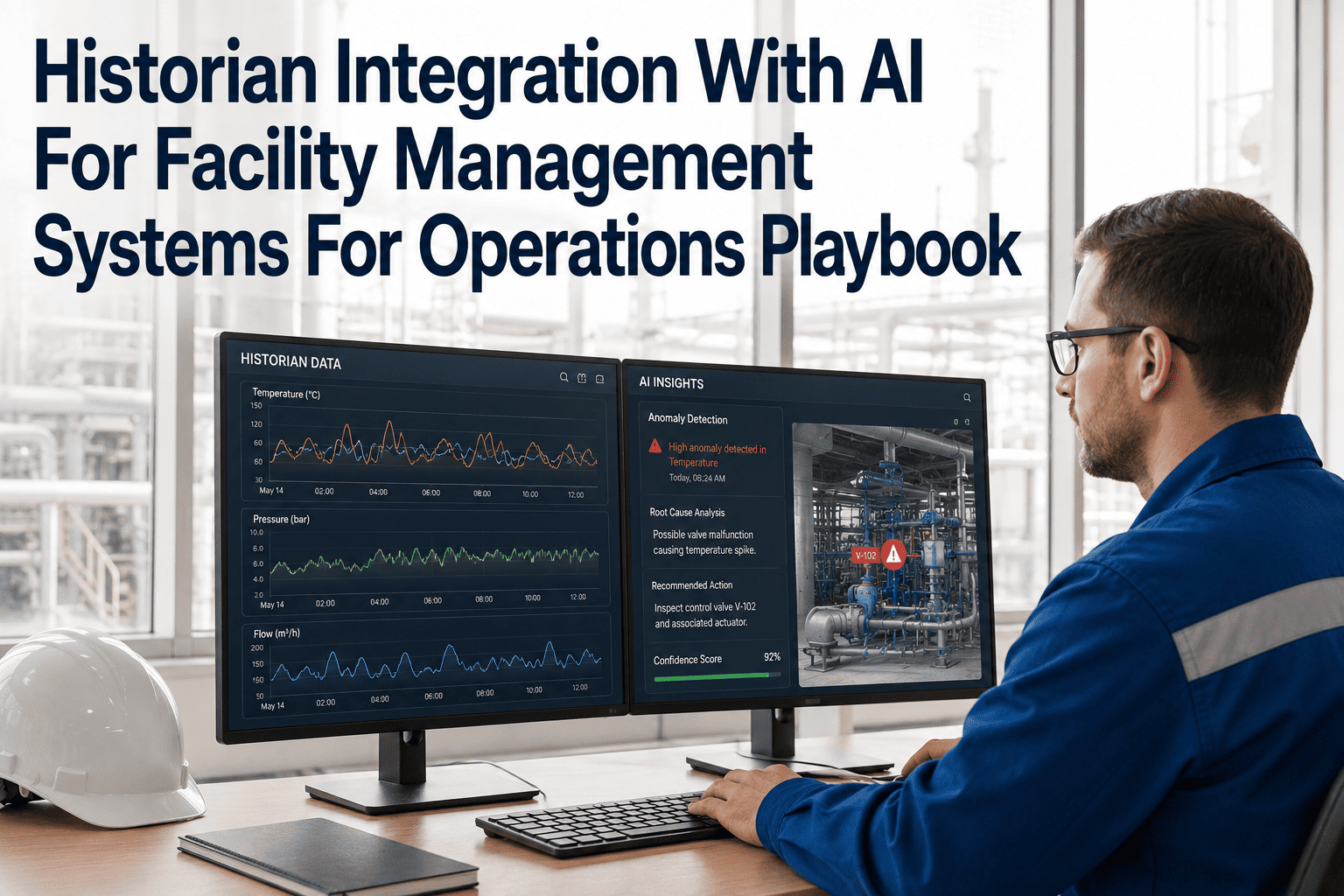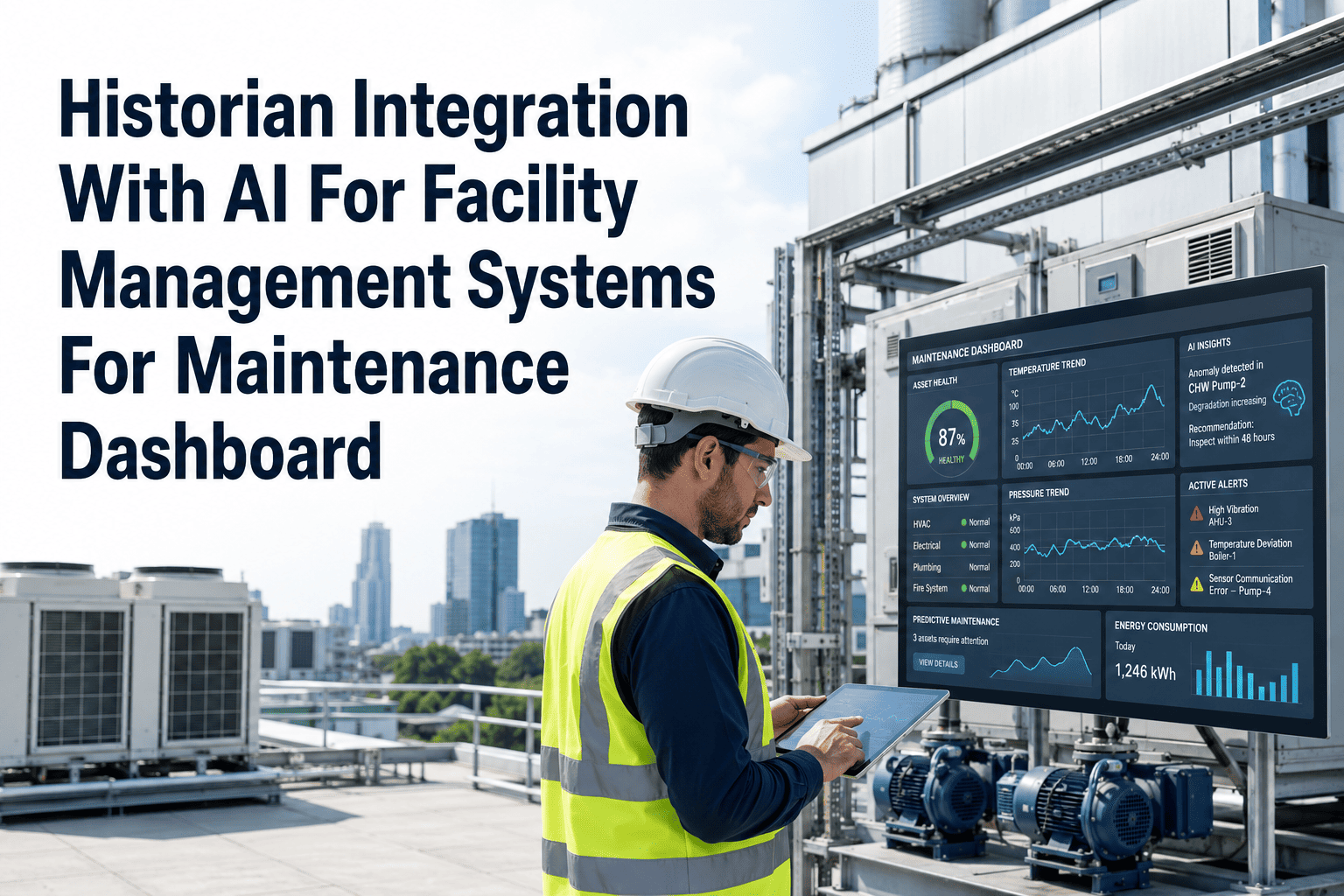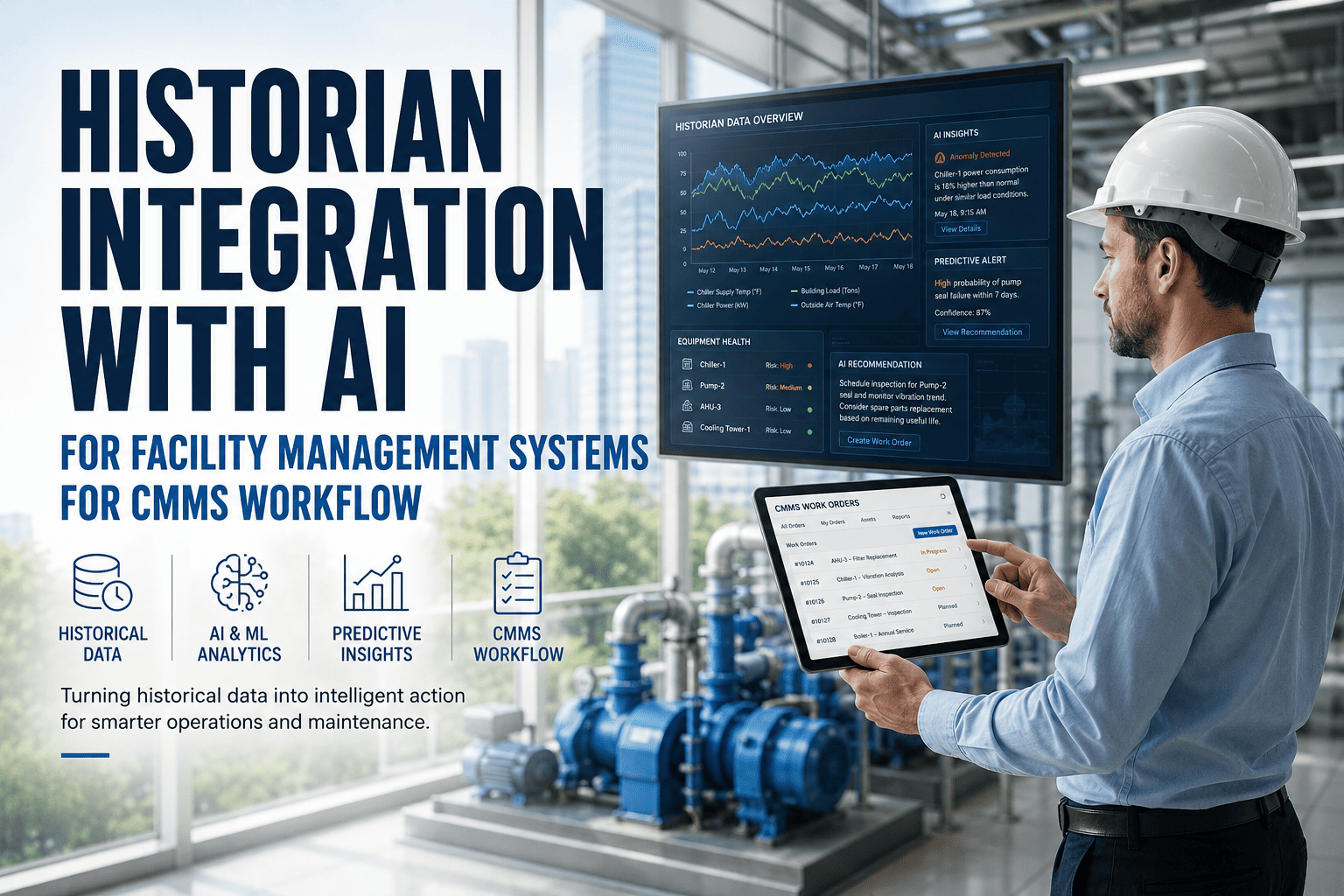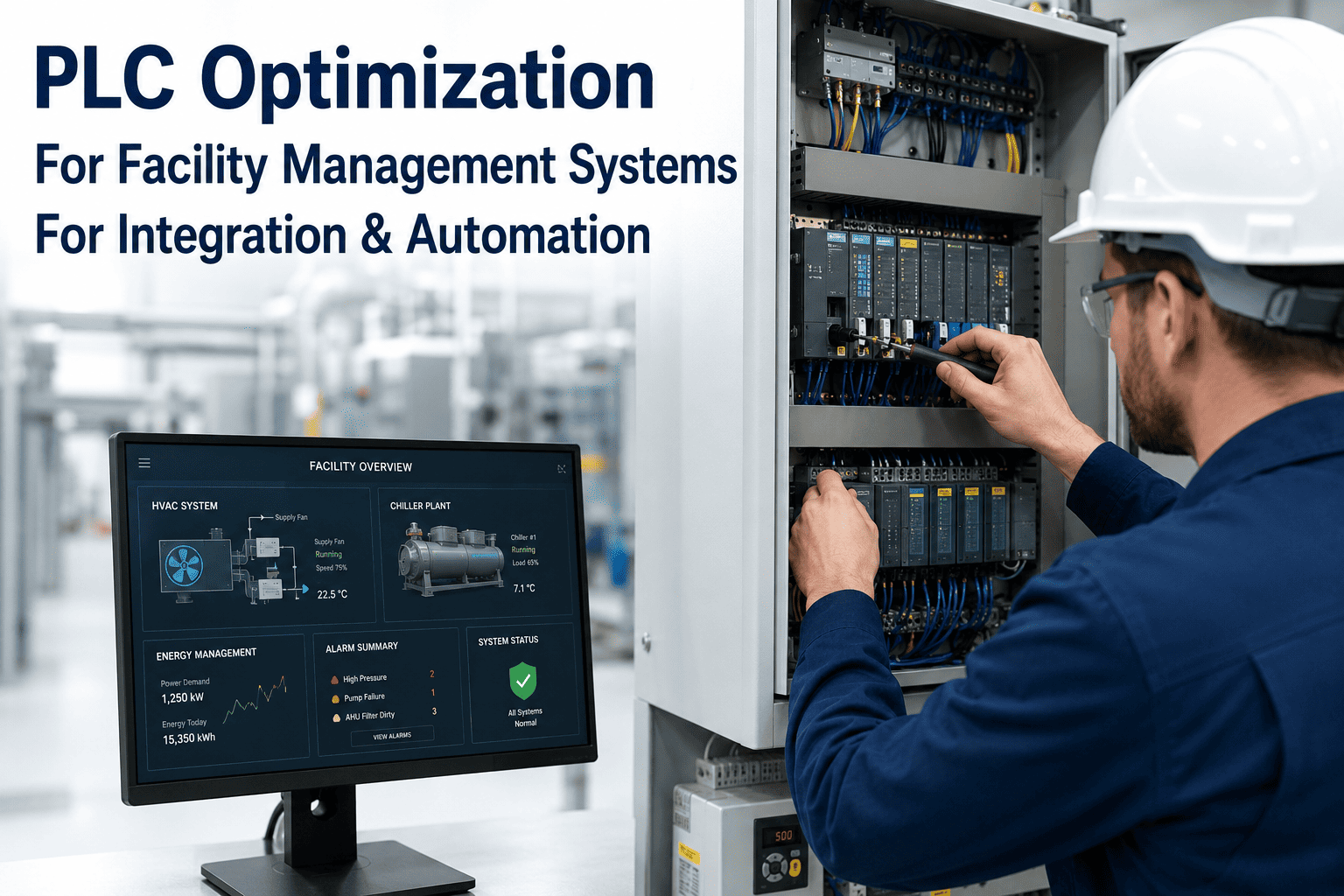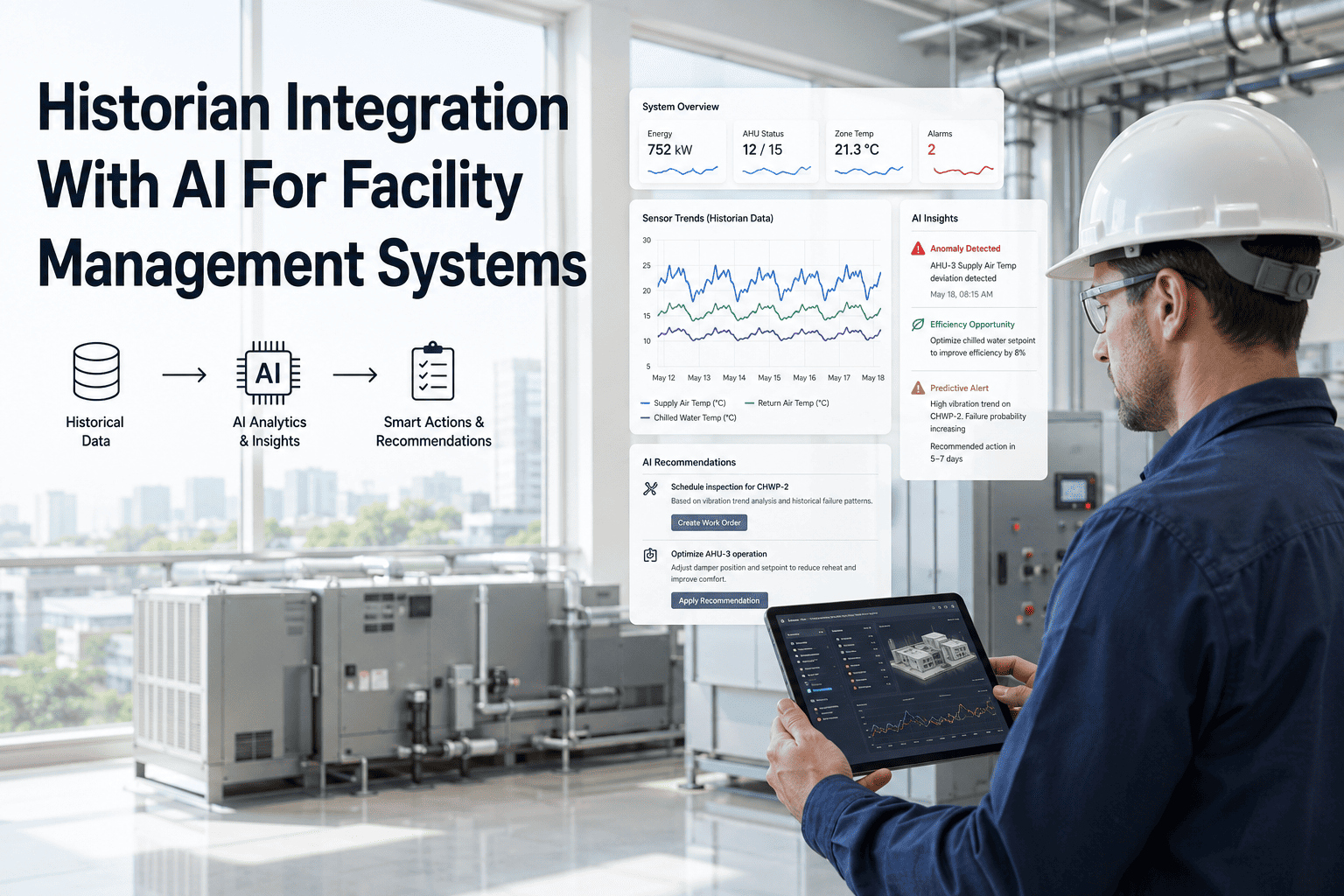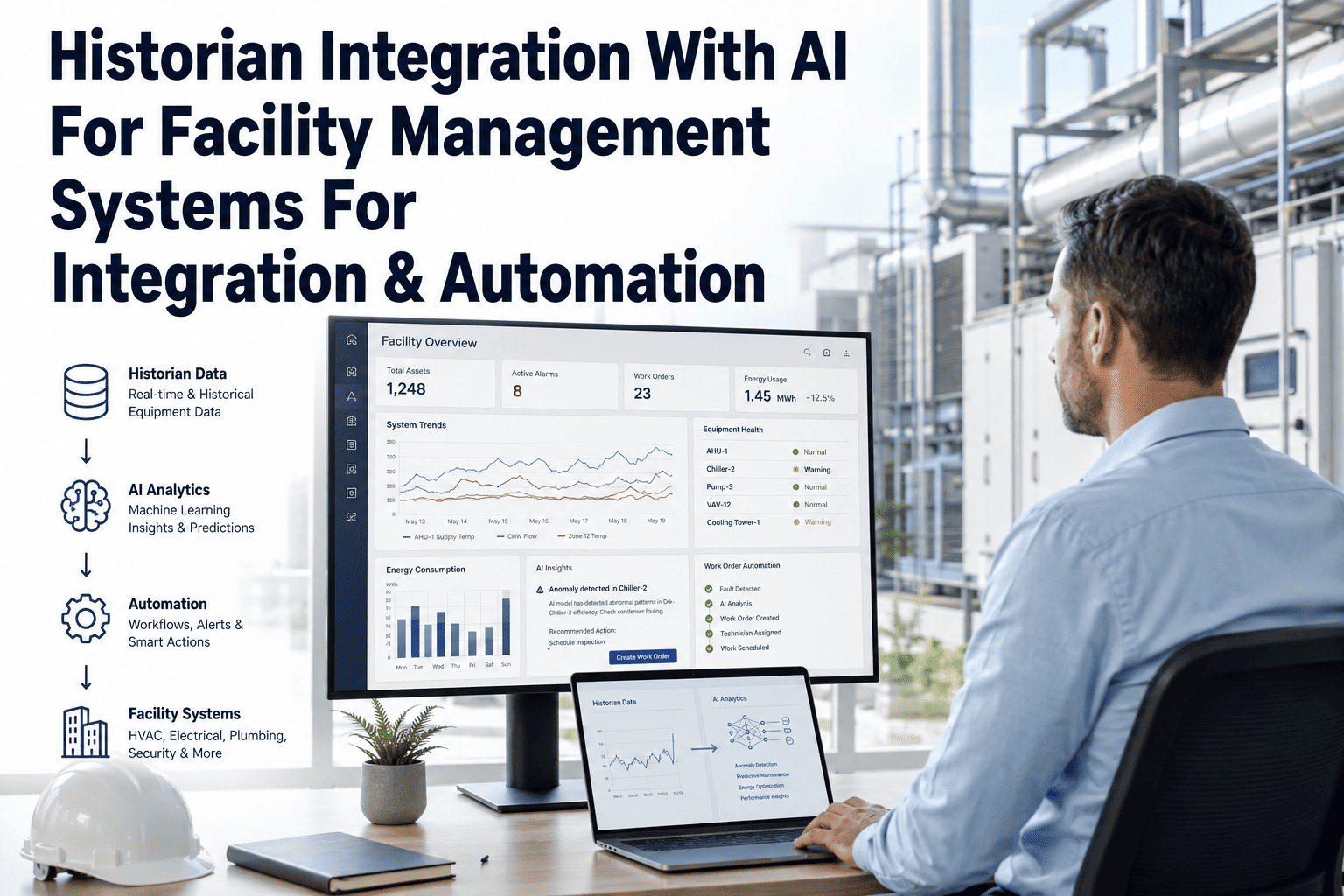
Campus facility directors managing complex building portfolios have long faced an impossible data gap: process historians sitting on the OT network hold years of equipment performance data, while the CMMS sitting on the IT network holds maintenance records — and the two systems have never spoken. Historian Integration with AI for Facility Management closes this gap by bridging time-series historian data with OxMaint's AI-powered work order engine, so anomalies detected in historian trends automatically trigger corrective maintenance actions without human relay. OxMaint's AI integration layer reads historian tags, applies anomaly detection models, and converts threshold breaches into structured work orders — complete with trend charts, asset context, and priority scoring. For campus facility directors managing HVAC, power, water, and mechanical systems across multiple buildings, this integration eliminates the coordination delays between control room operators and maintenance planners that allow small faults to escalate into costly failures.
AI Integration · Historian · Campus Facilities · OxMaint
Your Historian Already Knows When Equipment Is Failing. Does Your CMMS?
OxMaint connects historian time-series data with AI anomaly detection and automatic work order creation — so the signal reaches your technician before the asset fails.
74%
of equipment faults show detectable historian trend signatures 48+ hours before failure
4.2x
faster fault-to-work-order conversion when AI reads historian data vs. manual monitoring
91%
reduction in false-positive alerts after AI learns asset-specific performance baselines
How Historian AI Integration Works in OxMaint
01
Historian Connection
OxMaint connects to OSIsoft PI, Wonderware, or any OPC-UA historian via secure API bridge — no OT network changes required.
02
Tag Mapping
Historian tags are mapped to OxMaint asset records — chiller CHP-01 maps to its temperature, pressure, and flow tags in one configuration step.
03
AI Baseline Learning
OxMaint's AI engine analyzes 90 days of historian data to establish normal operating ranges per asset, season, and load condition.
04
Anomaly Detection
Live historian streams are compared to baselines continuously — drift, spikes, or pattern changes trigger classified alerts with severity scores.
05
Work Order Auto-Generated
High-confidence anomalies become OxMaint work orders instantly — with historian trend charts, asset history, and suggested repair actions attached.
Integration Compatibility: What OxMaint Connects To
OSIsoft PI
Full tag library sync via PI Web API — standard for large campus and industrial deployments
Wonderware
Historian REST bridge supports Wonderware InTouch and System Platform tag exports
OPC-UA / DA
Open standard protocol support for any compliant historian or SCADA historian output
BMS Historians
Johnson Controls, Siemens, Honeywell Trend, and Niagara-based historian exports supported
IoT Platforms
AWS IoT, Azure IoT Hub, and custom MQTT broker connections route sensor streams into OxMaint
Custom API
REST and webhook endpoints allow any historian or time-series database to push data to OxMaint
Before and After: Fault Detection on Campus HVAC
Without Historian AI Integration
Historian shows chiller COP declining for 6 days
Operator notices trend during weekly review — 8 days later
Manually emails maintenance planner with screenshot
Work order created 2 days after email — 10 days total
Chiller compressor fails before technician arrives
Emergency repair cost: $28,000 + 3 days downtime
With OxMaint Historian AI
Historian stream feeds OxMaint AI in real time
AI detects COP decline pattern on day 1 — baseline breach flagged
Work order auto-created with 48-hour trend chart attached
Technician dispatched same day — refrigerant leak found
Repair completed: $1,200 — chiller continues running
Zero downtime. Full audit trail logged in CMMS.
Expert Review — Building Automation & CMMS Integration
The historian has always been the most honest record of how a building's systems are actually performing. The problem is that no one built a reliable bridge between historian trends and maintenance action — so operators saw faults coming and maintenance planners never knew. AI-powered historian integration fixes the handoff problem. The signal that used to die in a control room now creates a work order in the CMMS within minutes of detection. That's the difference between managing buildings proactively and managing them by crisis.
Head of Building Systems Integration, University Campus Facilities Division
Connect Your Historian to Your CMMS — Automatically
OxMaint's AI integration layer turns historian time-series data into structured maintenance actions. No manual monitoring. No alert fatigue. Just work orders at the right time.
Frequently Asked Questions
Which historian platforms does OxMaint support out of the box?
OxMaint supports OSIsoft PI via PI Web API, Wonderware Historian, OPC-UA and OPC-DA compliant systems, and BMS historians from Johnson Controls, Siemens, and Honeywell. For any platform not listed, OxMaint's open REST API allows custom integration from any historian capable of exporting time-series data. Book a demo to confirm compatibility with your specific historian configuration before implementation.
How does OxMaint's AI avoid generating too many false-positive work orders from historian data?
OxMaint's AI engine runs a 90-day baseline learning period per asset before anomaly detection goes live — establishing normal operating envelopes for temperature, pressure, flow, and power across different load conditions and seasons. Work orders are only generated when deviations exceed statistically significant thresholds, not simple fixed limits. Facility teams can also configure confidence thresholds per asset class — critical chillers trigger at lower sensitivity than auxiliary pumps, for example — giving maintenance planners control over alert volume without sacrificing early detection.
Does connecting a historian to OxMaint require changes to our OT network or historian server?
No changes to the OT network or historian server configuration are required. OxMaint connects via read-only API access to the historian's data services layer — using existing historian export protocols. A lightweight integration agent is deployed in the IT-OT DMZ to relay historian tag data to OxMaint's cloud platform securely. This design ensures historian data integrity and OT network isolation are preserved throughout the integration. Book a demo to review the network architecture for your campus environment.
Turn 30 Years of Historian Data Into Tomorrow's Work Orders
OxMaint's AI historian integration makes your building automation data actionable — automatically converting performance trends into maintenance tasks before faults become failures.