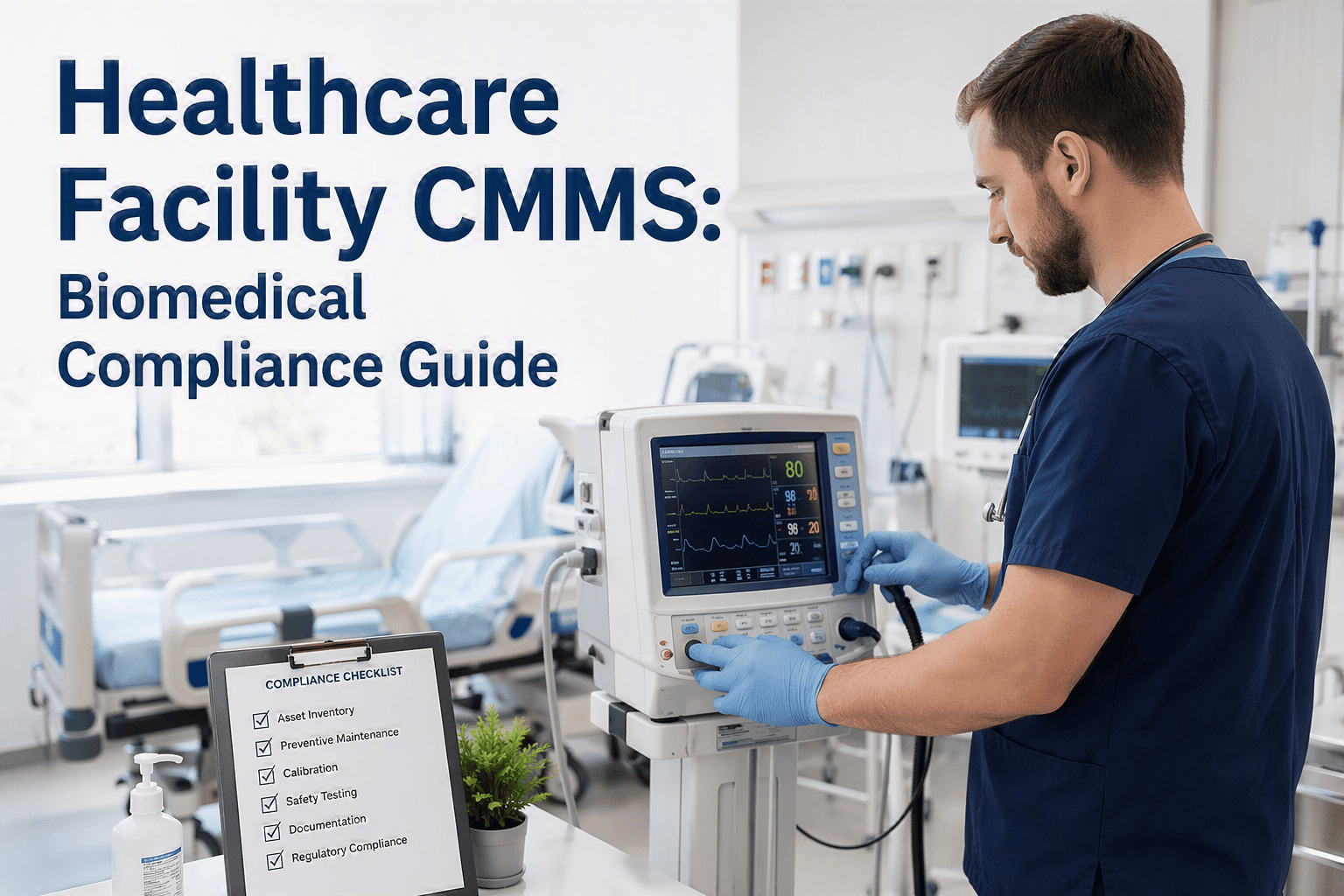
Hospitals and healthcare systems are entering 2026 under a reorganized compliance framework, with the Joint Commission's Accreditation 360 update merging Environment of Care and Life Safety requirements into one Physical Environment chapter. Biomedical equipment, life safety systems, and clinical infrastructure now sit under a single unified set of expectations, and surveyors expect complete maintenance evidence within minutes, not weeks. Most facility teams still track thousands of devices, PM schedules, and inspection logs across spreadsheets and disconnected biomedical systems, leaving gaps that surface only when a surveyor asks the wrong question at the wrong time. A purpose-built CMMS closes that gap by tying every work order, inspection, and compliance record to one defensible asset trail. Teams that adopt this approach walk into surveys with organized, real-time records instead of scrambling through file cabinets. You can book a demo to see how a compliance-ready asset register is built for your facility type.
Healthcare Facility Compliance · 2026 Physical Environment Framework
Biomedical Compliance Doesn't Have to Feel Like a Countdown to the Next Survey
Every ventilator, sterilizer, and fire door in your building has a maintenance clock running against it. OxMaint keeps that clock visible, documented, and audit-ready across every department, every shift, every site.
68%
of CMS deficiency citations trace back to the Physical Environment condition of participation
4.8x
higher cost of emergency biomedical repair compared to scheduled preventive maintenance
35,000+
medical devices tracked in a typical large hospital's compliance register
$93K
possible daily CMS penalty for an unresolved condition-level deficiency
See your own compliance gaps mapped out before a surveyor finds them.
Why This Matters Now
The Real Cost of Managing Biomedical Compliance on Spreadsheets
The Documentation Problem
Surveyors rarely find broken equipment. They find missing paperwork. A completed inspection with no signed record is treated as a deficiency, regardless of whether the work was actually done, because the record is the only proof a surveyor can verify.
The Fragmentation Problem
Facilities, biomedical engineering, and compliance teams often run on separate systems. When a survey request comes in, someone has to manually reconcile three sources of truth under time pressure, and something usually gets missed.
The Patient Safety Problem
An untracked ventilator service interval or a missed fire door inspection is not just a paperwork gap. It is a liability exposure that can directly affect patient outcomes and carry consequences far beyond the cost of the repair itself.
The Cost Problem
Reactive repairs on clinical equipment run several times higher than scheduled maintenance, and a single major imaging equipment breakdown can cancel dozens of patient appointments and a full day of billable procedures.
The 2026 Framework
One Physical Environment Chapter, Four Areas of Daily Work
01
Biomedical Equipment
Ventilators, infusion pumps, defibrillators, and imaging systems tracked at the individual device level with manufacturer service intervals and calibration history.
02
Life Safety Systems
Fire doors, sprinklers, dampers, and emergency egress lighting inspected on NFPA-aligned cycles with signed, timestamped completion records.
03
Utility and Infrastructure
Medical gas networks, emergency power, water management, and HVAC serving sterile and clinical spaces, each with a defined inspection cadence.
04
Emergency Preparedness
Crash carts, backup generators, and emergency equipment tested on daily, weekly, and monthly schedules with evidence ready for immediate review.
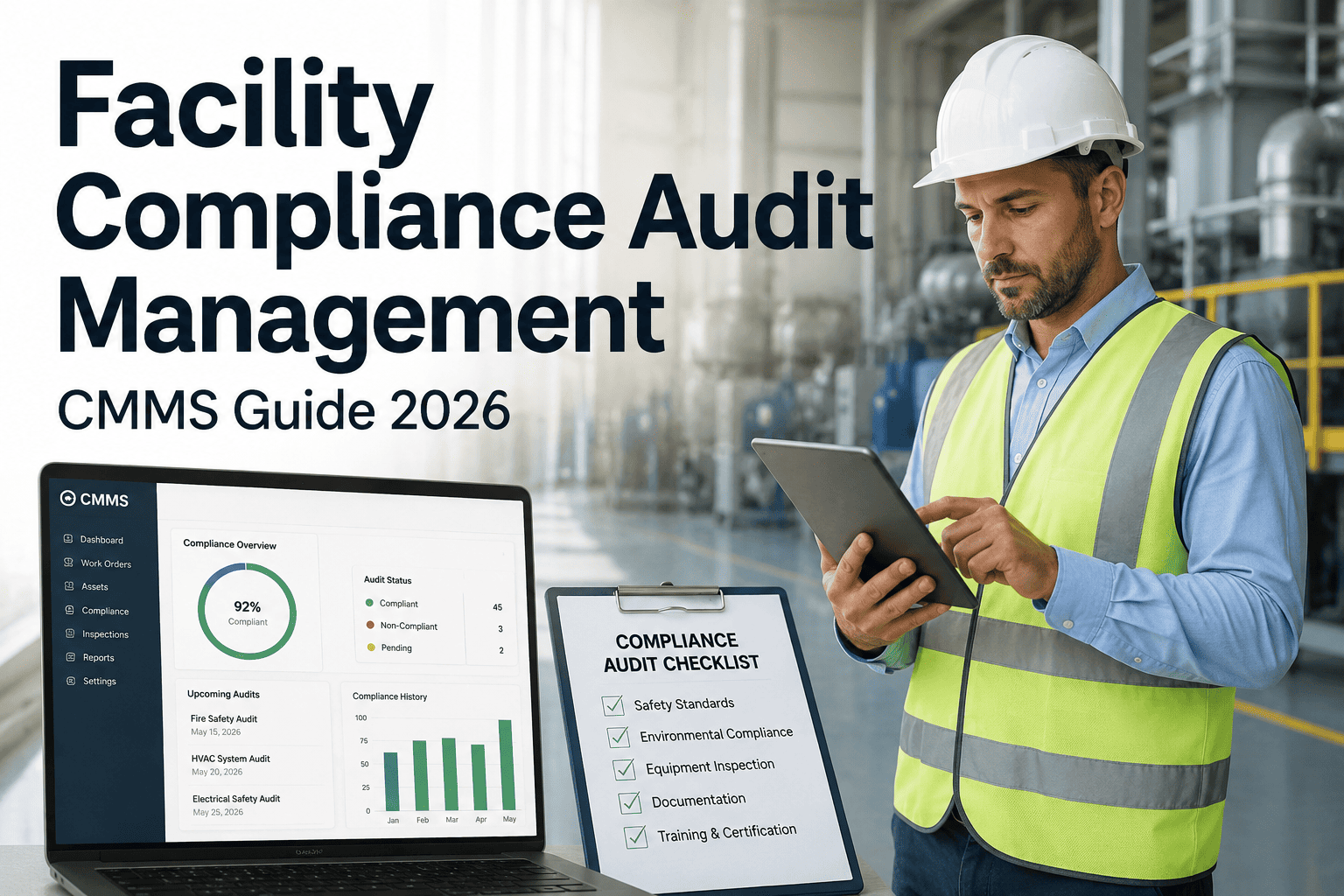
Compliance Dashboard
What Continuous Audit-Readiness Actually Looks Like
Biomedical PM Compliance
94%
Life Safety Inspection Cycle
78%
Emergency Equipment Testing
97%
Utility System Documentation
61%
1,240
Biomedical devices under active PM tracking
6
Open critical inspection items
2 min
Average time to pull a full survey record
Inspection Cadence
Sample Compliance Frequencies by Asset Category
| Asset Category |
Governing Standard |
Typical Frequency |
Common Citation Risk |
| Ventilators and infusion pumps |
TJC EC.02.04, FDA IFU |
Per manufacturer interval |
High |
| Fire doors and dampers |
NFPA 101, NFPA 80 |
Annual |
High |
| Sprinkler systems |
NFPA 25 |
Quarterly |
Medium |
| Emergency generators |
NFPA 110 |
Monthly load test |
High |
| Medical gas systems |
NFPA 99 |
Annual verification |
Medium |
Stop reconstructing three weeks of records every time a survey is announced.
Import your existing biomedical and facility asset lists, map them to the 2026 Physical Environment framework, and have a live compliance register running before your next accreditation cycle.
Who Relies On This
Teams That Depend on a Unified Compliance Register
Biomedical Engineering Departments
Device-level PM tracking, calibration history, and recall management for ventilators, monitors, and imaging equipment, with individual records instead of generic asset groupings.
Hospital Facilities Management
Life safety and utility inspections scheduled against NFPA and Physical Environment cycles, with escalation when an overdue item puts the next survey at risk.
Compliance and Quality Officers
A single dashboard showing PM compliance rate, open citations, and documentation gaps, replacing the multi-week manual compilation that most surveys used to require.
Multi-Site Health Systems
Portfolio-wide visibility across hospitals, clinics, and ambulatory sites, so leadership can compare compliance rates and equipment risk across every location.
Frequently Asked Questions
Healthcare CMMS and Biomedical Compliance — Common Questions
What changed with the Joint Commission's Accreditation 360 update?
Environment of Care and Life Safety standards were consolidated into a single Physical Environment chapter effective January 1, 2026. The requirements were reorganized, not reduced, so facilities need to remap existing procedures to the new structure.
Book a demo to see the mapping in action.
Why is documentation the most common survey deficiency?
Surveyors verify maintenance through records, not by witnessing the work. A completed inspection without a signed, timestamped record is treated as a deficiency even when the task was actually performed correctly.
Can a generic CMMS handle biomedical equipment compliance?
Generic platforms typically track equipment at a group level and miss device-specific intervals, calibration history, and recall status that biomedical and clinical engineering teams need for defensible audit records.
How quickly can our facility get a compliance register running?
Existing asset lists and spreadsheets can be imported and mapped to inspection frequencies within days, with most teams running live work orders inside their first two weeks. Start a
free trial to begin the import.
Does this help with CMS surveys as well as Joint Commission?
Yes. The same asset and inspection records support CMS Conditions of Participation reviews, Joint Commission Physical Environment surveys, and OSHA documentation from one dashboard.
Healthcare Facility CMMS · Biomedical Compliance
Walk Into Your Next Survey With Records Already Organized
Bring biomedical equipment, life safety, and utility compliance into one register built around the 2026 Physical Environment framework, so nothing depends on someone remembering to check a spreadsheet.