Facility Spare Parts Cost Reduction & MRO Optimization
By Corin Hale on July 21, 2026
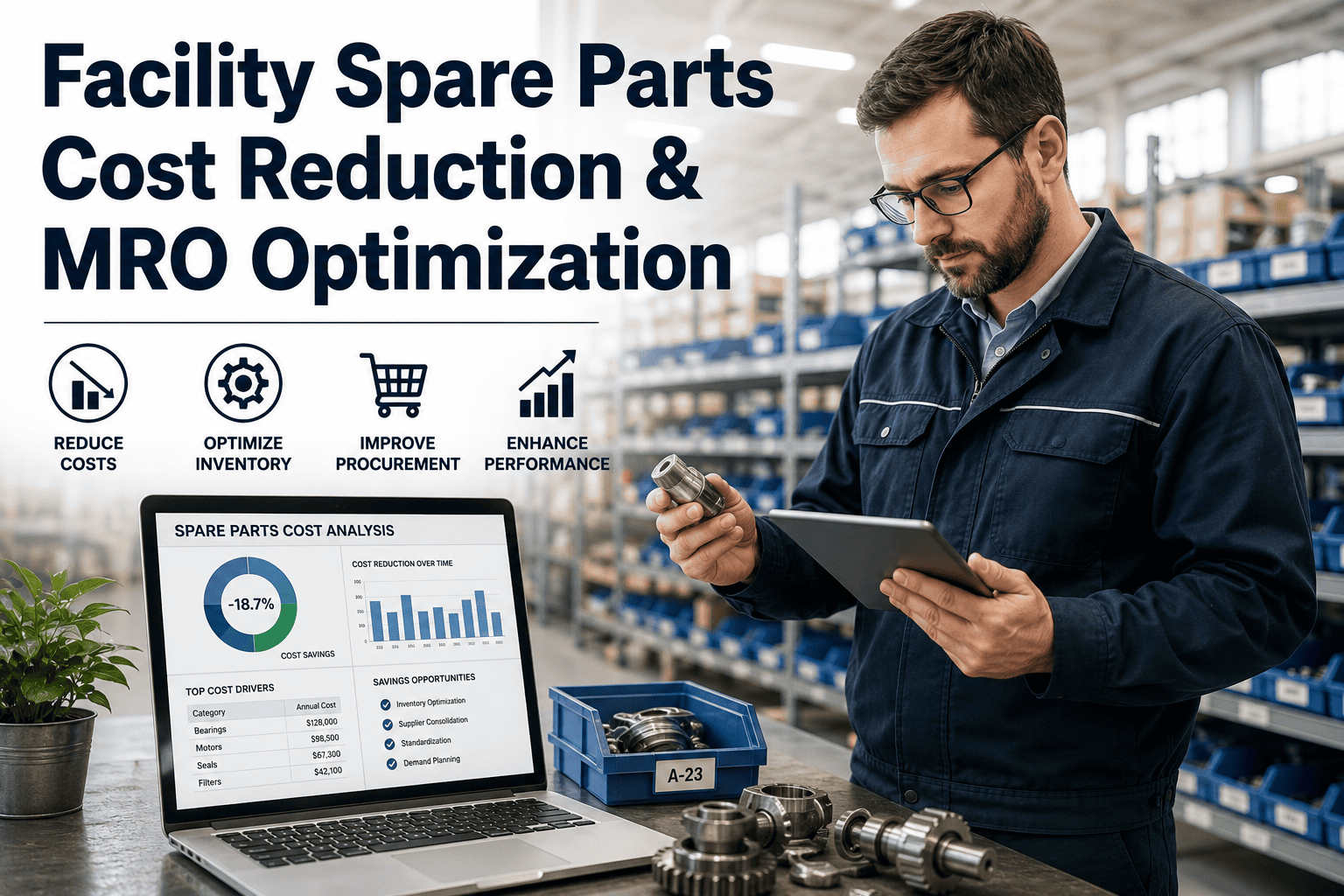
Facility spare parts cost reduction is the single fastest lever maintenance leaders pull to cut MRO spend — most plants carry 20–40% excess or obsolete parts inventory, tying up thousands in dead stock while still missing critical spares at breakdown. MRO optimization for facility teams means right-sizing stock levels, applying ABC classification, consolidating vendors, and using a CMMS to automate reordering so technicians find the right part at the right time without overstocking. This facility MRO guide walks through proven cost-reduction strategies, benchmarks, and a CMMS-based framework that delivers measurable parts savings within one quarter. Ready to see it on your assets? Start Free Trial and configure your spare-parts dashboard today.
MRO Cost Reduction · 2026 Guide
Stop Bleeding Cash on Spare Parts You Don't Need
The average facility ties up $40K–$120K in dead stock and over-pays 12–18% on fragmented MRO orders. OxMaint's AI-powered CMMS cuts facility inventory cost by up to 25% in the first quarter — automatically.
Average MRO inventory cost reduction in Q1 with CMMS-driven optimization
The Cost of Inaction
Where Facility MRO Dollars Leak — and How Fast
A 180-asset facility spending $42,000/yr on MRO parts typically wastes $8,400–$12,600 of that in dead stock, emergency freight, and duplicate orders. Here is where the money goes.
$50B
Annual U.S. MRO spend trapped in inefficient inventory and procurement processes
30–40%
Of facility spare-parts SKUs are dead, obsolete, or duplicated across storerooms
4.2 hrs
Lost per week per technician searching for parts in spreadsheets and cabinets
Savings Framework
The Facility MRO Cost-Reduction Formula
Total facility inventory cost isn't just part price — it is the sum of purchase, holding, stockout, and obsolescence cost. Optimizing all four is how top-quartile facilities achieve 20–25% savings.
Right-size safety stock, apply ABC, reduce average on-hand value
−20 to −30%
Stockout Cost
Auto-reorder triggers, predictive demand from asset usage data
−35 to −50%
Obsolescence Cost
Quarterly dead-stock review, link parts to asset lifecycle for retirement
−40 to −60%
Step-by-Step
How to Reduce Facility Parts Cost in 4 Months
A proven CMMS-driven timeline that takes a reactive, spreadsheet-run storeroom to a data-optimized MRO program in 120 days.
Month 1
Audit & ABC Classification
Import every SKU into OxMaint, classify A-items (80% spend, 20% SKUs) for tight control, B-items for standard reorder, C-items for vendor-managed stock. Benchmark current inventory value and dead-stock ratio.
Outcome: Full visibility into $ tied up per category
Month 2
Dead Stock Elimination
Flag parts with zero issues in 12+ months, cross-reference against active asset lists, return sellable stock to vendors, write off true dead stock, and link remaining spares to live work-order demand.
Outcome: 15–20% reduction in on-hand inventory value
Month 3
Vendor Consolidation & Min/Max Automation
Reduce active vendor count by 30–50%, negotiate framework pricing on A-items, and configure OxMaint auto-reorder points so the system generates POs when stock hits minimum — no manual chasing.
Outcome: 8–15% lower unit cost + zero manual reordering
Month 4
Predictive Demand & Continuous Review
Turn on OxMaint's AI demand forecasting — the system learns from asset runtime, PM schedules, and failure history to predict which parts will be needed and when, adjusting safety stock dynamically.
Outcome: 35–50% fewer stockouts at lower stock levels
Vendor Consolidation
Facility Vendor Consolidation: What You Save
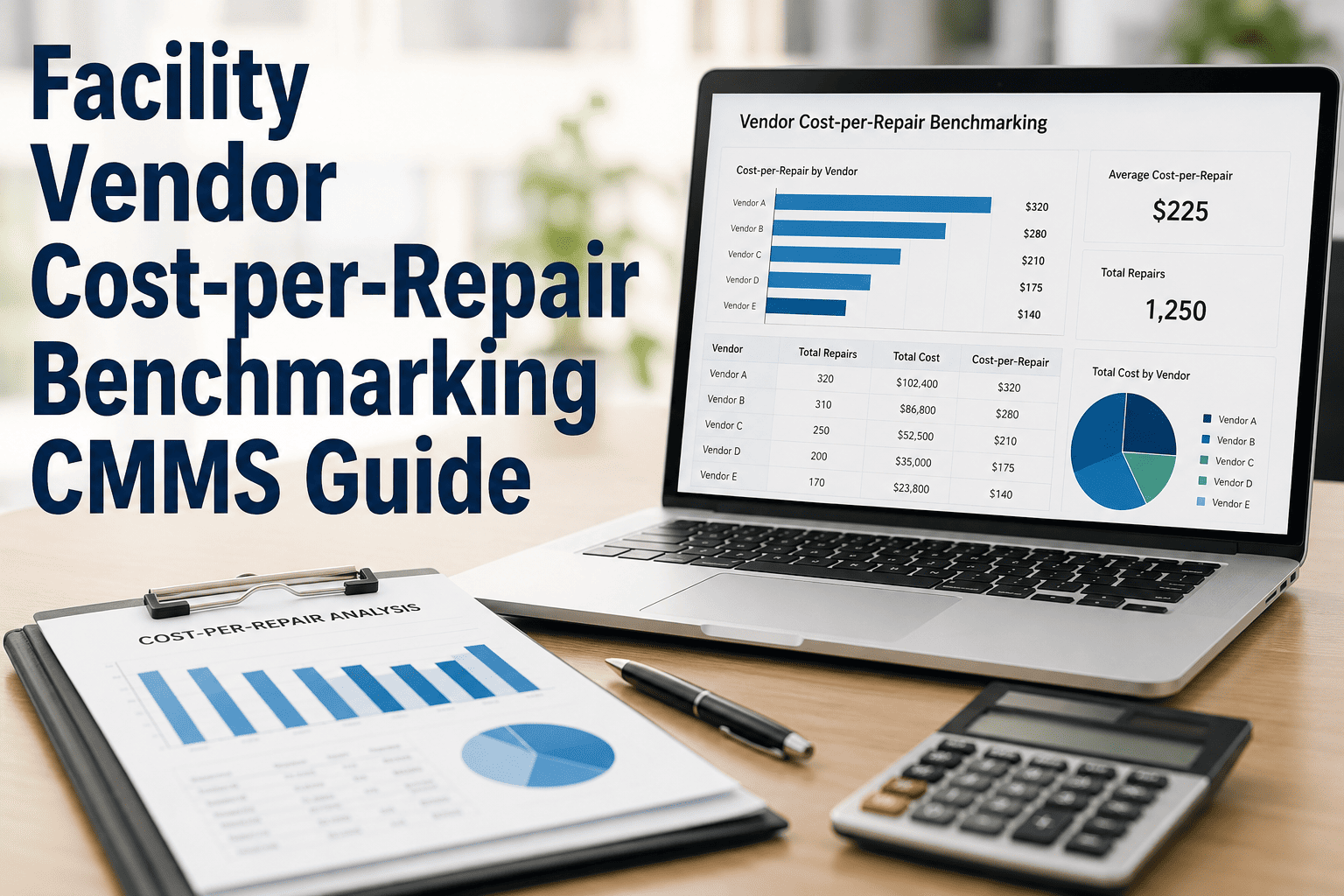
Most facilities buy MRO parts from 40–70 vendors. Consolidating to 15–20 preferred suppliers unlocks volume rebates, reduces admin overhead, and simplifies quality tracking.
Metric
Before Consolidation
After Consolidation
Savings
Active vendors
55
18
−67%
Avg. unit cost (A-items)
Baseline
−12% via rebates
$5,040/yr
PO processing cost
$85 × 320 POs
$85 × 140 POs
$15,300/yr
Emergency freight
$7,800/yr
$2,100/yr
$5,700/yr
Admin hours/week
14 hrs
5 hrs
468 hrs/yr
Total annual savings
—
—
$26,040
Worked example: A 180-asset facility spending $42K/yr on MRO parts consolidated from 52 vendors to 16 using OxMaint's vendor performance dashboard, negotiated 10% framework pricing on top-20 SKUs, and eliminated 180 manual POs — saving $26K in year one, a 62% reduction in total MRO procurement cost.
How OxMaint Helps
Cut Facility MRO Cost with OxMaint CMMS
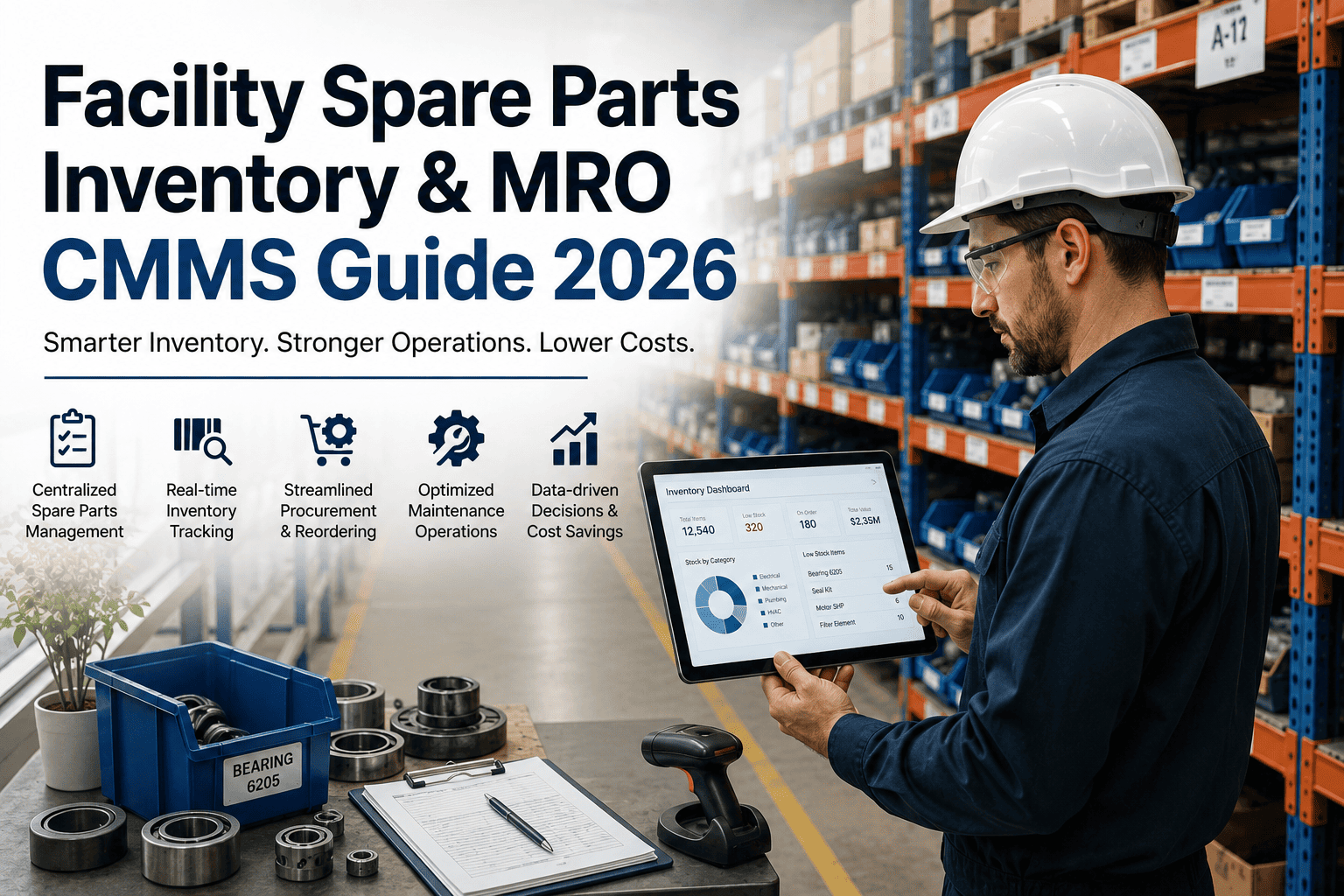
OxMaint replaces spreadsheets and reactive ordering with an AI-powered spare-parts inventory module that connects every part to an asset, a work order, and a demand forecast.
ABC Classification & Auto Reorder
Automatically classify every SKU by spend and criticality. OxMaint triggers POs at min-stock thresholds — no manual review cycles, no overnight stockouts on A-items.
Cuts stockouts 35–50% and reduces average on-hand value 20%
AI Demand Forecasting
Machine learning models consume asset runtime, PM cadence, and failure history to predict which parts will be needed — and when — so safety stock self-adjusts instead of sitting frozen.
Lowers dead-stock ratio to under 8% while improving fill rate to 98%+
Vendor Scorecards & Consolidation
Track on-time delivery, price variance, and quality by vendor in one dashboard. Identify duplicate suppliers for the same SKU and consolidate to negotiate better framework pricing.
Reduces active vendors 50–67% and cuts unit cost 8–15%
Parts-to-Asset Linkage & Lifecycle Tracking
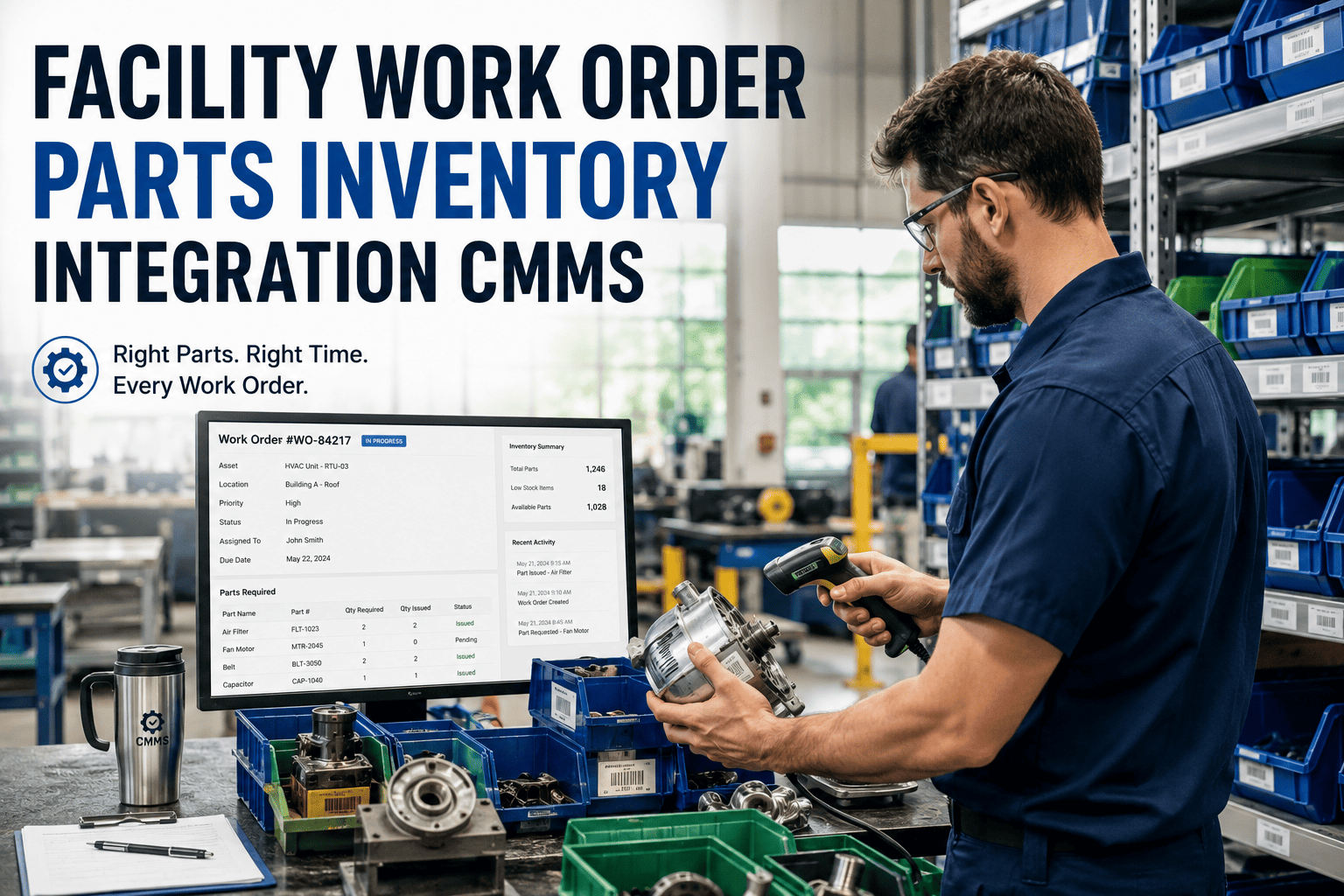
Every spare is linked to the asset it serves. When an asset is retired, OxMaint flags orphaned parts for return or write-off — preventing the slow accumulation of dead stock.
Eliminates 40–60% of obsolescence cost and speeds audits
See OxMaint on Your Assets — Book a 30-Min Demo
Walk through a live spare-parts optimization scenario on data that looks like yours. We'll show you exactly how much MRO cost you can recover in Q1.
Facility Spare Parts Cost Reduction — Frequently Asked Questions
How much can a facility save by optimizing MRO spare parts inventory?
Most facilities reduce total MRO inventory cost by 20–25% in the first year of CMMS-driven optimization. Savings come from dead-stock elimination (15–20% of on-hand value), vendor consolidation (8–15% lower unit cost), and automated reorder points that cut stockouts 35–50% without increasing stock. A facility spending $50K/yr typically recovers $10K–$12.5K.
What is ABC classification and how does it reduce facility parts cost?
ABC classification ranks spare parts by annual spend and criticality: A-items (20% of SKUs, 80% of spend) get tight min/max control and frequent review; B-items get standard reorder; C-items are candidates for vendor-managed inventory or stockless purchasing. This concentrates effort on the parts that matter, cutting holding cost 20–30% on A-items while freeing cash from over-stocked C-items. OxMaint automates the classification and adjusts thresholds as usage changes.
How does a CMMS reduce facility MRO cost compared to spreadsheets?
A CMMS like OxMaint links every part to an asset, a work order, and a demand forecast — eliminating the 4+ hours/week technicians lose searching for parts in spreadsheets and cabinets. Automated reorder points prevent both stockouts and over-ordering, while vendor scorecards expose price variance and duplicate suppliers. Facilities switching from spreadsheets to OxMaint typically see payback in under 4 months. Start Free Trial to see your baseline dashboard in minutes.
What is dead stock and how do facilities eliminate it?
Dead stock is spare-parts inventory with zero issues or movement in 12+ months — typically 20–40% of facility SKUs. Elimination requires a quarterly review: flag zero-movement parts, cross-reference against active asset lists, return sellable items to vendors, write off true obsolescence, and link remaining spares to live work-order demand. OxMaint automates the flagging and cross-referencing so the review takes hours, not days.
How long does it take to implement CMMS-based MRO optimization?
A facility with 150–250 assets and an existing parts list can implement OxMaint's spare-parts module in 2–4 weeks: Week 1 is SKU import and ABC classification, Week 2 is vendor and min/max setup, Weeks 3–4 are dead-stock review and reorder automation. First measurable savings — dead-stock write-offs and reduced emergency freight — typically appear in Month 2. Full ABC-driven holding-cost reduction is visible by Month 4.
Recover 25% of Your MRO Spend This Quarter
Join the maintenance teams using OxMaint to right-size inventory, eliminate dead stock, and never stock out of a critical spare again.