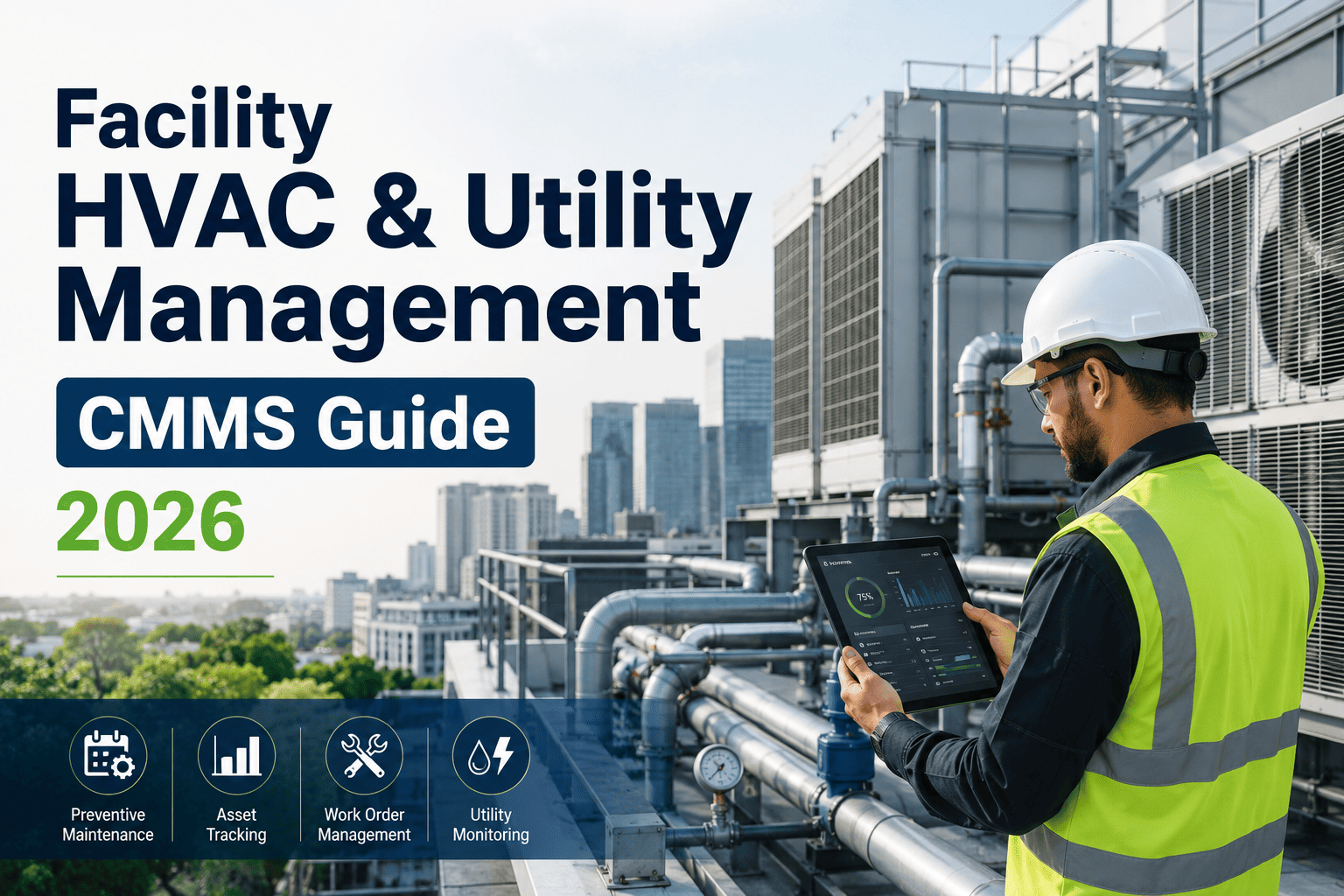
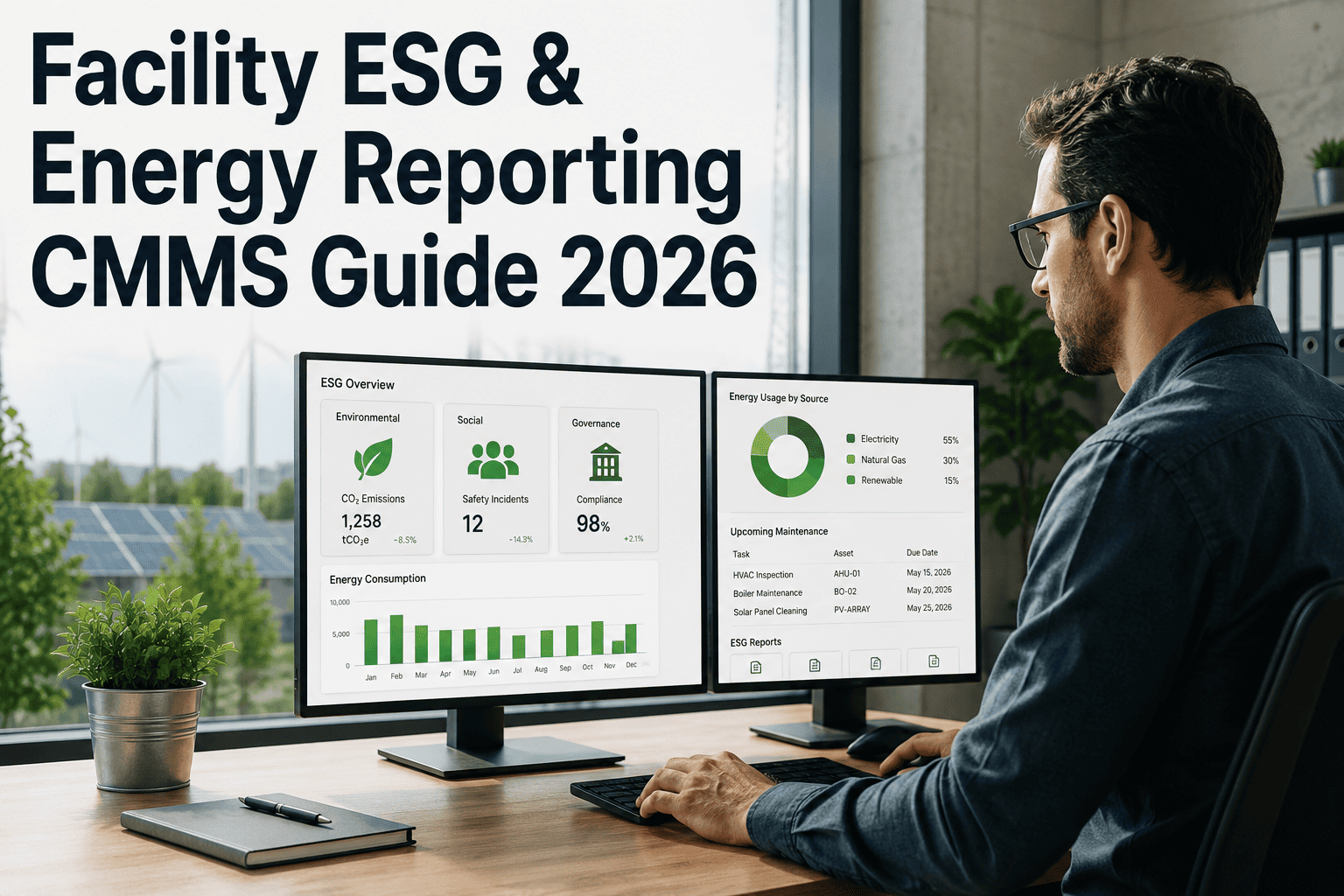
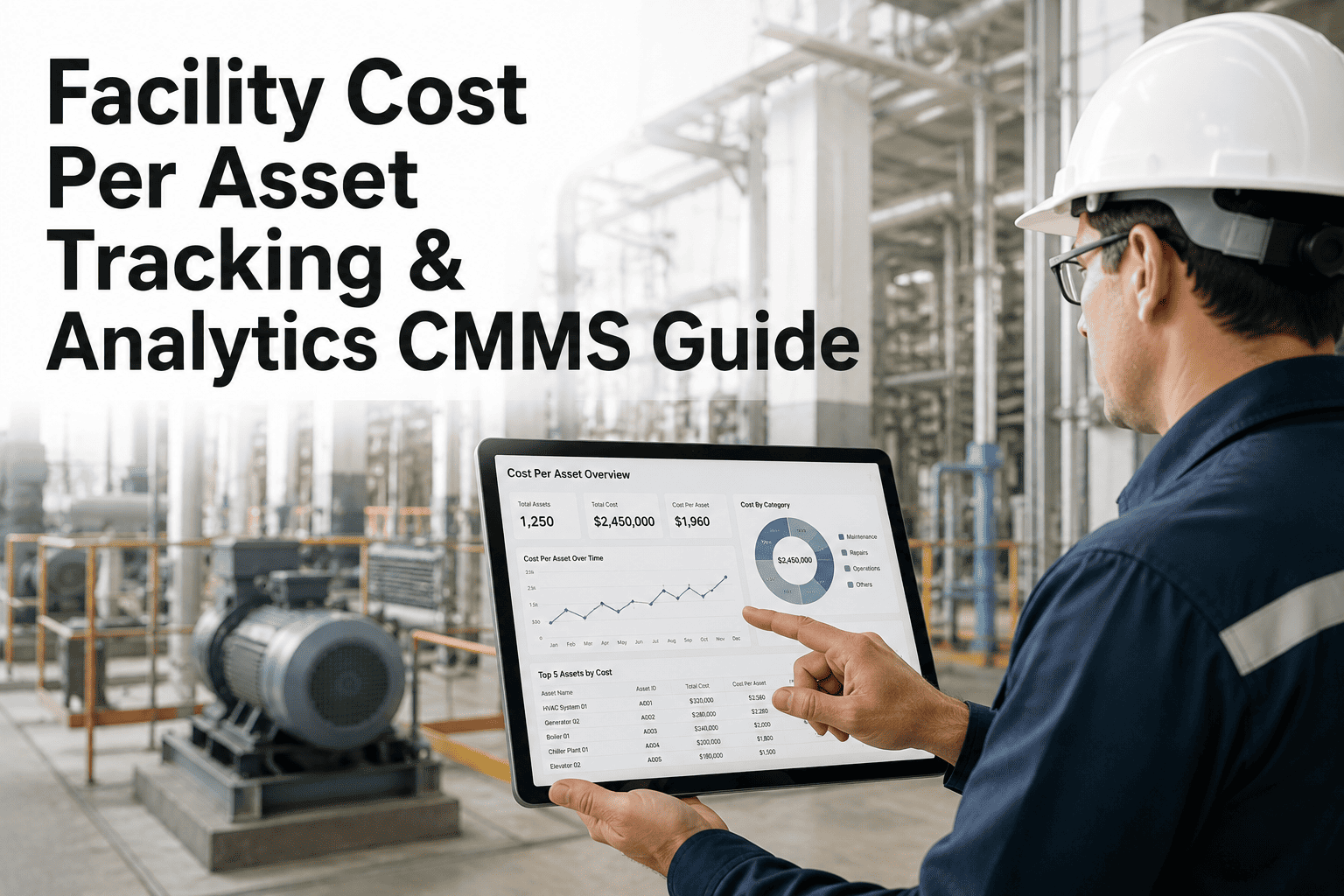
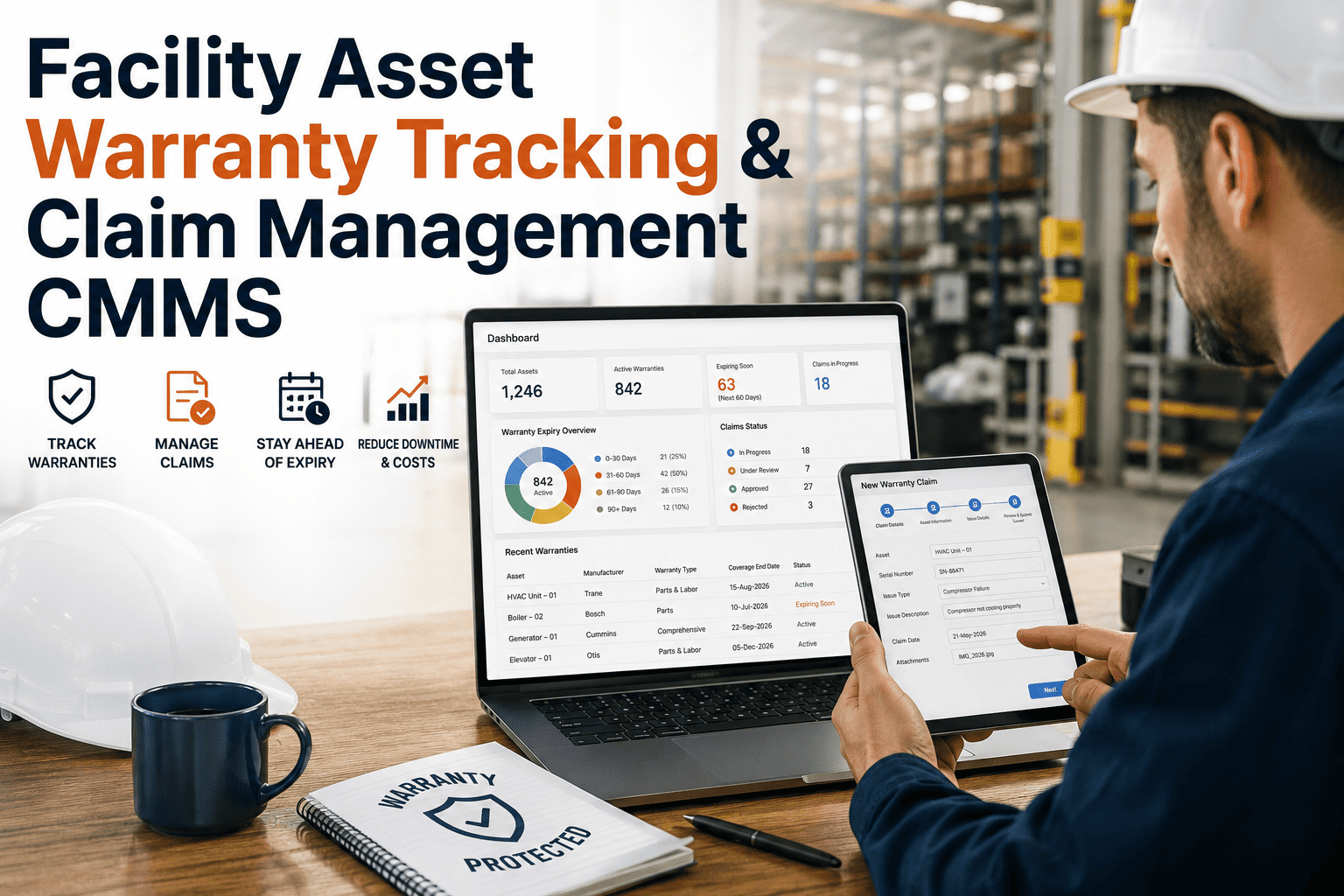
Facility teams rarely lose sleep over one broken thermostat. What actually drains budgets is a building running five separate utility systems — chillers, boilers, electrical panels, water lines, and gas systems — each tracked in a different spreadsheet, app, or nobody's notebook at all. HVAC alone consumes 40 to 50 percent of a commercial building's total energy, and every degraded coil, drifted sensor, or overdue filter change adds a silent tax to next month's bill. Energy prices are now climbing at roughly twice the rate of inflation, which means the gap between a building that tracks utility health and one that doesn't keeps getting more expensive. This guide breaks down how facility teams are consolidating HVAC and utility management under one CMMS instead of six disconnected systems, starting inside OxMaint.
Facility HVAC & Utility Management
One CMMS for Every System That Keeps Your Building Running
Chiller plants, boilers, electrical distribution, water systems, and gas lines don't fail in isolation — and they shouldn't be managed that way either. Here's the 2026 framework for bringing utility management under one roof.
40–50%
of commercial building energy is consumed by HVAC systems alone
4–6x
return for every dollar spent on preventive HVAC and utility maintenance
15–25%
lower energy consumption in facilities running structured PM programs
90%+
PM compliance for CMMS-managed utility programs, vs 62% industry average
Where Budgets Leak
Why Utility Systems Slip Through the Cracks
Most facilities don't lose money to catastrophic equipment failure. They lose it in small, compounding increments — a chiller running 10% less efficient than spec, a boiler nobody logged last quarter, a water line pressure drop that took three weeks to notice. These four gaps show up in almost every unmanaged utility program.
38%
Siloed Systems, No Shared Record
Chiller logs live with the mechanical contractor, electrical records sit in a binder, and water meter data stays in a utility portal nobody else can access.
29%
Reactive-Only Response
Work starts only after occupants complain about temperature, pressure, or an outage — by which point the underlying fault has usually existed for weeks.
21%
No Sensor or BMS Integration
Building automation data never reaches the maintenance team, so condition-based signals like temperature drift or vibration go unused.
12%
Manual, Paper-Based Logs
Boiler readings and electrical inspection checklists on paper rarely get reviewed, trended, or turned into a work order before something breaks.
See It In Your Building
Bring every utility system into one maintenance record
OxMaint connects chiller plants, boilers, electrical panels, water systems, and gas lines to a single CMMS — so every reading, fault, and work order lives in one place.
The Five Systems
Five Utility Systems, One Maintenance Backbone
Every commercial facility runs some combination of these five systems. Each has a different failure pattern, a different cost of neglect, and a different inspection rhythm — but all five belong under the same CMMS record.
Chiller Plant
Weekly readings, monthly deep check
Primary Risk
Refrigerant imbalance, condenser fouling, compressor strain
Energy Impact
A refrigerant imbalance alone can raise cooling electricity use by up to 30%
CMMS Action
Log condenser approach temperature; auto-flag any variance above spec
Boiler Systems
Daily log, quarterly certification
Primary Risk
Scale buildup, burner inefficiency, pressure relief failure
Energy Impact
Scale as thin as 1/16 inch can raise fuel consumption by roughly 10%
CMMS Action
Track combustion efficiency trend; auto-generate work order below threshold
Electrical Distribution
Monthly thermal scan, annual certification
Primary Risk
Loose connections, breaker wear, panel overheating
Energy Impact
Undetected hot spots are the leading cause of unplanned electrical outages
CMMS Action
Attach infrared scan results directly to the panel's asset record
Water Systems
Weekly meter read, monthly line inspection
Primary Risk
Undetected leaks, pump wear, backflow preventer failure
Energy Impact
A single unnoticed leak can waste thousands of gallons before a bill reveals it
CMMS Action
Set consumption baselines and auto-escalate on abnormal meter variance
Gas Systems
Monthly leak check, annual certification
Primary Risk
Line corrosion, regulator drift, undetected small leaks
Energy Impact
Regulator drift alone can push gas consumption well above rated demand
CMMS Action
Schedule certified inspection cycles and store compliance records centrally
The Shift
From Reactive to Structured: What Actually Changes
The difference between a facility that fights fires and one that runs ahead of them isn't bigger budgets or newer equipment. It's whether utility maintenance is structured, tracked, and reviewed — or left to whoever notices something's wrong first.
| Operating Factor |
Reactive-Only Facility |
CMMS-Structured Facility |
| Work order origin |
Occupant complaint or failure |
Scheduled PM or sensor-triggered alert |
| Reactive work order share |
30–50% of total volume |
Below 10% of total volume |
| Energy consumption |
Baseline, trending upward |
15–25% lower against baseline |
| PM compliance rate |
Around 62% industry average |
90%+ across all utility systems |
| Compliance documentation |
Scattered across paper and email |
Centralized, audit-ready in one system |
Program Results
What a Consolidated Utility Program Delivers
Facilities that move HVAC, electrical, water, and gas maintenance into one CMMS see these outcomes within the first two to three quarters of operation.
15–25%
Lower energy spend
28–40%
Budget gap closed vs reactive peers
Below 10%
Reactive work order rate
90%+
PM compliance across all systems
FAQ
Frequently Asked Questions
Can one CMMS really manage chillers, boilers, electrical, water, and gas together?
Yes. Each system has its own asset record, PM schedule, and fault history, but all of it lives in one platform instead of five disconnected tools.
See how OxMaint structures it.
How much does HVAC and utility neglect actually cost a facility?
Reactive-only facilities typically run 28 to 40 percent higher on total HVAC and utility spend than facilities with a structured PM program, driven mostly by energy waste and emergency repair premiums.
What's the fastest win when starting a utility management program?
Chiller and boiler PM usually deliver the fastest measurable savings, since coil fouling, refrigerant imbalance, and scale buildup are common, easy to catch, and directly tied to energy cost.
Do we need building automation or IoT sensors before starting?
No. A structured CMMS program works with manual readings from day one. Sensor and BMS integration adds predictive alerts later, but it isn't a prerequisite to get started.
How do we get a utility management program running in our facility?
Most teams start with a free trial to map their existing systems into asset records, then walk through PM scheduling with a specialist.
Book a demo to plan your rollout.
Ready When You Are
Stop managing five utility systems in five different places
OxMaint gives facility teams one CMMS for HVAC, electrical, water, and gas — with PM schedules, fault tracking, and compliance records built in from day one.