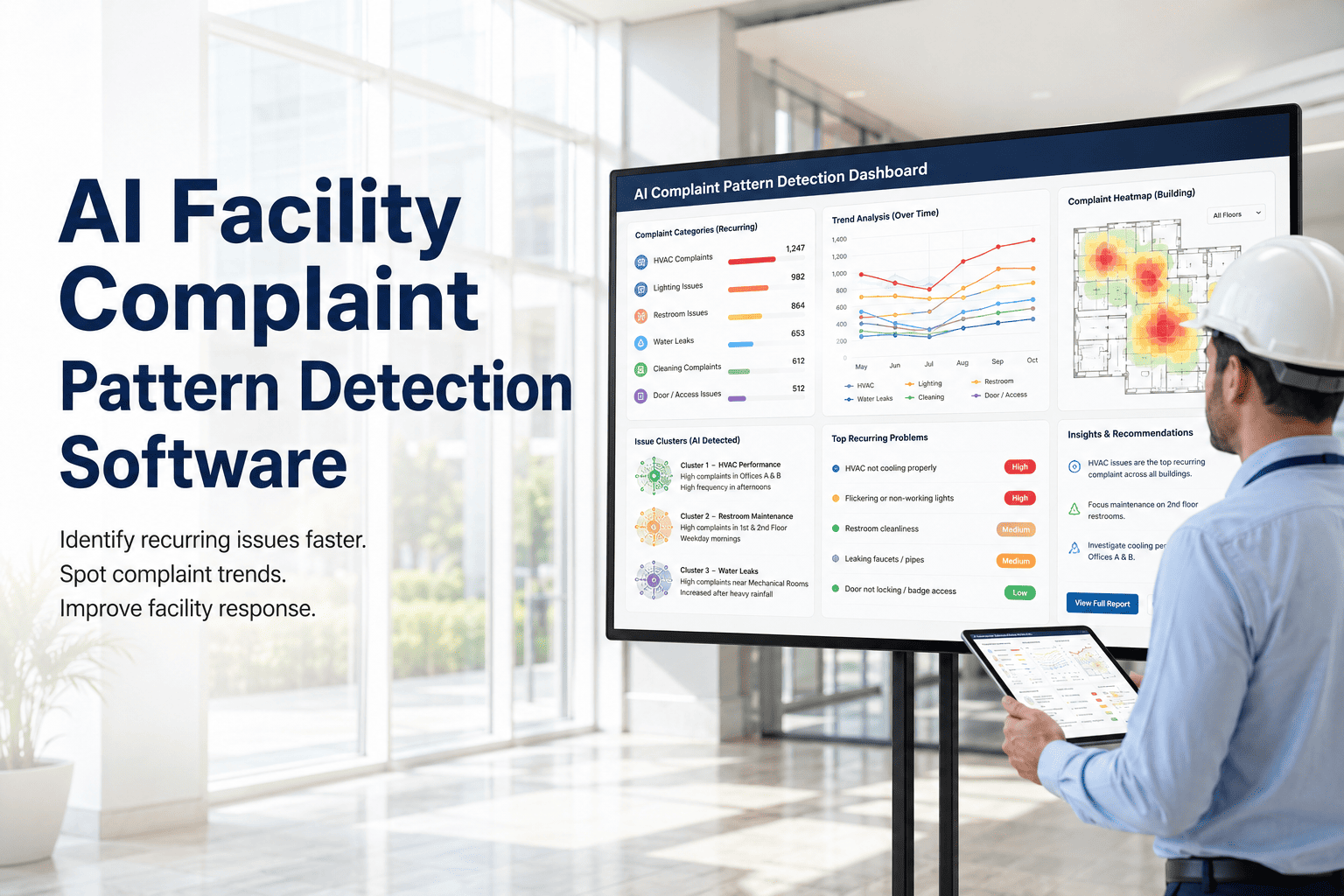
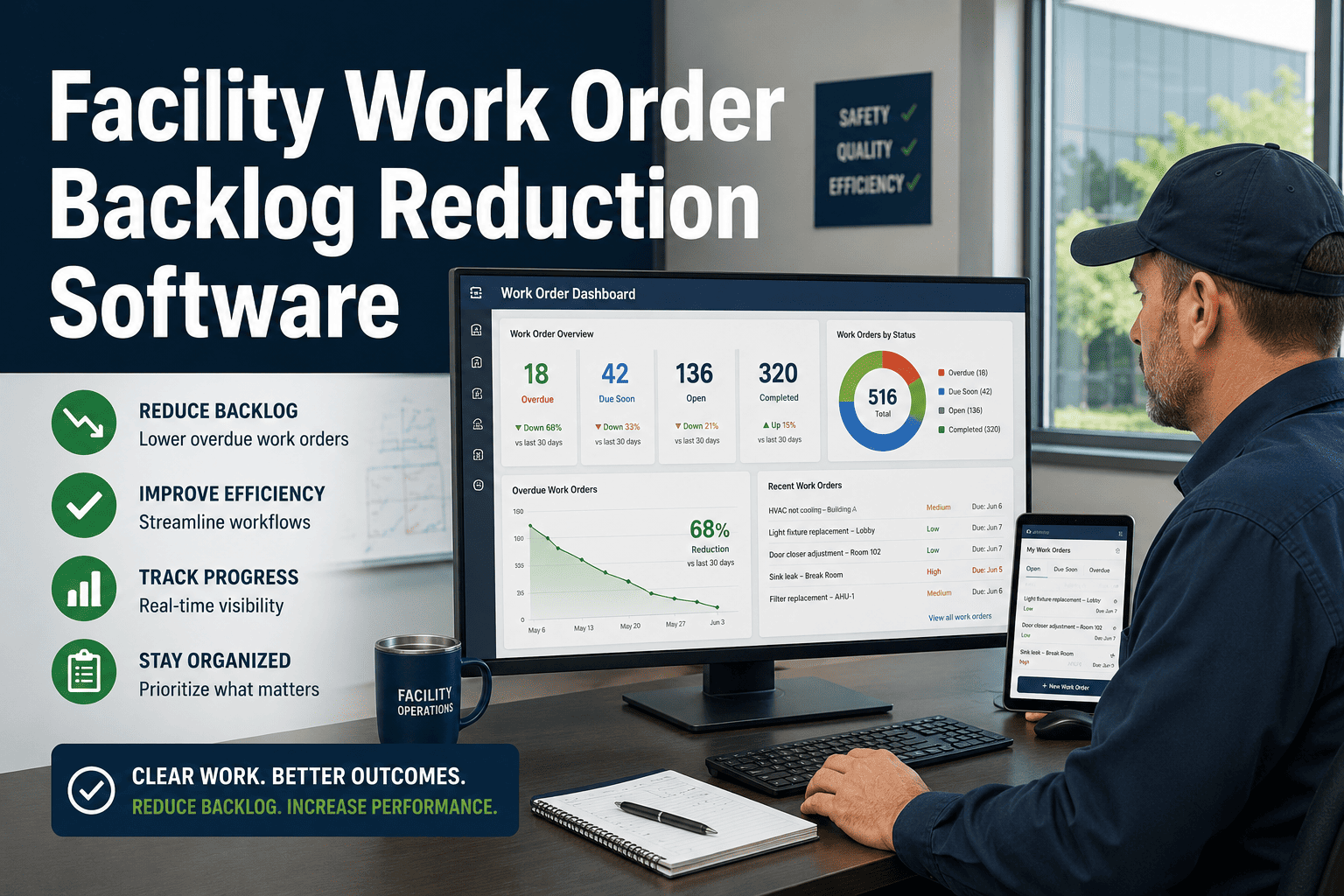
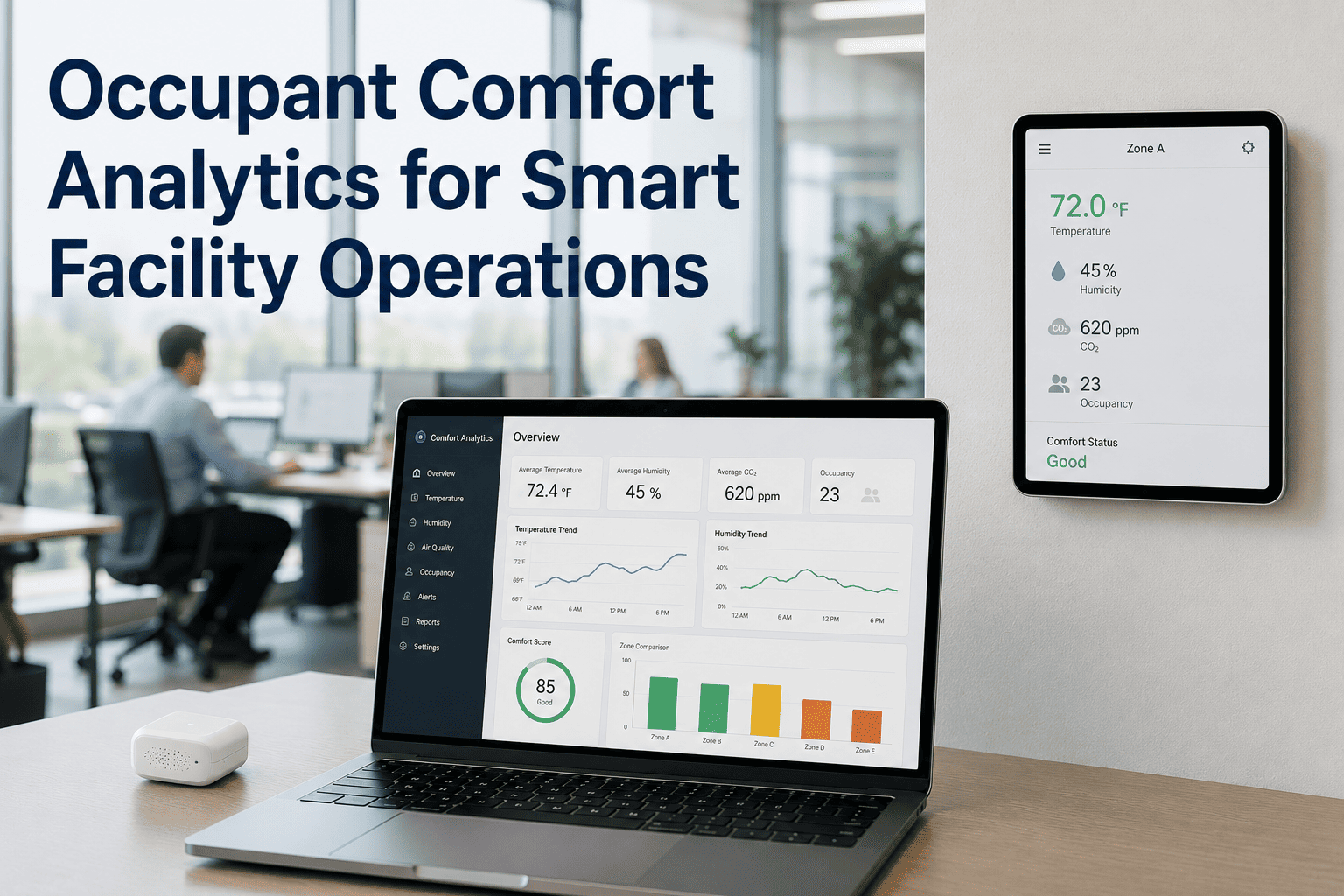
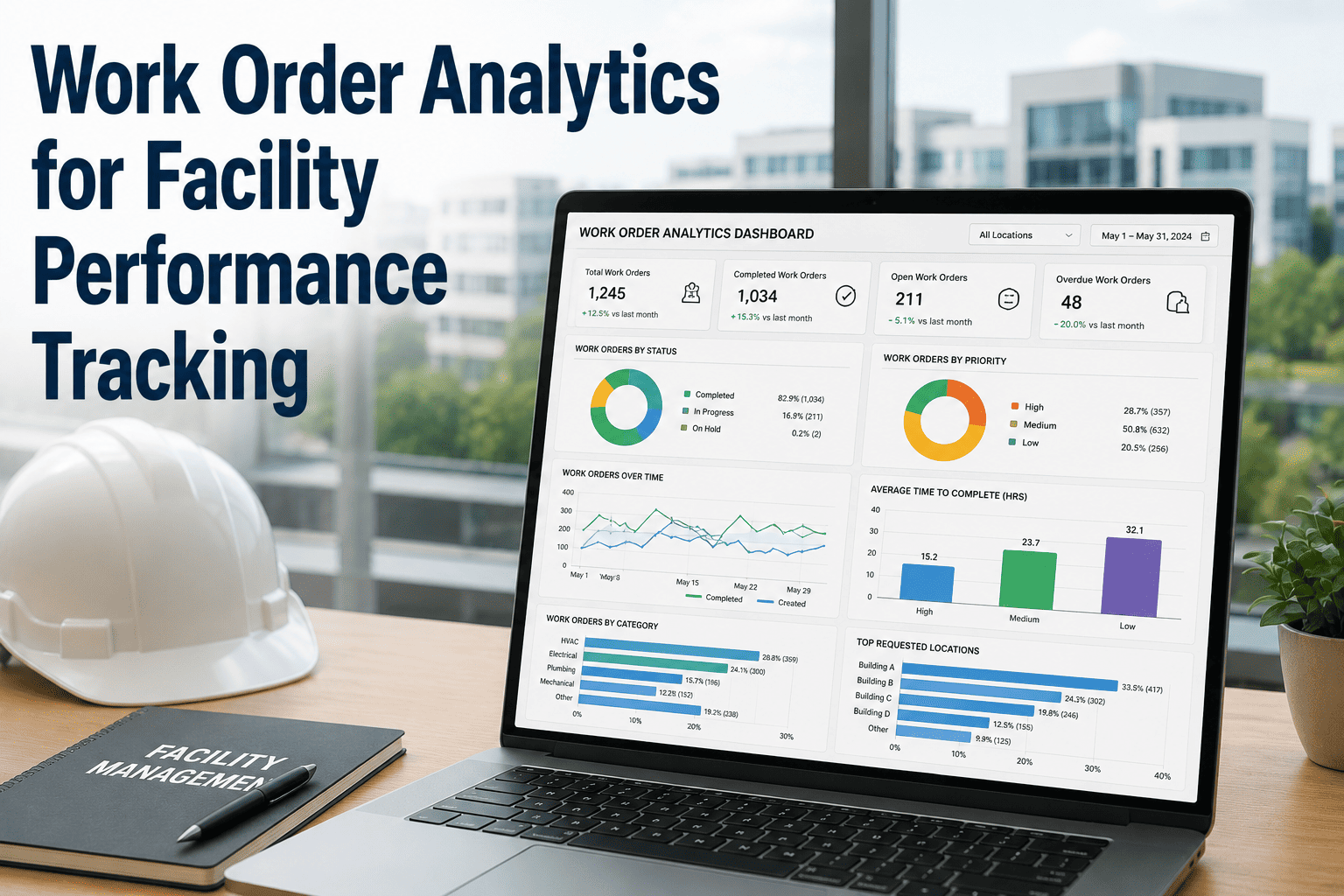
When occupants submit maintenance requests, they rarely describe problems in engineering terms. "It's too cold on my floor" and "the air feels stuffy in the conference room" and "there's a draft near the windows" may all be the same malfunctioning VAV box — but your team sees three unrelated tickets. AI complaint pattern detection reads the language of occupant feedback, maps it to locations, and connects the dots that manual review misses entirely. Facilities using AI complaint analytics resolve comfort issues 40–60% faster and reduce repeat complaint volume by up to 35% within the first operating quarter. Start free on Oxmaint and activate complaint intelligence across your facilities today.
AI Analytics · Occupant Experience · Facility Intelligence
AI Facility Complaint Pattern Detection Software
Recurring occupant complaints signal hidden maintenance failures. AI pattern detection connects complaint language, location data, and frequency — so your team sees systemic problems, not individual tickets.
Top complaint categories in multi-tenant commercial facilities (BOMA 2024 benchmark)
Why Manual Complaint Review Fails at Scale
A facility manager handling 200 tickets per month cannot read every description and map it to a location, a system, and a time pattern. AI does this continuously and flags anomalies before they become crises.
01
Language Variation
Occupants describe the same problem in dozens of ways. AI uses natural language processing to recognize semantic similarity — grouping "cold," "freezing," "chilly," and "HVAC not working" as one complaint cluster.
02
Temporal Blindness
A complaint that repeats every Monday morning suggests an equipment startup issue. One that spikes every February points to a seasonal failure. Humans rarely connect dates across hundreds of tickets; AI does it instantly.
03
Cross-System Masking
A water leak complaint and a mold concern and a humidity complaint may all be the same failed condensate drain. They live in different ticket categories and reach different technicians — invisible as a pattern without AI analysis.
Detection Layers: How Oxmaint Reads Complaint Patterns
1
Semantic Grouping
NLP reads occupant complaint text and groups semantically similar descriptions regardless of how they are worded. "Too hot," "overheating," "stuffy," and "sweating at my desk" map to one complaint cluster — HVAC cooling capacity.
2
Location Heat Mapping
Complaints are mapped to floor, zone, and room coordinates. Clusters forming in the same building zone reveal infrastructure issues affecting multiple occupants — not individual preferences or isolated incidents.
3
Frequency and Velocity Tracking
AI tracks how quickly a complaint pattern is growing. A cluster receiving two new complaints per week that accelerates to six per week signals a worsening failure — triggering an alert before occupant impact becomes severe.
4
Risk Scoring
Each detected pattern receives a risk score based on occupant count affected, complaint frequency, time since first occurrence, and asset criticality. High-risk patterns surface at the top of the manager's dashboard — not buried in a report.
5
Cross-System Correlation
Oxmaint links complaint patterns to open work orders, asset PM history, and inspection records. A complaint cluster appearing two weeks after a missed PM on the same system is flagged as a likely cause-effect relationship.
Complaint Pattern Outcomes by Building Type
| Building Type |
Most Common Pattern |
Typical Root Cause Found |
Average Tickets Eliminated |
| Class A Office |
Thermal comfort, Floor 4–8 |
VAV box failure, perimeter thermostat drift |
18–24 tickets per quarter |
| Healthcare Facility |
Odor complaints, East Wing |
Blocked condensate drain, failing exhaust fan |
12–16 tickets per quarter |
| University Campus |
Lighting flicker, Library floors |
Aging ballasts, panel overload |
9–14 tickets per quarter |
| Municipal Building |
Restroom complaints, 1st floor |
Single failing plumbing riser, pressure drop |
20–30 tickets per quarter |
| Manufacturing Plant |
Temperature extremes, Production floor |
Makeup air unit capacity mismatch |
14–22 tickets per quarter |
Find the Patterns Behind Your Occupant Complaints
Oxmaint's AI reads your complaint history and surfaces the recurring issues costing your team the most time — in days, not months.
Expert Review
OX
Facility Operations Expert
Occupant Experience Analysis
Occupant complaint data is one of the most underutilized signals in facility management. Unlike sensor data, which requires installation and integration, complaint data already exists in your work order system — it just has never been analyzed at scale. Facilities that implement AI complaint pattern detection consistently find that 30–40% of their open complaint volume traces back to a small number of systemic failures. The economic argument is straightforward: resolving one root cause can eliminate 20 tickets per quarter, each costing 45–90 minutes of labor. AI pattern detection doesn't just improve occupant satisfaction scores — it directly reduces labor cost and PM backlog in measurable terms. The ROI typically appears within the first 60–90 days of deployment.
Frequently Asked Questions
Does AI complaint pattern detection require sensors or IoT hardware?
No hardware is required. Oxmaint analyzes the complaint text, location tags, and timestamps already present in your work order records. IoT sensor data can enrich detection accuracy if available, but the core pattern engine runs entirely on work order data you already have.
Start free on Oxmaint and connect your existing complaint data through our import tools.
How does the system handle occupants who submit vague or informal complaints?
Oxmaint's NLP is specifically trained on facility maintenance language, including informal descriptions, abbreviations, and mixed-language inputs. It maps vague terms to maintenance categories automatically and flags them for human review if classification confidence is low — so no complaint is lost or miscategorized.
Book a demo to see how Oxmaint handles real-world complaint data from your building type.
Can complaint patterns be used in tenant reporting or lease renewal conversations?
Yes — complaint pattern resolution data is a powerful tool in tenant communications. Being able to show a tenant that their recurring HVAC complaints were detected as a pattern, investigated, and resolved with a root-cause fix demonstrates operational excellence. Oxmaint generates complaint resolution summaries exportable as tenant-facing reports.
Book a demo to see the reporting module in action.
Is complaint pattern detection available for multi-site or portfolio-level operations?
Oxmaint supports portfolio-level complaint analytics — detecting patterns not just within a single building but across your entire property portfolio. This is especially valuable for facility management companies and property owners who manage 10 or more buildings and need to spot systemic issues affecting multiple sites simultaneously.
Try Oxmaint free and see portfolio complaint insights across all your locations.
Turn Occupant Complaints into Maintenance Intelligence
Oxmaint detects the patterns behind recurring complaints, links them to root causes, and helps your team fix problems once — improving occupant satisfaction and reducing reactive maintenance costs.