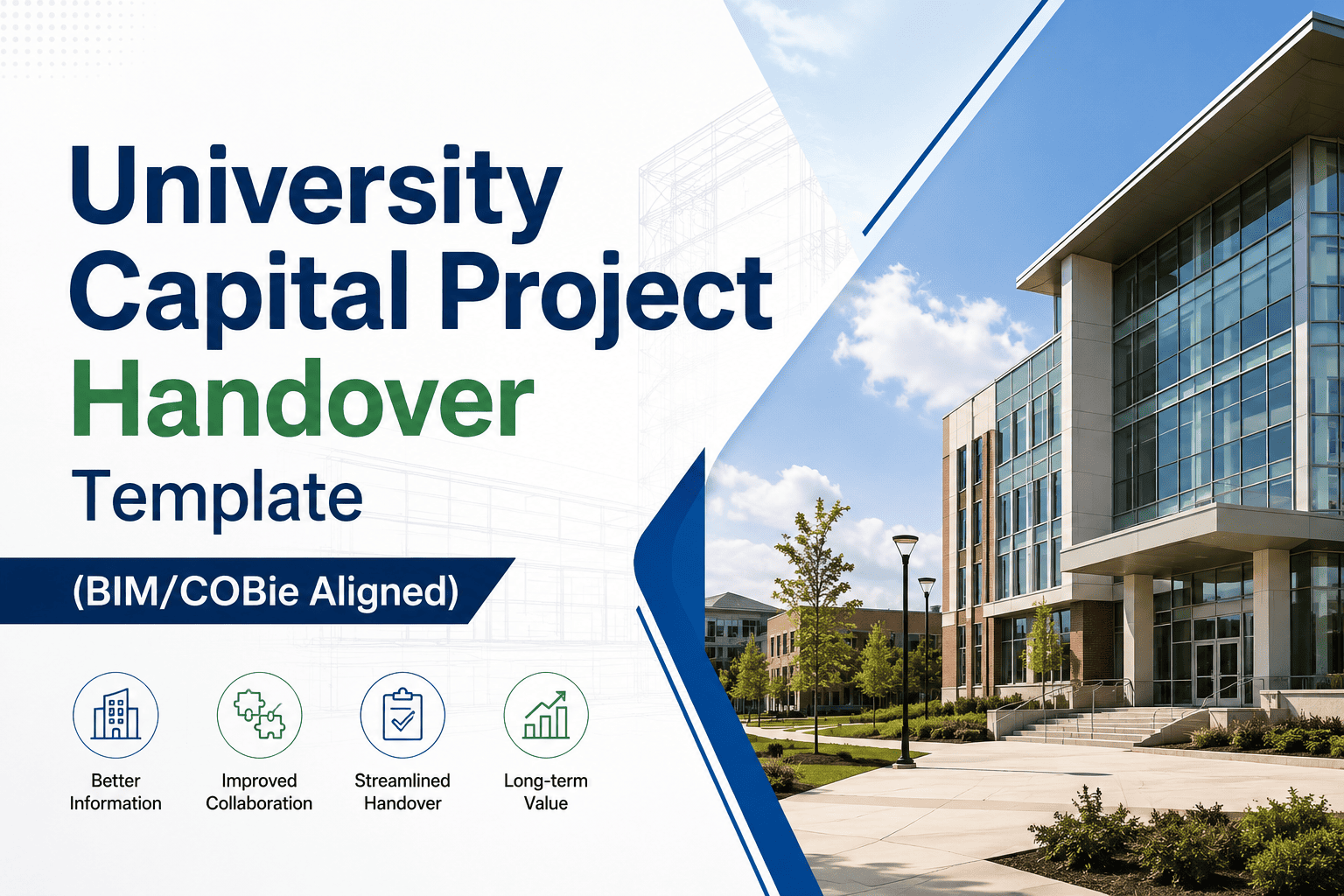
Nearly 68% of university capital projects experience handover documentation gaps that delay building occupancy by an average of 3–6 weeks. When a $40M science building reaches substantial completion, the transition from construction team to campus facilities operations is where asset data either enters the CMMS correctly — or gets lost in a filing cabinet forever. The commissioning record is not just a punch list; it is the foundation of every preventive maintenance schedule, every warranty claim, and every lifecycle forecast for the next 30 years. If your campus is onboarding new buildings with binder handoffs and PDF dumps instead of structured CMMS imports, start a free trial or book a demo to see how Oxmaint structures capital project turnover from day one.
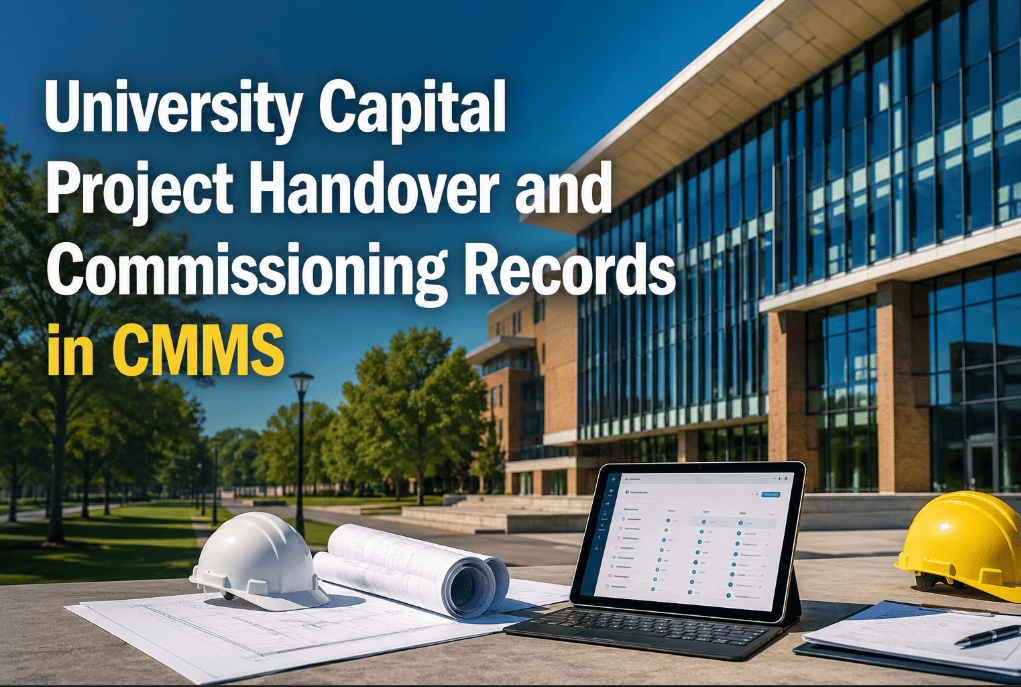
University Capital Project Handover and Commissioning Records in CMMS
68% of campus capital projects have handover documentation gaps. Structured CMMS-based turnover captures every asset, warranty, and O&M record before the construction team leaves the site.
The Building Is Complete — But Your Maintenance Data Is Not
A certificate of occupancy does not mean the building is ready for facilities operations. It means the construction is code-compliant. The gap between construction closeout and operational readiness is where universities lose warranty coverage, miss first-year PM windows, and start the deferred maintenance clock on day one. Oxmaint provides a structured capital project turnover workflow that imports every asset, links every warranty, and generates PM schedules before the general contractor demobilizes. See the full handover framework — start a free trial or book a demo to configure it for your campus.
What Is Capital Project Handover and Commissioning in a University CMMS?
Capital project handover is the structured transfer of all building systems, equipment records, warranties, and O&M documentation from the construction team to the campus facilities operations team — registered directly into the CMMS. Commissioning records document the functional performance testing of every major building system (HVAC, electrical, plumbing, fire protection, controls) to verify they operate as designed. Together, handover and commissioning records form the operational baseline for the building's entire lifecycle in the CMMS. Universities that skip structured CMMS import during handover spend an average of 14 months retroactively building asset records — during which 87% of first-year warranty claims go unfiled. Want to eliminate that gap entirely? Explore how Oxmaint handles it — start a free trial or book a demo to see the import workflow in action.
The Six Pillars of a Complete Capital Project Turnover Package
Every maintainable asset — AHUs, chillers, pumps, switchgear, elevators, fire alarm panels — registered in the CMMS with model, serial, location, and manufacturer data. A typical 80,000 GSF academic building contains 1,200+ assets requiring individual PM schedules.
Every warranty term — manufacturer, start date, expiration, coverage scope, claim procedure — linked to its CMMS asset record. The average new building carries $2.4M in warranty value across mechanical, electrical, roofing, and envelope systems. Without CMMS tracking, 73% of warranties expire unclaimed.
Functional performance test results for every HVAC sequence, electrical switchover, fire alarm zone, and plumbing system. Commissioning records establish the design-intent baseline that PM schedules are built to maintain — and that re-commissioning audits will measure against in years 3, 5, and 10.
Operation and maintenance manuals, as-built drawings, control sequences, and equipment submittals linked to individual CMMS asset records — not stored in a shared drive folder that no technician will ever open. Digital attachment to the asset record ensures the manual is accessible at the equipment location via mobile CMMS.
Manufacturer-recommended PM schedules generated for every imported asset before the building is occupied. First PM cycles — filter changes, belt inspections, lubrication, fire alarm tests — should begin within 30–90 days of substantial completion, not after the first failure report.
Outstanding construction deficiencies tracked through CMMS work orders linked to contractor responsibility — with warranty-period deadlines, photo documentation, and resolution verification. Universities that track punch list items outside the CMMS lose visibility into open deficiencies within 60 days of occupancy.
Six Handover Failures That Cost Universities Millions
Construction teams deliver 40–60 binders of O&M documentation that sit in a closet. Within 6 months, 92% of technicians report they have never opened them. Asset data that is not in the CMMS does not exist operationally.
Universities lose an average of $1.8M per building in unclaimed warranty repairs because warranty terms were never entered into the CMMS. The facilities team discovers the warranty existed only after paying for the repair out of operating budget.
Without structured asset import, PM schedules for new buildings take 8–14 months to build retroactively. During that gap, equipment operates without scheduled service — accelerating wear and voiding manufacturer warranties that require documented PM compliance.
Commissioning data stored on the commissioning agent's server or in construction project files becomes inaccessible within 2 years. When re-commissioning is needed at year 5, the facilities team has no baseline to measure against — turning a $30K re-Cx into a $120K full Cx.
Construction punch list items tracked in spreadsheets or email threads lose accountability within 90 days. The GC's warranty obligation to resolve deficiencies expires, and the university absorbs $80K–$300K in repair costs that were the contractor's responsibility.
New building assets are dumped into the CMMS as a flat list without system-level hierarchy. Without linking AHU-3 to its VFDs, damper actuators, and coils, technicians cannot trace system failures to component-level root causes — and lifecycle forecasting is impossible.
How Oxmaint Structures Capital Project Handover for Universities
Oxmaint provides a turnover workflow that transforms construction closeout documentation into a fully operational CMMS asset registry — with warranties linked, PM schedules generated, and commissioning baselines attached — before the building is occupied. Campus facilities teams ready to eliminate the handover gap can start a free trial or book a demo.
Structured import templates accept equipment schedules from the construction team — model, serial, location, system assignment — and build the full asset hierarchy: Building > System > Equipment > Component. No manual entry of individual assets.
Warranty start dates, durations, coverage scopes, and claim procedures attached to each asset record. Automated alerts 90 days before expiration prompt the facilities team to inspect for latent defects and file claims before coverage lapses.
Functional performance test data, sequence of operations verification, and TAB reports linked to CMMS system records — accessible for re-commissioning comparison at years 3, 5, and 10 without searching archived project files.
PM templates applied to imported assets generate the first service cycles — filter changes, belt inspections, lubrication schedules, fire alarm tests — scheduled to begin within 30 days of substantial completion. No 14-month PM gap.
Punch list items converted to CMMS work orders with contractor assignment, warranty-period deadlines, photo documentation requirements, and resolution verification — ensuring no deficiency expires unresolved.
O&M manuals, as-built drawings, and submittals attached to individual asset records — accessible on the technician's mobile device at the equipment location. No binder closets. No shared drive hunting.
Traditional Handover vs. CMMS-Structured Turnover
Outcomes from Structured Capital Project Handover
Every warranty term tracked, claim procedures documented, and 90-day expiration alerts prevent the $1.8M average loss from unclaimed coverage
PM schedules active within 30 days vs. 8–14 months — eliminating the first-year maintenance gap that voids manufacturer warranties
Every construction deficiency tracked as a CMMS work order with contractor assignment and warranty-period deadline — no items expire unresolved
Asset condition scoring, replacement forecasting, and CapEx planning begin at commissioning — not retroactively after the first major failure
Frequently Asked Questions
When should CMMS asset import begin during a capital project?+
How does Oxmaint handle warranty tracking for multi-system buildings?+
Can Oxmaint store commissioning records for re-commissioning comparisons?+
What should be included in the project specification to ensure CMMS-ready handover?+
Your New Building Deserves Maintenance Data as Good as Its Architecture
Structured CMMS handover protects $2.4M in warranty value, activates PM schedules before occupancy, and establishes the 30-year lifecycle baseline your campus needs for CapEx forecasting. First asset imports completed in the first week.