Higher education institutions are the largest non-military building operators in the United States — managing over 5.7 billion gross square feet collectively — and they produce roughly 2% of all U.S. carbon emissions from building operations alone. In 2026, the pressure to reduce that footprint is no longer aspirational: 640+ universities have signed carbon neutrality pledges, AASHE STARS participation has grown 22% since 2023, and student recruitment data now shows that 71% of prospective students consider campus sustainability when choosing a school. The programs featured in this guide aren't just symbolic — they represent institutions that have achieved measurable operational results: real energy reductions, documented carbon offsets, verified AASHE STARS Gold and Platinum ratings, and geothermal systems delivering 40–60% heating cost reductions. Behind every one of these successes is a facility team that can measure, track, and verify their operations data — often through a CMMS that connects maintenance activities directly to sustainability outcomes. Institutions using Oxmaint track energy-linked maintenance, asset lifecycle data, and sustainability KPIs as part of their daily operations. Want to see what that looks like on your campus? Book a demo or start a free trial.
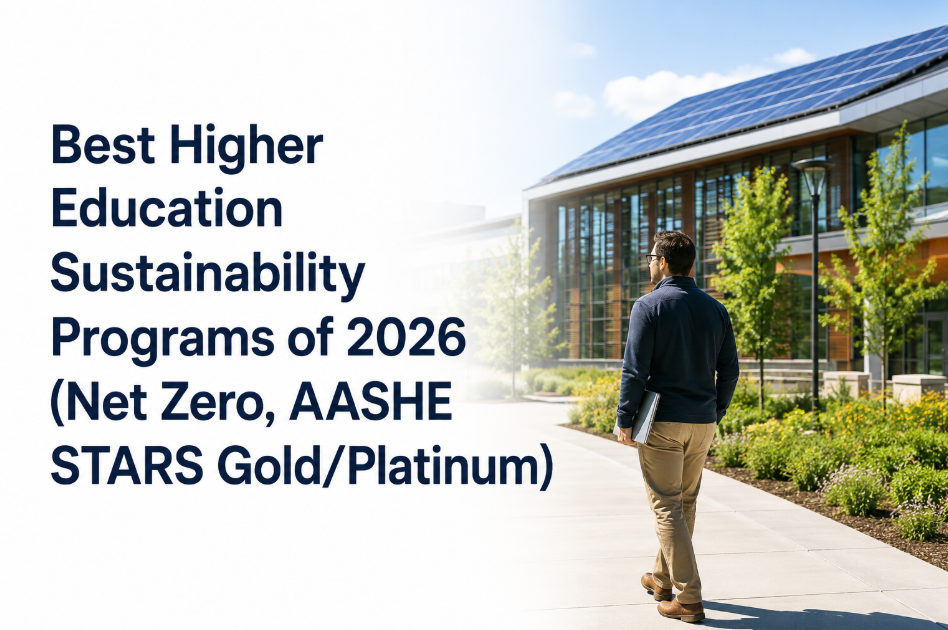
Best Higher Education Sustainability Programs of 2026
Net-zero pathfinders, AASHE STARS Gold and Platinum institutions, geothermal pioneers, and the CMMS-driven operations data behind each success — case studies with measurable results.
Connect Your Maintenance Operations to Sustainability Goals
Sustainability targets fail when facility teams can't measure progress. Oxmaint links energy asset maintenance, HVAC performance tracking, and sustainability KPIs to your daily operations — so progress is documented, not estimated.
What Defines a Best-in-Class Sustainability Program in 2026
Sustainability in higher education is no longer about signing pledges — it is about delivering verified, measurable operational outcomes. The programs highlighted in this guide meet four criteria: they have documented energy or carbon reductions of 25% or more, they hold or are pursuing AASHE STARS Gold or Platinum ratings, they have integrated sustainability into facility operations rather than treating it as a separate initiative, and they can produce verified data proving their claims. The common operational thread across every successful program is measurement infrastructure — often a CMMS or building analytics platform that connects daily maintenance decisions to long-term sustainability outcomes.
Leading Sustainability Programs by Category
Stanford eliminated 68% of campus carbon emissions by replacing its cogeneration plant with a heat recovery system and electrified district heating. The Stanford Energy System Innovations (SESI) project cost $485 million but saves $4.4 million annually in energy costs and eliminates 150,000 metric tons of CO2 per year. The system uses variable-speed chillers and heat pumps powered by 73% renewable electricity.
Ball State operates the largest closed-loop geothermal system in the country — 3,600 boreholes across 47 acres heating and cooling 5.5 million square feet of campus buildings. The system replaced four aging coal boilers and reduced campus carbon emissions by 51%. Annual energy savings exceed $2 million, and the system's 50-year design life transforms it from a capital cost into a multigenerational asset.
UNH achieved AASHE STARS Platinum with a 50% carbon reduction since 2001, driven by a campus landfill gas-to-energy system, comprehensive building retro-commissioning, and a sustainability-integrated curriculum. Their EcoLine cogeneration facility converts landfill methane into 85% of campus heat and 8% of electricity — turning a waste liability into an energy asset.
ASU maintains AASHE STARS Gold across the largest public university in the U.S. — 730+ buildings and 80,000+ students. Their approach is operational rather than symbolic: 110MW of solar capacity, 32% reduction in potable water use since 2007, and a zero-waste goal supported by comprehensive waste-stream monitoring. The facility team uses building analytics to optimize HVAC scheduling across campus.
Middlebury became the first higher ed institution to commit to carbon neutrality — and has achieved it through a biomass gasification plant, a 143-acre solar array, aggressive building envelope upgrades, and verified carbon offsets. Their facility team tracks energy performance building-by-building through a CMMS-integrated energy management system that identifies efficiency degradation in real-time.
The entire 10-campus UC system committed to carbon neutrality for Scopes 1 and 2 by 2025. Progress is tracked through a system-wide energy dashboard that aggregates data from individual campus CMMS and building management systems. UC Davis alone has reduced campus energy intensity by 34% since 2000 while adding 2.5 million GSF of new construction — proving that growth and energy reduction can coexist with the right operational infrastructure.
The Operational Infrastructure Behind Every Success
Every program above shares one common operational requirement: the ability to measure, track, and verify sustainability outcomes from daily facility operations. Here's what that measurement infrastructure looks like — and how a CMMS like Oxmaint provides it.
CMMS tracks every HVAC unit, chiller, boiler, and pump — with installation date, efficiency rating, and maintenance history. This data identifies which assets are degrading in efficiency and consuming excess energy.
Missed preventive maintenance on HVAC systems degrades efficiency 15–30%. CMMS ensures PM schedules are followed, documented, and optimized — protecting the energy performance that sustainability programs depend on.
When should a 20-year-old chiller be replaced with a high-efficiency unit? CMMS calculates remaining useful life and replacement timing — enabling sustainability-aligned capital planning.
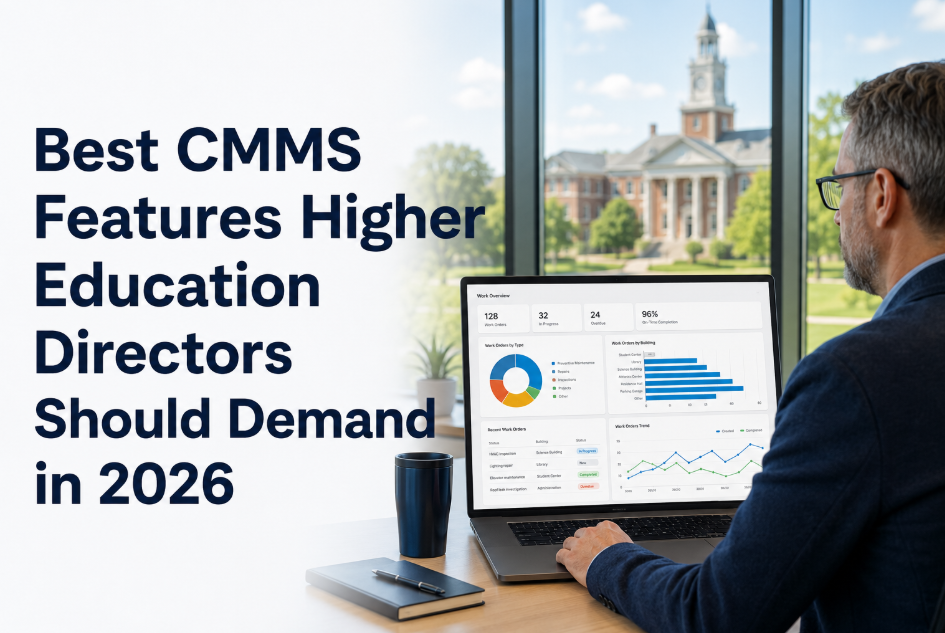
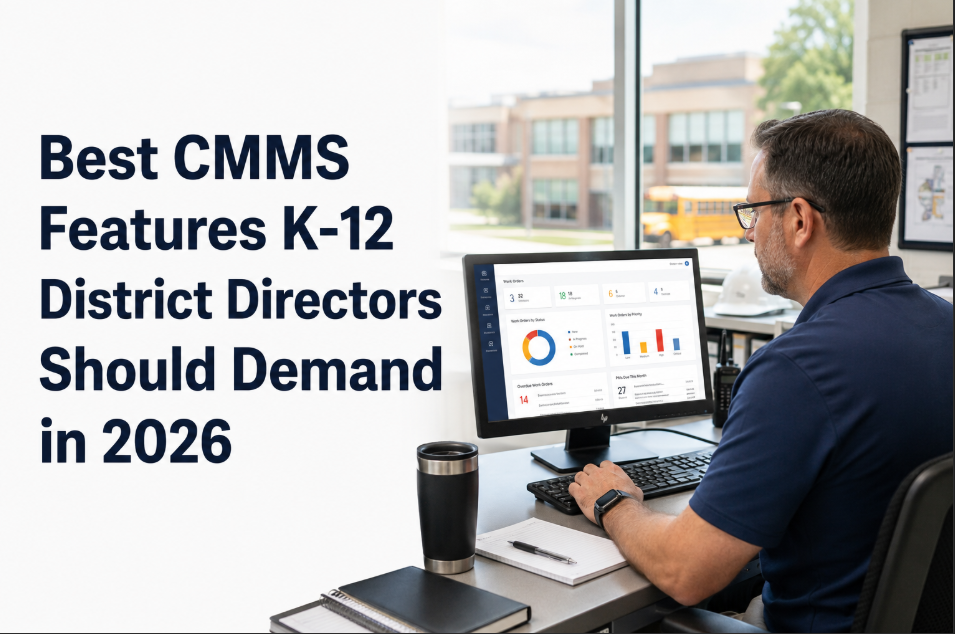
CMMS produces dashboards showing energy cost per GSF, carbon intensity by building, water consumption trends, and waste diversion rates — the exact metrics AASHE STARS submissions require.
AASHE STARS Rating Requirements and CMMS Data
AASHE STARS evaluates institutions across five categories. Facility operations data — much of it producible by a CMMS — drives scoring in three of them.
| STARS Category | Facility Data Needed | CMMS Produces It? |
|---|---|---|
| Operations — Energy | Energy consumption by source, intensity per GSF, renewable % | Yes |
| Operations — Buildings | LEED-certified buildings, green building policies, renovation data | Partial |
| Operations — Water | Water consumption, reduction %, fixture upgrade tracking | Yes |
| Operations — Waste | Waste diversion rates, recycling program data | Indirect |
| Planning — Climate | GHG inventory data, emissions reduction progress | Supporting data |
You can't reduce what you can't measure. Oxmaint connects your daily maintenance operations to sustainability outcomes — energy asset tracking, PM compliance for HVAC efficiency, lifecycle planning for equipment upgrades, and AASHE-compatible reporting. Start measuring your campus sustainability from the operations level up.
Frequently Asked Questions
Does CMMS data help with AASHE STARS submissions?
How do maintenance operations affect campus carbon emissions?
What's the first step for a campus that hasn't started a formal sustainability program?
Can small institutions compete for AASHE STARS Gold or Platinum?
Turn Your Maintenance Operations Into Sustainability Outcomes
The institutions leading higher education sustainability didn't start with grand gestures — they started with measurement. Oxmaint connects your daily facility operations to sustainability KPIs — energy asset tracking, PM compliance, lifecycle planning, and AASHE-compatible reporting. Start measuring, start improving, start leading.