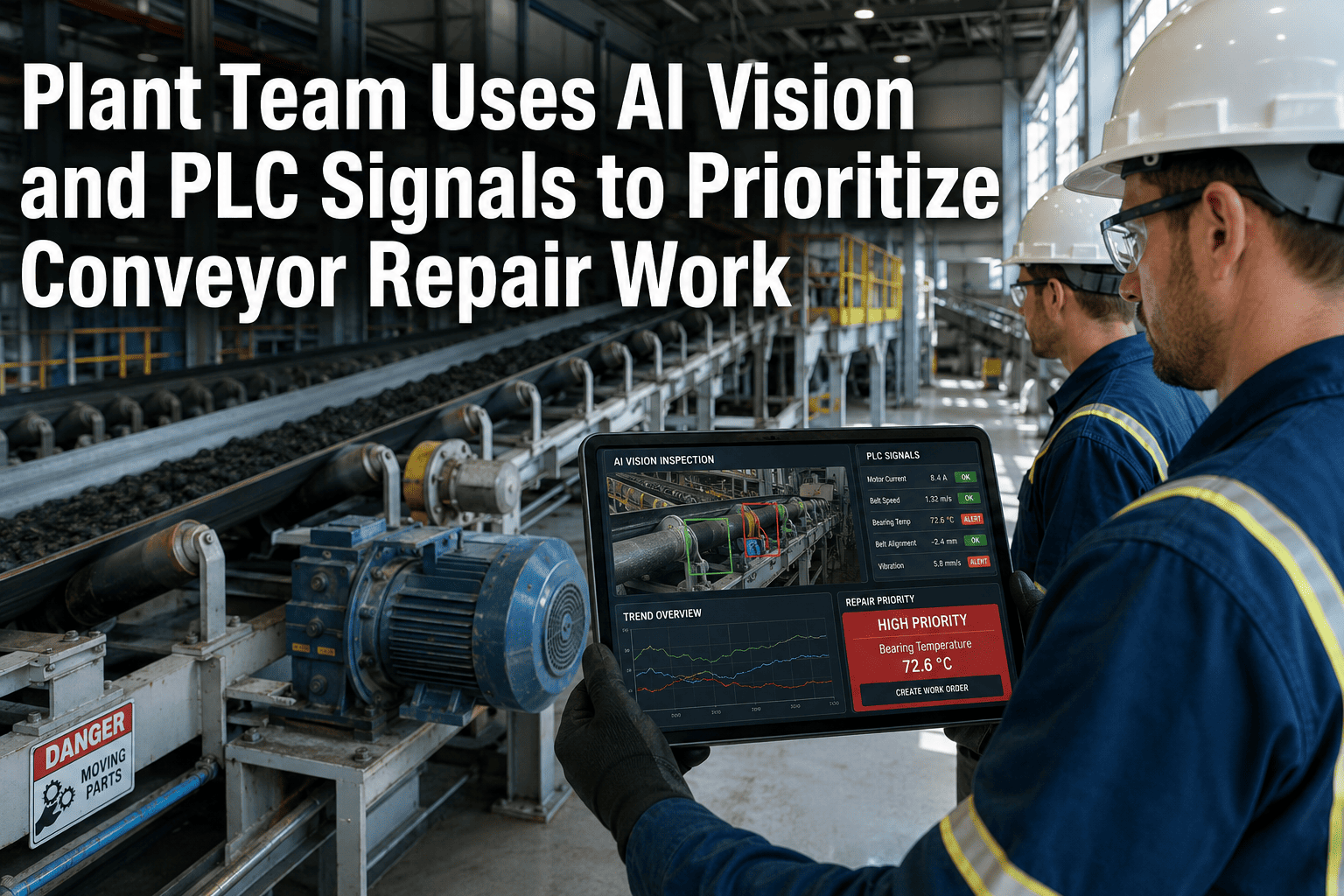
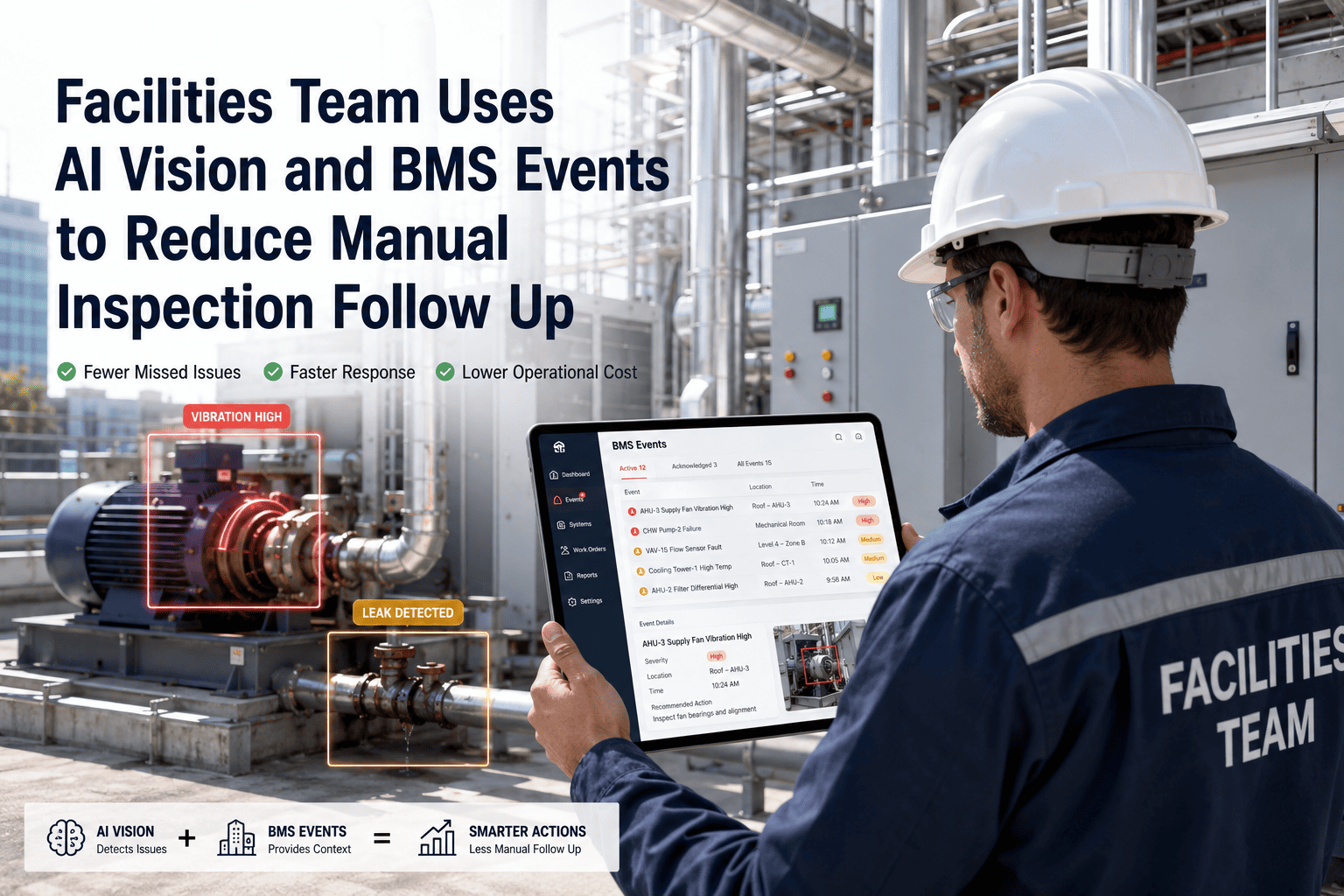
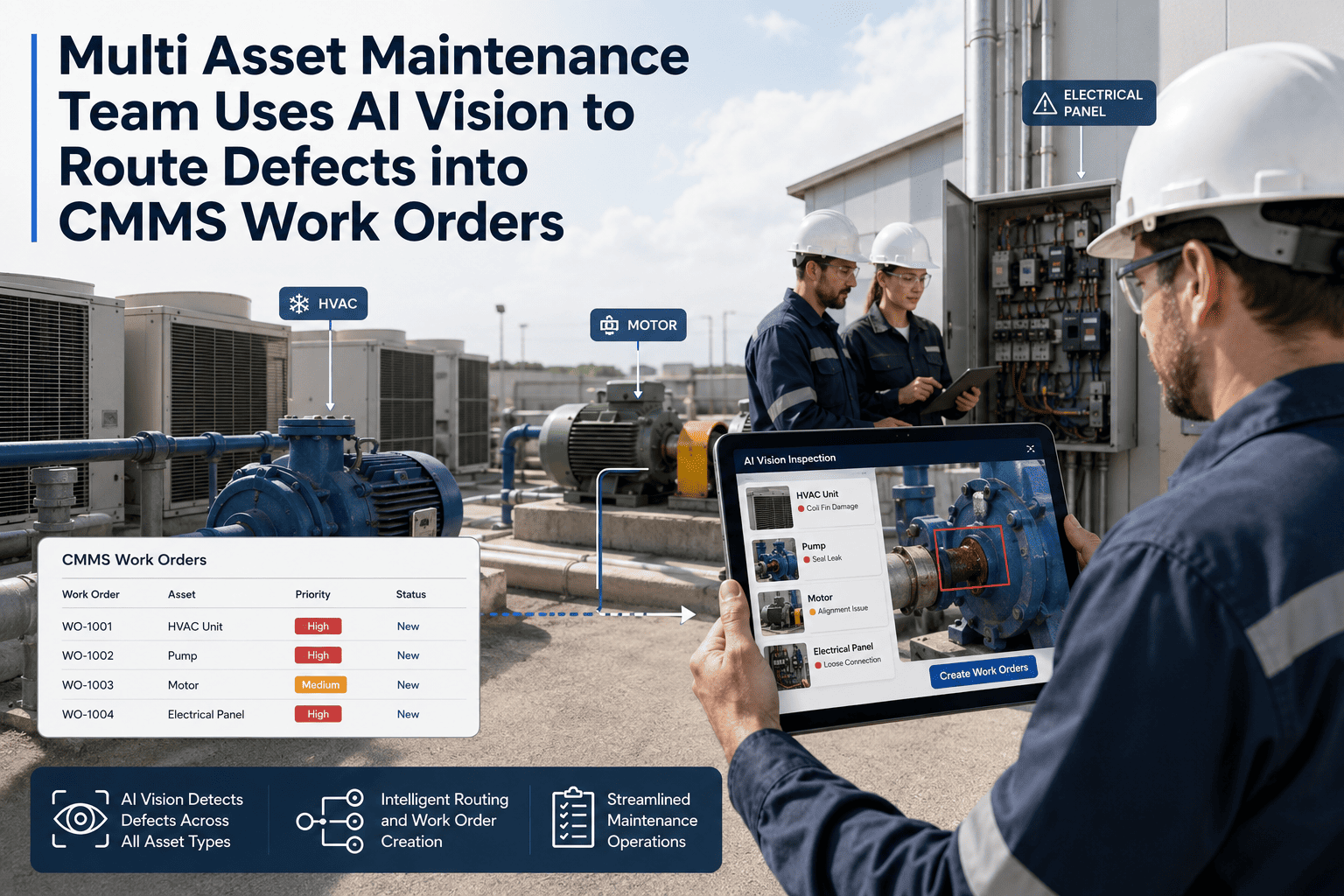
A service team that cannot prove an inspection happened is a team that cannot defend itself when something goes wrong — during an audit, after an incident, or at contract renewal. The gap between maintenance that was done and maintenance that was documented is where liability lives. QR-tagged assets combined with AI vision inspection close that gap in a way that paper checklists, verbal sign-offs, and manual photo uploads never could: every scan is timestamped, every photo is analyzed, every defect is logged to the asset record automatically. OxMaint AI brings QR asset scanning and computer vision inspection into one platform so service teams across every industry — manufacturing, facilities, fleet, utilities, food processing — get the inspection traceability that compliance requires and operations demand. Start your free trial and see how QR assets and AI vision work together in OxMaint today.
Traditional Inspection
Paper checklist — filled by hand
Photo taken on personal phone — maybe shared
Defect written in margin — maybe transferred
Signed by technician — stored in binder
Auditor asks for record — search takes days
Traceable? Barely. Defensible? No.
OxMaint QR + AI Vision
Technician scans QR tag — asset loads instantly
AI camera analyzes photo — defects flagged in seconds
Work order auto-generated — timestamped to the asset
Sign-off captured — synced to compliance record
Auditor requests record — exported in under 2 minutes
Traceable? Completely. Defensible? Always.
What QR Asset Tagging Actually Solves
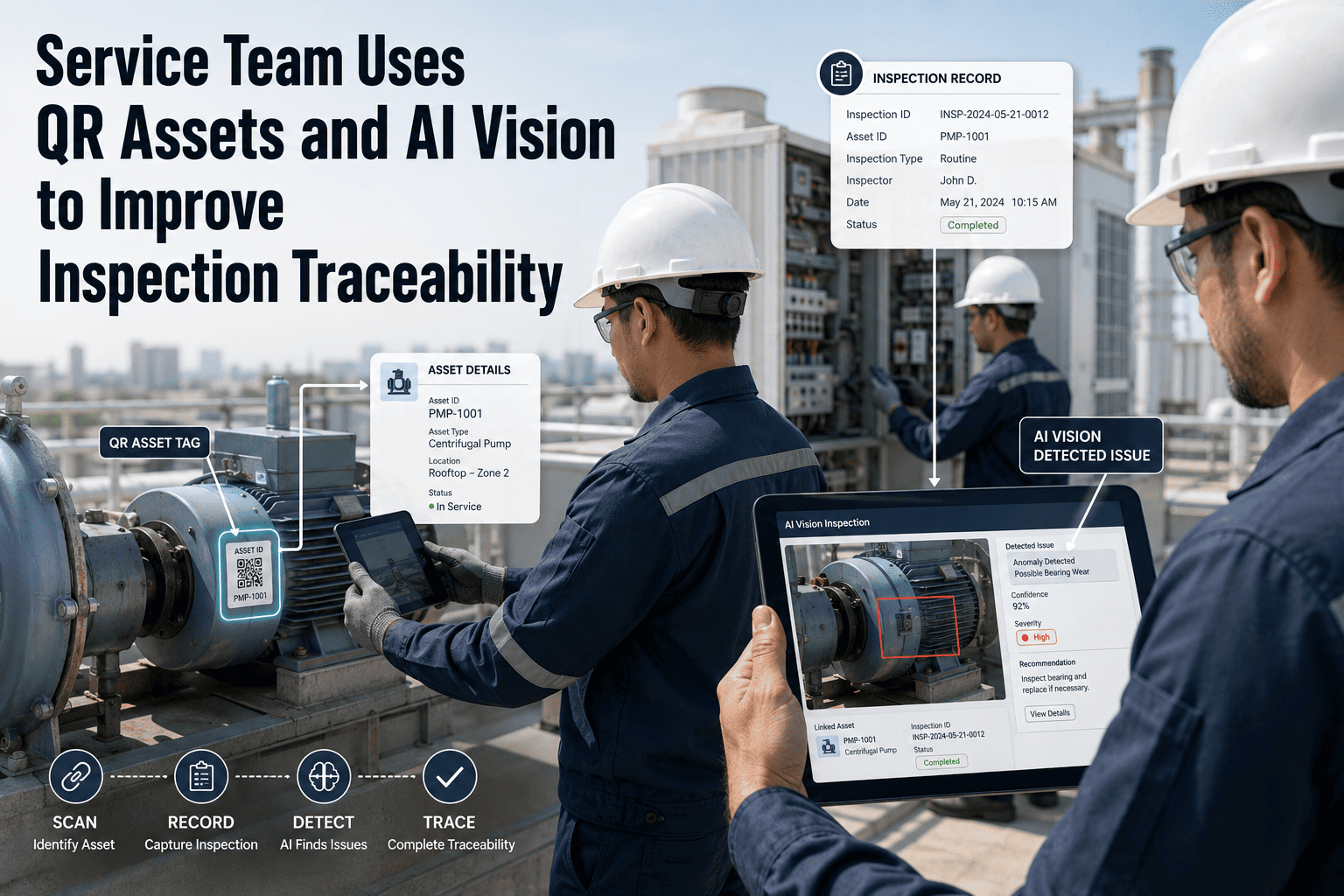
QR codes on assets are not new. What is new is what happens after the scan. In most operations, a QR code opens a static data sheet — a PDF manual or a registration number. In OxMaint, scanning a QR tag on any asset opens the full live asset record: inspection history, open work orders, PM schedule, warranty status, last technician sign-off, and flagged defects. The technician does not need to know the asset ID, the location code, or the service history. They scan, and context appears.
Scan
Asset Identity Confirmed Instantly
The QR tag carries the asset ID, zone classification, and inspection protocol reference. One scan on a mobile device pulls the complete asset record — no manual lookup, no ID entry, no risk of inspecting the wrong unit.
Load
Live Asset Context Surfaces
Last inspection date, open defects from prior visits, overdue PM items, and any active work orders all appear on screen before the technician touches a single tool. Institutional knowledge lives in the system, not in someone's memory.
Inspect
Structured Checklist Runs Against the Asset
The inspection protocol for that specific asset type loads automatically. Each checklist item is answered, photographed, or passed — and every response is tied to the asset record, not floating in a general form submission.
Detect
AI Vision Analyzes the Photo Evidence
Photos taken during inspection are processed by OxMaint AI vision — surface anomalies, wear patterns, corrosion, fluid stains, and structural issues flagged automatically. The technician sees the AI assessment alongside their own observation before closing the inspection.
Log
Every Finding Enters the Compliance Record
Inspection completed, defects noted, photos attached, technician sign-off captured — all stored to the asset record with a timestamp. No transfer step. No transcription risk. The compliance record builds itself as the work happens.
How AI Vision Changes What Gets Caught
Surface Wear Detection
AI vision identifies surface degradation — coating breakdown, abrasion patterns, erosion marks — that human inspectors often miss on quick walkthroughs. A photo taken with a standard mobile camera provides enough data for the model to flag early-stage wear before it becomes a failure.
Manufacturing, Facilities, Fleet
Fluid and Leak Pattern Recognition
Staining patterns below machinery, around fittings, or on structural surfaces are analyzed against known leak signatures. AI vision does not require an active drip — it recognizes the residue signature and flags the asset for follow-up before the next inspection cycle.
Fleet, Food Processing, Utilities
Structural Anomaly Flagging
Cracks, deformations, corrosion clusters, and fastener gaps are detected in photo evidence even when the technician is focused on a specific checklist item. The AI runs parallel to the inspection — catching what the checklist did not explicitly ask about.
Infrastructure, Utilities, Heavy Equipment
Comparison Against Asset Baseline
OxMaint stores baseline photos at first inspection. Every subsequent AI vision analysis compares current condition against the baseline — detecting progression of known issues and identifying new anomalies that were not present at commissioning.
All Industries
AI Vision + QR Asset Scanning
Every Inspection Documented. Every Defect Detected. Every Asset Traceable.
OxMaint combines QR asset scanning with AI computer vision so service teams get inspection traceability that holds up in any audit — without adding a single extra step to the technician's workflow.
Traceability Gaps That QR + AI Vision Closes Permanently
| Traceability Gap |
How It Happens Today |
OxMaint Resolution |
Compliance Impact |
| Wrong asset inspected |
Technician identifies by sight — similar units confused |
QR scan confirms asset identity before checklist opens |
Eliminates misattributed inspection records |
| Defect noted but not actioned |
Paper defect note never converts to work order |
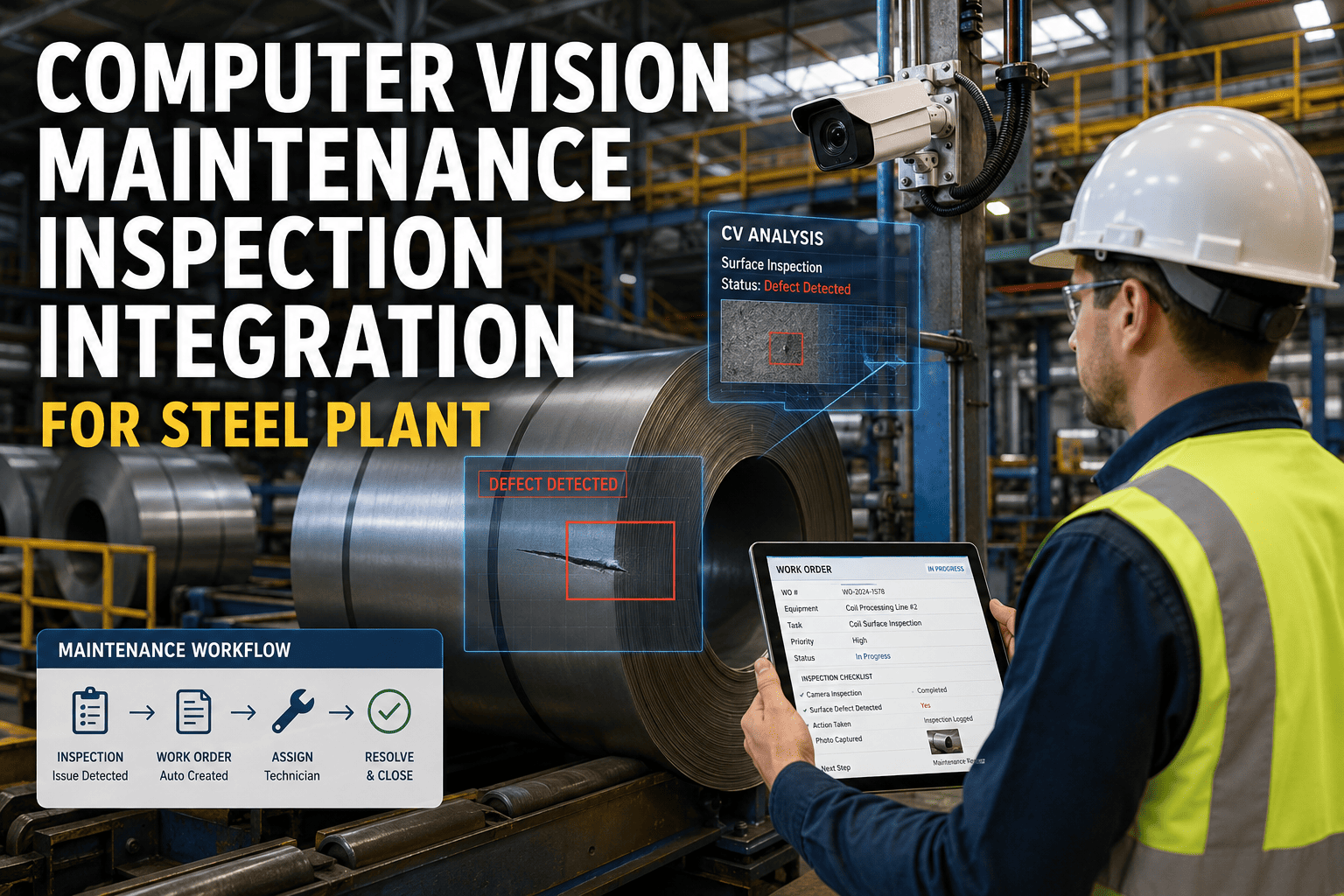
AI-flagged defect auto-generates work order in seconds |
Closes gap between finding and fix |
| No photo evidence on file |
Photo taken, not attached — stored on personal device |
Photo captured in app, attached to asset record, AI-analyzed |
Visual proof exists for every inspection event |
| Inspection timestamp disputed |
Paper form date handwritten — easily altered |
QR scan timestamp is system-generated and tamper-proof |
Undisputable audit trail per inspection event |
| Missed inspection cycle |
No alert — gap only noticed at next manual audit |
Overdue inspection alert fires before next cycle begins |
No compliance gaps go unnoticed |
| Technician skill variance |
Senior tech catches what junior misses — inconsistent |
AI vision provides consistent defect analysis regardless of experience |
Inspection quality standardized across the team |
Industries Where QR Asset Traceability Delivers the Most
Manufacturing
Production lines carry hundreds of components — motors, conveyors, presses, sensors — that look identical across zones. QR tagging eliminates the misidentification risk that plagues paper-based PM programs and gives maintenance managers a complete asset-level history that ISO auditors can verify on demand.
Commercial Facilities
Multi-tenant buildings with shared HVAC, electrical, and plumbing systems need inspection records that are traceable by zone, floor, and system — not lumped into a single building log. QR asset scanning in OxMaint gives facilities managers room-level and asset-level traceability across the entire building stack.
Delivery Fleet
DOT inspection requirements demand timestamped, vehicle-specific records for every pre-trip and post-trip check. QR tags on each vehicle unit make the correct inspection form load automatically — and AI vision analysis of submitted photos adds a defect-detection layer that improves compliance catch rates significantly.
Food and Beverage
FSMA and HACCP compliance require documented equipment inspections at defined intervals with evidence of corrective action. QR asset tags in OxMaint create a food-grade inspection trail — photo evidence, AI anomaly detection on surfaces and seals, and automatic corrective work orders — that FDA auditors can verify without a paper binder in sight.
Utilities and Infrastructure
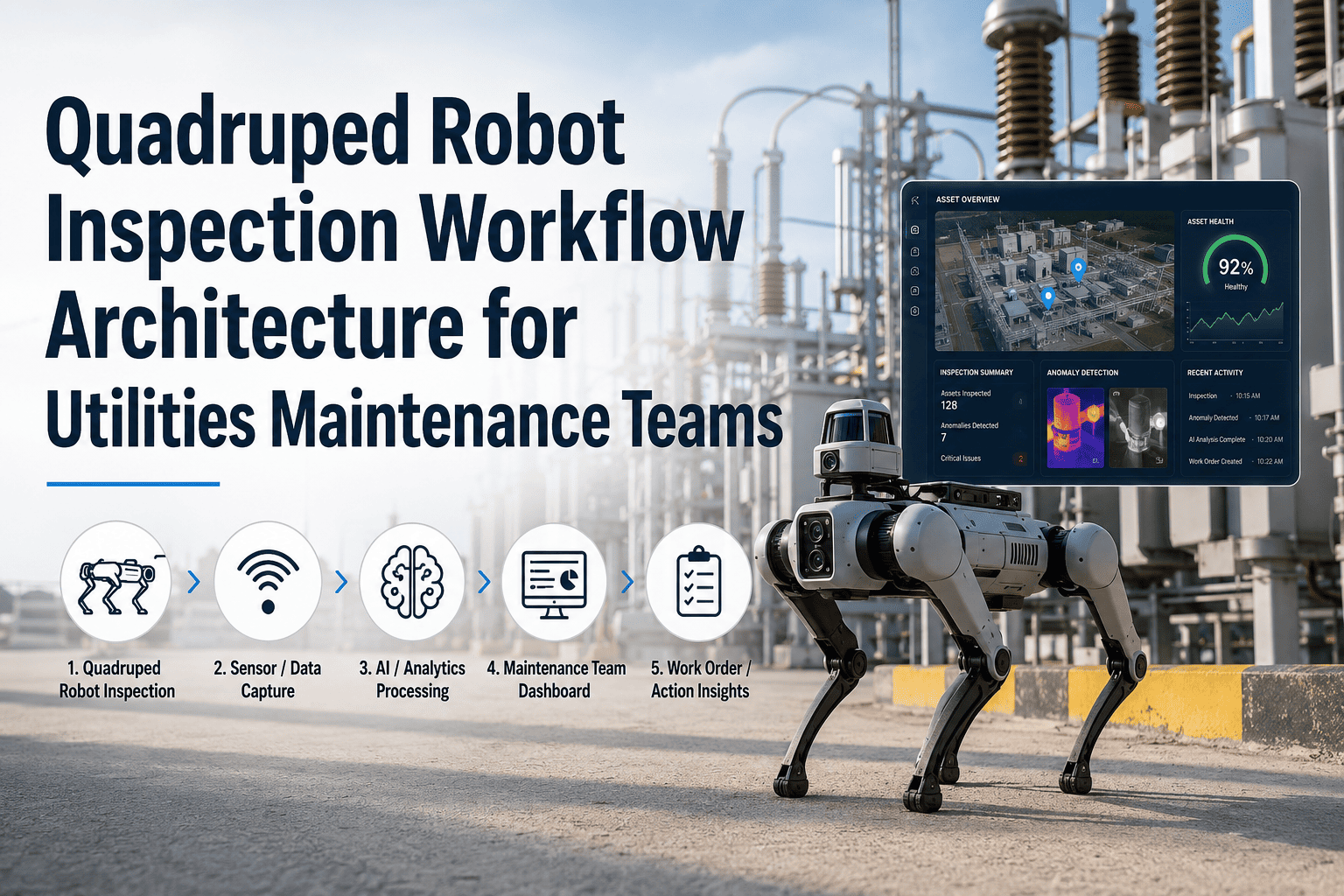
Distributed assets — pumping stations, substations, towers, valves — are often inspected by rotating crews with no shared institutional knowledge. QR tags deliver the asset context each technician needs on arrival, and AI vision catches progressive structural degradation that would otherwise require specialist review at every visit.
Healthcare Facilities
Joint Commission and CMS surveys require maintenance records traceable to specific equipment items — not a general department log. QR tags on medical gas outlets, AHU units, fire suppression components, and patient lifts give facility managers asset-level inspection proof that surveyors can verify in real time.
Frequently Asked Questions
How does OxMaint generate QR tags for existing assets?
OxMaint generates printable QR tags from the asset registry — each tag carries the asset ID, classification, and inspection protocol reference. Tags are printed, laminated, and affixed to the physical asset. When scanned, they pull the live asset record from OxMaint instantly. No hardware beyond a standard mobile device is required.
Start your free trial and generate your first asset tags today.
Does AI vision inspection require specialized cameras or hardware?
No. OxMaint AI vision processes photos taken with any standard smartphone camera. Technicians photograph the asset or defect area as part of the normal inspection workflow, and the AI analysis runs automatically on upload — no additional hardware, no scanning rigs, no special lighting setup required.
Book a demo to see AI vision in action with standard mobile hardware.
How accurate is AI vision at detecting defects compared to a human inspector?
AI vision is consistently better at detecting early-stage surface wear, staining patterns, and progressive structural changes — issues that experienced technicians often overlook because they appear minor in isolation. It is not a replacement for human judgment on complex mechanical diagnosis; it is an always-on second layer that catches what checklists and quick visual scans miss.
Can QR inspection records be exported for compliance audits?
Every QR-triggered inspection in OxMaint is stored with the technician identity, timestamp, checklist responses, AI vision findings, and attached photo evidence. Audit packages — including filtered records by asset, date range, zone, or inspection type — are exportable on demand in minutes, not days.
See how OxMaint audit exports work.
What happens when AI vision flags a defect during an inspection?
A flagged AI vision defect automatically generates a work order tied to the asset record, assigns it based on defect type and technician availability, and notifies the maintenance manager. The inspection record and the work order are linked — so every remediation action traces back to the specific finding that triggered it.
OxMaint AI — Inspection Traceability for Every Industry
QR Tags. AI Vision. Compliance Proof. One Platform.
Service teams across manufacturing, facilities, fleet, food processing, utilities, and healthcare use OxMaint to close the inspection traceability gap — with QR asset scanning, AI visual defect detection, and automatic compliance documentation that holds up in any audit.