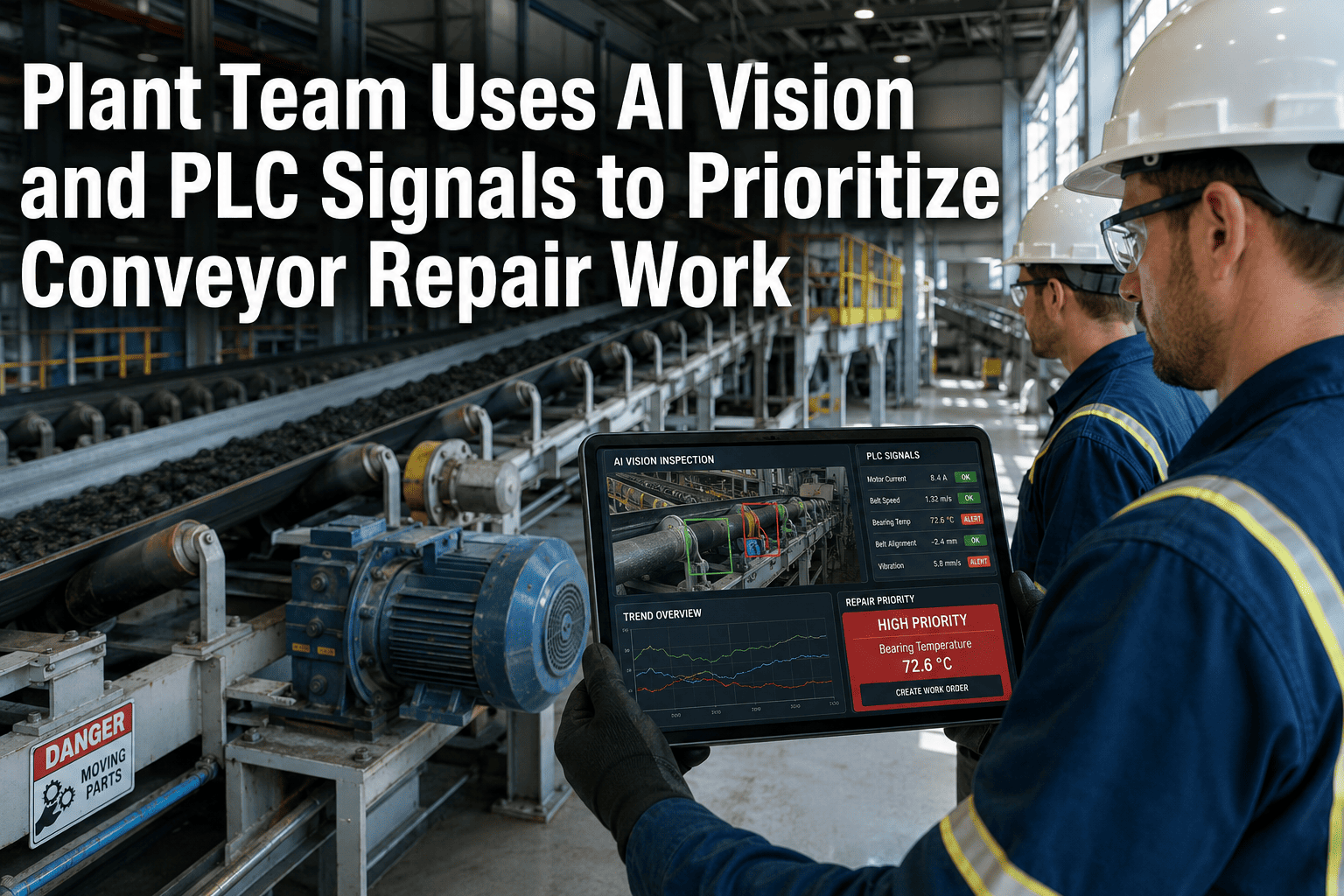
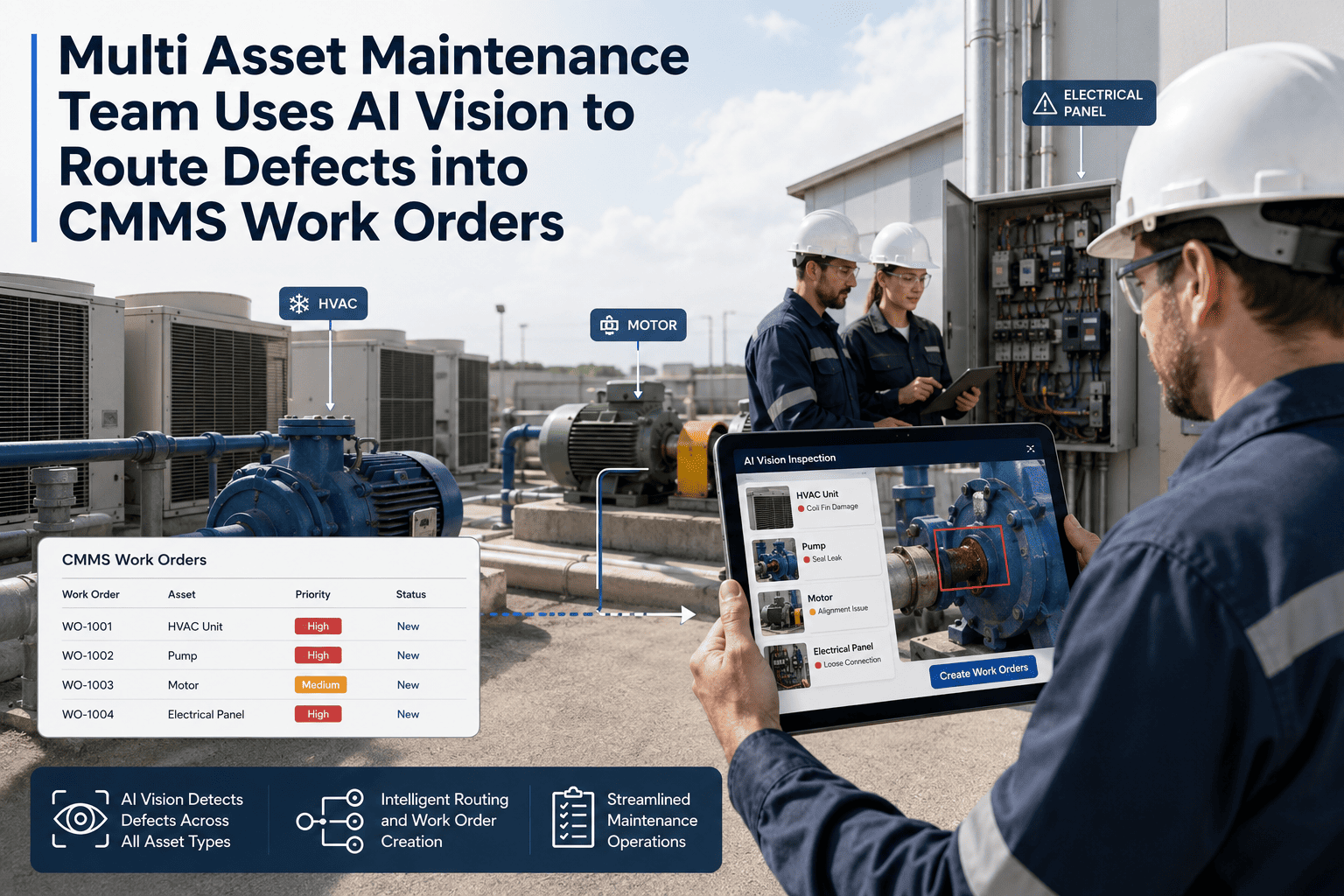
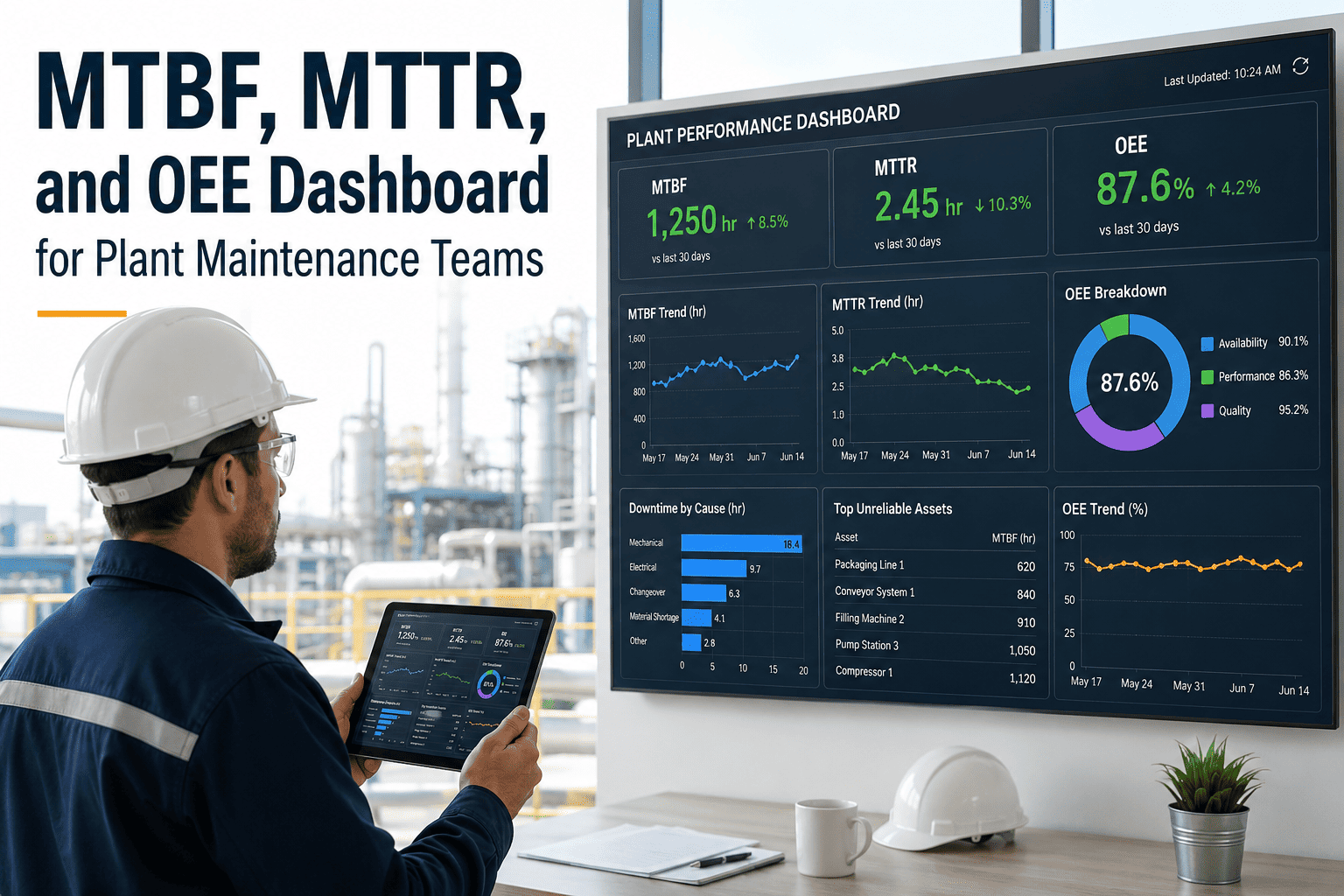
When a 5.2-kilometre overland conveyor in a mining operation carries 4,000 tonnes of ore per hour, a single unplanned belt stoppage costs between $80,000 and $200,000 in lost production — and the most dangerous failures are the ones building silently for days before they appear. PLC control systems report amperage spikes, belt speed deviations, and motor temperature trends. AI vision cameras watch idlers, belts, and splice zones that sensors cannot reach. Alone, each data stream creates alerts. Together — fused in OxMaint — they create prioritized repair work orders that tell a technician exactly which conveyor, which section, what failure mode is developing, and how urgent the intervention is before a breakdown occurs. Start a free trial to connect your conveyor PLC signals to OxMaint today.
AI VISION + PLC — MINING CONVEYORS
Two Signal Streams. One Prioritized Repair Queue. Zero Surprise Stoppages.
OxMaint fuses AI vision camera detections with PLC control signals to build a live priority list of conveyor repair work — so your maintenance team always fixes the right thing first, before the belt stops production.
What Each Signal Stream Sees — and What It Misses Alone
PLC Control Signals
Sees
Drive motor amperage trend
Belt speed deviation from setpoint
Conveyor start/stop cycle frequency
Belt slip and pull station tension
Motor winding temperature
Misses
Idler overheating from friction
Belt surface cracks and longitudinal tears
Splice delamination in progress
Material carryback under the belt
Foreign object before impact
+
AI Vision Camera
Sees
Idler colour change from overheating
Belt surface cuts, tears, and wear patterns
Splice separation and edge fraying
Material spillage and carryback zones
Foreign objects on the belt or beneath it
Misses
Internal bearing race degradation
Drive motor winding faults
Electrical load imbalance signals
Belt slip without visible surface change
PLC fault codes and trip history
Combined in OxMaint
Belt deviation + edge fraying detected simultaneously → Priority 1 repair order raised
Motor amperage spike + drive-side idler heat anomaly → Root cause confirmed, not guessed
Repeated belt slip signals + carryback zone image → PM task created for scraper replacement
Foreign object detected by vision → PLC belt stop triggered in under 200ms
How OxMaint Converts Signals Into a Prioritized Repair Queue
Ingest PLC Data
OxMaint connects to your conveyor PLC via MQTT or OPC-UA. Motor amperage, belt speed, tension, temperature, and fault code streams are ingested continuously — mapped to each conveyor asset in the OxMaint register.
Ingest AI Vision
AI vision cameras positioned at idler clusters, splice zones, and belt return sections analyze every frame against a baseline. Detections — overheated idler, surface tear, material spillage — fire with timestamped image evidence linked to belt section and GPS coordinate.
Correlate Signals
OxMaint's AI engine correlates the two streams. An amperage spike at Drive Station 3 arriving at the same time as an idler heat anomaly 40 metres downstream is not coincidence — it is a pattern. Correlated events score higher severity than isolated signals.
Generate Work Orders
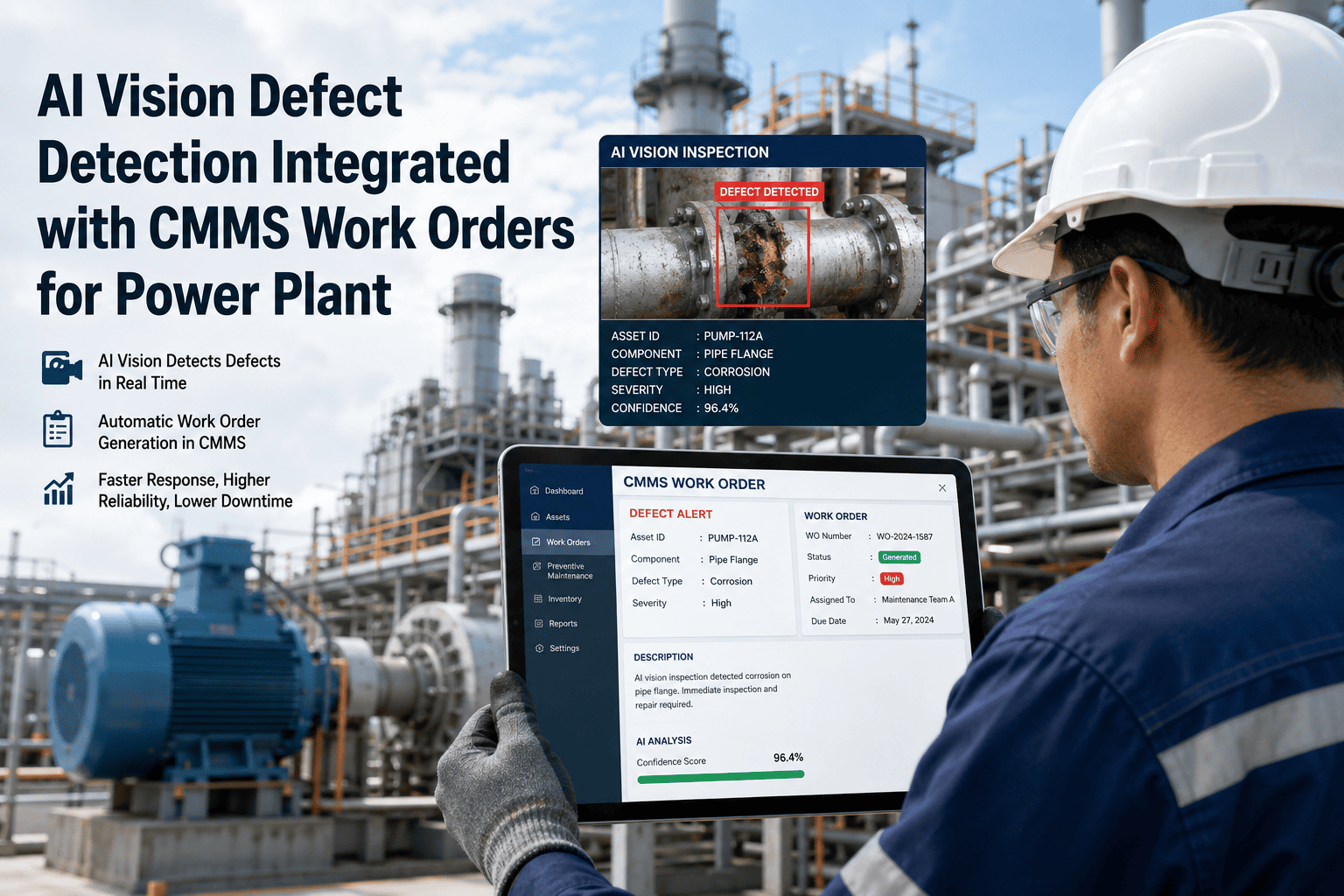
A correlated detection generates a corrective work order in OxMaint automatically — pre-populated with asset ID, belt section location, failure mode classification, severity level, detection image, and recommended repair procedure. No dispatcher required.
Priority-Rank the Queue
Every open conveyor repair work order carries a priority score calculated from failure severity, production impact of this belt section, trend velocity, and time-since-detection. The repair queue shows technicians the right sequence — not the order detections arrived in.
Close with Evidence
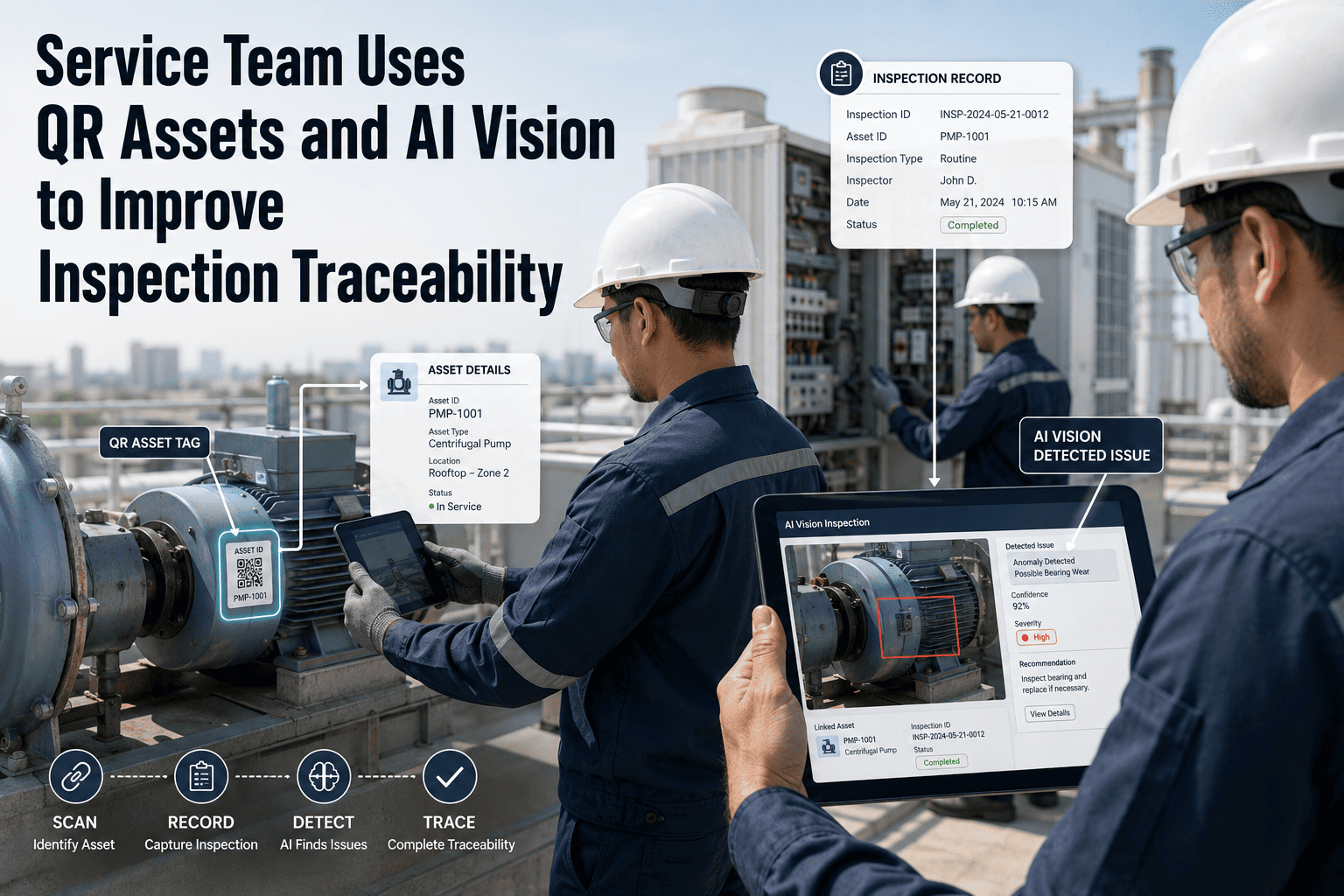
Technicians close work orders on mobile with an after-repair photo. OxMaint confirms the visual is clear — the detection that triggered the job is linked to the resolution image, creating an unbroken detect-fix-verify audit chain for every conveyor repair.
FROM PLC SIGNAL TO REPAIR ORDER IN UNDER 90 SECONDS
Stop Guessing Which Conveyor Needs Attention First
OxMaint fuses your PLC signals and AI vision feeds into a single prioritized repair queue — so your mining maintenance team always works on the highest-risk conveyor section, not the one that triggered the last alert.
Priority Scoring — How OxMaint Ranks Each Repair
| Detection Event |
PLC Corroboration |
Belt Criticality |
Priority Score |
Action |
| Longitudinal tear detected by vision |
Belt deviation alarm active |
Main ore feed |
P1 — Critical |
Immediate stop, crew dispatch |
| Idler overheating at Cluster 7 |
Amperage +14% above baseline |
Secondary haul |
P2 — Urgent |
Repair within 4 hours |
| Splice edge fraying visible |
No PLC signal yet |
Main ore feed |
P2 — Urgent |
Repair within 8 hours |
| Material spillage under return belt |
No PLC signal |
Transfer belt |
P3 — Planned |
Next maintenance window |
| Idler surface wear — early stage |
No PLC signal |
Tertiary conveyor |
P4 — Monitor |
Re-inspect in 7 days |
Frequently Asked Questions
Which PLC brands and protocols does OxMaint connect to?
How does AI vision perform in dusty underground mining environments?
OxMaint AI vision cameras are housed in IP67-rated enclosures with pressurised air purge ports that prevent dust accumulation on the lens. Models are trained on imagery from dusty mining environments, and structured backlighting enhances contrast on dirty belt surfaces. Detection accuracy in underground and dusty surface applications is maintained above 94%.
Start a trial to assess camera placement for your conveyor layout.
Can OxMaint trigger an automatic belt stop when a critical defect is detected?
Yes. For critical-tier detections such as longitudinal tears or foreign objects at impact points, OxMaint can send a stop signal back through the PLC integration in under 200 milliseconds — before the defect reaches the next idler cluster. This stop trigger is configurable by belt section and defect class. The decision to enable automatic stops is yours.
How many conveyor belts can OxMaint monitor simultaneously?
There is no hard limit. Mining operations use OxMaint across 20 to 80+ conveyor assets simultaneously, with each belt carrying its own AI vision feeds, PLC signal streams, and work order queue. Multi-conveyor visibility is managed from a single OxMaint dashboard — filtered by belt, priority, or production area.
What happens to a work order when the priority score changes after creation?
Priority scores are live, not static. If a P3 idler overheating work order is still open two days later and the PLC now shows amperage rising, OxMaint automatically escalates it to P2 and notifies the assigned technician and supervisor. The repair queue re-sorts in real time — so the list a technician sees at shift start always reflects the current state of the conveyor, not the state when the order was raised.
See the live priority escalation system in a demo.
OXMAINT — AI VISION + PLC FOR MINING CONVEYORS
See Every Belt Defect. Know Every Priority. Fix the Right One First.
OxMaint fuses AI vision camera detections with PLC control signals to automatically generate and priority-rank conveyor repair work orders — so your mining maintenance team works on facts, not guesses, and your belts keep running.