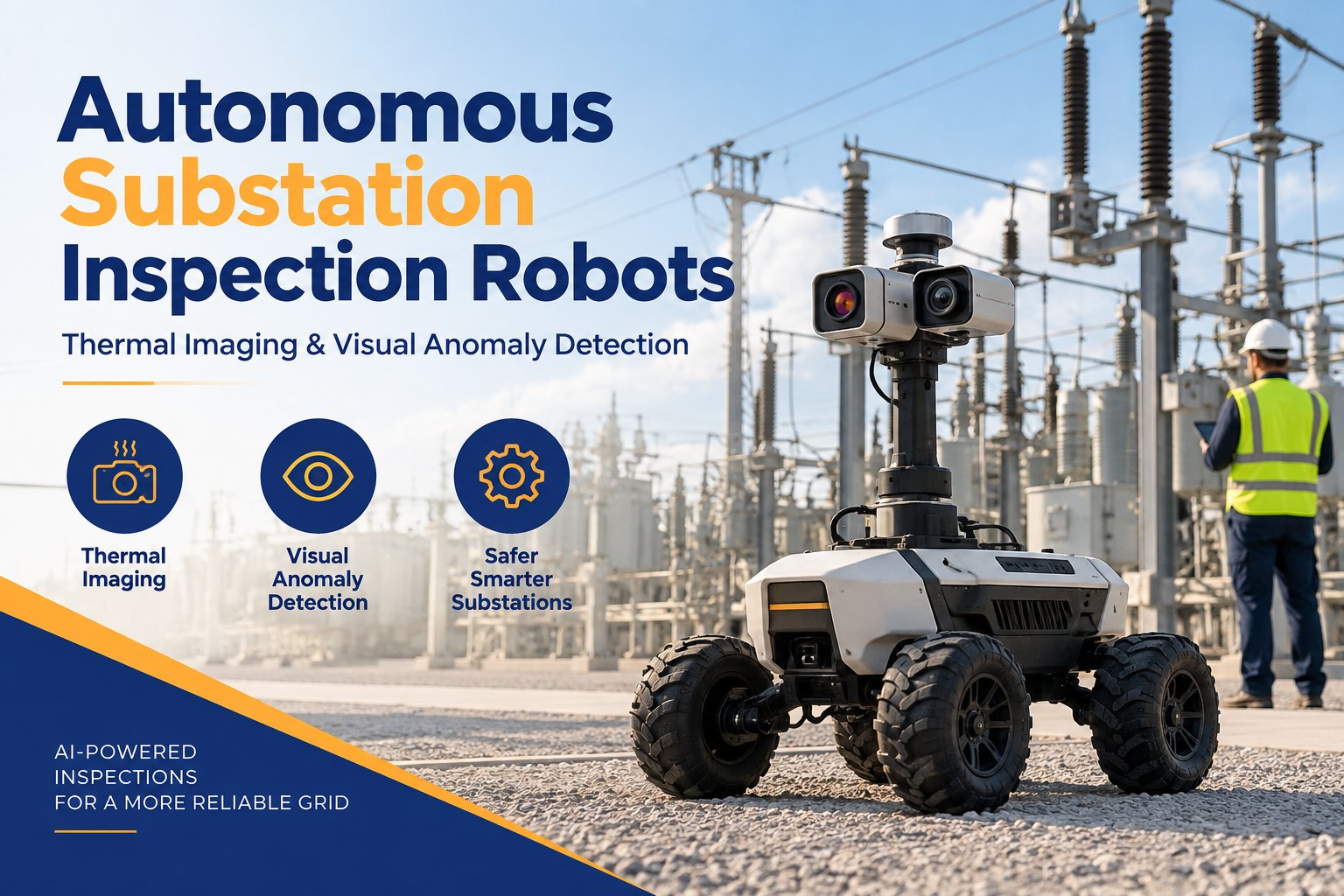
Unitree B2 Quadruped Robot for Substation & Power Grid Inspection
By Johnson on March 6, 2026
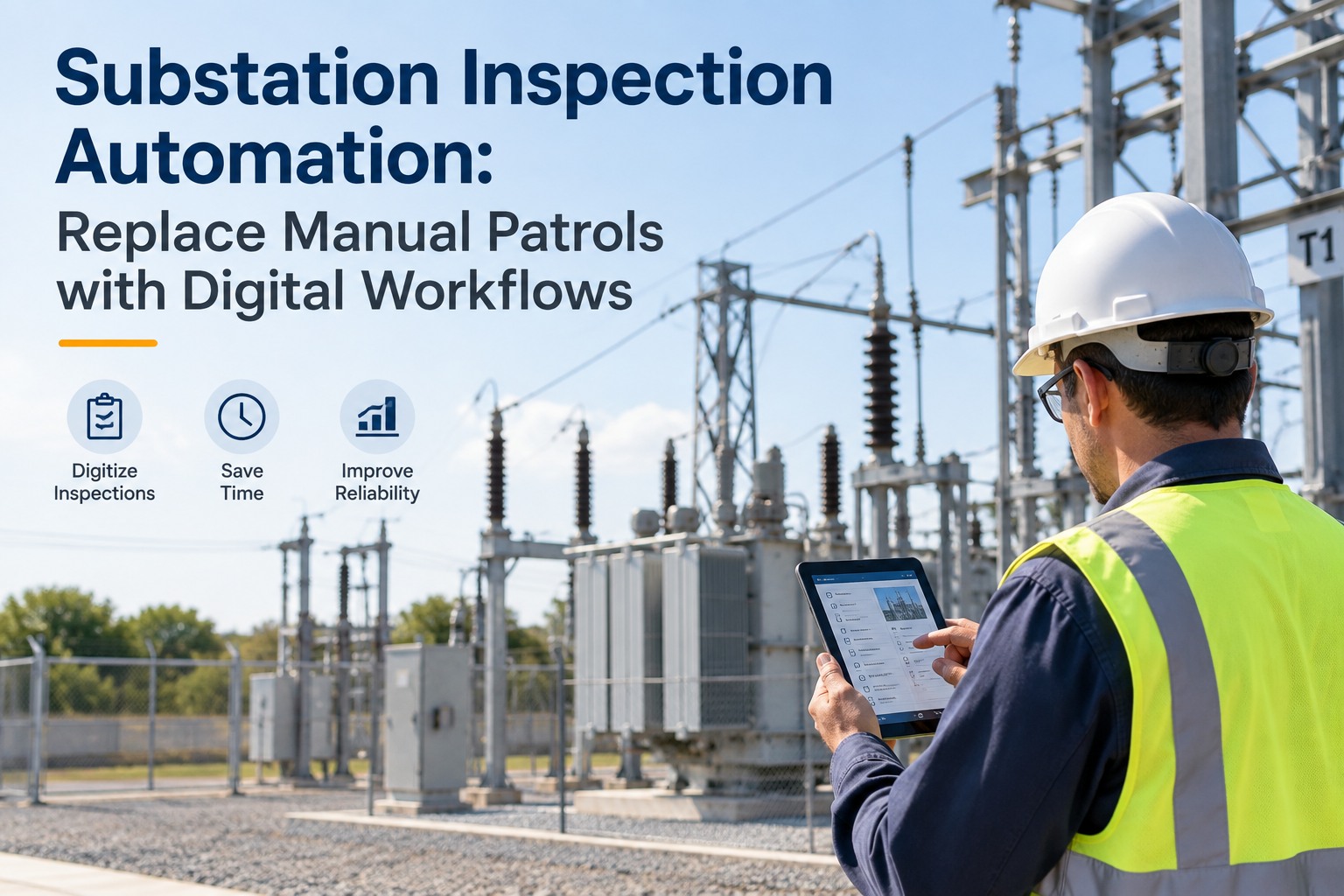
Every 90 days, a crew suits up in arc-flash PPE, enters a live 230 kV switchyard, and walks inspection routes that have not changed since the 1980s. They carry clipboards and handheld thermal cameras. They can only get so close. They miss things. And when a transformer bushing overheats at 2 AM on a Sunday, nobody finds out until Monday morning — or until the grid trips. The Unitree B2 industrial quadruped robot changes that equation entirely. At 6 m/s, IP67-rated, operating between -20°C and 55°C, the B2 patrols live substations autonomously — capturing thermal profiles, reading analog gauges, and detecting partial discharge — then feeds every finding directly into Sign Up free as a prioritized, evidence-backed work order before the robot finishes its patrol.
6 m/s
Top patrol speed — fastest industrial quadruped robot available
IP67
Dustproof and waterproof — operates in rain, snow, and chemical environments
20 km
Range per charge — covers large transmission substations in a single patrol run
$260M
Global substation inspection robot market in 2025, growing at 13.5% CAGR
OXmaint Robotics Integration
Connect Every B2 Patrol to a CMMS Work Order — Automatically
OXmaint receives thermal anomaly alerts, gauge readings, and defect classifications from the Unitree B2 via API. Every threshold breach becomes a timestamped, asset-linked work order with sensor evidence attached — routed to the right technician in under 5 minutes. No manual data entry. No paper logs. No missed findings.
The U.S. has 55,000 substations. Germany has 8,000. Every one of them depends on inspection programs that were designed around human limitations — not asset failure modes. The result is a widening gap between what your maintenance team knows and what is actually happening inside your electrical infrastructure right now.
90 days
Typical Inspection Gap
Standard manual substation walkdowns happen quarterly at best. A transformer bushing can develop a critical thermal hotspot, peak, and fail in less than 30 days — completely between inspections.
Arc Flash
Approach Boundary Limits
Arc-flash regulations require human inspectors to maintain safe distances from energized equipment. Thermal cameras operated at restricted approach distances miss early-stage hotspots invisible at range.
47 min
CMMS Data Entry Delay
Average delay between a manual inspection finding and the corresponding CMMS work order entry. Critical anomalies sit in a field notebook, waiting to be transcribed — while the failure progresses.
60%+
Transformer Failures Preventable
Over 60% of transformer failures originate from thermal or dissolved-gas anomalies that are detectable weeks before catastrophic failure — if you are inspecting frequently enough to see the trend.
Unitree B2: Built for Substation Environments
The B2 is not a research robot adapted for industrial use — it was engineered from the ground up for extreme operating conditions found in power infrastructure. Here is what makes it the leading quadruped for substation patrol.
UnitreeB2Industrial Quadruped
IP67 Rated
-20°C to 55°C
5G / WiFi
Nvidia Orin AI
SpecificationValueSubstation Relevance
Max Speed6 m/sCovers large 500 kV switchyards in a single patrol shift
Payload Capacity40 kg walking / 120 kg standingCarries dual thermal + optical + LiDAR payload without performance loss
Battery Range20 km (unloaded)Full patrol of large substations without mid-mission recharge
IP RatingIP67Rain, humidity, dust — no shelter needed for outdoor switchyard patrol
Operating Temp-20°C to 55°CBlizzard conditions in winter, desert heat in summer — uninterrupted
Climb Capability40 cm steps / 45° slopesNavigates cable trenches, equipment plinths, and uneven yard surfaces
Peak Torque360 N·mStable traversal on gravel, wet grass, and ice-covered switchyard surfaces
ComputeNvidia Jetson Orin NXOn-board AI anomaly classification — no cloud round-trip required for alerts
Your Substation Inspection Program Has Blind Spots. The B2 Closes Them.
Deploy Unitree B2 patrols integrated with OXmaint CMMS and shift from 90-day manual walkdowns to continuous autonomous monitoring. Every patrol generates asset-linked, evidence-backed maintenance actions — without touching a paper form.
The integration between Unitree B2 autonomous patrols and OXmaint follows a four-stage closed-loop workflow that converts every sensor reading into a tracked, completed, verified maintenance action.
01
Autonomous Patrol
B2 follows pre-programmed waypoints through the substation yard — thermal camera scanning transformer bushings, LiDAR mapping the full switchgear layout, optical cameras reading analog gauges and detecting visible defects on insulators and connections.
Waypoint NavigationThermal ImagingLiDAR Mapping
02
On-Board AI Classification
Nvidia Orin NX processes sensor data in real time. Thermal anomalies are scored against baseline profiles. Gauge readings are compared to expected ranges. Defects are classified by type and severity — all on-board, before any data leaves the yard.
Edge AI ProcessingAnomaly ScoringNo Cloud Latency
03
OXmaint Work Order Creation
Threshold breaches trigger an API post to OXmaint. A work order is created with the asset ID, GPS-tagged location, thermal image, severity classification, and recommended corrective action pre-populated. Time from robot detection to dispatched work order: under 5 minutes.
REST API IntegrationEvidence AttachedPriority Routing
04
Technician Execution + Feedback Loop
Certified technician receives mobile work order with full sensor context, completes the repair, and closes with e-signature and photos. Completed records feed back into asset history — updating the B2's baseline profiles for more accurate future patrol thresholds.
Mobile ExecutionCompliance RecordsBaseline Recalibration
Sensor-to-Asset Defect Coverage Matrix
Every B2 payload sensor is matched to specific failure modes in substation equipment. This is what converts raw patrol data into actionable maintenance intelligence inside OXmaint.
Thermal Infrared Camera
Core Sensor
Transformer BushingsOverheating contacts — OXmaint WO triggered at +5°C above baseline
Obstacle DetectionEquipment displacement, debris accumulation, and access path obstruction
3D Change DetectionStructural deformation over time — compares patrol scans against baseline geometry
Manual Walkdown vs. B2 Autonomous Patrol
The case is measurable — not theoretical. Here is a direct comparison between traditional human inspection programs and B2-integrated OXmaint patrol workflows.
FactorManual WalkdownUnitree B2 + OXmaint
Inspection FrequencyQuarterly — 90-day blind spots between patrolsDaily or continuous — programmable patrol schedules
Thermal Imaging DistanceRestricted by arc-flash approach boundariesOptimal distance, every time — B2 positions precisely
Data Capture ConsistencyVariable — depends on inspector fatigue and experience100% consistent — same angle, same distance, every patrol
CMMS Entry Delay47 minutes average from finding to work orderUnder 5 minutes — automated API post to OXmaint
Inspector Safety RiskArc flash, EMF exposure, slip/fall in switchyardZero human exposure to live equipment hazards
Weather OperationSuspended in heavy rain, ice, or extreme heatIP67 — operates through rain, snow, -20°C to 55°C
Evidence for CompliancePaper forms, manual photos, transcription errorsTimestamped, geo-tagged, auto-linked to asset record
Outcomes When B2 Patrol Data Feeds OXmaint
60%
reduction in unplanned outages at facilities running continuous robotic patrol programs tied to CMMS-driven maintenance response
<5 min
from B2 anomaly detection to a dispatched, asset-linked OXmaint work order with thermal image evidence attached
13.5%
CAGR growth in the substation inspection robot market — utilities that deploy now gain years of operational advantage over laggards
Zero
human arc-flash exposure incidents during robotic patrol missions — B2 operates in live switchyards without safety clearances or PPE requirements
We were running quarterly walkdowns on a 345 kV substation with 14 transformer bays. Between two manual inspections, we had a bushing overheating event that escalated to a partial discharge failure — caught by our DCS alarm, not by us. After deploying robotic daily patrol routes integrated with OXmaint, we have found three separate thermal anomalies at early stage and generated work orders before any of them progressed. One of those was a breaker contact that would have been a major forced outage. The program paid for itself in the first six months.
— Substation Asset Manager, Regional Transmission Operator, Midwest United States
OXmaint CMMS Features That Power the B2 Integration
Robotic patrol data is only as valuable as the maintenance system that acts on it. OXmaint provides the asset management backbone that turns every B2 sensor reading into a tracked, compliant, closed maintenance event.
Robotic Inspection Work Order Templates
Asset-specific templates for transformer, circuit breaker, insulator, and cable termination anomalies — pre-loaded with sensor evidence from the B2 patrol and correct repair procedure for each failure type.
Auto-PopulationEvidence Attached
Condition-Based Patrol Scheduling
Set B2 patrol frequency triggers based on asset criticality, seasonal load conditions, or recent anomaly history. High-load summer periods trigger daily thermal sweeps; winter inspections increase for ice-related fault risks.
Smart SchedulingAsset Criticality
Asset Performance Trend Tracking
Plot thermal baseline trends, gauge reading histories, and defect recurrence patterns for every asset in your substation. Spot degradation trajectories weeks before failure thresholds are reached.
Trend AnalyticsBaseline Tracking
Compliance Documentation — Auto-Generated
Every B2 patrol creates timestamped, geo-tagged inspection records tied to specific asset IDs. NERC GADS reporting, insurance audit trails, and utility regulatory submissions are populated from robot patrol data without manual assembly.
NERC GADSAudit-Ready Records
Mobile Work Order Execution
Technicians receive B2-triggered work orders on mobile with the thermal image, GPS location, severity score, and recommended action. Complete inspections offline inside metal-clad switchgear rooms — data syncs when connectivity returns.
Offline-CapableMobile-First
Multi-Robot Fleet Management
One OXmaint account manages B2 patrol data from multiple substations simultaneously. One operator can oversee patrol schedules, work order queues, and asset trending across your entire grid portfolio from a single dashboard.
Fleet ViewMulti-Site
Frequently Asked Questions
The Unitree B2 carries IP67 dust and waterproof certification, operates across -20°C to 55°C, and is constructed to function in the electromagnetic fields present near high-voltage equipment. Its 360 N·m peak joint torque ensures stable locomotion on gravel, wet surfaces, and uneven switchyard terrain. The B2 carries no energized components that would create arc flash risk, meaning it can operate within approach boundaries that are off-limits to human inspectors. Unitree's inspection platform is also designed to meet State Grid technical specifications, supporting standardized integration with existing substation patrol systems and SCADA infrastructure.
OXmaint integrates with the Unitree B2 via REST API. When the B2's on-board Nvidia Orin NX classifies an anomaly — overheating bushing, gauge reading out of range, insulator crack — the system packages the finding with its thermal image, GPS coordinates, severity level, asset ID, and timestamp, then posts a structured JSON payload to OXmaint's API. OXmaint automatically creates a work order, attaches the sensor evidence, assigns priority based on severity scoring, and routes the WO to the assigned technician. The entire pipeline from robot detection to a dispatched work order completes in under 5 minutes with zero manual data entry. Book a demo to see the full data pipeline live.
Patrol frequency depends on substation criticality, load profile, and seasonal conditions. For transmission substations (230 kV and above), daily thermal sweeps of transformer bays and circuit breaker contacts are recommended during peak summer and winter loading periods when failure rates increase. Distribution substations can typically be covered with weekly patrols during normal conditions. OXmaint allows you to configure condition-based patrol schedules — automatically increasing patrol frequency when recent anomalies have been detected on an asset, or when seasonal load thresholds trigger elevated monitoring periods. The B2's 20 km range means a single robot can cover most large substations in a single 4–6 hour patrol window without recharging.
Every B2 patrol generates timestamped, GPS-tagged, asset-linked inspection records stored in OXmaint. These records satisfy NERC GADS forced outage reporting requirements by providing traceable inspection histories for every critical asset. Insurance audits are supported through complete photographic and thermal image evidence attached to each work order, demonstrating proactive maintenance response to detected anomalies. Utility regulatory submissions requiring proof of inspection program compliance are assembled directly from OXmaint's asset records — no manual log consolidation required. All records are digitally signed and immutable once closed, meeting the evidentiary standards required by NERC and major property insurers.
Yes — OXmaint is designed to handle hybrid inspection programs. Robotic B2 patrol findings flow in automatically via API. Manual inspection results are entered by technicians on mobile using the same asset-specific work order templates. Both sources populate the same asset history, creating a unified view of each transformer, breaker, and insulator regardless of how the inspection was conducted. Facilities typically start with manual inspection programs, deploy robotic patrols on the highest-criticality assets first, and expand coverage over time. OXmaint supports this transition without requiring any data migration or template restructuring. Sign up free to configure your first hybrid inspection asset hierarchy.
Most facilities complete initial deployment in 4–8 weeks. Week 1–2 covers OXmaint asset hierarchy setup and B2 waypoint mapping for your substation layout. Week 3–4 involves supervised patrol runs where technicians validate the robot's anomaly detection thresholds against known asset baselines. Week 5–6 establishes the OXmaint work order routing rules, technician assignments by certification, and compliance documentation templates. From week 7, the system runs autonomously — patrol findings flow directly to work orders with no operator intervention required for routine anomalies. Most operators that deploy one robot across their highest-value substation expand to 3–5 platforms within 18 months based on documented ROI from prevented outages.
Stop Inspecting Your Substation Like It Is 1985
The Unitree B2 gives you continuous thermal coverage, autonomous patrol, and on-board AI anomaly detection across every asset in your switchyard. OXmaint turns every detection into a completed, compliant maintenance event. Together, they close the inspection gap that is costing you outages, safety incidents, and regulatory exposure — starting today.