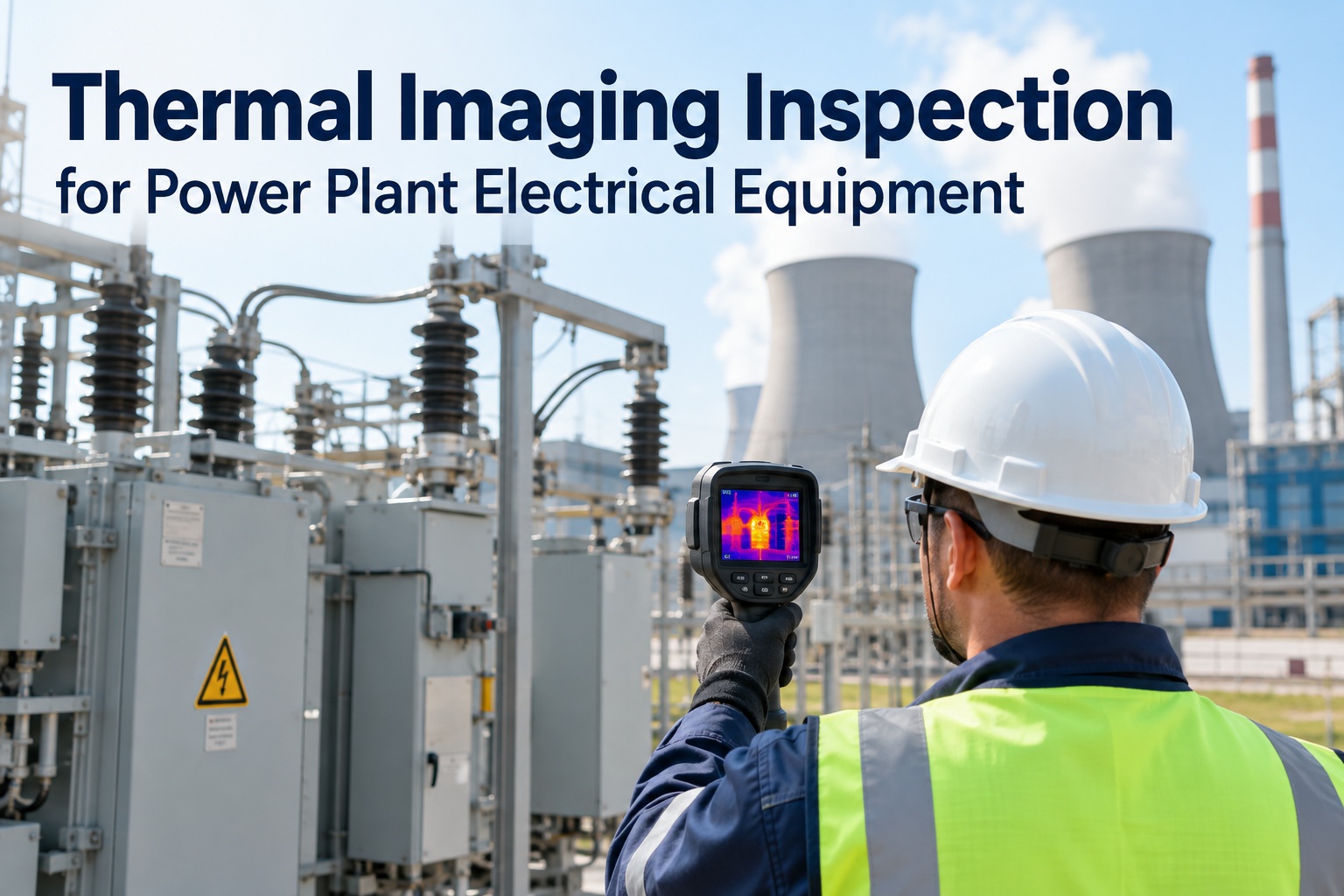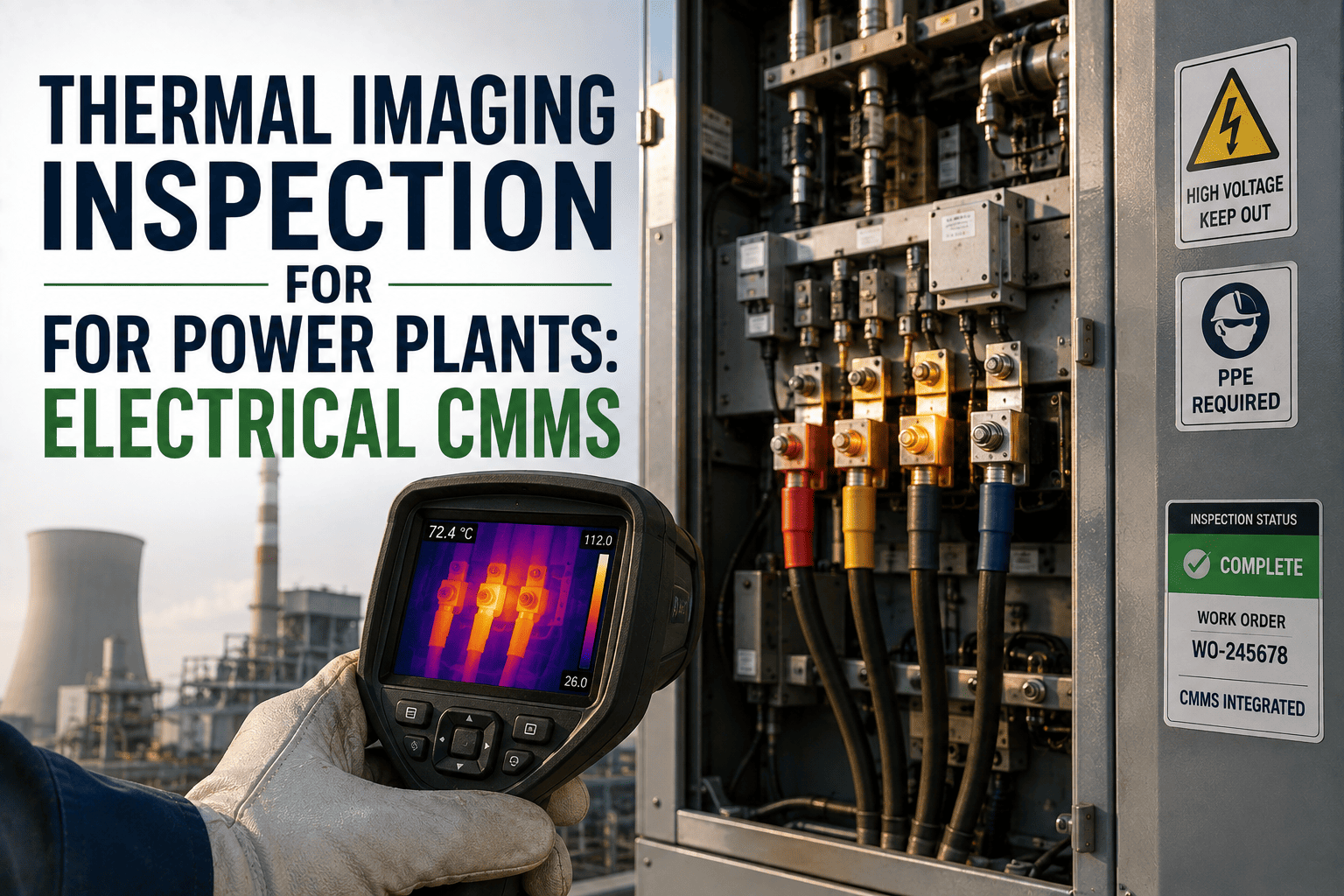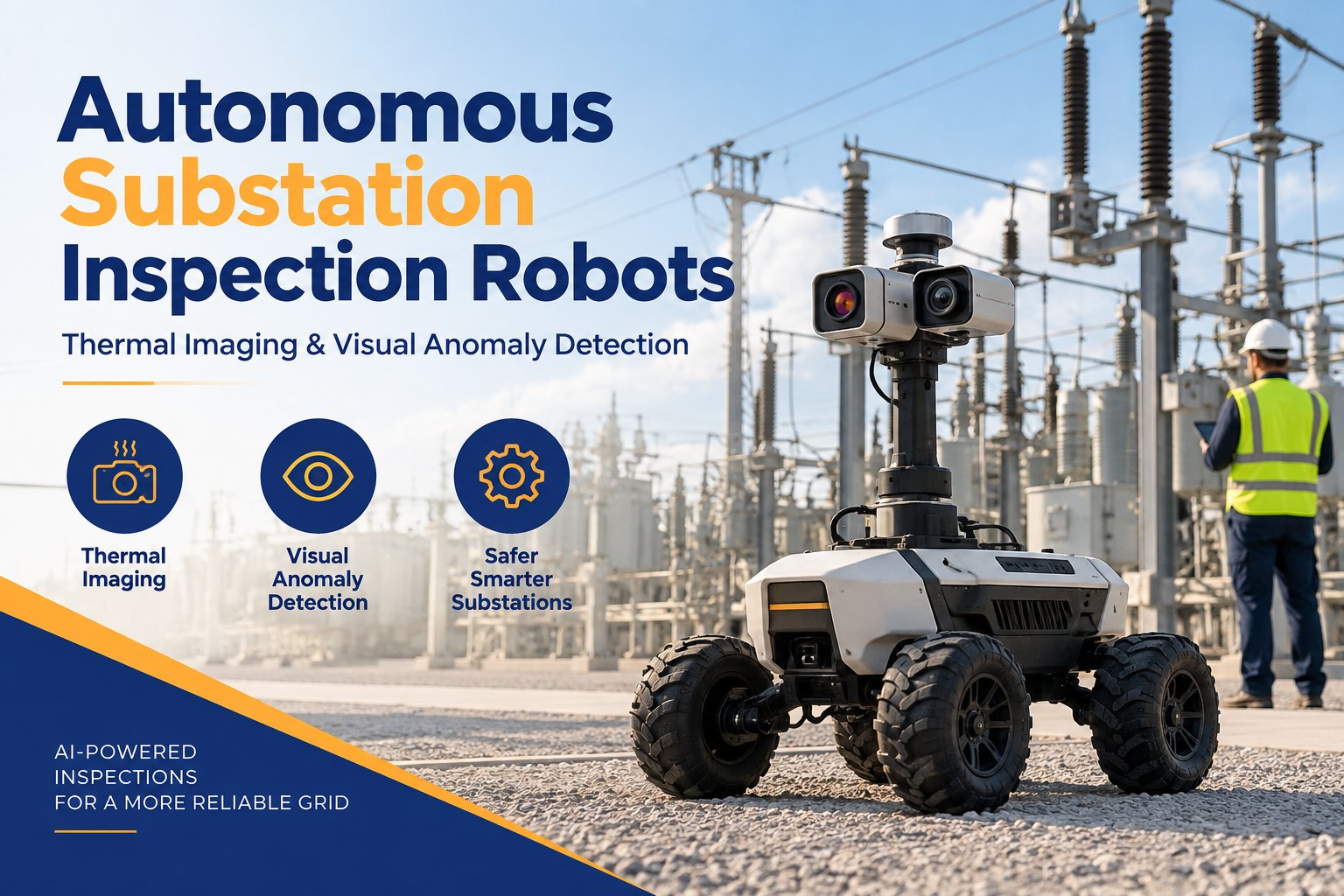
A transformer doesn't fail on a schedule it fails between inspections. Most substations still run on quarterly handheld infrared scans and annual walk-downs, which means a bushing can go from a warm spot to a flashover in the weeks nobody was looking. Autonomous inspection robots close that gap by walking the yard every day, reading thermal and visual signatures on every asset, and turning a temperature drift into a work order before it turns into an outage. This guide breaks down how thermal + visual anomaly detection actually works on an autonomous robot platform, using OXMAINT AI, the AI-powered CMMS that turns every robot patrol into a closed-loop maintenance event.
Autonomous Substation Inspection Robots: Thermal Imaging & Visual Anomaly Detection
A thermal drift a robot catches today is only useful if it reaches a technician before the next patrol — not buried in a report nobody opens until the failure already happened. OXMAINT AI closes that gap: every thermal and visual reading from the robot lands directly on the asset's record, any reading that breaks from that asset's own pattern is logged as a defect automatically, and confirmed defects convert straight into a prioritized work order with the images already attached. No manual triage between the camera and the technician — and every patrol adds to the asset history that shapes smarter preventive scheduling over time.
The Blind Spot Between Inspections
A bushing running hot doesn't wait for your inspection calendar. Between two handheld IR scans, a loose connection can go from a small rise to a full thermal runaway — and the crew that could have caught it was never standing in front of it at the right moment. Robots remove the "right moment" problem entirely: they're always standing in front of it. OXMAINT AI takes every reading the robot captures and checks it against the asset's own history, not a generic threshold. Start free and put your first patrol route on OXMAINT AI.
- Weeks of blind spot between one IR scan and the next
- Crew standing in a live high-voltage bay to take the reading
- One temperature snapshot, no trend, no baseline comparison
- Findings written on a clipboard before they reach a work order — if they ever do
- Analog gauges read by eye, once, on inspection day only
- Every asset re-scanned daily — the blind spot shrinks to hours
- Robot enters the bay; humans stay behind the fence
- Every reading compared to that asset's own thermal baseline over time
- A confirmed drift becomes a work order automatically, image attached
- Gauges and dial readings logged and trended every single patrol
How the Robot Actually Sees an Anomaly
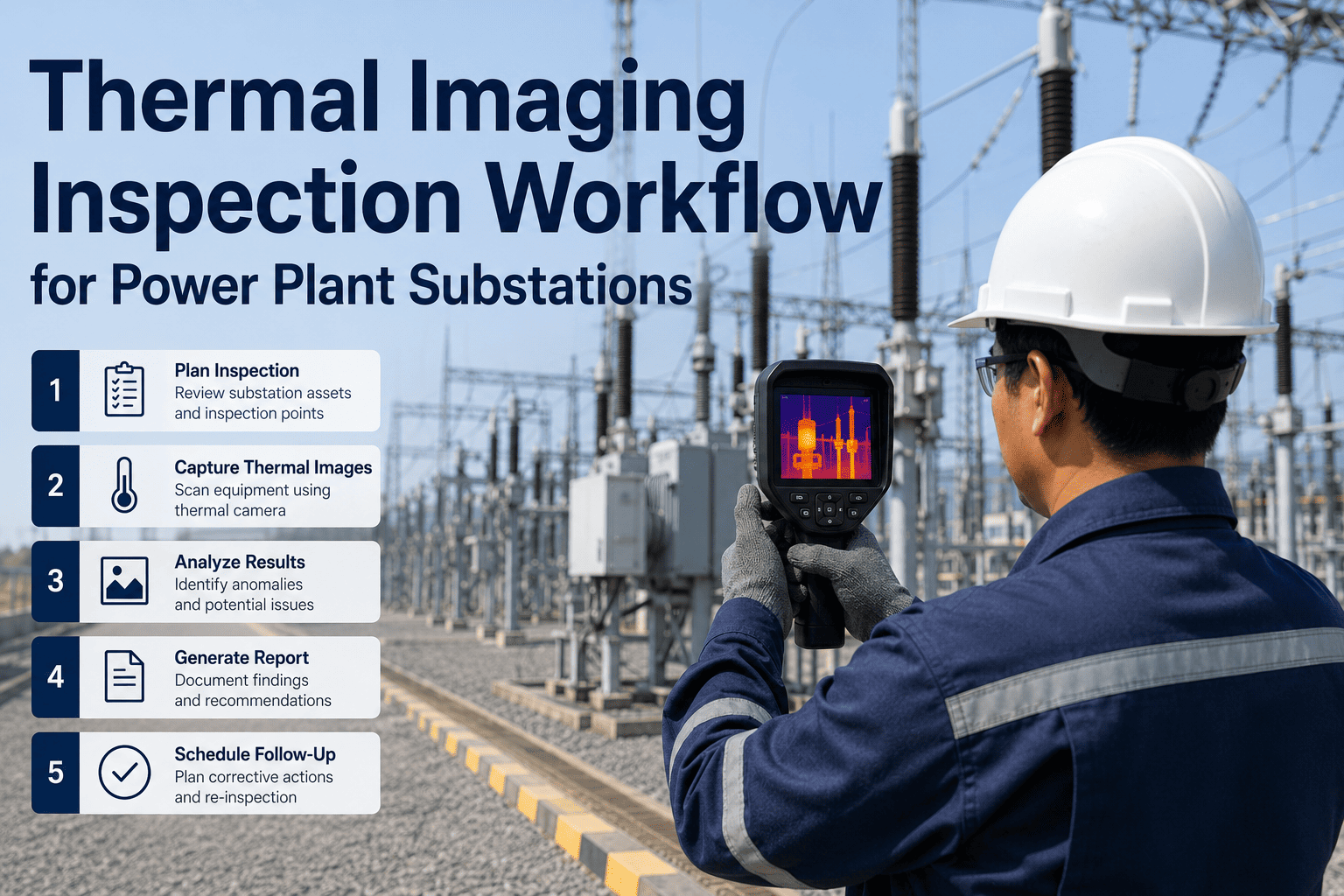
Detecting a problem isn't one camera taking one picture — it's four steps happening in sequence, on every asset, every patrol. OXMAINT AI runs this pipeline the moment the robot docks and syncs, so a raw thermal frame becomes a ranked, evidence-backed work order without anyone opening a spreadsheet. Book a demo to see the pipeline run on your own footage.
What the Robot Is Actually Watching
Not every asset needs the same eyes. OXMAINT AI applies a different read on every component class, so a switchgear cubicle and an oil gauge don't get scored the same way. Sign up free and map your own asset classes in OXMAINT AI.
| Asset | What's captured | Common anomaly | Typical trigger |
|---|---|---|---|
| Transformer | Bushing & tank thermal, oil-level gauge, visual leak check | Overheating bushing, oil leak, tap-changer drift | Thermal rise above own baseline |
| Switchgear | Contact & joint thermal, panel visual, door/seal check | Loose connection, hot joint, corrosion | Localized hot spot on one phase |
| Breaker | Contact thermal, mechanism visual, SF6 pressure gauge | Contact wear, gas pressure drop | Gauge reading outside trend band |
| Analog gauges | Visual dial read, trend log every patrol | Slow drift no one checks daily | Reading trending toward limit |
A Missed Reading Doesn't Announce Itself. A Robot Doesn't Miss It.
The failures that take down a substation are rarely sudden — they're a slow drift nobody was watching closely enough. OXMAINT AI turns every patrol into a data point on a trend line, so the drift shows up before the failure does.
A Patrol, Timestamped
Here's what one flagged anomaly actually looks like moving through OXMAINT AI, from the moment the robot captures it to a closed work order. Book a demo to see this run on your own substation.
Handheld Scan vs. Continuous Robotic Patrol
| What matters | Handheld IR (quarterly) | Robot + OXMAINT AI (daily) |
|---|---|---|
| Time between readings | Up to 90 days | Every patrol cycle |
| Human exposure to live bay | Direct, every scan | None |
| Comparison basis | Fixed threshold | Asset's own trend line |
| Evidence on the work order | Manual notes, if any | Thermal + visual + trend, attached |
| Analog gauge trending | Not tracked | Logged every patrol |
Frequently Asked Questions
Let the Robot Stand in the Bay. Let OXMAINT AI Watch the Trend.
Move your substation from quarterly snapshots to daily thermal + visual patrols — every reading trended, every anomaly cross-checked, every confirmed defect turned into a work order with the evidence already attached.