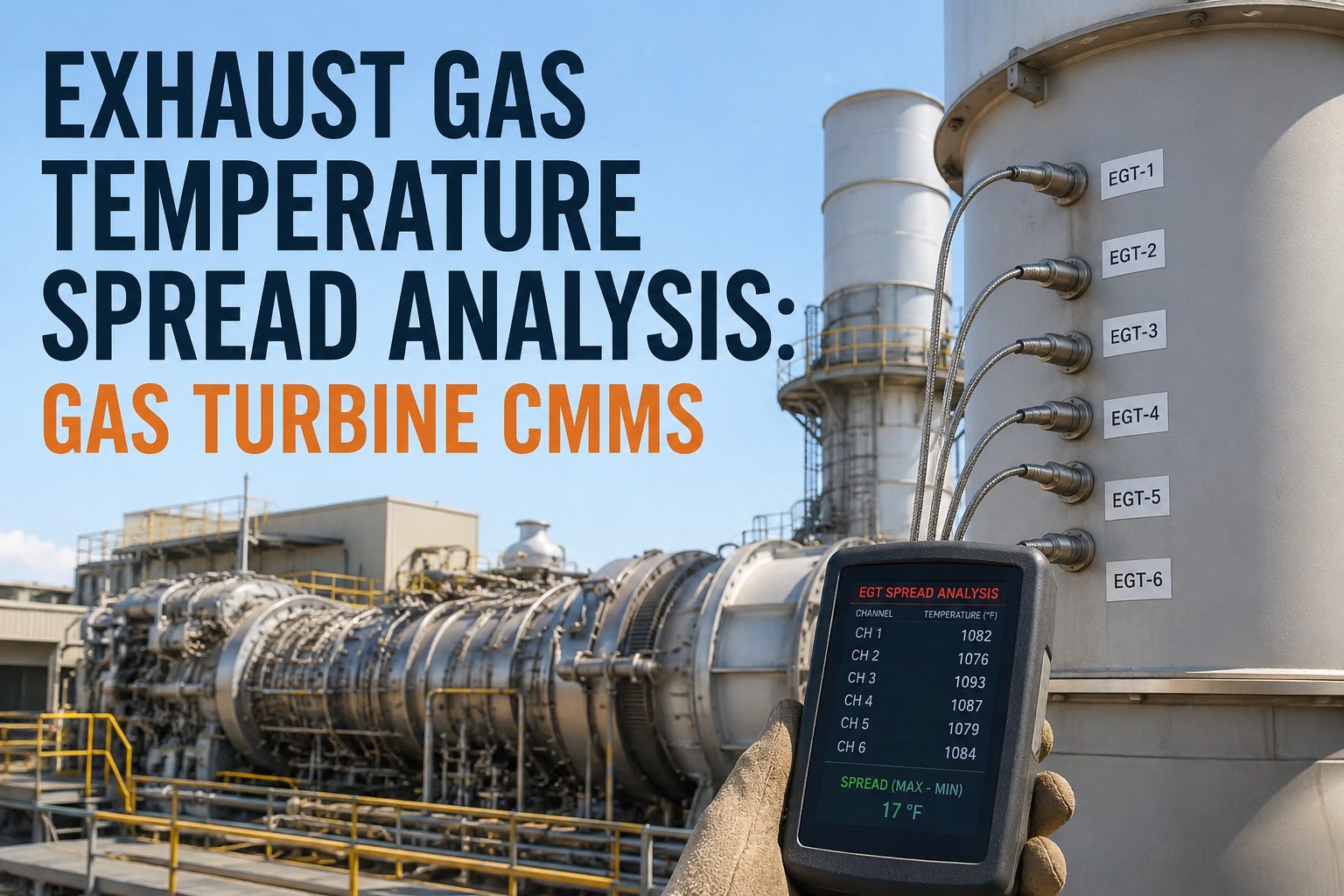
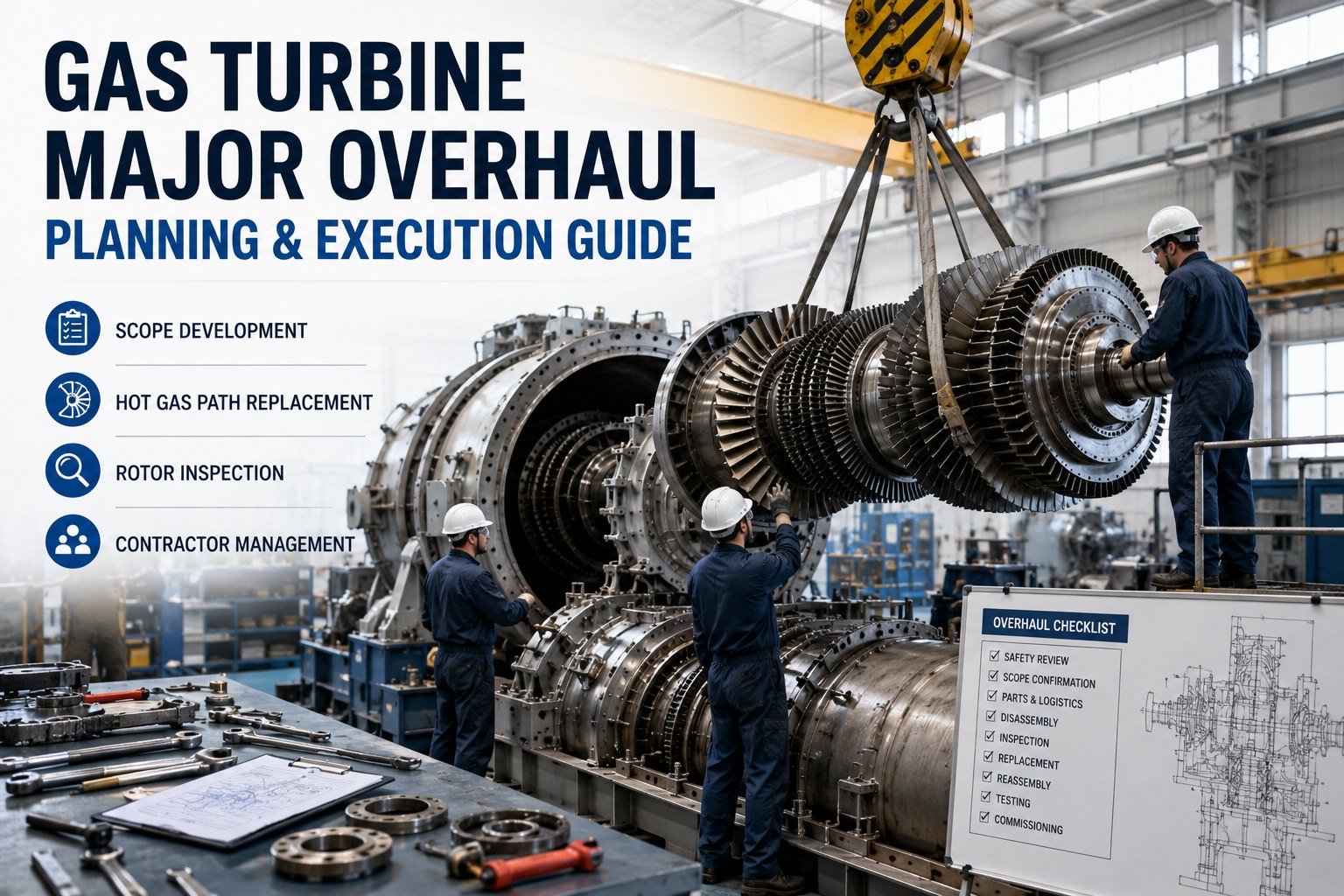
A modern gas turbine carries a nameplate lifespan of 25–40 years and a replacement cost of $8M–$80M depending on class. What happens between the commissioning signature and the decommissioning order determines whether that asset delivers its full economic potential — or costs 30–50% more than it should while delivering 15–20% less than it could. The maintenance history recorded in year 3 influences the overhaul scope in year 12. The overhaul decisions in year 12 determine the remaining useful life projection in year 22. And the lifecycle cost analysis in year 22 tells you whether a refurbishment at year 25 is financially rational or whether capital is better deployed on a replacement unit. OxMaint's turbine lifecycle management platform tracks every event, decision, and data point across that entire arc — so that every decision your team makes is informed by the complete asset history, not just last month's work orders.
Turbine Lifecycle Management · Full Asset Arc
Most Turbine Operators Are Making $2M+ Decisions Based on Incomplete Asset Records
Overhaul scoping without full maintenance history. Replacement decisions without lifecycle cost models. Capital requests without documented performance trends. OxMaint closes every one of those gaps across the complete turbine lifecycle — from first bolt torqued to final decommissioning report.
25–40
Year Average Turbine Operational Lifespan
$80M
Max Replacement Cost — Large Frame Gas Turbine
38%
Lifecycle Cost Reduction with Proactive Management
6 Yr
Average Asset Life Extension via APM Programs
The Complete Turbine Lifecycle: Six Stages, One Platform
Every turbine moves through six distinct lifecycle stages. Each stage generates critical data — commissioning baselines, routine maintenance records, degradation trends, overhaul findings, and end-of-life assessments. When these records live in separate systems, on paper logs, or in the memories of technicians who left three years ago, the next decision is made partially blind. OxMaint captures every stage's data in a single, continuously accessible turbine record. Talk to our lifecycle specialists to see how the platform maps to your current fleet documentation state.
Stage 01
Installation & Commissioning
OxMaint captures commissioning test results, baseline vibration signatures, thermal performance curves, alignment records, and OEM acceptance criteria as the permanent reference baseline for all future health comparisons.
Baseline vibration spectrum
Thermal performance baseline
OEM acceptance test results
Initial alignment records
Stage 02
Early Operations & Warranty Period
Continuous performance trending against baseline identifies early degradation patterns. All warranty-relevant events are automatically flagged and documented with timestamp, operating condition, and fault signature for OEM claim submission.
Performance trend analysis
Warranty event documentation
First inspection findings
Operating hours accumulation
Stage 03
Routine Maintenance & Minor Overhauls
Every planned inspection, parts replacement, and condition-based repair is logged against the turbine record with technician, findings, parts used, and post-work verification. Minor overhaul scope is driven by accumulated operating hours and condition data.
Complete maintenance history log
Parts replacement tracking
Hot section inspection records
Combustion inspection findings
Stage 04
Major Overhaul Planning & Execution
OxMaint's overhaul planning module uses accumulated degradation data, component remaining life estimates, and historical findings from previous overhauls to optimize scope, minimize duration, and prevent surprise findings that cause costly overrun delays.
Scope optimization from health data
Parts pre-order from RUL forecasts
Findings-to-baseline comparison
Post-overhaul performance reset
Stage 05
Life Extension & Rehabilitation Assessment
At the original design life threshold, OxMaint's lifecycle cost model presents a data-driven NPV comparison of continued operation with increasing maintenance costs vs. major rehabilitation vs. capital replacement — using 20+ years of the asset's own performance history.
Lifecycle cost NPV model
Remaining useful life forecast
Rehabilitation scope & cost
Risk-adjusted replacement timing
Stage 06
Decommissioning & Asset Disposition
Complete decommissioning package generated from the full lifecycle record: regulatory compliance documentation, salvage value assessment, component condition reports for secondary market or parts harvesting, and environmental compliance evidence.
Regulatory compliance package
Salvage & parts value assessment
Full 30-year maintenance history
Environmental decommission records
The Major Overhaul Intelligence Gap: Where Most Plants Lose the Most Money
Major overhauls — typically every 24,000–32,000 equivalent operating hours for gas turbines — represent the single largest planned maintenance expenditure in a turbine's life, ranging from $2M to $18M depending on turbine class and findings. Yet most plants walk into these events with minimal advance preparation, then spend 40–60% of the overhaul duration reacting to findings they could have predicted from their own maintenance data. OxMaint closes that gap by making overhaul planning an evidence-driven process.
Without OxMaint Lifecycle Tracking
6 Months Before Overhaul
Generic scope based on OEM hour-based recommendations. No insight into which components are actually degraded. Parts ordered based on previous overhaul lists, not current condition.
During Overhaul
Surprise findings on 3–5 components requiring expedited parts. 8–14 day average schedule overrun. Emergency engineering consultations. Contractor standby time during parts wait.
After Overhaul
New baseline lost in paper records or disconnected SCADA. Findings not linked to future maintenance triggers. Next overhaul scope still starts from OEM generics.
Avg cost overrun: 28–42% above budget
With OxMaint Lifecycle Intelligence
6 Months Before Overhaul
Scope built from 3–12 years of maintenance history and condition data. RUL estimates identify exactly which components need replacement. Parts pre-ordered 14–20 weeks ahead based on predictive findings.
During Overhaul
Actual findings compared in real time against predicted condition. 92% of required parts already on-site. Average schedule adherence within 2 days of plan. No standby costs from parts delays.
After Overhaul
Post-overhaul performance reset captured as new baseline. All findings automatically linked to future maintenance triggers and next overhaul scope model. Continuous lifecycle record updated.
Cost overrun reduced to under 8% · Duration 22% shorter
Lifecycle Cost Visibility: What OxMaint Tracks Across Every Turbine Year
The most important financial question in turbine fleet management is not "what did this turbine cost to maintain last year?" It is "what has this turbine cost across its entire life, what will it cost over the next five years, and at what point does the lifecycle cost curve of continued operation cross the replacement threshold?" OxMaint's lifecycle cost intelligence module makes that analysis available on demand for every turbine in your fleet.
Reactive / Unmanaged Lifecycle
OxMaint Managed Lifecycle
What Creates the $2.2M Gap at Year 25
01
Avoided Emergency Repairs
Predictive alerts catch degradation before failure. Emergency repair cost multiplier of 4–6x never triggered.
02
Optimized Overhaul Scope
Data-driven scoping eliminates unnecessary replacements and prevents surprise cost overruns across 3–4 major overhaul events.
03
Life Extension Beyond Design Life
Managed degradation and optimal rehabilitation timing extends serviceable life 4–6 years, deferring $8M–$20M replacement.
04
Downtime Revenue Preservation
Planned maintenance replaces emergency shutdowns. 400–600 fewer unplanned downtime hours per decade at $8,000–$25,000/hr.
Every Turbine Decision Gets Better When It Is Built on Complete Lifecycle Data
OxMaint starts building your turbine's permanent lifecycle record from day one — and every maintenance event, inspection finding, and performance trend that follows makes the next decision smarter than the last.
Turbine Fleet Management: Multi-Unit Lifecycle Visibility
A power plant operating four turbines does not have four independent maintenance problems — it has a fleet management challenge where lifecycle stages, overhaul windows, and capital replacement timings need to be coordinated across units to optimize generation availability and capital deployment. OxMaint's fleet view overlays every turbine's lifecycle position, health trend, and upcoming milestone on a single planning canvas.
Unit
Age / EOH
Lifecycle Stage
Health Score
Next Milestone
CapEx Outlook
GT-01 · 7FA
18 yrs · 142,000 EOH
Life Extension
Rehab assessment due Q2
$4.2M in 18 months
GT-02 · 7FA
11 yrs · 88,000 EOH
Major Overhaul
Major OH due Q4 · Parts ordered
$2.8M this year
GT-03 · LM6000
6 yrs · 46,000 EOH
Active Operations
Minor OH in 4,200 EOH
$380K next 12 months
GT-04 · LM6000
2 yrs · 14,800 EOH
Early Operations
First combustion inspection Q3
$95K next 12 months
Fleet total CapEx forecast (24 months): $7.5M — optimized by staggering GT-01 rehab and GT-02 overhaul to maintain 3-unit availability minimum throughout
By the Numbers: OxMaint Lifecycle Management Impact
22%
Reduction in Major Overhaul Duration
Data-driven scope preparation eliminates surprise findings and parts delays that cause schedule overruns
$1.8M
Average Overhaul Cost Saving Per Event
Scope optimization and avoided overruns on major frame gas turbine OH programs vs. unmanaged planning
6 Years
Average Asset Life Extension
Managed degradation and rehabilitation decisions extend turbine operation well beyond original design life thresholds
71%
Warranty Recovery Rate Improvement
Documented event logs with timestamps and condition data increase successful OEM warranty claim submission rates
38%
Lifecycle Cost Reduction Over 25 Years
Across avoided emergencies, optimized overhauls, life extension, and deferred capital replacement programs
100%
Regulatory Audit Readiness
Complete, searchable maintenance and inspection records available for NERC, FERC, and insurance compliance reviews at any time
Frequently Asked Questions
How does OxMaint handle turbines with incomplete historical maintenance records?
Most turbines that onboard to OxMaint have gaps in their historical records — paper logs, lost files, or maintenance performed under previous ownership. OxMaint handles this through a structured onboarding process that captures whatever historical data exists, uses condition-based assessment at onboarding to establish a current-state health baseline, and then begins building the forward record from day one. For missing historical context, the platform's AI models weight recent condition data more heavily than historical trends until sufficient record depth is established, typically within 12–18 months. The system clearly flags where historical data gaps affect confidence levels in lifecycle projections so your team can make informed decisions.
Sign up free to start building your turbine's lifecycle record today.
Can OxMaint manage lifecycle records for both gas and steam turbines simultaneously?
Yes. OxMaint supports gas turbines (heavy-frame and aeroderivative), steam turbines, and combined cycle units within the same fleet view. Each turbine class has distinct lifecycle parameters — gas turbines are tracked against equivalent operating hours (EOH) and equivalent starts, while steam turbines use service hours, thermal cycling counts, and material life fraction calculations. The lifecycle stage boundaries, overhaul trigger thresholds, and failure mode libraries are configured per turbine class, while the dashboard, work order system, and reporting structure are unified across all types. You manage a mixed gas and steam fleet from one platform without configuring separate tools for each technology.
How far in advance can OxMaint project overhaul needs and capital expenditure requirements?
OxMaint's lifecycle forecasting module produces overhaul milestone projections at 12, 24, 36, and 60-month horizons with confidence intervals that tighten as the event approaches. At 60 months, projections use statistical degradation models and historical EOH accumulation rates — sufficient for budget planning and procurement lead-time management. At 12 months, projections incorporate live condition data, actual EOH accumulation, and component-level RUL estimates — sufficient for scope definition and parts pre-ordering. Capital expenditure forecasts are aggregated across the fleet and presented in a planning dashboard that shows monthly cash flow requirements, helping your finance team align CapEx planning with plant budget cycles.
Book a demo to see a fleet-level CapEx forecast for a plant similar to yours.
What does the decommissioning documentation package include and how is it generated?
OxMaint generates a complete decommissioning package from the turbine's full lifecycle record with a single report export. The package includes: a chronological maintenance and inspection history spanning the full operational life, component-level condition assessments at decommissioning (supporting salvage value or secondary market transactions), accumulated operating hours and starts against design life limits, environmental compliance records for all relevant inspection periods, and regulatory documentation meeting NERC, FERC, or applicable regional compliance frameworks. For turbines being transferred to secondary markets or parts harvesting programs, the documented condition history significantly increases component recoverable value by providing buyers with verifiable service records that most decommissioned turbines lack.
Installation
→
Operations
→
Overhauls
→
Life Extension
→
Decommissioning
One Platform. One Record. Every Decision Smarter Than the Last.
Your turbines are accumulating operating hours, maintenance history, and degradation data right now. OxMaint captures all of it, structures it into a permanent lifecycle record, and converts it into the overhaul intelligence, replacement timing models, and maintenance cost projections that your team and your boardroom need to manage these assets at their true financial potential.