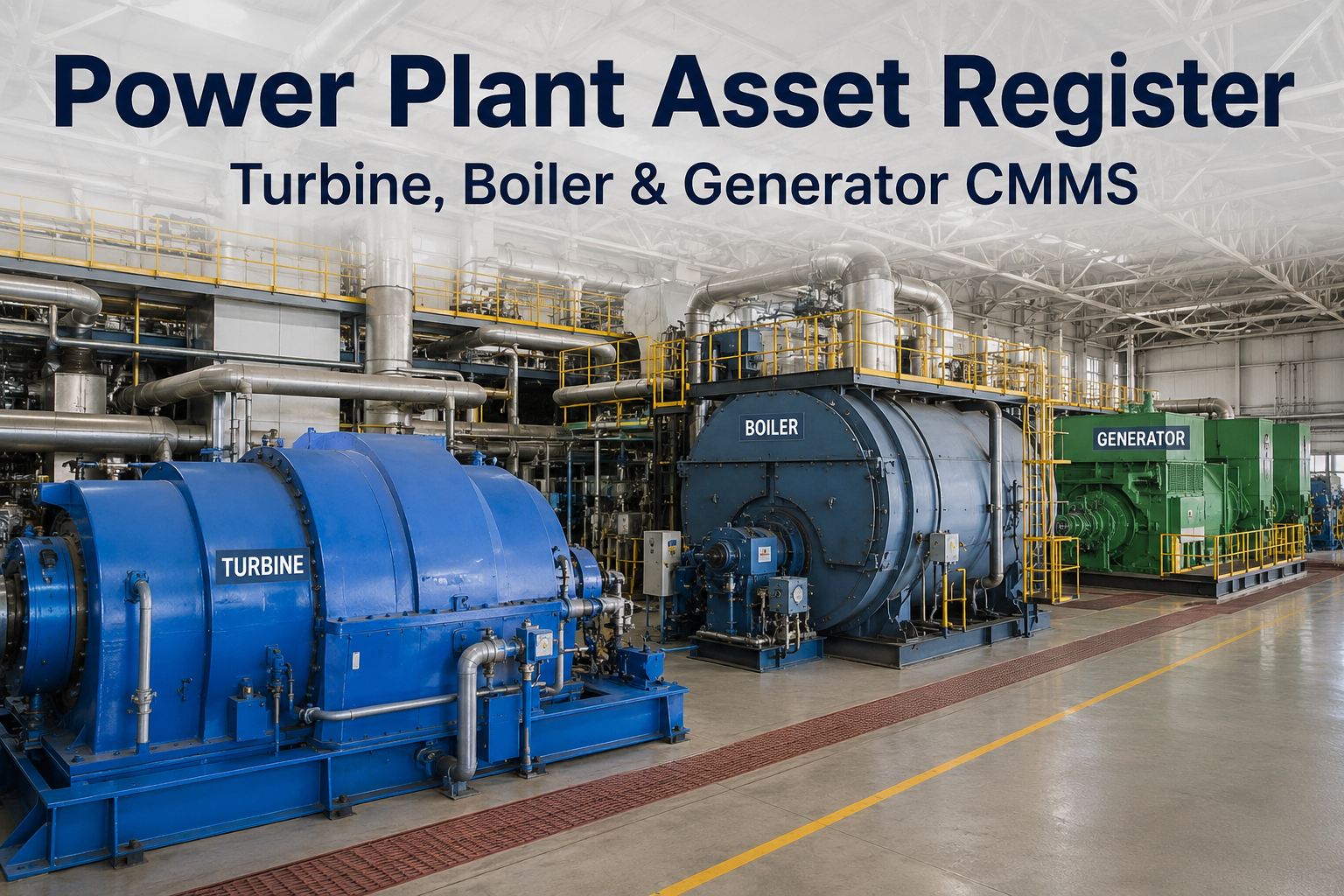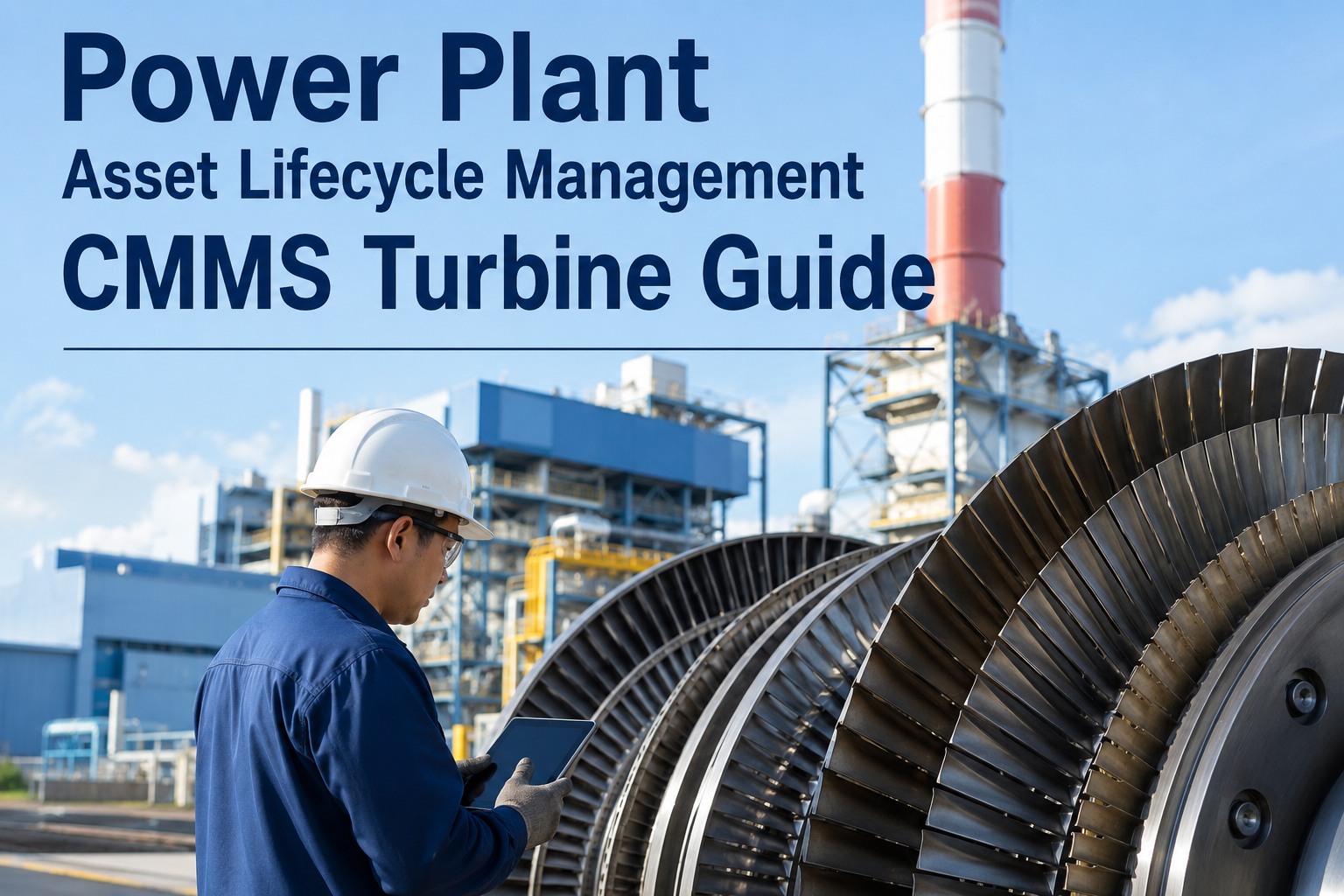
Power plant asset lifecycle management is the discipline of tracking every critical piece of equipment—from turbine commissioning to decommissioning—so that generation availability stays above 95% and maintenance spend stays predictable. A modern CMMS built for power assets gives reliability teams a single system of record for turbine lifecycle management, HRSG lifecycle tracking, generator winding inspections, and spare-parts inventory, replacing spreadsheets and paper logs that hide failure trends. Plants that implement a structured asset lifecycle guide typically cut unplanned downtime by 20–40% and extend major overhaul intervals by 10–15%, translating to millions in avoided lost-generation revenue. Whether you manage a 180-MW gas-fired facility or a 1.2-GW combined-cycle fleet, the right CMMS lifecycle strategy turns reactive fire-fighting into data-driven preventive and predictive maintenance. See it on your assets—Start Free Trial or book a tailored walkthrough today.
Power Plant Asset Lifecycle Guide
Every turbine, HRSG and generator has a lifecycle. Are you tracking it—or just reacting to it?
From first commissioning to decommissioning, a single missed inspection window on a steam turbine can cost $2M+ in unplanned outages and lost generation. OxMaint gives power plants an AI-powered CMMS to track asset health, predict failures and extend lifecycle value across the entire fleet.
Asset Lifecycle Stages
The 6-Phase Power Plant Asset Lifecycle
Power plant asset management follows six distinct phases defined by ISO 55000 standards. Each phase carries specific risk profiles and maintenance requirements—missing the handoff between phases is where 60% of premature equipment failures originate.
Commissioning & Baseline
Record nameplate data, vibration baselines, oil analysis benchmarks and OEM warranty terms. A turbine CMMS lifecycle starts here—without baseline data, you cannot detect deviation two years later.
Early Operation (Years 1–5)
Shift from warranty-driven maintenance to preventive schedules. Track first oil changes, filter replacements and bore-scope inspections. Most plants lose 8–12% of baseline efficiency by year five without structured PM tracking.
Mature Operation (Years 5–15)
This is where predictive maintenance pays off. HRSG lifecycle tracking reveals creep damage in superheater tubes; generator winding lifecycle monitoring catches partial discharge before insulation fails. Unplanned outages here cost $8K–$15K per hour.
Major Overhaul & Refurbishment
Turbine major inspections happen at 24,000–48,000 operating hours. A CMMS with full lifecycle history reduces overhaul planning from 6 months to 8 weeks and cuts parts procurement delays by 35%.
Extended Life (Years 15–25+)
Beyond OEM design life, risk-based inspection (RBI) drives the maintenance strategy. Lifecycle tracking power data—vibration trends, oil degradation curves, thermal efficiency loss—tells you exactly which components need replacement vs. continued monitoring.
Decommissioning & Disposal
Asset retirement requires full lifecycle documentation for environmental compliance and scrap-value recovery. Plants with complete CMMS records recover 15–20% more value from retired assets through targeted component salvage.
Lifecycle Cost Formula
How Much Does Poor Lifecycle Tracking Cost a Power Plant?
A typical 500-MW combined-cycle plant with 1,200 tracked assets loses $3.2M annually to unplanned downtime, redundant spare-parts purchases and premature equipment replacement. Here is the formula reliability engineers use to quantify the gap.
Annual Lifecycle Cost Gap
Unplanned Downtime Cost + Premature Replacement Cost + Redundant Inventory Spend + Overtime & Contractor Premium
Where downtime cost = (MW lost × hours down × $/MWh wholesale price). For a 500-MW plant at $45/MWh, one 72-hour turbine forced outage = $1.62M in lost generation alone.
Worked Example
Turbine Lifecycle Tracking: A 180-Asset Gas Plant Scenario
Consider a 320-MW gas-fired peaker plant running two GE 7FA turbines, an HRSG and a steam turbine generator. Before implementing a CMMS lifecycle program, the plant spent $42K/month on reactive maintenance and logged 14 unplanned trips per year.
| Lifecycle Metric | Before CMMS (Spreadsheets) | With OxMaint CMMS | Annual Impact |
|---|---|---|---|
| Unplanned turbine trips | 14 per year | 5 per year | $890K saved |
| PM compliance rate | 61% | 94% | Fewer cascade failures |
| Mean time to repair (MTTR) | 18.2 hours | 9.5 hours | $680K saved |
| Spare-parts inventory carrying cost | $580K/year | $410K/year | $170K freed |
| HRSG tube leak detection | Reactive—after failure | Predictive—21 days lead time | 1 outage avoided |
| Generator winding inspection tracking | Paper logs, 40% missing | 100% digital, auto-scheduled | Audit-ready in minutes |
| Total measurable annual impact | — | — | $1.74M+ saved |
This plant recovered its OxMaint investment in under 90 days. The CMMS paid for itself by preventing a single HRSG tube leak that would have triggered a 6-day forced outage during peak pricing season.
How OxMaint Helps
OxMaint Capabilities That Extend Power Asset Lifecycle
OxMaint is built for power plant maintenance and reliability teams. These four capabilities map directly to the lifecycle challenges above—each with a measurable outcome you can verify in the first 90 days.
Predictive Maintenance Engine
AI models analyze vibration, oil analysis, thermal imaging and performance data to predict turbine, HRSG and generator failures 14–30 days before they occur. Plants using OxMaint predictive alerts cut unplanned downtime by 30–50%.
Full Asset Lifecycle Registry
Track every asset from commissioning to decommissioning—nameplate data, maintenance history, warranty status, overhaul records and failure codes in one searchable registry. Eliminates the 40% missing-documentation problem that plagues audit season.
Automated PM Scheduling & Work Orders
Generate preventive maintenance work orders based on operating hours, calendar time or condition triggers. OxMaint raises PM compliance from 60% to 95%+ and eliminates paper work orders entirely—technicians complete digital checklists on mobile devices.
Spare-Parts Inventory Optimization
Link every asset to its BOM and min/max stock levels. OxMaint auto-generates purchase requisitions when parts drop below threshold and ties spare-parts consumption to asset lifecycle records—reducing carrying costs 20–30% while preventing stockouts.
See OxMaint on your turbines, HRSGs and generators
Book a 30-minute demo and we will walk you through a power plant asset lifecycle setup—turbine commissioning to decommissioning, predictive alerts, PM scheduling and inventory optimization on your own asset hierarchy.
FAQ
Power Plant Asset Lifecycle Management — Frequently Asked Questions
What is power plant asset lifecycle management?
Power plant asset lifecycle management is the process of tracking and optimizing every piece of critical equipment—from turbines and HRSGs to generators and auxiliary systems—across all six phases: commissioning, early operation, mature operation, major overhaul, extended life and decommissioning. A CMMS like OxMaint centralizes the data, schedules and history needed to maximize availability and minimize lifecycle cost.
How does a CMMS improve turbine lifecycle management?
A CMMS improves turbine lifecycle management by maintaining a complete digital record of every inspection, repair, oil change and vibration reading across the turbine's 25–30-year life. It auto-schedules preventive maintenance based on operating hours, flags deviation from baseline conditions and provides the overhaul history that OEMs require—extending mean time between failures by 15–25%.
How long does it take to implement a CMMS in a power plant?
A focused CMMS implementation for a single power plant takes 4–8 weeks with OxMaint. The fastest deployments start with critical assets (turbine, generator, HRSG) and expand to auxiliary equipment in phases. You can begin tracking work orders and PM schedules in week one—book a demo at calendly.com/oxmaintapp/30min to see a realistic timeline for your plant.
What is the ROI of CMMS lifecycle tracking for power plants?
Most power plants see a 3–6 month payback period. A 500-MW plant typically saves $1.5M–$3M annually through reduced unplanned downtime (30–50% fewer forced outages), lower spare-parts carrying costs (20–30% reduction), extended overhaul intervals (10–15%) and reduced contractor overtime. The cost of one avoided turbine trip often covers the full annual CMMS subscription.
Can OxMaint track HRSG and generator winding lifecycle alongside turbines?
Yes. OxMaint supports unlimited asset hierarchies, so you can track HRSG tube inspections, generator winding partial-discharge tests, transformer DGA results and turbine borescope inspections in the same system. Each asset carries its own lifecycle timeline, PM schedule and condition-monitoring data—giving you a single source of truth across the entire generation fleet. Start your free 14-day trial to import your asset list today.
Stop managing power assets on spreadsheets. Start managing lifecycles.
Join the power plants using OxMaint to cut unplanned downtime 30–50%, extend overhaul intervals and turn maintenance from a cost center into a reliability engine.
Free 14-day trial · No credit card