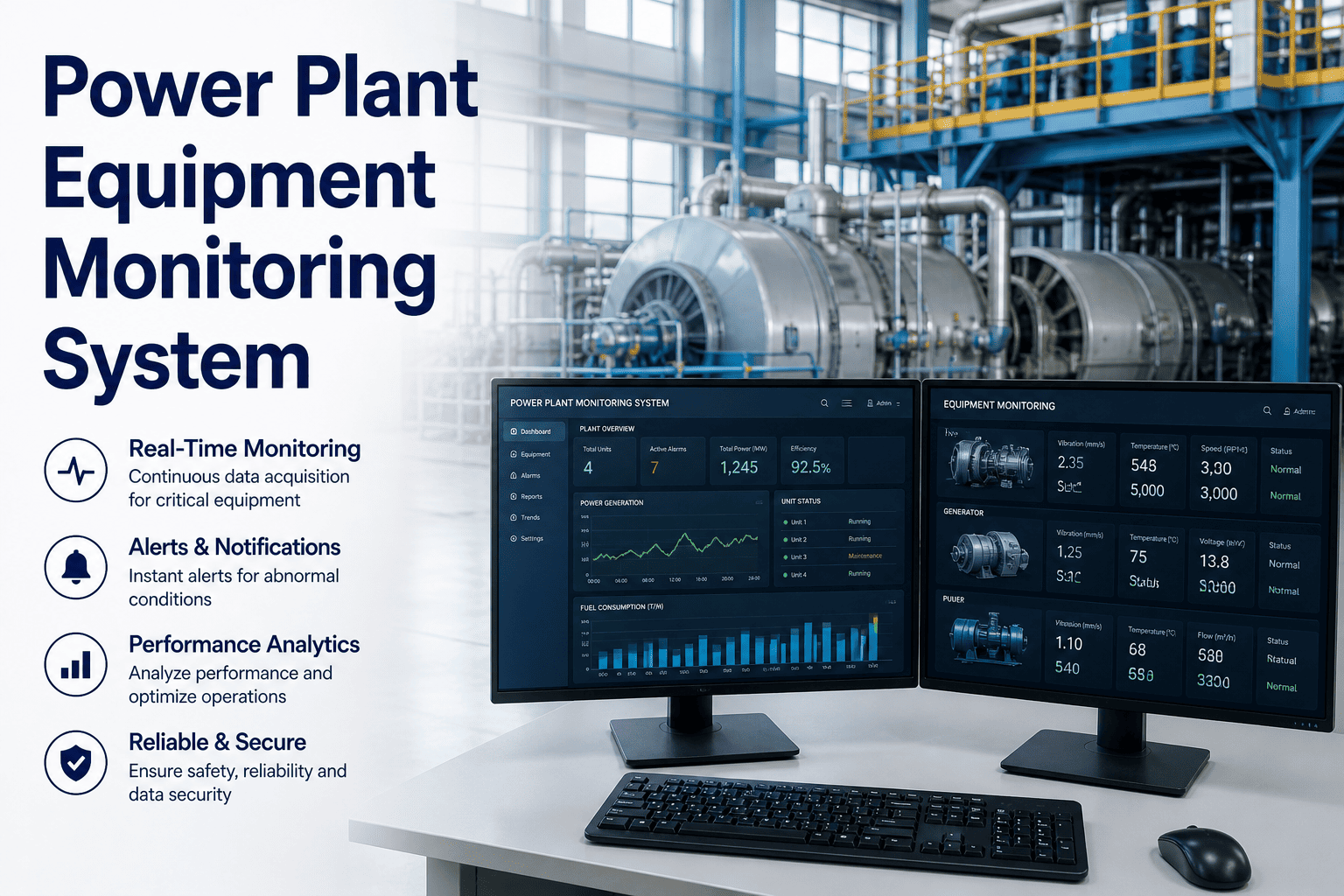
Steam turbines are the backbone of power generation and industrial processes worldwide, operating continuously under extreme temperatures exceeding 565°C and pressures up to 160 bar. Yet most facilities still schedule maintenance based on calendar intervals rather than actual operating conditions. The result? Either premature maintenance that wastes resources, or delayed service that risks catastrophic failures costing millions in unplanned downtime. Oxmaint CMMS transforms steam turbine maintenance from guesswork to precision by tracking runtime hours, equivalent operating hours, and component-specific wear factors — triggering work orders exactly when your turbines need service. Schedule a demo to see runtime-based scheduling in action.
Why Runtime-Based Scheduling Outperforms Calendar Maintenance
A steam turbine operating 8,000 hours annually experiences dramatically different wear patterns than one running only 2,000 hours. Calendar-based scheduling treats both identically — resulting in either wasted resources on premature maintenance or dangerous delays that risk equipment failure. Runtime-based maintenance triggers inspections and overhauls based on actual operating hours and equivalent operating hours (EOH), ensuring service happens exactly when your turbines need it.
Calendar-Based
- Fixed intervals ignore actual usage
- Over-maintenance of low-use units
- Under-maintenance of high-use units
- Unpredictable component failures
- Higher total maintenance costs
Runtime-Based
- Triggers on actual operating hours
- Accounts for starts and load cycles
- Optimizes each turbine individually
- Prevents unexpected failures
- Reduces costs by up to 80%
Stop Guessing When to Service Your Turbines
Oxmaint tracks running hours, calculates EOH with weighted factors, and automatically generates work orders when turbines approach inspection intervals.
Steam Turbine Maintenance Intervals: The Complete Runtime Schedule
Steam turbine maintenance intervals vary significantly by turbine size, operating conditions, and manufacturer recommendations. However, industry standards establish clear runtime thresholds for different inspection levels. Tracking these intervals by actual operating hours rather than calendar dates ensures optimal maintenance timing.
Routine Monitoring
Real-time vibration monitoring, bearing temperature checks, oil pressure verification, and steam parameter logging. No turbine shutdown required.
Operational Checks
Lubrication system inspection, oil filter condition, steam leak detection, control system calibration verification, and auxiliary equipment checks.
Minor Inspection
Oil analysis per ASTM D-4378 standards, vibration trending analysis per ISO 10816, borescope inspection of accessible stages, and valve function testing.
Minor Overhaul
Opening of turbine housing for internal inspection, blade and diaphragm condition assessment, bearing inspection, seal replacement, and clearance measurements.
Major Overhaul
Complete turbine disassembly, rotor removal and inspection, NDE testing of all critical components, blade replacement as needed, and full steam path restoration.
Life Extension Assessment
Comprehensive remaining life analysis, rotor bore inspection, creep damage evaluation, and modernization planning for continued reliable operation.
Critical Components and Their Maintenance Triggers
Each steam turbine component degrades at different rates based on operating conditions, steam quality, and thermal cycling. A CMMS must track these components independently and trigger maintenance based on component-specific thresholds.
Rotor Blades
Subject to erosion, corrosion, and fatigue. Borescope inspection quarterly; detailed inspection at minor overhaul. HP blades and LP blades are among top failure causes.
Journal Bearings
Critical for rotor support and vibration control. Continuous monitoring via vibration sensors; inspection at every minor overhaul. Oil analysis detects early wear.
Thrust Bearings
Maintains axial positioning under pressure-induced forces. Tilting pad design requires precise clearance monitoring. Temperature trending critical for early detection.
Control Valves
Main stop and control valves are critical safety components. OEM recommendation: inspect every 3-5 years or 25,000 EOH. Valve actuator diagnostics enable condition-based timing.
Gland Seals
Prevent steam leakage affecting efficiency. Labyrinth seals require clearance checks; carbon seals need regular replacement. Steam leak detection during weekly rounds.
Diaphragms
Stationary nozzle assemblies directing steam flow. Subject to erosion and deposit buildup. Inspection during major overhaul; repair solutions include weld repair and coating.
Equivalent Operating Hours: The True Measure of Turbine Wear
Running hours alone don't capture the full picture of turbine stress. Equivalent Operating Hours (EOH) adds weighted factors for starts, load cycling, steam quality, and other stress factors that accelerate component degradation. This provides a more accurate measure of true component wear than simple runtime tracking.
Cold Starts
10-20 EOH per startHighest thermal stress from ambient temperature. Most damaging to rotor and casing.
Warm Starts
5-10 EOH per startModerate thermal cycling from partial cooldown. Less damaging than cold starts.
Hot Starts
2-5 EOH per startQuick restarts with minimal thermal gradient. Lowest impact on component life.
Trips/Overspeed
50-100+ EOH per eventHighest severity events. Emergency shutdowns and overspeed cause extreme rotor stress.
Automate EOH Tracking and Work Order Generation
Oxmaint calculates equivalent operating hours automatically, applying start factors and load profiles to trigger maintenance at optimal intervals.
What the CMMS Must Track Per Steam Turbine
Each steam turbine requires a comprehensive digital record with runtime data, component condition, and maintenance history continuously updated. This data drives accurate maintenance scheduling and provides the foundation for predictive analytics.
- Total running hours (cumulative)
- Hours since last inspection
- Start count by type (cold/warm/hot)
- Equivalent operating hours (EOH)
- Load profile and cycling history
- Trip and overspeed events logged
- Vibration trending (ISO 10816)
- Bearing temperature profiles
- Oil analysis results (ASTM D-4378)
- Steam path efficiency calculations
- Differential expansion measurements
- Valve stroke timing and position
- Inspection dates and findings
- Component replacements logged
- Clearance measurements recorded
- NDE test results archived
- Repair and upgrade history
- Parts inventory and lead times
- Hours to next minor inspection
- Hours to major overhaul due
- Valve inspection interval countdown
- Bearing replacement triggers
- Oil change intervals
- Parts procurement lead time alerts
The Cost of Getting It Wrong
Steam turbine maintenance failures don't just cost money — they can shut down entire facilities for weeks and pose serious safety risks. Understanding these consequences reinforces the value of runtime-based preventive maintenance.
Optimized Runtime Maintenance
Work orders triggered at precise intervals based on actual operating hours. Parts pre-ordered, outages scheduled during planned downtime windows. Typical availability: 95% or higher with less than 2% forced outage rate.
Calendar-Based Scheduling
Fixed intervals miss actual wear conditions. Some units over-maintained, others under-maintained. Occasional unexpected issues during outages extend downtime. Higher maintenance costs without corresponding reliability gains.
Reactive Maintenance
Inspections delayed or skipped. Minor issues escalate undetected. Vibration anomalies ignored. Parts not in stock when needed. Average unplanned outage adds 3.5 days and $150,000 in costs per event.
Catastrophic Failure
Blade liberation, rotor damage, overspeed event, or bearing seizure. Cascade damage to downstream components. Major outages cost $1M+ and weeks of downtime. Potential safety incidents and regulatory consequences.
Transform Your Steam Turbine Maintenance Program
Oxmaint tracks runtime hours, calculates EOH with start and load factors, and automatically generates work orders when your turbines approach inspection thresholds. Extend outage cycles from 5 to 7+ years with proper monitoring. Prevent catastrophic failures. Optimize maintenance spending.
Frequently Asked Questions
How often should steam turbines be maintained?
Maintenance frequency depends on turbine type, size, and operating conditions. Minor inspections are typically performed every 3-6 months or based on condition monitoring data. Minor overhauls (opening the turbine housing) are scheduled at 8,000-12,000 operating hours. Major overhauls with complete disassembly occur at 25,000-50,000 hours, while some advanced monitoring programs extend major overhaul intervals to 100,000 EOH. Steam turbines can achieve 95% availability with proper runtime-based scheduling and less than 2% forced outage rates with proactive maintenance programs.
What is the difference between running hours and equivalent operating hours?
Running hours measure actual time the turbine operates — simply counting hours when the unit is online. Equivalent operating hours (EOH) add weighted factors for starts, load cycling, steam quality, trips, and other stress factors that accelerate component wear. Cold starts might add 10-20 EOH per event, while trips and overspeed events can add 50-100+ EOH. EOH provides a more accurate measure of true component degradation and better predicts when maintenance is actually needed, preventing both premature service and dangerous delays.
What does an unplanned steam turbine outage cost?
Unplanned outages are significantly more expensive than scheduled maintenance. Industry data shows average unplanned outages cost around $150,000 in lost generation and increased repair expenses, adding approximately 3.5 days of additional downtime compared to planned outages. For industrial facilities, every day of downtime can translate to $30,000 or more in lost production revenue. Major failures involving blade liberation, rotor damage, or cascade component damage can cost over $1 million and require weeks or months to repair. Approximately 50% of annual steam turbine outages are unplanned — representing significant opportunity for improvement through proper runtime-based scheduling.
When should steam turbine valves be inspected?
OEMs and industry organizations typically recommend steam turbine valve inspection every 3-5 years or 25,000 equivalent operating hours, whichever comes first. Main stop valves and control valves are critical safety components — valve failures can lead to overspeed events, which are among the highest-severity steam turbine failures. Modern valve actuator diagnostics enable condition-based timing by monitoring stroke times, position feedback, and operating characteristics, potentially extending intervals when data supports safe operation or triggering earlier service when degradation is detected.
What are the most common steam turbine failure causes?
Industry failure analysis identifies several leading causes of steam turbine unavailability: LP turbine blades (erosion, fatigue, resonance), turbine bearings (HP and LP), vibration issues, main stop and control valves, HP blades, trip devices, and lube oil system problems. Overspeed events represent the highest-severity failures, particularly in smaller turbines under 40 MW. Many failures result from thermal cycling stress as turbines increasingly operate in two-shifting or load-following modes rather than baseload operation. Proper runtime tracking with EOH factors for starts and load cycles helps predict and prevent these failure modes.

.png)