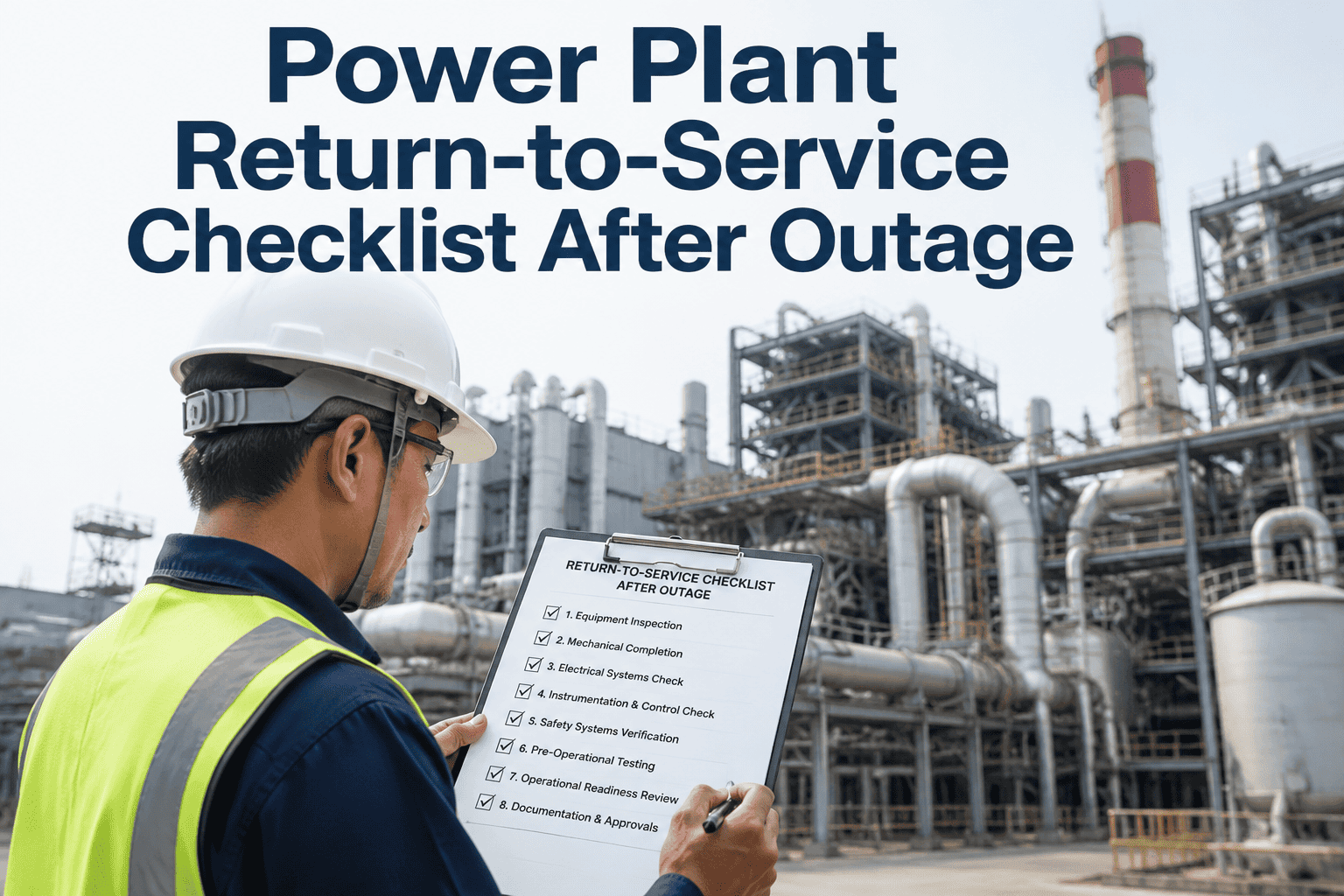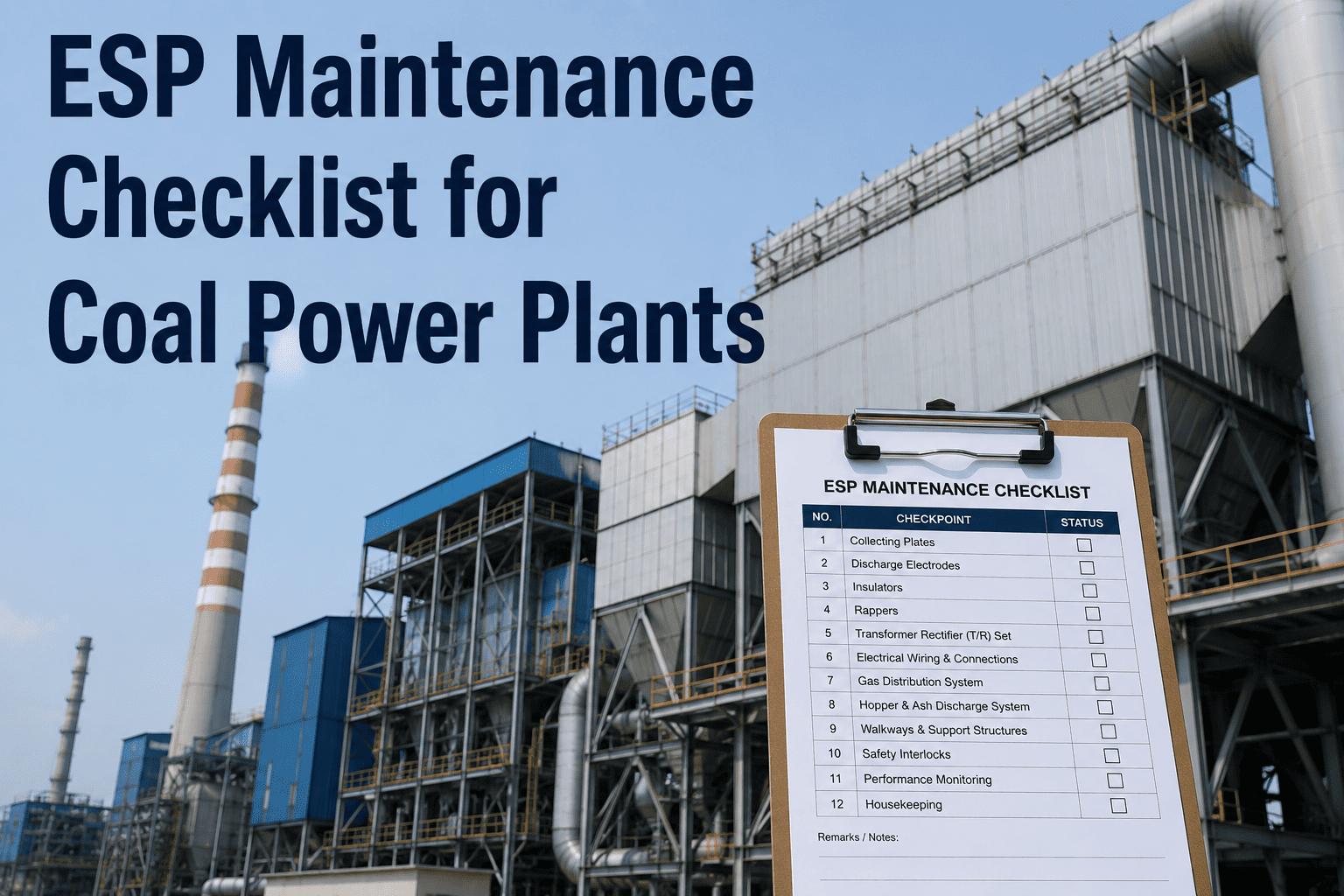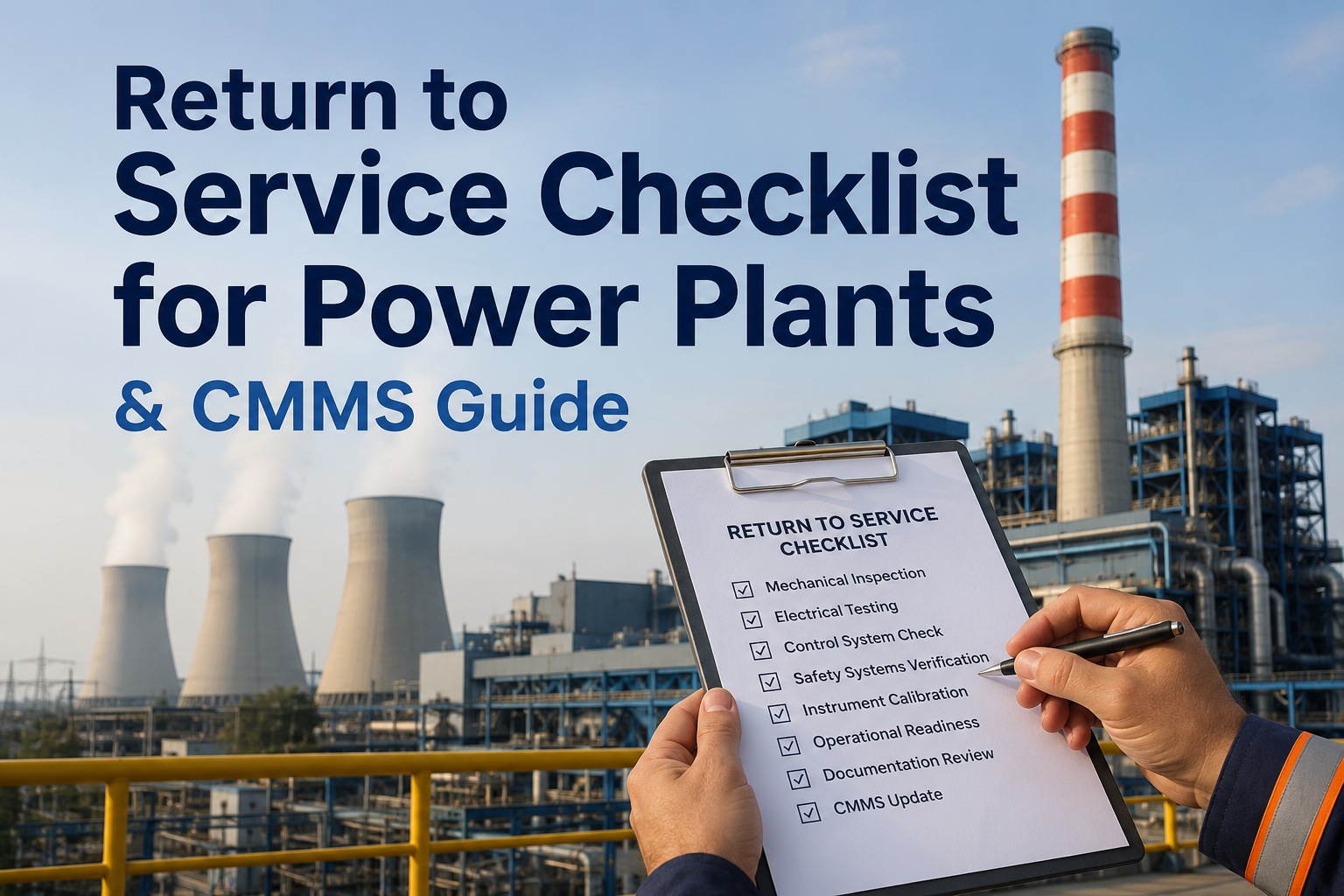
A return to service power plant procedure is the structured sequence of commissioning checks, turbine run-up steps, and protection-system verifications that bring generating equipment safely from a maintenance outage back to full load. This power plant startup guide covers the full commissioning checklist for turbine return service, from punch-list closeout to synchronized grid operation. A CMMS return service workflow in OxMaint digitizes every milestone, sign-off and handover — so teams can Start Free Trial and cut startup delays by 30-50 %.
Are You Still Running Plant Startup from Spreadsheets and Paper Punch Lists?
Every extra shift your turbine sits offline after maintenance is lost revenue. A 500 MW unit at $45/MWh loses roughly $540,000 per day of delay. OxMaint digitizes your return to service power plant checklist — tracking every commissioning sign-off, punch-list item and run-up milestone in one AI-powered CMMS.
Return to Service Power Plant Checklist: 5 Phase Gate Verification
A structured power plant startup checklist breaks the return to service into five phase-gated commissioning stages. Each gate must be signed off before the next begins — missed checks at any gate are the leading cause of turbine damage and forced outages during run-up.
Pre-Energization Checks
- Permits to work closed and isolations verified
- Tag-out / lock-out registers reconciled
- Electrical protection relays tested and armed
- Bearing oil temperatures and lube-oil flows confirmed
Auxiliary Systems Commissioning
- Seal-oil system pressure and differential verified
- Condenser vacuum pulled to target (typically below 25 kPa abs)
- Feed-water chemistry within ISO 17025-specification limits
- Cooling-water pumps and valves responding to DCS commands
Turbine Run-Up Procedure
- Turning gear engaged and vibration baselines recorded
- Hold points at 500, 1500 and 3000 RPM for thermal soaking
- Shaft vibration and eccentricity trended against OEM limits
- Overspeed trip test completed at 110 % rated speed
Synchronization & Initial Loading
- Governor and AVR auto-mode response verified
- Voltage, frequency and phase-angle matched to grid
- Load ramp held at 5 % for initial stabilisation period
- Steam-metal temperature differentials within 50 °C envelope
Full Load Acceptance & Handover
- Performance test at 100 % MCR capacity completed
- Heat-rate deviation within 1 % of design baseline
- All open punch-list items closed or risk-accepted
- Operations handover certificate signed by shift managers
Turbine Run Up and Commissioning Timeline
A typical steam-turbine return service spans 7 to 14 days from maintenance closeout to full-load acceptance. Each milestone below must be tracked, time-stamped and signed off — a task that collapses without a plant commissioning CMMS.
Permit Closure & Isolation Removal
Lock-out/tag-out devices removed under formal permit-to-work clearance. All maintenance work orders closed in the CMMS and punch-list items categorized as critical, minor or deferred.
Auxiliary System Flush & Test
Lube-oil flushing, seal-gas system pressurization, and control-fluid circulation verified against ISO 4406 cleanliness targets. Protection relays function-tested before energization.
Turbine Run-Up & Soak Points
Rotor accelerated through hold points with continuous vibration monitoring. Any deviation above 125 µm peak-to-peak triggers automatic trip and root-cause investigation.
Synchronization & Load Ramp
Grid synchronization at 100 % voltage match. Load ramped at 2–3 % per minute to protect steam-path components from thermal stress, reaching nameplate capacity within 4–6 hours.
Performance Test & Handover
ASME PTC 6 performance test conducted at full load. Heat rate and output verified against design guarantees. Final punch-list sign-off and operations acceptance certificate issued.
What a Disorganized Return to Service Really Costs Your Plant
A typical 400 MW combined-cycle plant loses $360,000–$540,000 in gross margin for every 24 hours of avoidable startup delay. When commissioning checklists live on clipboards, critical punch-list items slip through — and the costs compound fast.
A 320-asset cogeneration plant delayed turbine return service by 4.2 days due to misplaced paper punch-list items and untracked protection-relay sign-offs. At 180 MW output and $42/MWh spark spread, that single event cost $762,000 in lost generation revenue — roughly 11× the annual cost of an OxMaint CMMS subscription for the same site.
Spreadsheet vs CMMS Return Service: Where Time Is Lost
Most reliability teams still manage plant recommissioning with shared spreadsheets, scanned PDFs and email sign-off chains. The table below shows where a dedicated return service CMMS recovers time and reduces risk at every phase.
| Commissioning Phase | Spreadsheet / Manual | OxMaint CMMS | Time Saved |
|---|---|---|---|
| Permit & isolation closure | 4–6 hrs, manual reconciliation | Digital LOTO, auto-reconcile in real time | 60 % |
| Punch-list tracking | Static sheets, items missed | Live punch list with photo attachments | 45 % |
| Protection-system verification | Sign-off emails, no audit trail | Mandatory e-signature per checklist item | 55 % |
| Turbine run-up monitoring | Handwritten logs, delayed review | Live trend data from DCS integration | 40 % |
| Handover documentation | 2–3 days of report compilation | Auto-generated commissioning dossier | 80 % |
See OxMaint on Your Assets — Book a 30-Minute Demo
Watch how OxMaint digitizes your return to service checklist, tracks turbine run-up milestones in real time, and auto-generates your commissioning handover dossier.
How OxMaint Powers Your Power Plant Recommission
OxMaint maps directly to every stage of your return to service power plant procedure — from maintenance closeout through full-load handover — eliminating the spreadsheet chaos that delays turbine startup and risks forced outages.
Digital Phase-Gate Checklists
Convert every commissioning checklist item into a mandatory, role-gated digital task. No phase advances until all predecessors are signed off — cutting missed checks by 45 % and creating a tamper-proof audit trail for every startup.
Live Punch-List Management
Capture defects on mobile devices with photos and severity ratings the moment they are found. OxMaint routes each item to the right technician, tracks resolution status in real time, and ensures zero open critical items at handover.
Real-Time Run-Up Monitoring
Integrate DCS vibration, temperature and pressure trends directly into the work order. OxMaint flags any parameter exceeding OEM limits during turbine run-up, triggering automatic hold-trip alerts so operators react in seconds, not minutes.
Auto-Generated Handover Dossier
The moment full-load acceptance is signed, OxMaint compiles every checklist sign-off, punch-list resolution, test result and performance reading into a searchable commissioning dossier — eliminating 2–3 days of manual report compilation.
What Changes When a Plant Moves to OxMaint
A 680 MW gas-fired plant in Texas replaced spreadsheet-based commissioning with OxMaint during a major turbine overhaul. The results below are from their first return to service cycle after deployment.
"OxMaint cut our turbine return service from 12 days to 8. The digital phase-gate checklists meant not a single punch-list item was missed — and we had the full handover dossier before the operators even left the control room."
Return to Service Power Plant — Frequently Asked Questions
What is a return to service procedure in a power plant?
A return to service procedure is the controlled sequence of commissioning checks that bring generating equipment from a maintenance outage back to full-load grid operation. It covers permit closure, auxiliary-system testing, turbine run-up, synchronization and performance acceptance — typically managed as phase-gated milestones with mandatory sign-offs at each stage.
How long does turbine return service take after a major overhaul?
A steam-turbine return service after a major overhaul typically takes 7 to 14 days, depending on unit size and scope. Auxiliary flushing alone can consume 48 hours, followed by 3–5 days of run-up hold points and thermal soaking before synchronization and full-load testing begin. Plants using a CMMS return service workflow routinely compress this by 25–35 %.
What is the difference between commissioning and return to service?
Commissioning generally refers to first-time energization and testing of new or modified equipment against design specifications, while return to service is the process of restoring an existing asset to operation after a planned or forced maintenance outage. Both require structured checklists, punch-list management and documented sign-offs — which is why a plant commissioning CMMS like OxMaint supports both workflows in a single platform.
How does a CMMS improve power plant startup reliability?
A CMMS digitizes every startup checklist item, enforces phase-gate sign-offs, tracks punch-list defects in real time, and captures DCS trend data alongside work orders — eliminating the missed checks, lost paperwork and email-chain delays that cause 18 % of forced outages. You can Start Free Trial on OxMaint to see how it maps to your specific startup procedure.
What should be on a power plant startup checklist?
A complete startup checklist covers LOTO clearance, auxiliary-system readiness (lube oil, seal gas, cooling water, feedwater chemistry), protection-relay testing, turbine run-up hold points with vibration limits, synchronization parameters, load-ramp rates, and final performance verification at 100 % MCR. OxMaint ships with configurable templates for each of these phases so your team can start on day one.
Stop Losing Revenue to Startup Delays
Digitize your return to service checklist, punch-list management and turbine run-up monitoring in one AI-powered CMMS. See how OxMaint compresses your commissioning timeline and eliminates forced-outage risk.
Free 14-day trial · No credit card