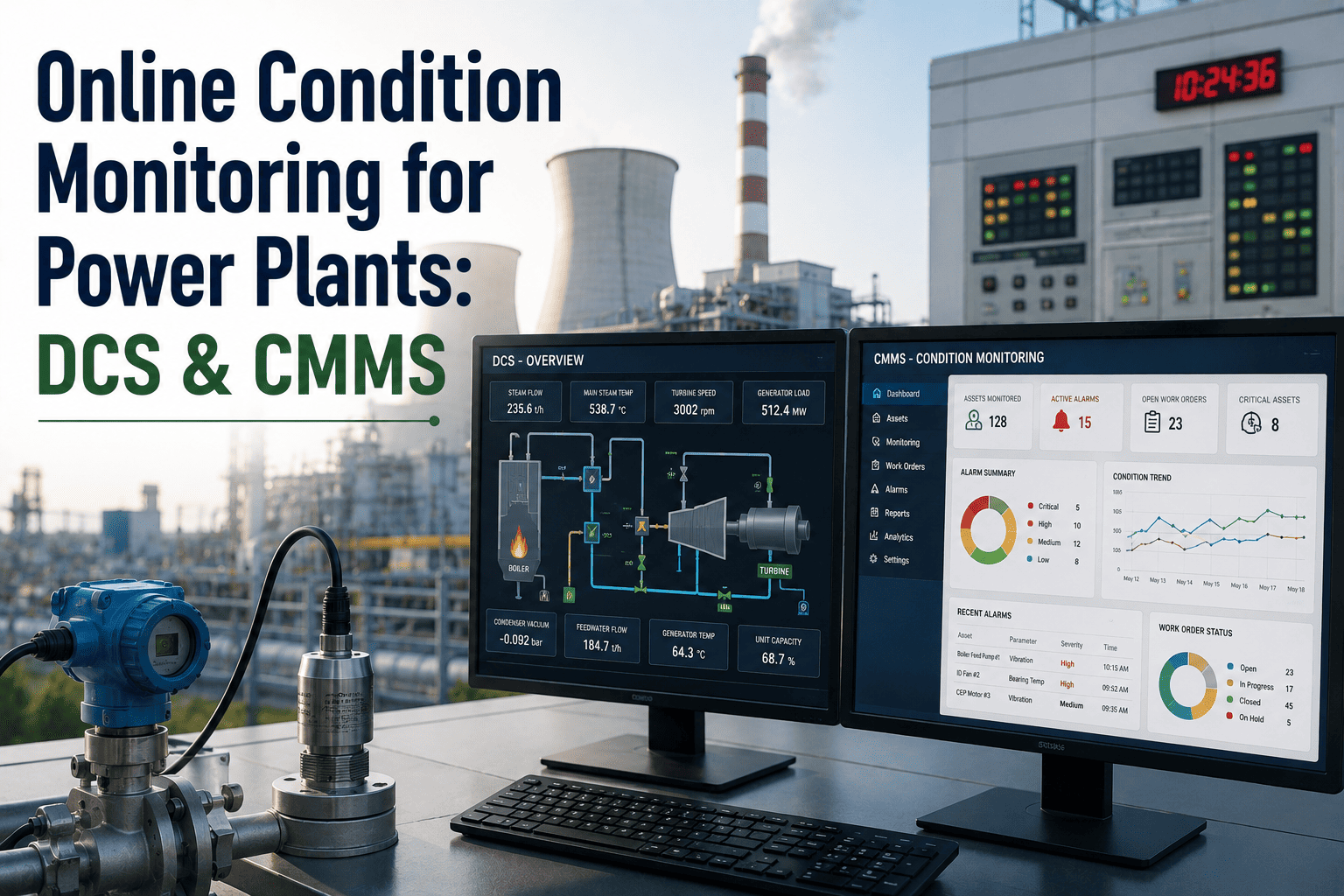
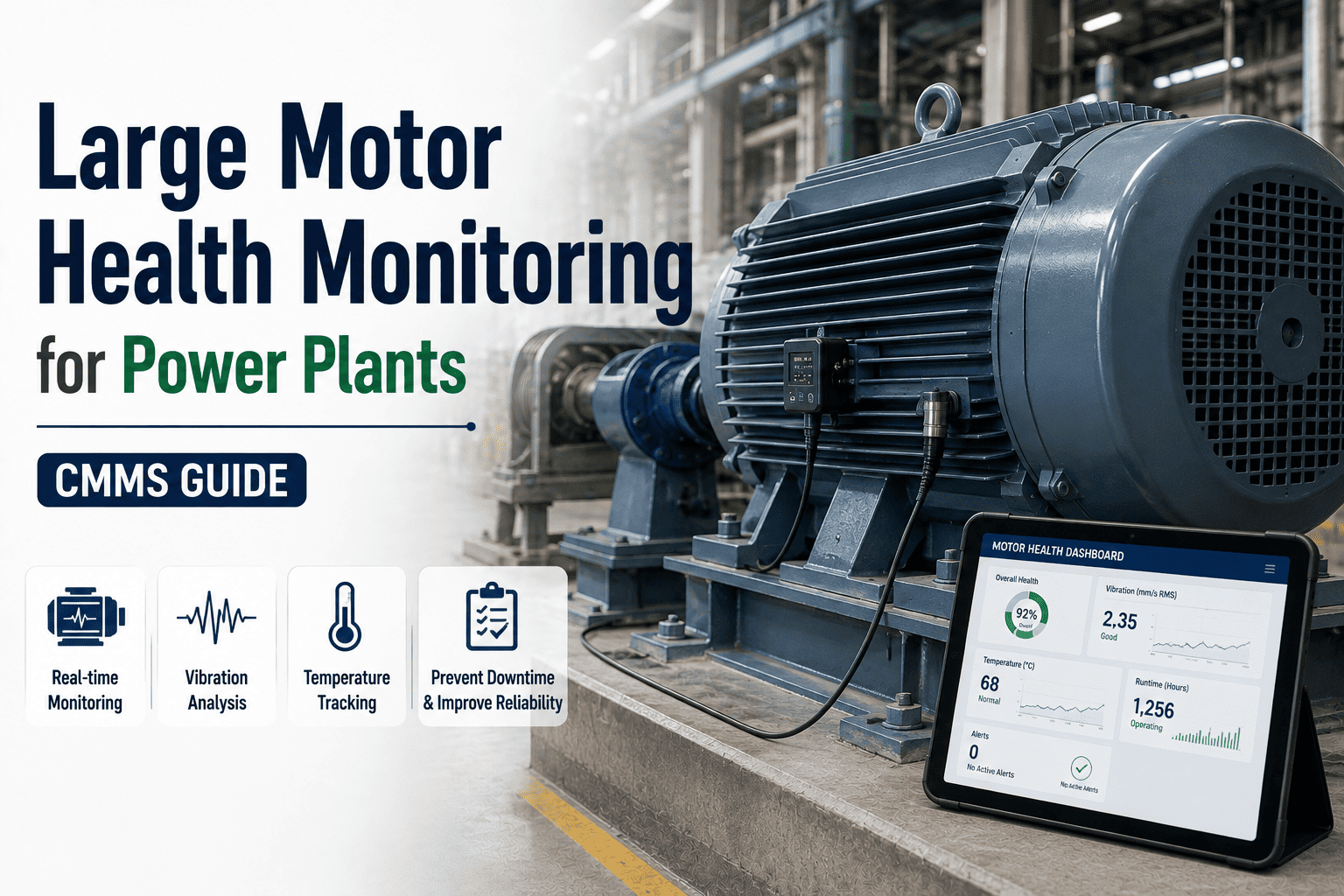
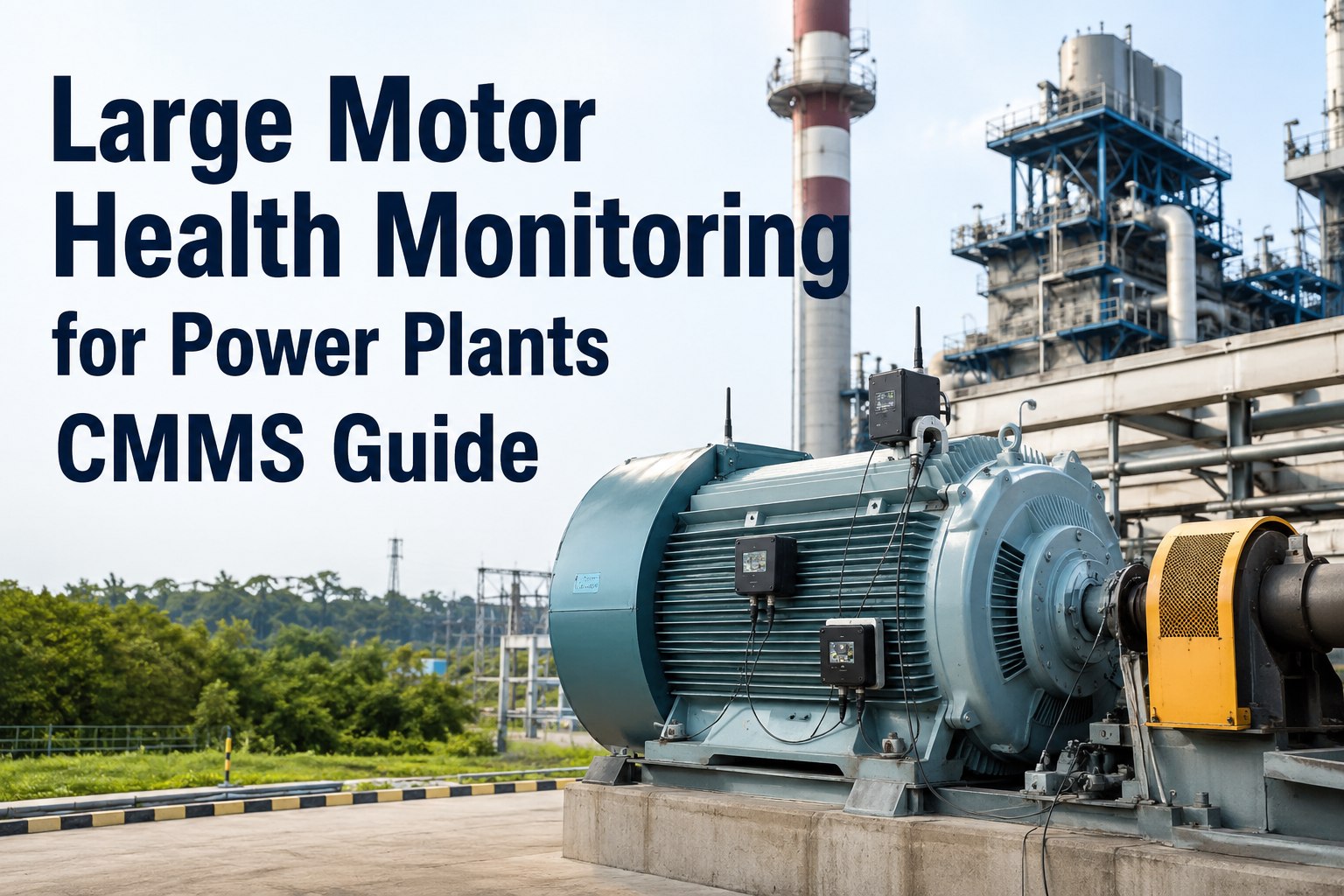
A turbine bearing running at 6,200 RPM does not send an email when it starts to degrade. A transformer drawing abnormal current does not file a work order. A boiler feed pump losing efficiency millimetre by millimetre over eight weeks gives no visible sign until the day it fails. Real-time equipment monitoring — IoT sensors feeding live data into a CMMS that acts on it automatically — is the only way a power plant's maintenance team can stay ahead of failures that develop silently across weeks. Sign up for Oxmaint to connect your plant's sensor data to a CMMS that converts readings into work orders automatically, or book a demo to see a live IoT-CMMS monitoring dashboard configured for power generation assets.
Real-Time Equipment Monitoring for Power Plants: IoT Sensors + CMMS That Acts Before Equipment Fails
How 24/7 condition monitoring with IoT sensor integration and automated CMMS workflows is replacing scheduled inspections — and cutting unplanned downtime by up to 70% in power generation facilities.
The 168-Hour Blind Spot in Weekly Inspection Programmes
A weekly inspection checks equipment once every 168 hours. Real equipment degradation does not wait for inspection day. Bearing temperatures rise. Vibration signatures shift. Insulation resistance drifts. Most failure modes that cause unplanned outages in power plants develop and cross their critical threshold between scheduled inspections — invisible to any team relying on periodic checks alone.
Checks asset condition once. 167 hours of operation happen unobserved. Failures developing between visits are caught only after they become visible — often after the damage is irreversible.
Better coverage, but a bearing failure developing over 6 hours at peak load still goes undetected until the next visit. Labour-intensive and does not scale across large plant asset populations.
Sensors read every asset continuously. The CMMS acts the moment a reading deviates from its learned normal pattern — generating a prioritised work order with asset history and recommended action before the shift ends.
Every Critical Power Plant Asset Has a Sensor Signature. Oxmaint Reads All of Them.
Different assets fail through different mechanisms measured by different sensor types. Oxmaint ingests data from the full range of industrial IoT sensors and SCADA/DCS historian streams — and applies asset-specific health models to each one.
Your Plant Already Generates the Data. Oxmaint Turns It Into Maintenance Decisions.
Most power plants already have temperature, pressure, and vibration instrumentation wired into their DCS or SCADA historian. Oxmaint connects to your existing data streams — no new hardware required to start. IoT sensor alerts become work orders. Work orders close loops. Loops become learning.
From Raw Sensor Signal to Closed Work Order: The Closed-Loop Monitoring Cycle
Real-time monitoring only delivers value when sensor data triggers action. Oxmaint closes the complete loop from signal detection to repair execution to model improvement — automatically, with no manual handoffs that introduce delay.
IoT sensors and SCADA/DCS historian streams deliver continuous readings to Oxmaint — vibration, temperature, pressure, current, oil quality — at configurable intervals from seconds to minutes.
Multivariate AI models compare current readings against the asset's learned normal envelope. Anomaly scores update continuously — flagging pattern deviations across correlated parameters, not just single-point threshold crossings.
When anomaly score crosses the configured sensitivity threshold, the system identifies the driving parameters and produces a prioritised alert with failure mode context — not just a raw alarm value.
Oxmaint automatically generates a CMMS work order linked to the specific asset — including sensor readings, failure history, recommended repair scope, parts list, and urgency classification.
Technician receives the work order on mobile, arrives with the right parts, executes the repair, and closes the job with findings recorded — all from asset location, no desk visit required.
Confirmed failure data feeds back into the AI model — refining MTBF calculations, improving failure prediction accuracy, and building the asset's continuous health history that makes every future detection sharper.
One Dashboard. Every Asset. Real-Time Health at a Glance.
Oxmaint's plant monitoring dashboard gives maintenance managers and operations leaders a single view of every asset's current health status — with live sensor readings, open anomaly alerts, and pending work orders all visible without switching between systems.
What Power Plants Report After Connecting IoT Monitoring to Oxmaint CMMS
| Metric | Periodic Inspection Only | IoT + Oxmaint CMMS | Measured Outcome |
|---|---|---|---|
| Unplanned downtime | Facility baseline | Up to 70% reduction | IoT-driven prediction |
| Maintenance cost | Calendar-based spend | 25–30% reduction | Condition-based scheduling |
| Alert-to-action time | Next inspection cycle | 40–60% faster | Automated work order |
| Energy consumption | Unoptimised | Up to 30% reduction | IoT efficiency monitoring |
| Failure prediction accuracy | Limited — visual only | Up to 90% accuracy | ML multivariate models |
| ROI on monitoring investment | Difficult to quantify | 95% of adopters report positive ROI | 27% amortise in year 1 |
Real-Time Monitoring in Power Plants — What Operations and Maintenance Teams Ask
Oxmaint connects to existing DCS, SCADA, and PI historian data streams through standard API integration — meaning most power plants can begin real-time monitoring using instrumentation already installed, without purchasing new sensors. New sensor investment is typically targeted at rotating equipment lacking continuous vibration coverage and transformers not already on DGA monitoring programmes. Oxmaint's integration team assesses your existing data landscape and identifies gaps before recommending any hardware additions. Book a demo to see how your existing plant instrumentation maps to Oxmaint's monitoring capabilities.
Oxmaint uses multivariate AI models rather than single-parameter threshold alarms — which is the primary cause of alarm fatigue in traditional monitoring systems. Instead of firing an alert every time one reading crosses a static limit, the AI evaluates whether the deviation is part of a wider pattern of correlated parameter changes that indicates a real fault. This approach significantly reduces false positives while catching real faults earlier. Maintenance teams receive fewer, better-quality alerts — each linked directly to a work order with the context needed to act immediately. Sign up to configure your asset monitoring sensitivity thresholds.
Multi-unit and multi-site monitoring is a core use case. Each generating unit's assets are registered separately with their own sensor connections, health models, and alert thresholds — while a plant-level and portfolio-level dashboard aggregates health status across all units simultaneously. A maintenance manager overseeing three units at one site or assets across multiple facilities sees every anomaly alert, open work order, and asset health status without switching between separate systems. Sign up to configure your multi-unit monitoring portfolio in Oxmaint.
Lead time varies by sensor type and failure mechanism. Vibration monitoring on rotating equipment typically provides four to sixteen weeks of advance warning on bearing and rotor faults. Transformer dissolved gas analysis can flag insulation degradation four to twelve weeks before dielectric failure. Temperature-based winding and lube oil monitoring typically provides two to ten weeks depending on the failure rate. As Oxmaint accumulates more confirmed failure history from closed work orders, AI model accuracy improves — with well-trained models achieving up to 90% failure prediction accuracy. Book a demo to see lead time benchmarks for your specific asset types.
Oxmaint's monitoring layer includes sensor health validation that distinguishes between a genuine equipment anomaly and a data quality issue. Flat-line readings, out-of-range values caused by sensor failure, and sudden step changes inconsistent with equipment operating rate are flagged as data quality events rather than asset health alerts. This prevents bad sensor data from generating unnecessary work orders while ensuring that real equipment degradation signatures — which show characteristic multi-parameter patterns — still trigger the appropriate response. Sign up to see how sensor health monitoring works alongside equipment health scoring.
Every Hour Your Plant Runs Without Real-Time Monitoring Is an Hour of Failure Risk You Cannot See.
Oxmaint connects your existing sensor data to AI-powered health models, auto-generates work orders the moment anomalies appear, and gives your maintenance team a live dashboard of every asset in the plant — so failures stop being surprises and start being scheduled repairs.