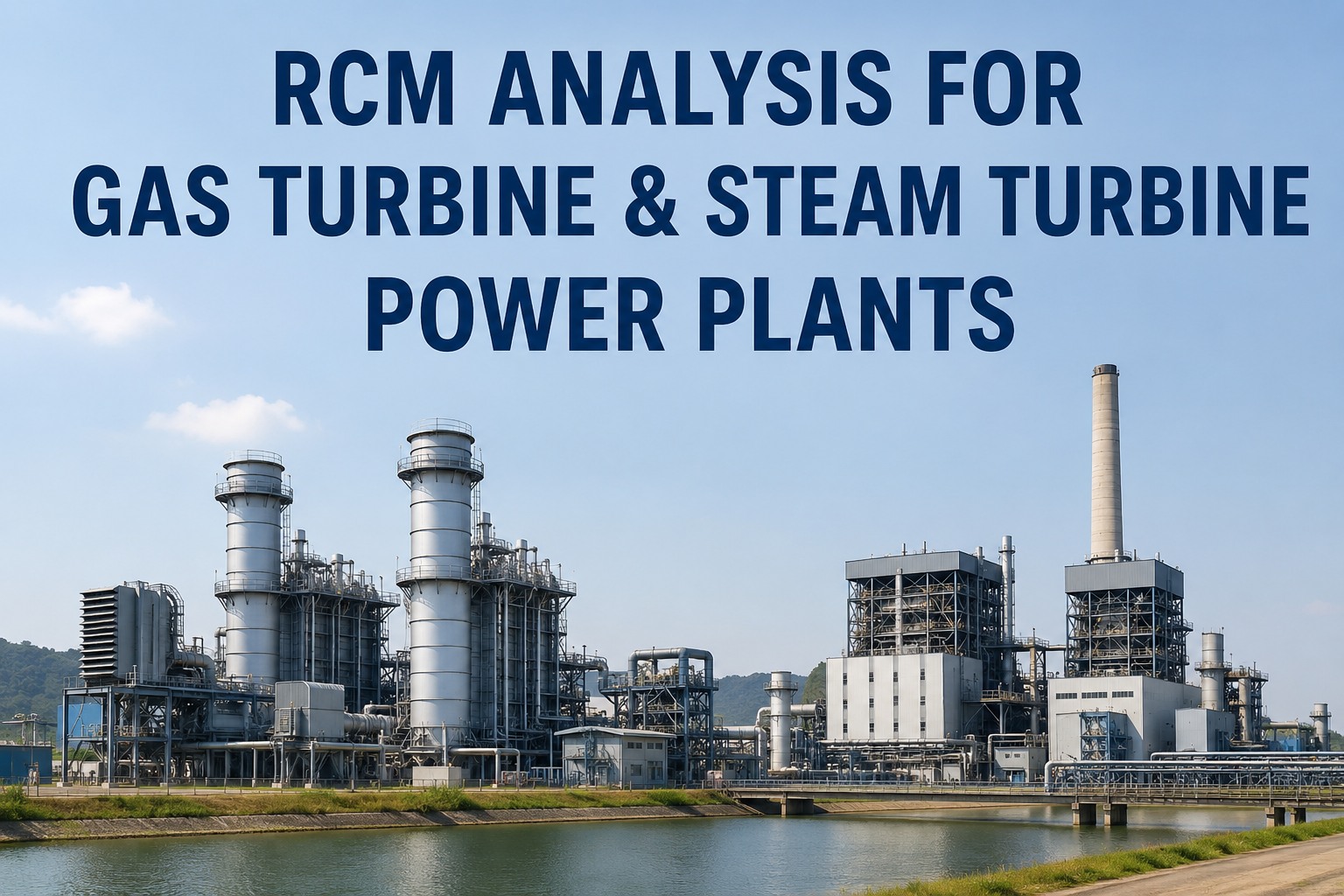
Reliability centered maintenance (RCM) analysis for power plant turbines systematically identifies the functions, failure modes, and consequences of gas and steam turbine assets to select the most effective maintenance tasks. A structured turbine RCM analysis helps coal, gas, and combined-cycle plants cut unplanned outages by 25–45% and extend mean time between failures (MTBF) by thousands of operating hours. Whether you are conducting an RCM guide for power generation or refining an existing turbine reliability RCM program, the goal is the same: direct maintenance spend to the failure modes that actually threaten safety, availability, and cost. OxMaint turns that analysis into action—translating RCM task selection into living preventive, predictive, and condition-based work orders inside an AI-powered CMMS. Start Free Trial to see how quickly your RCM logic becomes an executable maintenance plan.
RCM ANALYSIS FOR TURBINES
Is one unplanned turbine outage costing you $250K–$1M per day in lost generation?
RCM analysis for gas and steam turbines pinpoints the failure modes that drive 70%+ of forced outages—and defines the exact preventive, predictive, and condition-based tasks that prevent them. OxMaint operationalizes that analysis as living maintenance plans your team actually executes.
FOUNDATIONS
What is RCM analysis for power plant turbines?
RCM analysis for power plant turbines is a structured, seven-question methodology—rooted in SAE JA1011 and IEC 60300-3-14—that determines the right maintenance for each component based on its function, functional failures, failure modes, failure effects, and consequences. For gas turbines and steam turbines, the stakes are enormous: a single Frame 7FA gas turbine can generate $300K–$800K in daily revenue, and a 1% availability improvement on a 500 MW unit can be worth $1.5M+ annually. Turbine RCM analysis shifts maintenance from calendar-driven guessing to consequence-driven precision: it tells you which bearing, blade, or valve actually warrants a time-based overhaul, which needs condition monitoring, and which can safely run-to-failure.
Function identification
Define primary and secondary functions (e.g., "convert thermal energy to 250 MW shaft power at 3,600 RPM") with performance standards so failures are measurable, not subjective.
Failure mode analysis (FMEA)
Drill to the component level—combustor can cracking, turbine blade fouling, bearing white-metal fatigue—capturing how each failure mode is detected today.
Consequence classification
Categorize each failure mode as safety, environmental, operational, or non-operational to prioritize maintenance spend where the risk is greatest.
Task selection logic
Apply the RCM decision tree to choose scheduled restoration, on-condition monitoring, failure-finding, or redesign—never defaulting to "time-based overhaul."
GAS TURBINE FOCUS
RCM gas turbine failure modes that drive forced outages
Gas turbine RCM analysis targets the failure modes responsible for the majority of unplanned trips in combined-cycle and peaking plants. Soot deposits, combustion dynamics, blade creep, and compressor fouling degrade performance gradually—then cascade into forced outages. The table below reflects the failure modes a robust power plant RCM analysis must address for gas turbines, the dominant detection method, and the recommended RCM task type.
| Failure Mode | Typical Detection Method | RCM Task Type | Recommended Interval |
|---|---|---|---|
| Compressor fouling (air-side deposits) | Compressor efficiency trend, exhaust temp spread | On-condition (online/offline wash) | 2,000–4,000 operating hours |
| Combustor hardware wear / transition piece cracking | Borescope inspection, dynamic pressure sensors | Scheduled restoration | 8,000–12,000 hours (HGPI) |
| Turbine blade creep & coating degradation | Borescope, exhaust temperature trending | Scheduled restoration / on-condition | 24,000–48,000 hours (major inspection) |
| Bearing white-metal fatigue / oil contamination | Vibration analysis, oil debris monitoring | On-condition (predictive) | Continuous monitoring |
| IGV / VSV actuator drift | Position feedback calibration check | Scheduled on-condition | 4,000 hours |
| Fuel nozzle coking (gas fuel) | Exhaust temp spread, combustion dynamics | On-condition / scheduled restoration | 8,000 hours |
STEAM TURBINE FOCUS
RCM steam turbine analysis: critical failure modes & tasks
Steam turbine RCM analysis differs from gas turbine RCM because the dominant failure modes are driven by steam quality, cyclic loading, and long operating intervals between major overhauls. Water induction events, blade erosion, and governor oil degradation are the failure modes most likely to cause severe damage and multi-week outages. A thorough power plant RCM guide for steam turbines must address the modes below—and translate each into a tracked maintenance task.
FAILURE MODE 01
Turbine blade erosion & deposits
Moisture droplets and silica deposits erode last-stage blades. Detect via efficiency loss and stage pressure trending; task = on-condition blade cleaning at 2–4% efficiency degradation.
FAILURE MODE 02
Water induction / thermal shock
Condensate in steam piping can shatter blades and warp rotors. Task = failure-finding on drain valves, check valves, and steam traps every 6 months + automatic moisture monitoring.
FAILURE MODE 03
Bearing & journal oil degradation
Lube oil contamination degrades babbitt bearings. Task = quarterly oil analysis, continuous vibration monitoring, and scheduled oil purification system maintenance.
FAILURE MODE 04
Governor & control valve sticking
Deposits on valve stems cause slow governor response and overspeed risk. Task = scheduled exercising of trip & throttle valves plus valve-stem lubrication every 90 days.
FAILURE MODE 05
Rotor bow / differential expansion
Uneven heating bows the rotor. Task = enforce startup ramp-rate limits via permissives, on-condition eccentricity monitoring, and review of turning-gear sequencing.
FAILURE MODE 06
Condenser tube fouling & leakage
Tube leaks reduce vacuum and back-pressure performance. Task = scheduled retubing assessment, eddy-current testing every 24 months, on-condition water-box cleaning.
RCM DECISION LOGIC
How RCM task selection works for power plant turbines
RCM task selection follows a strict hierarchy: if a failure mode has safety or environmental consequences, the task must reduce risk to tolerable levels or the design must change. For operational consequences, the task must be cost-effective—meaning the cost of doing the task must be less than the cost of the failure it prevents. The decision logic below is the core of every turbine RCM CMMS implementation.
Safety / environmental consequence?
If yes → task must reduce probability to acceptable level OR redesign is mandatory. Example: turbine overspeed protection (mechanical & electronic). Failure-finding task on trip logic at every scheduled outage.
On-condition task feasible?
Is there a detectable potential-failure (P-F) interval before functional failure? Example: vibration trend rising over 3 weeks before bearing seizure. If yes → condition-based monitoring task.
Scheduled restoration or discard?
Is there a clear age-related failure pattern where life can be extended by component replacement? Example: gas turbine combustor baskets replaced at 12,000 hours. If yes → scheduled restoration task.
Failure-finding task for hidden failures?
Does the failure mode have no visible impact until a second failure occurs (e.g., a standby lube-oil pump that does not start)? If yes → periodic functional test.
Run-to-failure (default)
If no task is technically feasible or cost-effective and consequences are non-safety, the component runs to failure with a spare on the shelf and a defined contingency plan. Example: a non-critical instrument valve.
ROI & WORKED EXAMPLE
The cost of not doing turbine RCM analysis
A 500 MW combined-cycle plant operating two Frame 7FA gas turbines and one steam turbine typically generates $400K–$700K in gross margin per day at current spark spreads. A single forced gas turbine outage lasting 72 hours costs $1.2M–$2.1M in lost generation, plus $150K–$400K in repair costs and startup fuel. Industry data shows that 30–45% of these forced outages trace to failure modes that a structured RCM analysis would have identified and addressed with a $2K–$15K preventive task.
RCM PAYBACK FORMULA
Annual RCM Value = (Forced Outages Prevented × Average Outage Duration × MW × Spark Spread) − (Annual Cost of RCM Tasks)
WORKED EXAMPLE
A 500 MW combined-cycle plant: from reactive to RCM-driven
Before RCM: 4 forced gas turbine outages/year averaging 60 hours each. At 250 MW lost per gas turbine and a $60/MWh spark spread, lost margin = $360K per event, or $1.44M/year. After a structured gas turbine RCM analysis implemented in OxMaint: 2 of the 4 outages prevented by on-condition tasks (compressor wash scheduling, combustor borescope at P-F detection, bearing vibration alerts). Annual maintenance task cost: $85K. Net annual savings: $715K. Payback on RCM analysis + CMMS implementation: under 4 months.
HOW OXMAINT HELPS
OxMaint: the CMMS that turns RCM analysis into living maintenance plans
An RCM analysis is only valuable if the selected tasks are actually executed on time, by the right technician, with the right parts, and verified against equipment condition data. That is exactly what OxMaint does. As an AI-powered CMMS and EAM platform, OxMaint operationalizes your turbine RCM analysis—mapping every failure mode and task to a living work order with triggers, conditional logic, and analytics that close the loop.
Failure-mode-linked PM triggers
Every preventive maintenance task in OxMaint is tied to the failure mode it addresses—not just an asset tag. When a gas turbine borescope finds Stage 1 blade distress, the system auto-generates the next-level task from your RCM logic. Outcome: 30–50% reduction in unplanned turbine downtime.
Predictive condition monitoring integration
OxMaint ingests vibration, oil analysis, DCS, and IoT sensor data to detect P-F intervals before functional failure. AI alerts auto-generate work orders against the specific RCM task for that failure mode. Outcome: 15–25% extension of MTBF on critical turbine bearings.
Spare-parts readiness for RCM overhauls
OxMaint links each scheduled restoration task (e.g., HGPI at 12,000 hours) to its bill of materials and min/max stock levels. The system triggers procurement 90 days before the task is due so the right parts are on the shelf. Outcome: 40–60% reduction in outage delays caused by parts shortages.
Maintenance analytics & RCM validation
OxMaint dashboards track MTBF, MTTR, forced outage frequency, and PM compliance per failure mode—so you can validate whether your RCM tasks are actually working and refine the analysis. Outcome: continuous improvement loop, fully audit-ready for ISO 55000 / NERC compliance.
IMPLEMENTATION
Turbine RCM CMMS: turning analysis into an executable plan
The gap between an RCM analysis spreadsheet and a living maintenance program is where most plants fail. A binder of FMEAs and RCM decision worksheets sits on a shelf; tasks drift; outages repeat. OxMaint closes that gap by importing your RCM analysis directly into the CMMS—each failure mode becomes a monitored condition, each task becomes a triggered work order, and each completed task feeds analytics that validate or refine the analysis. A typical gas turbine or steam turbine RCM CMMS implementation in OxMaint takes 4–8 weeks for a 200–600 asset plant, with full migration of existing PMs, BOMs, and condition-monitoring integrations.
See OxMaint on your turbines—book a 30-minute demo
Watch how OxMaint maps your RCM failure modes to live work orders, predictive alerts, and maintenance analytics in a single platform built for power generation reliability teams.
FAQ
Frequently asked questions about RCM analysis for power plant turbines
What is the difference between RCM analysis and preventive maintenance for turbines?
RCM analysis is a structured methodology that determines which maintenance tasks are needed and why, based on failure modes and consequences. Preventive maintenance (PM) is the execution of those tasks. A power plant can have PMs without RCM (calendar-driven, often wasteful), but a turbine RCM analysis produces PMs that are consequence-driven and cost-justified. OxMaint bridges the two by turning RCM task selection into triggered, tracked work orders.
How long does an RCM analysis take for a gas turbine or steam turbine?
A focused RCM analysis on a single gas turbine or steam turbine—covering major systems (combustor, hot gas path, bearings, lube oil, control valves)—typically takes 2–4 weeks with a cross-functional team of reliability engineers, operations, and maintenance leads. Implementing the resulting tasks in a CMMS like OxMaint adds another 2–4 weeks for system configuration, BOM linkage, and condition-monitoring integration.
What standards govern RCM analysis for power plant turbines?
The two primary RCM standards are SAE JA1011 ("Evaluation Criteria for Reliability-Centered Maintenance (RCM) Processes") and IEC 60300-3-14 ("Application Guide—Maintenance and Maintenance Support"). Power plants also align RCM with ISO 55000 asset management and, in regulated markets, NERC reliability standards. OxMaint's analytics and audit trails support compliance with all four frameworks. Start Free Trial to see compliance-ready reporting in action.
Can RCM analysis be applied to existing preventive maintenance programs?
Yes—and it should. RCM analysis is the most effective way to rationalize an existing PM program: eliminating tasks that add no value, extending intervals where failure data supports it, and adding on-condition or failure-finding tasks where gaps exist. Plants typically reduce PM labor hours by 15–30% after an RCM review while simultaneously cutting forced outages. OxMaint imports your existing PMs and maps each to its RCM failure mode for continuous validation.
How does a CMMS support RCM analysis for turbines?
A CMMS supports RCM in three ways: it executes the selected tasks as triggered work orders (time-based, condition-based, or event-based); it captures the failure history and condition data needed to validate and refine the RCM analysis; and it provides analytics on MTBF, MTTR, and PM compliance per failure mode. OxMaint goes further with AI-driven predictive alerts that detect P-F intervals before functional failure—turning the RCM "on-condition" task type into an automated, data-driven trigger. Book a Demo to see it live.
Stop losing $250K+ per day to unplanned turbine outages
Operationalize your RCM analysis in OxMaint—the AI-powered CMMS for power plant reliability teams. Map every failure mode to a living maintenance plan, predict failures before they happen, and cut unplanned downtime 30–50%.
Free 14-day trial · No credit card
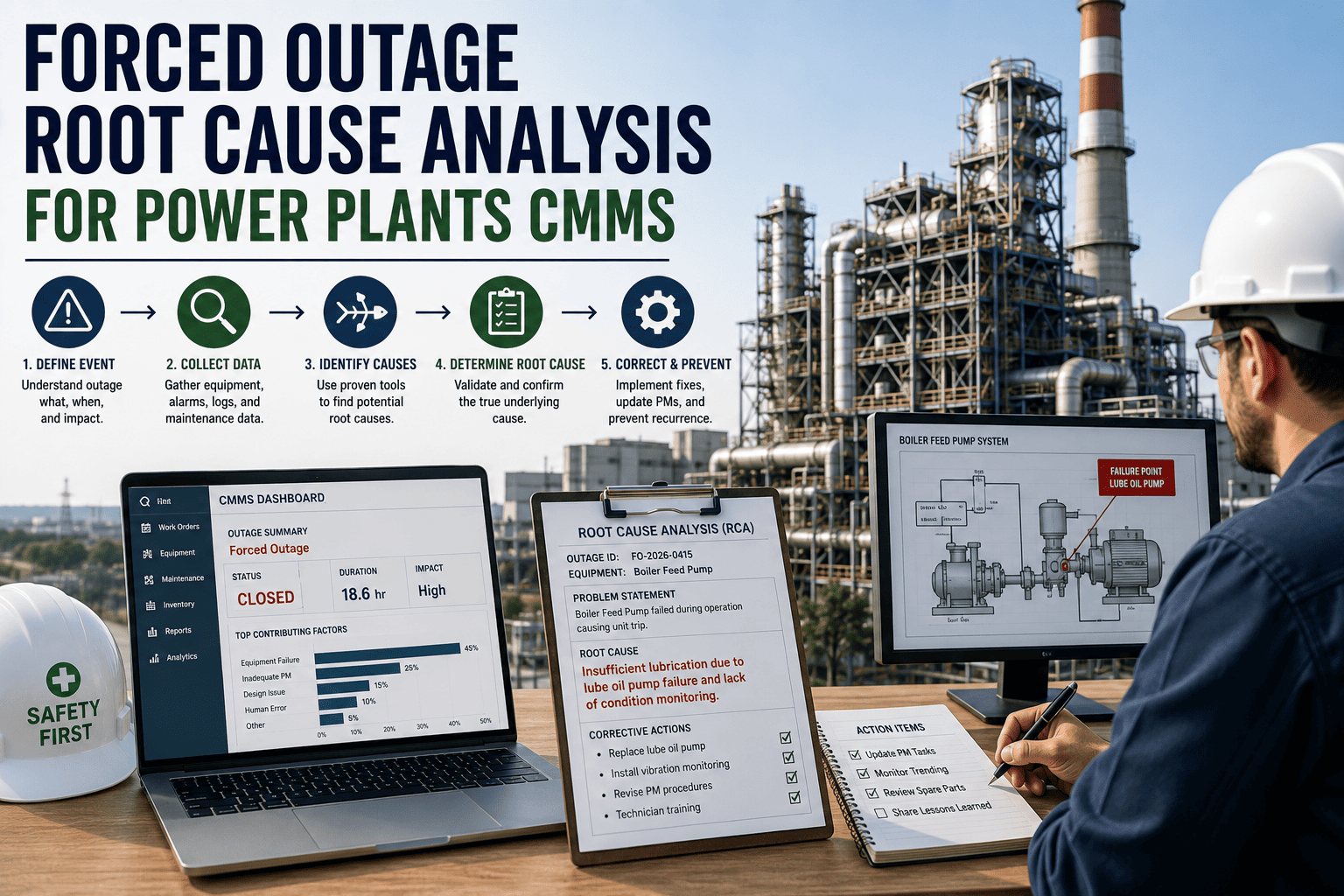
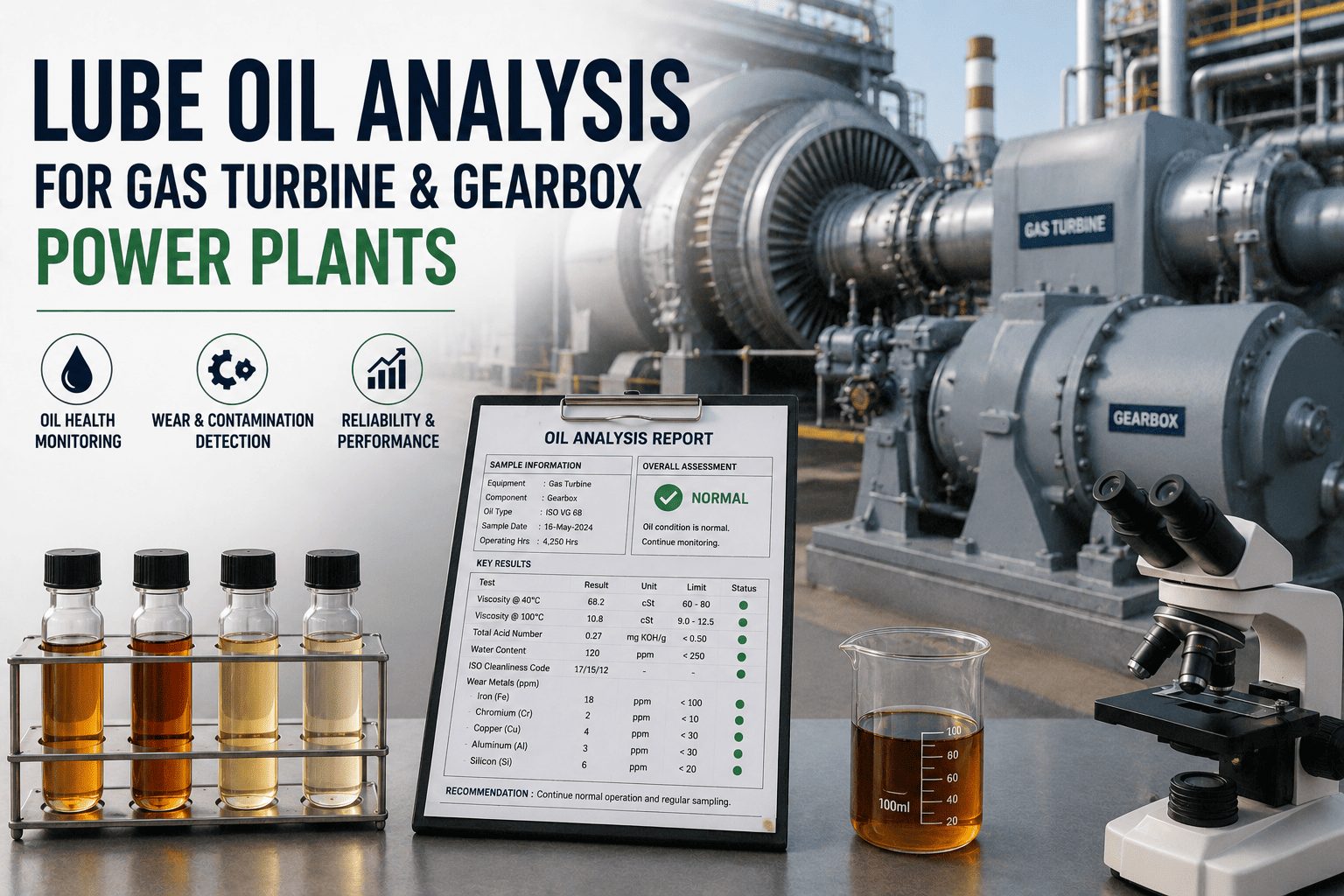

.png)