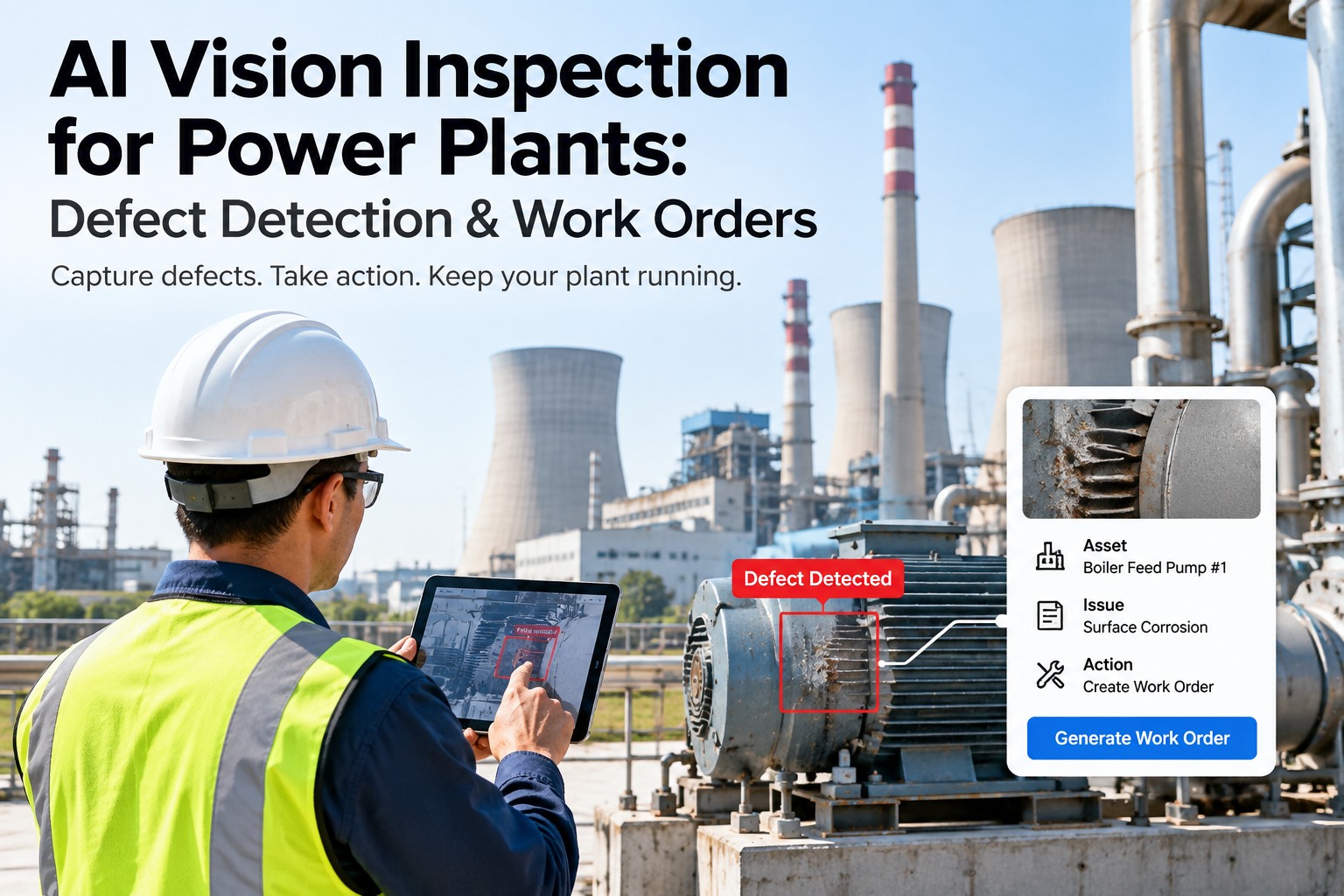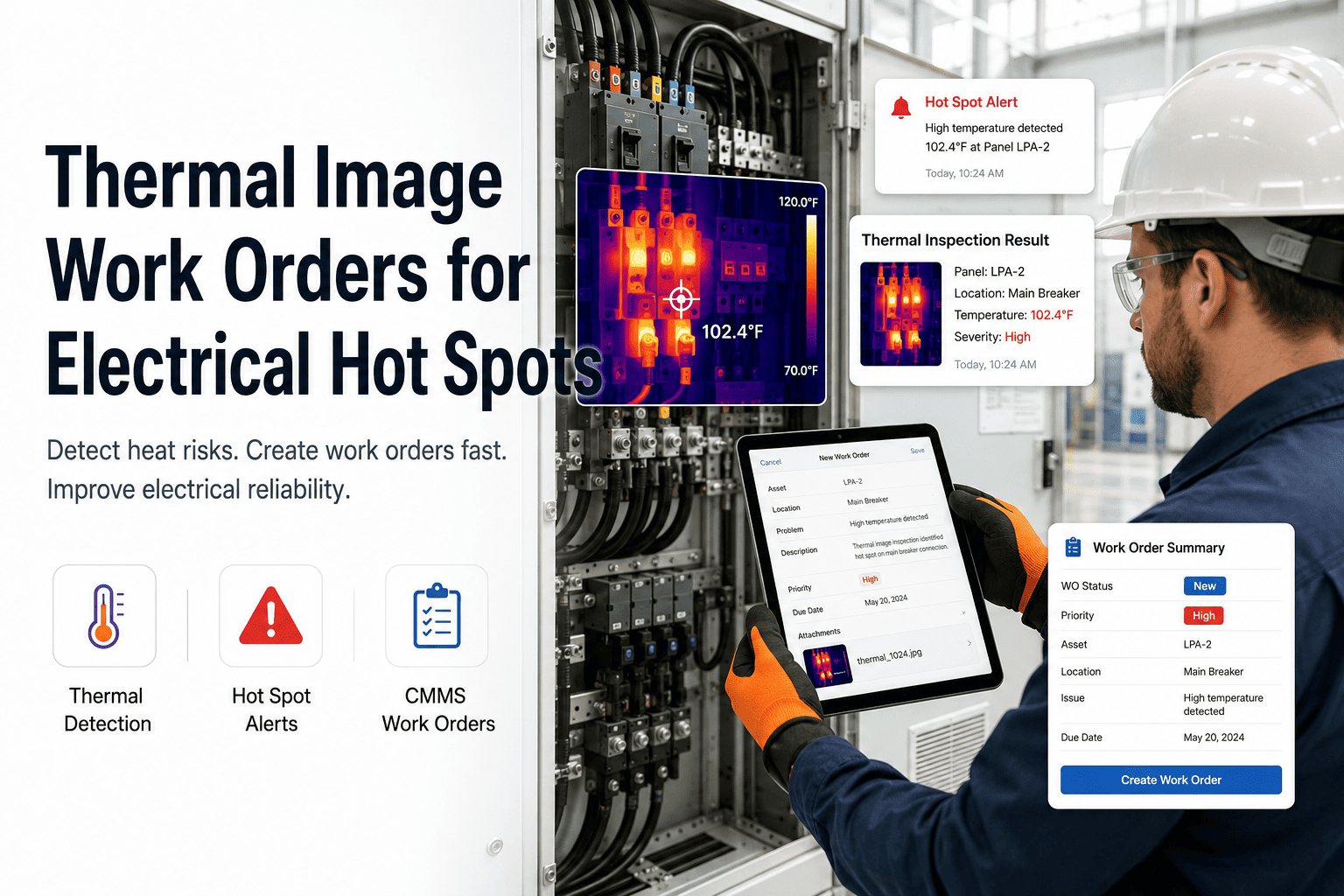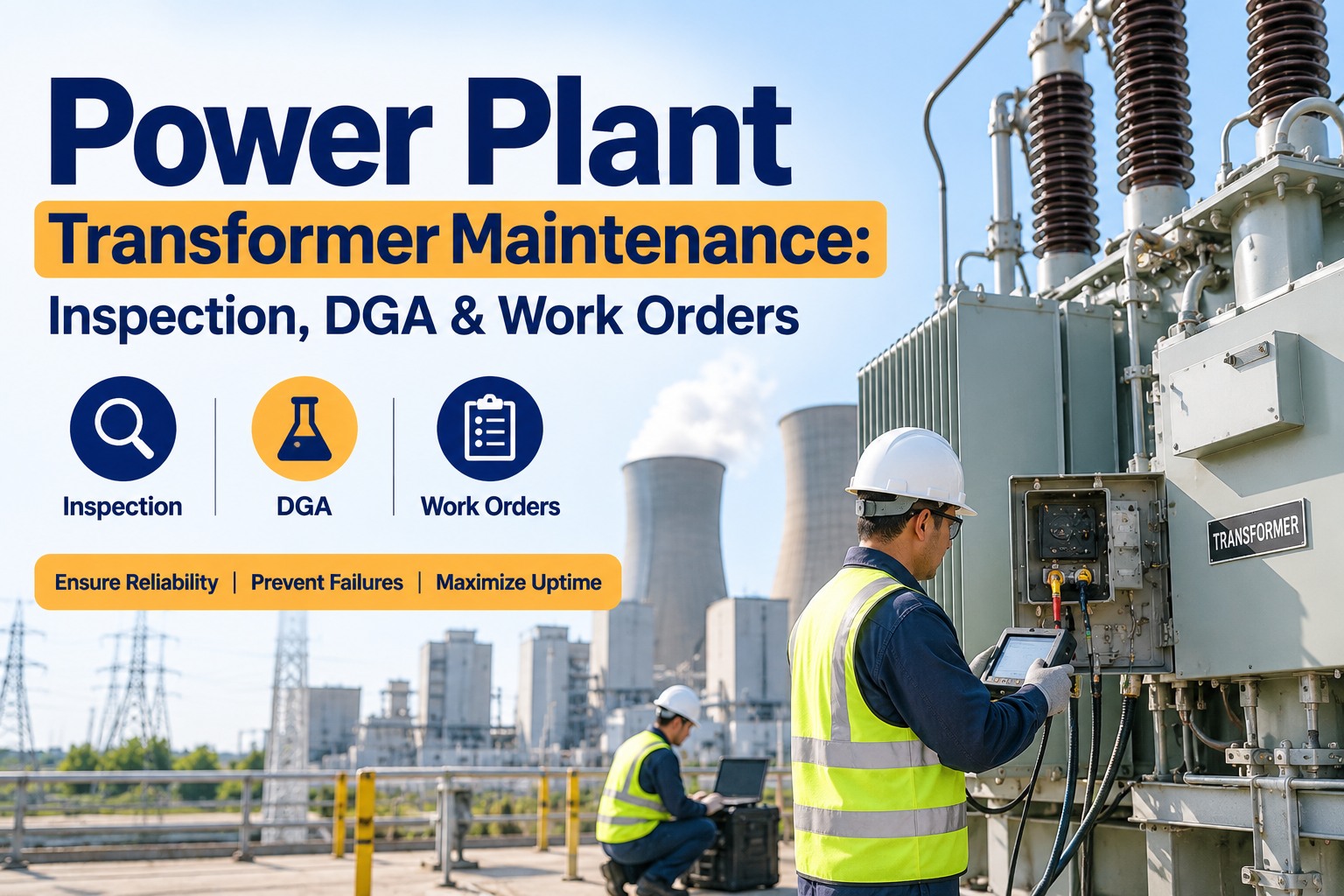
A transformer doesn't announce a problem with a warning light it leaves clues in the oil. A rising acetylene reading, a slow climb in the temperature trend, a bushing that looks fine to the eye but has been logged as "fine" on three inspections in a row without anyone comparing the numbers that's how transformer failures actually build, quietly, across records that rarely get compared side by side. This guide walks through how to build a transformer maintenance program around visual inspection, oil analysis, dissolved gas analysis (DGA) and temperature trending, using OXMAINT AI, the AI-powered CMMS that keeps every reading tied to the transformer it came from and turns a threshold breach into a work order automatically.
Power Plant Transformer Maintenance: Inspection, DGA & Work Orders
A transformer maintenance program only works if every inspection, oil sample and gas result lands in one place, next to the readings that came before it. OXMAINT AI holds that full record for every transformer — visual findings, oil test results, DGA gas ratios, temperature trend — and the moment a result crosses a threshold or breaks from that transformer's own pattern, a work order is drafted automatically, with the readings that triggered it already attached.
Why Four Separate Good Records Still Miss the Failure
A visual inspection can look clean. An oil sample can come back within limits. A single DGA result can sit just under the alert threshold. Individually, none of those raises a flag — but a technician who could see all four side by side, trending together, would notice the pattern building. Most programs can't, because the four records live in four different places. Start free and bring your transformer records into one view with OXMAINT AI.
- Visual inspection notes on paper or in a separate log
- Oil lab results emailed as a PDF and filed, not trended
- DGA gas ratios reviewed one report at a time, not against history
- Temperature readings live in SCADA, disconnected from the maintenance record
- A borderline result in each system, never compared as a whole
- Every visual inspection logged against that specific transformer's history
- Oil results entered once and trended automatically against prior samples
- DGA gas ratios compared to this unit's own baseline, not just a fixed limit
- Temperature trend sitting next to the oil and gas data, not in a separate tool
- A borderline result in one area checked against the other three before it's dismissed
The Four Signals a Transformer Program Should Track
Each of these tells you something different about a transformer's condition — and none of them is the full picture alone. OXMAINT AI logs all four against the same asset record, so a technician reviewing one signal can see the other three from the same screen. Book a demo to see all four signals on one transformer record.
Reading the Gases: A Quick Reference
DGA results are only useful when someone reads them against what each gas typically indicates. This is a general reference, not a diagnostic substitute for a qualified transformer specialist — OXMAINT AI's role is to make sure the trend is visible and the result reaches that specialist, not to replace their judgment. Sign up free and start trending your own gas results in OXMAINT AI.
| Key gas | Commonly associated with | Why the trend matters |
|---|---|---|
| Acetylene | Arcing or very high-temperature faults | Even a small rise from zero is often more significant than the absolute level |
| Ethylene | Thermal faults at higher temperatures | A steady climb across samples can flag a developing hot spot before it's severe |
| Methane & hydrogen | Lower-temperature thermal faults or partial discharge | Ratios between these gases help distinguish fault type, not just presence |
| Carbon monoxide/dioxide | Paper insulation degradation | A slow, long-term trend matters more than any single sample |
One Borderline Result Is a Data Point. Four of Them Together Are a Warning.
The failures a transformer program misses are rarely hiding in one bad reading — they're spread thin across inspection notes, an oil report and a gas trend that never got compared. OXMAINT AI keeps all four next to each other, on the same asset, every time.
From Oil Sample to Closed Work Order
Here's how one flagged result actually moves through OXMAINT AI, from lab report to a technician acting on it. Book a demo to see this flow on your own transformer fleet.
Calendar-Based vs. Condition-Based Transformer Maintenance
| What matters | Calendar-based only | Condition-based with OXMAINT AI |
|---|---|---|
| When testing happens | Fixed interval, regardless of condition | Fixed interval plus condition-triggered checks |
| How a result is judged | Against a single fixed limit | Against this transformer's own trend line |
| Visual, oil, DGA and temperature | Reviewed separately, different systems | Reviewed together, one asset record |
| Follow-up on a borderline result | Depends on someone remembering to check | Flagged automatically for review |
| Path from finding to work order | Manual write-up and handoff | Auto-drafted with evidence attached |
Frequently Asked Questions
Stop Reading Four Records Separately. Read Them as One Transformer.
Bring visual inspections, oil analysis, DGA results and temperature trends into one record per transformer — and let a threshold breach become a work order automatically, evidence attached.