When a turbine bearing fails and your insurer sends an adjuster, the first document they request is not the repair invoice — it is the maintenance history for that specific asset. Up to 40% of denied equipment breakdown claims involve insufficient maintenance documentation, and insurers now conduct pre-loss risk assessments that directly influence premium rates based on the quality and completeness of your maintenance programme records. A plant that cannot produce timestamped, technician-attributed service logs for its boilers, turbines, and transformers is not just exposed to claim denial — it is paying higher premiums for coverage that may not respond when it matters most. Sign up for Oxmaint to build the audit-ready asset history that satisfies insurers, survives adjuster scrutiny, and positions your plant for premium reductions at renewal.
Power Plant Insurance Compliance: Maintenance Records & CMMS Documentation
The maintenance records your CMMS generates today are the insurance defence documents your plant will need tomorrow. Here is exactly what insurers require — and how Oxmaint makes those records automatic.
The Insurer's Risk Assessment Is a Maintenance Records Audit in Disguise
Before quoting your renewal premium, machinery breakdown and property insurers conduct a risk assessment that evaluates three things: the physical condition of your equipment, your loss history, and your maintenance practices. The last item carries the most weight — because it predicts the other two.
An insurer who sees documented preventive maintenance schedules, completed inspection records with technician sign-offs, calibration certificates, and a clear corrective action trail views your plant as a lower-risk account. A plant that cannot produce those records — or produces records that are inconsistent, unsigned, or missing entire inspection periods — is priced accordingly. Some carriers decline to write the risk at all.
The critical distinction insurers make is between a breakdown caused by a sudden, accidental event and one caused by neglect. Policies cover the former. They exclude the latter. And the way an adjuster determines which category applies is by examining your maintenance history for the failed asset — looking specifically for whether scheduled inspections were completed, whether identified defects were actioned, and whether OEM service requirements were followed.
What Your Insurer Wants to See for Each Critical Asset
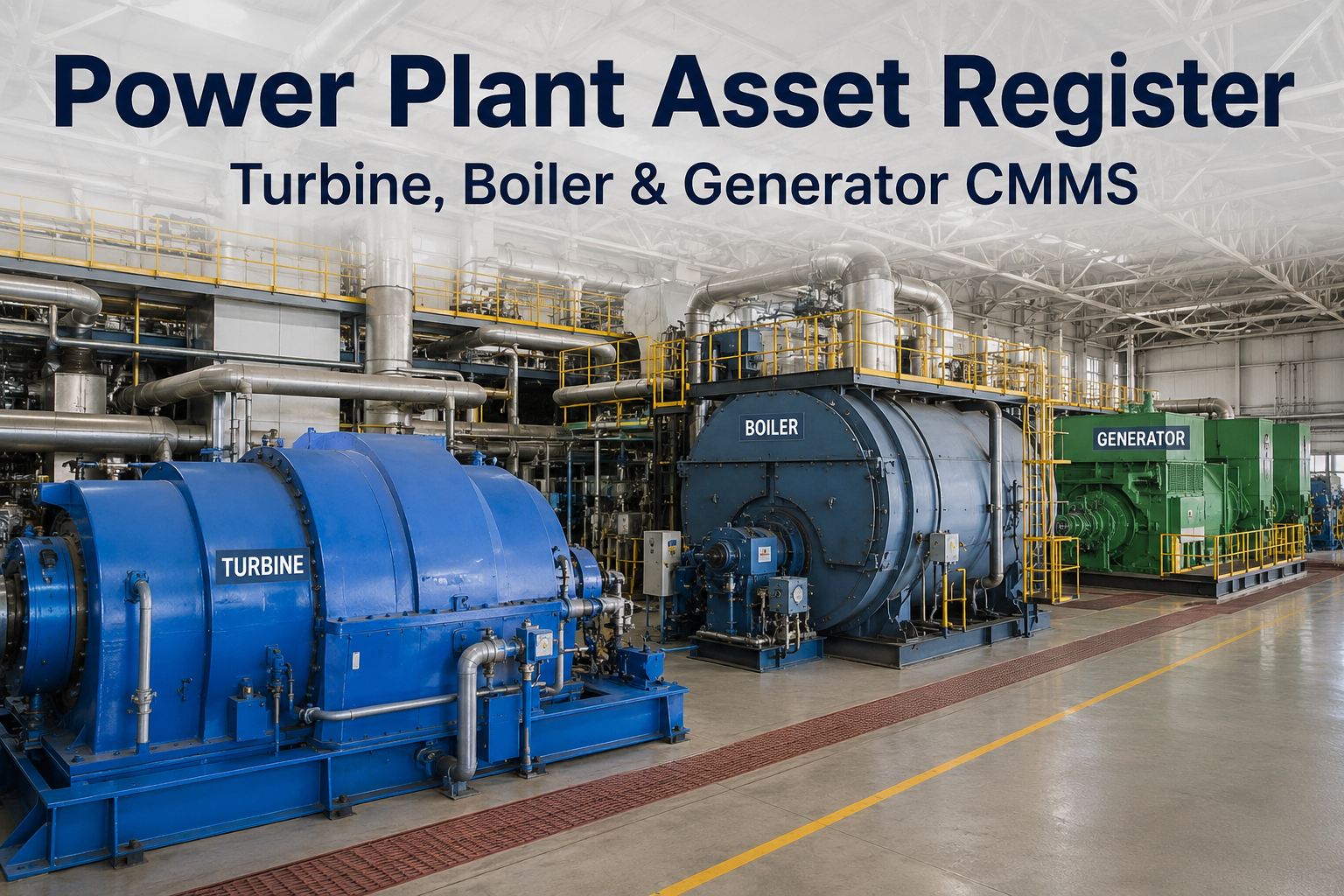
Insurance requirements are not generic. Boilers, turbines, transformers, and generators each carry their own inspection standards, statutory obligations, and documentation expectations. Oxmaint manages each as a separate asset with its own record structure.
Ready to Build Your Insurance-Ready Asset Record?
Oxmaint creates the complete, timestamped, technician-attributed maintenance history that insurers require — automatically, from the work orders your team is already closing.
Why Most Plants Cannot Produce What Insurers Ask For
Every Work Order Closed Is an Insurance Record Created
Oxmaint does not create insurance documentation as a separate task. It creates it automatically as your team does its normal maintenance work — every work order, every inspection, every corrective action becomes a timestamped, named, auditable entry in the asset record.
Every work order in Oxmaint records who completed the work, when it was started, when it was closed, what was found, and what action was taken. This is the specific data format an insurance adjuster needs to verify that maintenance was performed — not just planned. Unsigned or undated records are the primary reason insurers dispute claims.
Insurers distinguish between a maintenance programme that exists on paper and one that is executed. Oxmaint tracks PM completion rates by asset, flags missed tasks before they age, and escalates overdue inspections through the management hierarchy. The result is a PM completion rate that your insurer can verify from the system record — not from your account of what happened.
When an inspection identifies a defect, Oxmaint links the finding directly to the corrective work order and the completed repair record — creating a complete chain of evidence from discovery to resolution. If a defect was identified and not actioned, that gap is visible in the system. If it was actioned, the record is complete. This trail is what distinguishes a defensible claim from a denied one.
Statutory inspection certificates, third-party test reports, OEM service bulletins, and calibration records are attached directly to the relevant asset record in Oxmaint. When an adjuster asks for the boiler's last annual inspection certificate or the transformer's most recent dissolved gas analysis, the document is one click from the asset page — not lost in a physical filing system or a shared network folder.
When your insurer requests a documentation package for renewal underwriting or post-loss assessment, Oxmaint generates a formatted export of the asset's complete maintenance history — work orders, inspection records, PM completion rates, defect log, and attached certificates — in a single operation. Audit preparation that previously took two clerks two days now takes the plant manager five minutes.
How Maintenance Documentation Directly Affects What You Pay
| Premium Factor | Without Structured CMMS Documentation | With Oxmaint Audit-Ready Records | Premium Impact |
|---|---|---|---|
| Maintenance programme quality | Cannot demonstrate structured execution | PM completion rates exportable per asset | Premium loading avoided |
| Inspection record completeness | Gaps in records — treated as uninspected | Continuous timestamped record, no gaps | Risk classification improved |
| OEM compliance evidence | Stated but not documentable | Work order history against OEM schedule | 8–15% premium reduction possible |
| Defect response time | No visibility into how quickly defects were actioned | Discovery-to-close timeline per defect on record | Claim defence strengthened |
| Statutory inspection currency | Certificates may be expired without notice | Certificate expiry tracked as PM work order | Coverage continuity protected |
| Post-loss claim resolution | Weeks to compile records under pressure | Minutes — full history exportable on demand | 30% faster claim approval |
Power Plant Insurance Documentation — Questions Plant Managers Ask
NERC reliability standards require a minimum of six years of evidence retention for compliance documentation. Insurance carriers typically request 2–5 years of maintenance history when evaluating a post-loss claim, with some carriers requesting the full asset history for high-value equipment like main power transformers and turbine-generators. Oxmaint stores all records permanently with no data expiry — meaning your plant's entire maintenance history is available for any audit or insurance review without restriction. Sign up to begin building your permanent digital maintenance record.
Yes. Oxmaint allows you to export a complete asset maintenance history — including all closed work orders, PM completion records, inspection findings, corrective action trails, and attached documents — filtered by asset, date range, and work type. The export is formatted for readability and includes technician attribution, timestamps, and task descriptions in a format that insurance adjusters and underwriters can review directly. Book a demo to see the export function configured for your insurer's documentation requirements.
Yes. External documents — statutory inspection certificates, third-party test reports, OEM service records, and hydrostatic test certificates — are uploaded and attached directly to the relevant boiler or pressure vessel asset record in Oxmaint. Certificate expiry dates are tracked as recurring PM work orders so that lapsed statutory certificates generate an escalation before coverage is affected. Every attached document is searchable and accessible from both desktop and mobile. Sign up to start building your statutory inspection record library.
Each asset in Oxmaint has its own record structure — separate PM schedule, inspection checklist, document vault, and condition monitoring parameters. A boiler's record holds different fields and attached documents than a transformer's record, reflecting the different inspection standards and documentation requirements that apply to each. Insurer-required documents for each asset type are attached to that specific record, not stored in a shared filing system where they may be difficult to locate when needed. Book a demo to see your specific asset mix configured in Oxmaint.
Every work order in Oxmaint records the assigned technician, the actual start time, the completion timestamp, the findings entered, and any parts used or documents attached — all of which are immutable once the work order is closed. This level of attribution is exactly what an insurance adjuster examines when determining whether maintenance was genuinely performed versus merely scheduled. The record cannot be edited retrospectively, which gives it evidentiary weight that a paper sign-off sheet does not carry. Sign up to start creating maintenance records that hold up under claims scrutiny.
Your Next Insurance Renewal Is a Documentation Review. Start Preparing Now.
Oxmaint automatically creates the timestamped, technician-attributed, audit-ready maintenance records that insurance underwriters use to price your risk and adjusters use to evaluate your claims — so that when the moment comes, your documentation is already complete.