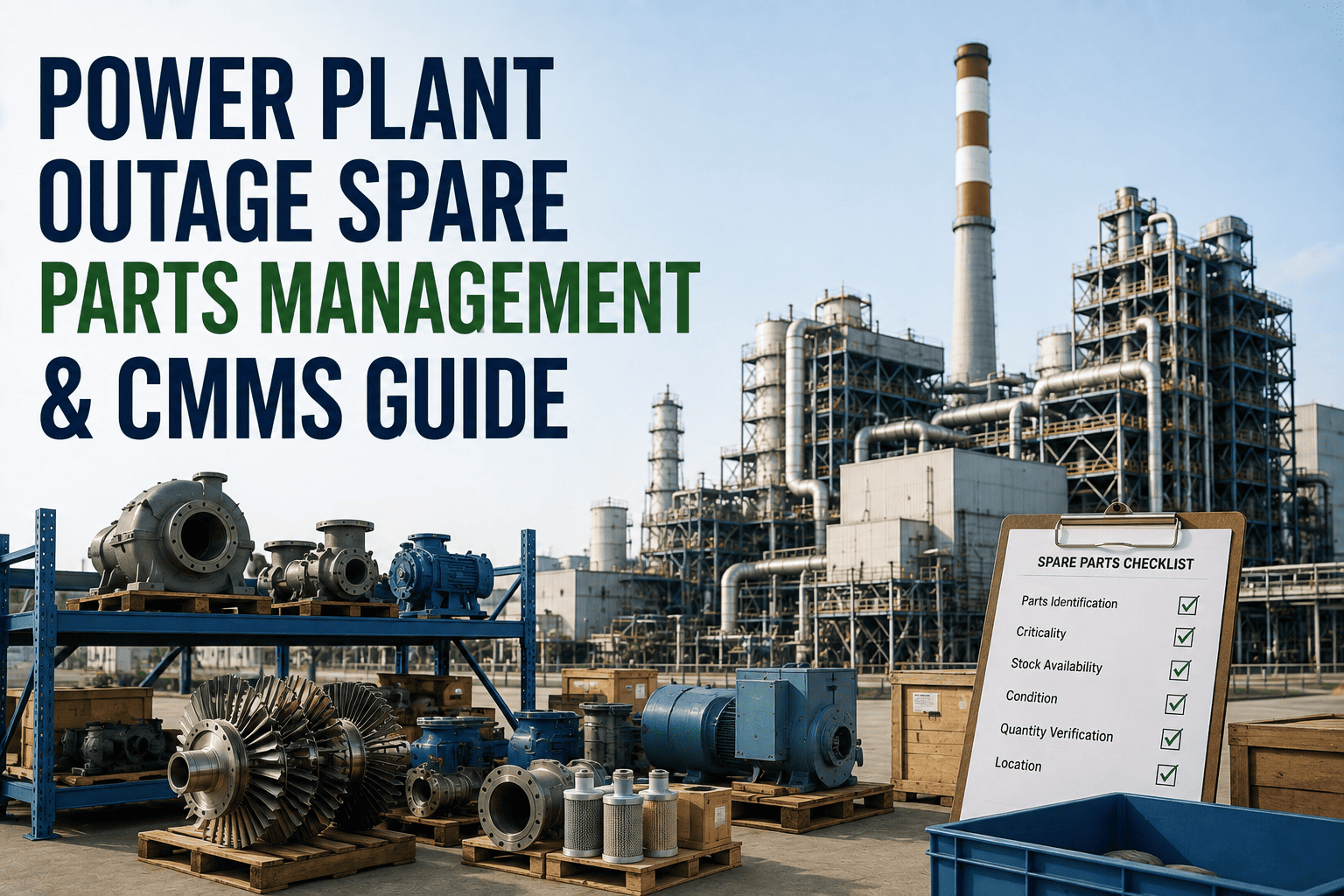
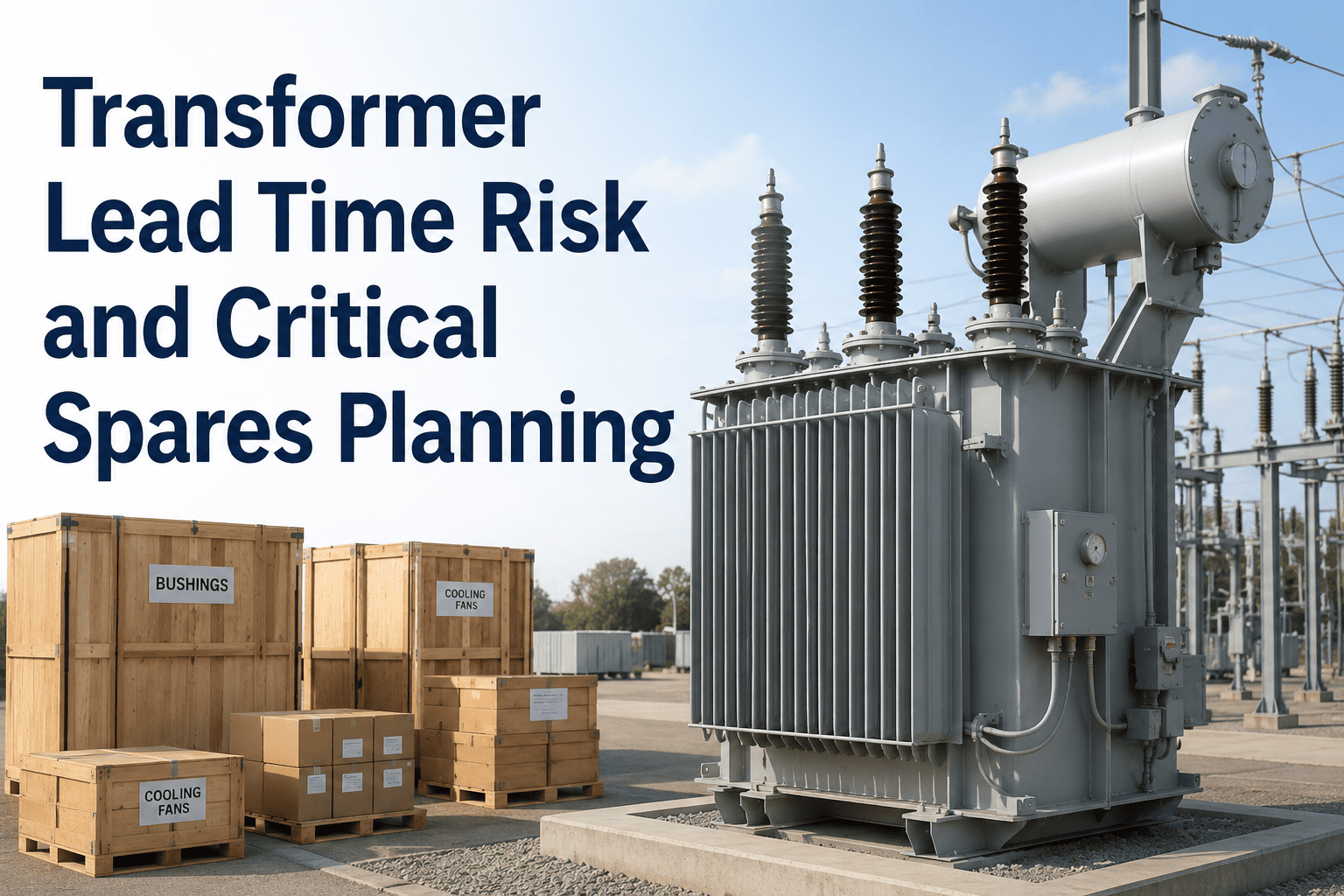
A single missing transformer bushing — lead time: 14 months, replacement cost: $38,000 — can force a 500 MW power plant into emergency shutdown costing over $900,000 in lost generation. Critical spare parts strategy is not a procurement problem. It is a risk management discipline, and CMMS failure history is the only data source that makes it defensible. Start a free trial with Oxmaint CMMS to see how your asset failure data can drive a smarter, leaner critical spares program — or book a 30-minute strategy call with our power generation team.
The Core Problem
Why Power Plants Get Spare Parts Strategy Wrong
Most power plant inventory programs were built on intuition, OEM recommendations, and legacy tribal knowledge — not on actual failure data. The result is a warehouse full of low-risk consumables sitting on shelves for years, while a single long-lead critical component is missing the day a unit trips. The financial gap between these two failure modes is enormous.
$2.1M
Average annual carrying cost of overstocked low-criticality parts per 500 MW plant
VS
$1.4M
Cost of a single unplanned outage caused by a missing critical spare
+
14 mo
Typical lead time for a major transformer — ordered after failure, not before
Classification Framework
Three Tiers Every Power Plant Inventory Must Separate
Treating all maintenance inventory the same is the root cause of both over-investment and dangerous gaps. A structured three-tier classification forces your team to make explicit risk decisions for every item in stock — and every item not in stock.
Tier 1
Insurance Spares
Hold regardless of cost. Failure = unit trip.
Typical Examples
Turbine rotor blades & nozzle rings
High-voltage transformer bushings
Generator stator wedges
Main steam control valves
HV switchgear breakers
Lead time > 6 months AND failure causes full outage → always stock one unit minimum
Tier 2
Strategic Spares
Stock based on failure frequency × downtime cost.
Typical Examples
Boiler feed pump impellers
Cooling water pump mechanical seals
Condenser tube bundles
Exciter rectifier assemblies
Governor control modules
CMMS failure history determines quantity — replace actual consumption, not calendar estimates
Tier 3
Operational Consumables
Minimize stock. Fast reorder. Don't overinvest.
Typical Examples
Gaskets, O-rings, seals
Filter elements and strainers
Lubricants and greases
Instrument fuses and relays
Standard fasteners and hardware
Available from local distributors within 48 hours → lean reorder point model only
Risk Scoring
The Four-Factor Risk Score That Decides What to Stock
Every critical spare decision should be driven by a quantified risk score — not by OEM recommendation lists or the maintenance supervisor's memory. The formula combines four variables that CMMS data can populate directly for any asset in your inventory.
Long-Lead Items
The Components You Cannot Afford to Order After Failure
Long-lead power plant components are in a category of their own. The lead times below are not worst-case estimates — they are industry-standard procurement windows reported by plant reliability managers at coal, gas, and nuclear facilities operating under normal supply chain conditions.
| Component |
Lead Time |
Replacement Cost |
Outage Cost / Day |
Stock Decision |
| Large power transformer (HV, >100 MVA) |
12–24 months |
$2M–$7.5M |
$80K–$220K |
Spare or consortium share |
| Steam turbine rotor assembly |
18–36 months |
$1.2M–$4M |
$120K–$300K |
OEM exchange program |
| Generator stator winding |
12–20 months |
$800K–$2.2M |
$100K–$250K |
Hold critical components |
| Boiler pressure vessel drums |
9–18 months |
$400K–$1.5M |
$75K–$180K |
Custom fabrication pre-order |
| HV switchgear assemblies |
8–16 months |
$180K–$600K |
$60K–$140K |
Critical breakers always on hand |
| Cooling tower fill and distribution |
4–8 months |
$60K–$220K |
$30K–$80K |
CMMS-triggered reorder |
| Feed water pump cartridges |
3–6 months |
$35K–$120K |
$25K–$70K |
1 spare per critical pump |
| Control valve actuators |
6–12 weeks |
$8K–$40K |
$15K–$50K |
2–3 units per valve class |
Map Your Critical Spares Gaps in One Session
Oxmaint CMMS lets you overlay failure history, lead time data, and asset criticality scores to identify which components in your inventory are dangerously understocked — and which are eating budget unnecessarily. Deploy across your full asset inventory in under 10 weeks.
CMMS Integration
How CMMS Failure Data Transforms Spare Parts Decisions
The difference between a spare parts program built on OEM catalogs and one built on CMMS failure history is the difference between guessing and knowing. Every work order closed in your CMMS is a data point that should be feeding your inventory decisions — most plants are not using it.
01
Mean Time Between Failures by Component Class
CMMS work order history calculates actual MTBF for every component class in your plant — not theoretical OEM estimates. A pump seal rated for 24 months that is actually failing at 9 months in your operating environment demands a fundamentally different stocking level than the catalog suggests.
02
Parts Consumption Rates at Asset Level
CMMS parts issue records show exact consumption rates for every item at every asset location. Reorder points derived from actual consumption replace calendar-based estimates — eliminating both stockouts on high-consumption items and unnecessary carrying costs on slow-moving stock.
03
Failure Mode Trending and Pattern Recognition
When CMMS failure codes are applied consistently, trending analysis identifies failure modes that are increasing in frequency — giving procurement teams a 6–12 month lead on potential stockouts before the pattern becomes a crisis. This is especially valuable for aging fleet components approaching end of design life.
04
Outage Planning Parts Requirements
Planned outage work scopes generated in CMMS drive a complete bill of materials for each planned shutdown — automatically checking stock levels against requirements and triggering procurement for shortfalls based on lead time calendars. Parts shortages during planned outages become an avoidable problem rather than an accepted frustration.
Common Mistakes
Five Spare Parts Decisions That Cost Plants Millions
01
Following OEM Recommended Spare Parts Lists Without Validation
OEM spare parts lists are optimized for OEM revenue, not your plant's actual failure profile. A manufacturer listing 400 line items as "recommended" across a turbine model does not mean your specific unit, operating at your load factor, in your environment, will fail the same way. CMMS failure data routinely shows 60–70% of OEM-recommended spares have never been consumed in 10 years of operation at a given site.
02
Ordering Long-Lead Items Only After the Failure Occurs
This is the most expensive mistake in power plant maintenance management. A plant that orders a major power transformer after failure will wait 12–24 months for delivery while carrying full outage costs throughout. The decision to hold or pre-order a long-lead item must be made before failure — and it requires a risk score that accounts for lead time explicitly.
03
Classifying Obsolete Parts as Active Critical Stock
Inventory audits at thermal power plants regularly uncover critical spares designated for equipment that was retired or refurbished years earlier. Spare parts tied to replaced assets consume warehouse space and capital while creating a false sense of inventory security. CMMS asset records must be linked to inventory classifications so that retirements automatically trigger stock reviews.
04
Ignoring Shelf Life and Condition Degradation of Stored Parts
Rubber seals, electrical insulation materials, lubricant-wetted components, and instrument modules all have finite shelf lives. A gasket classified as critical spare that has been warehoused for 8 years may fail immediately on installation. CMMS inventory modules track storage age and trigger condition inspection before a deteriorated part reaches the job site.
05
No Spare Parts Sharing Agreement With Regional Plants
For very high-cost, low-frequency items like spare transformers or rotor assemblies, holding a sole-plant inventory is often economically indefensible. Consortium spare sharing agreements among regional plants — documented and tracked in CMMS — allow the cost of a $3M transformer spare to be distributed across three facilities while maintaining the same risk coverage each plant needs.
Performance Benchmarks
What a Mature Critical Spares Program Looks Like
Plants with CMMS-driven critical spares programs that have reached full operational maturity — typically 18–24 months post-implementation — show measurable, consistent performance improvements against plants still running intuition-based inventory.
Parts-related outage events / year
Inventory carrying cost as % of RAV
First-time fix rate (parts available on dispatch)
Emergency procurement events / year
Frequently Asked Questions
Critical Spare Parts Strategy: Common Questions
Build a Critical Spares Program That Eliminates Parts-Driven Outages
Power plants using Oxmaint CMMS reduce parts-related outage events by over 75% within 18 months — by connecting failure history, lead time data, and risk scoring into a single inventory intelligence system. No rip-and-replace. Deployed in 8–12 weeks across your full asset and inventory catalog.