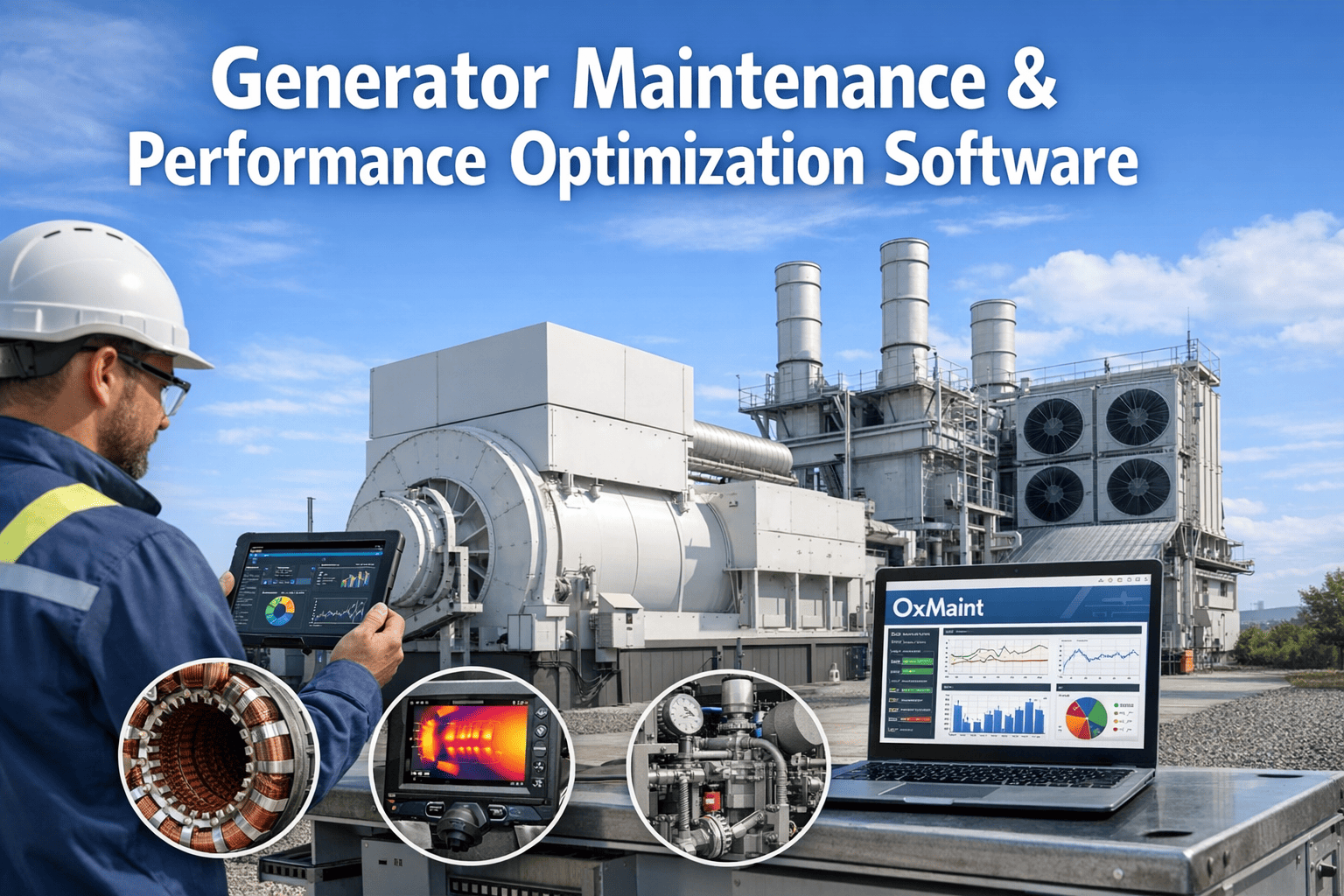
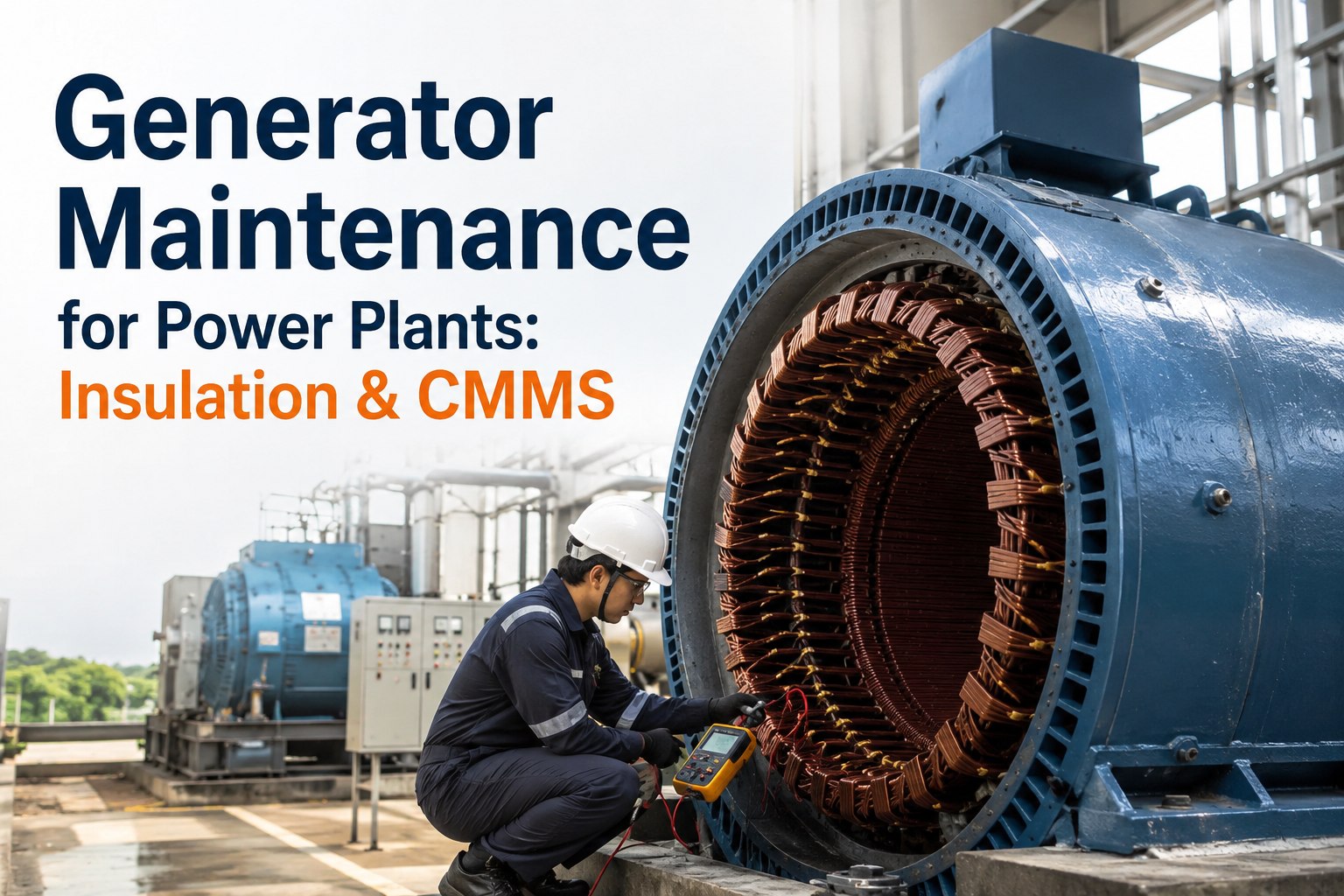
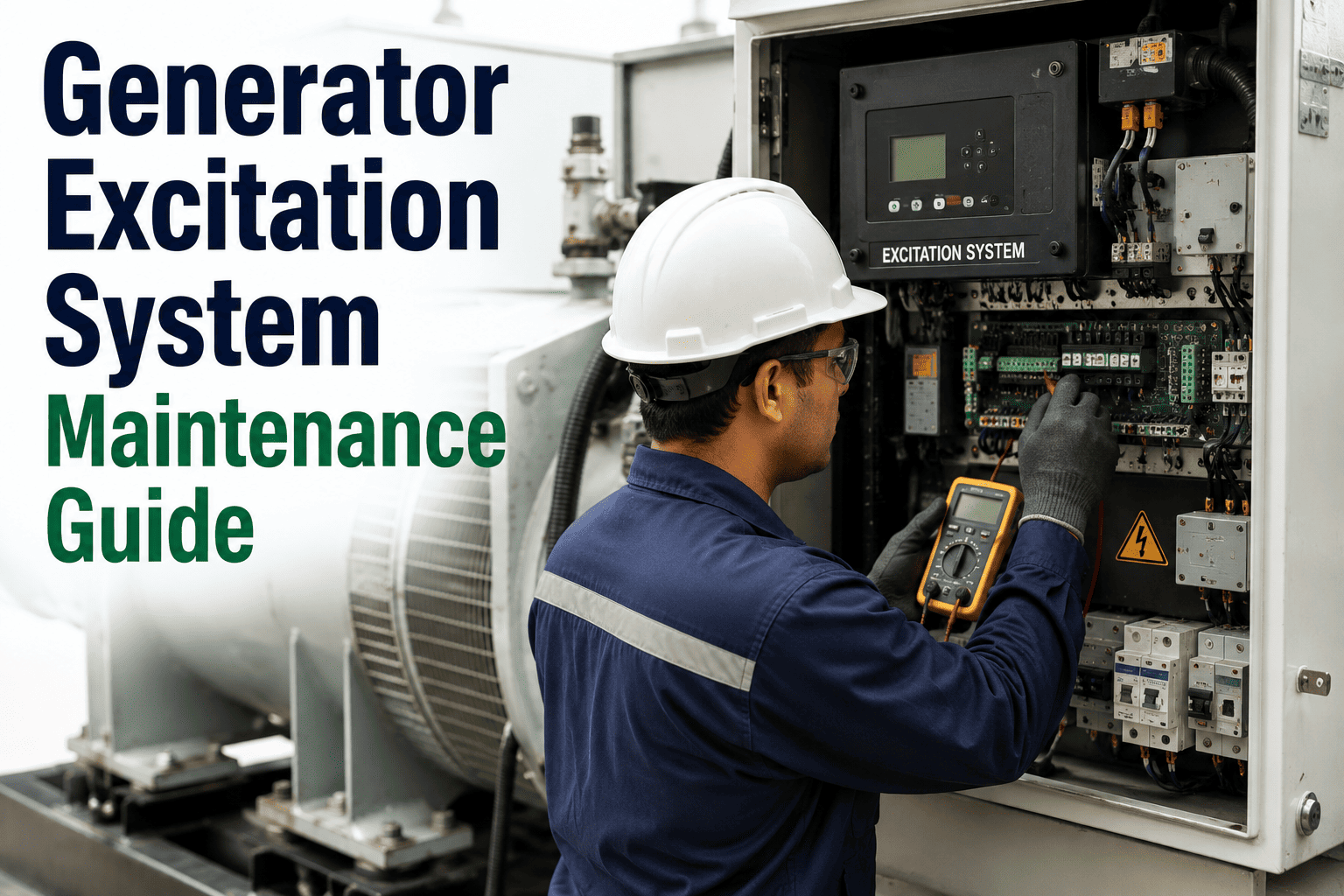
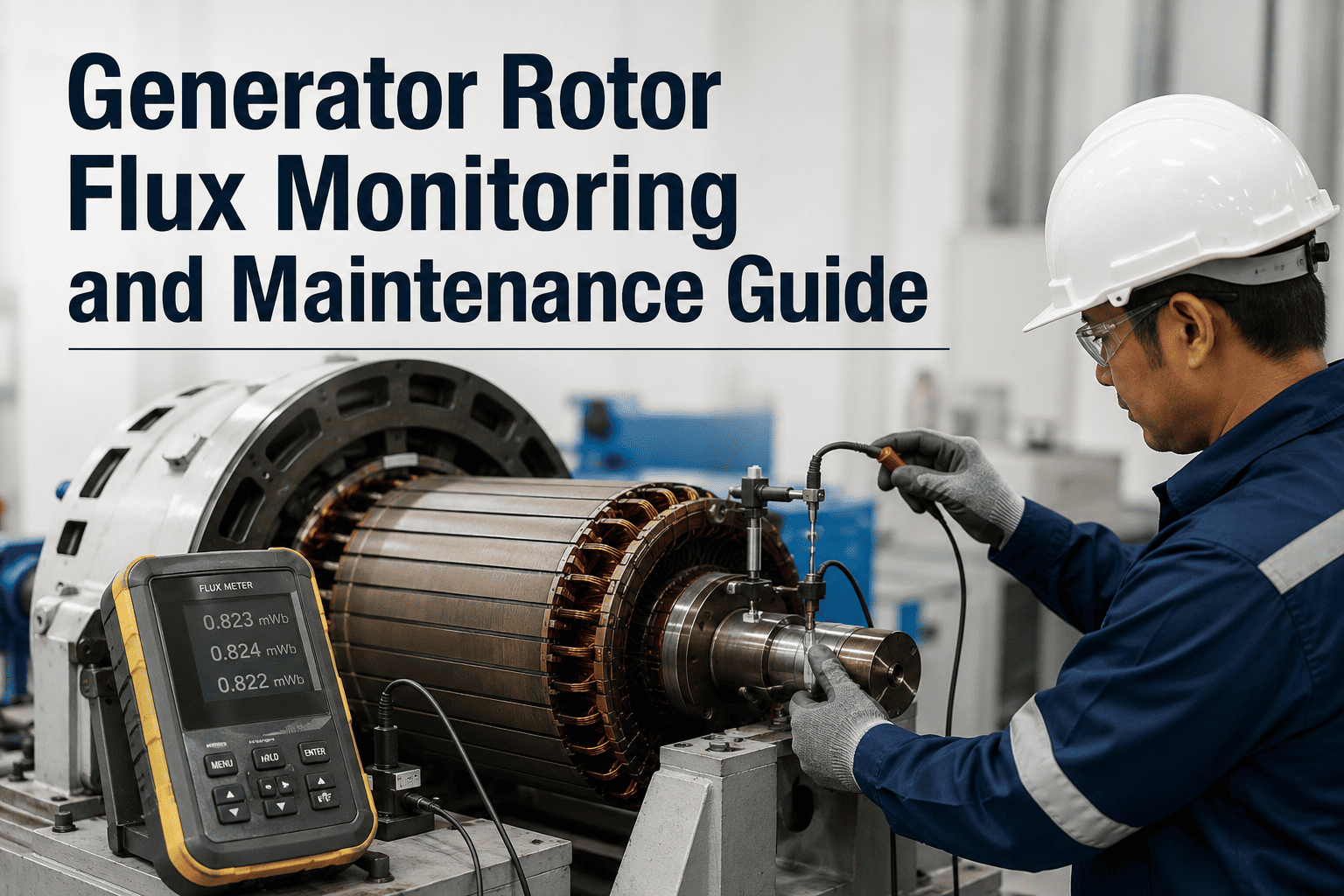
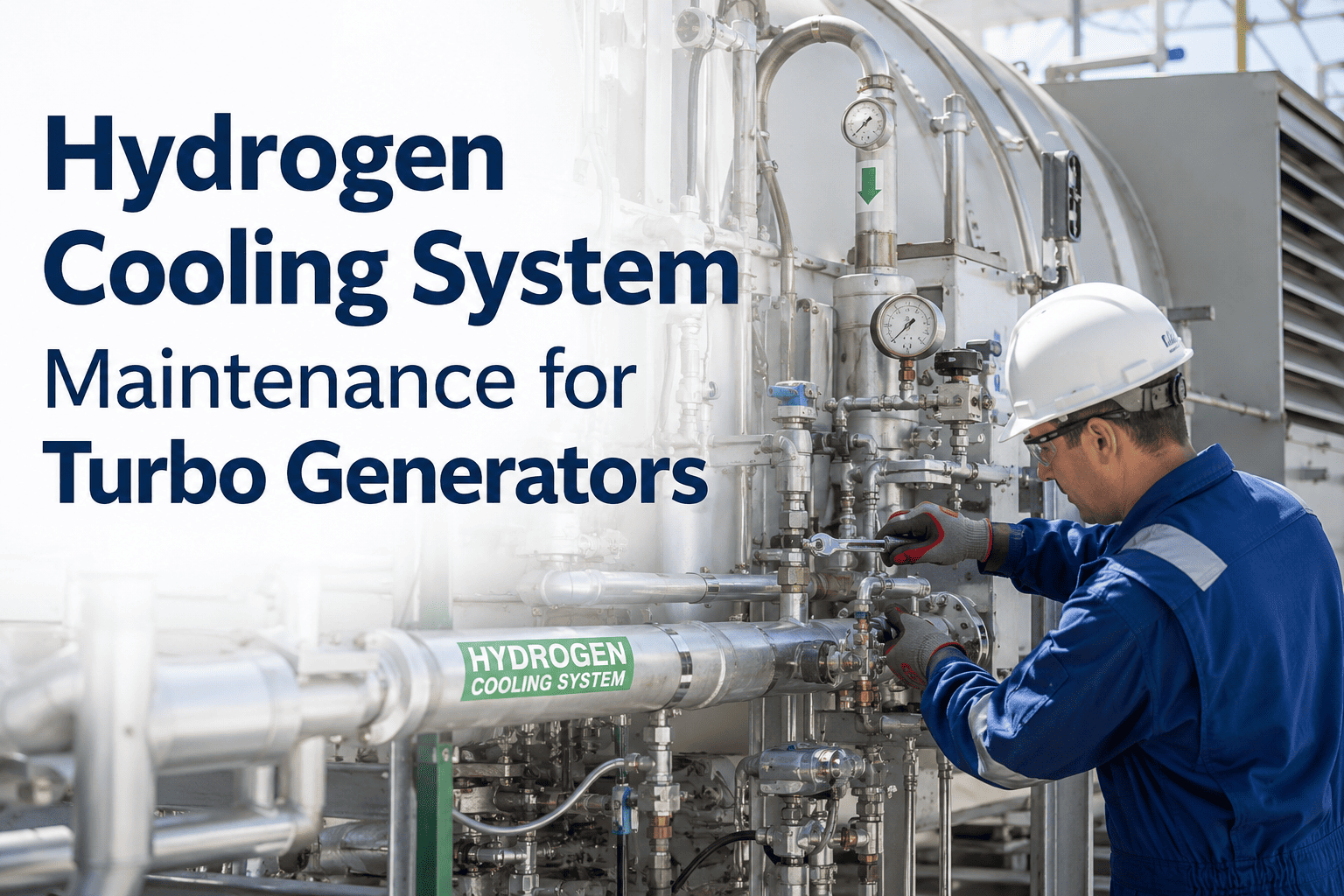
A generator running at 91°C stator temperature with mildly elevated partial discharge readings is three months from a $480,000 emergency rewind — yet the control panel shows green across every gauge. This is exactly how 67% of generator failures begin: with gradual, invisible degradation that fixed-interval maintenance schedules never detect in time. OxMaint monitors stator insulation, rotor winding health, excitation stability, and cooling performance continuously — giving your maintenance team 6 to 18 months of advance warning before catastrophic failure arrives. Start your free trial to connect your generator assets today. Book a demo to see live generator health analytics on real plant data.
Generator Performance Optimization
Stop Reacting. Start Predicting.
The average industrial generator experiences 2–4 unplanned failures per year. Each one is preventable.
$480K
Average catastrophic rewind cost
45%
Of failures from insulation breakdown
18 Mo.
Advance warning for insulation degradation
What a Generator Failure Actually Costs
Maintenance teams typically report the direct repair figure — parts and labor. That number represents less than 20% of the true impact. The real damage flows from extended downtime, emergency procurement, production losses, and cascade damage to connected equipment.
Emergency Rewind Labor
$86,000
Replacement Parts & Materials
$104,000
Expedited Logistics
$42,000
Production Downtime Loss
$480,000
Cascade Equipment Damage
$190,000
Regulatory & Compliance Penalties
$65,000
Total Cost Per Catastrophic Event
$967,000
Average facility: 2–4 unplanned generator events/year = $1.9M–$3.9M annual exposure
5 Generator Systems That Predict Failure
Modern generators degrade through five distinct subsystems — each with its own failure signature and monitoring protocol. OxMaint tracks all five simultaneously, correlating signals across subsystems to detect failure modes that single-sensor approaches miss entirely.
45%
Stator Insulation
Partial discharge levels, insulation resistance trending, polarization index analysis. Detects moisture ingress, thermal ageing, and corona damage.
Sensors: PD probes, IR testing
Warning window: 6–18 months
20%
Rotor Winding & Core
Flux probe analysis, air-gap eccentricity, torsional vibration. Identifies shorted turns, core lamination faults, and rotor imbalance.
Sensors: Flux probes, vibration
Warning window: 2–4 months
15%
Excitation System
AVR voltage stability, field current drift, diode rectifier health. Catches voltage regulator degradation and brush gear wear before they cascade.
Sensors: Current/voltage monitors
Warning window: 4–8 weeks
12%
Cooling Circuit
Stator coolant flow, hydrogen purity trending, air cooler delta-T. Detects blocked cooling passages and heat exchanger fouling before thermal damage occurs.
Sensors: Flow meters, temperature arrays
Warning window: 2–6 weeks
8%
Bearings & Seals
Shaft vibration spectra, oil film analysis, bearing temperature trends. Identifies lubrication breakdown and bearing wear progression.
Sensors: Vibration, proximity probes
Warning window: 3–8 weeks
Failure Mode Distribution in Industrial Generators
Where failures originate determines where monitoring investment delivers the highest return. Stator insulation alone accounts for nearly half of all generator forced outages — and it is also the failure mode with the longest detectable lead time, making it the highest-ROI monitoring target in any program.
Stator Winding Insulation
Highest ROI
Rotor Winding & Core
High ROI
Excitation System
High ROI
Cooling System
Medium ROI
Bearings & Mechanical
Medium ROI
How OxMaint Delivers Generator Intelligence
From raw sensor signals to a scheduled work order — OxMaint closes the gap between what your generator is experiencing and what your maintenance team knows about it.
01
Continuous Sensing
Vibration, temperature, current, partial discharge, and coolant sensors stream data every 15–30 seconds across all five generator subsystems. No manual readings. No gaps.
→
02
Baseline Learning
AI builds a digital health baseline unique to your generator — accounting for load cycles, ambient conditions, and operating history. Anomalies are flagged against your machine's normal, not a generic curve.
→
03
Failure Forecasting
Predictive models estimate remaining useful life per subsystem. The dashboard shows "Stator insulation PI index declining — recommend intervention within 90 days." Not a vague alert. An actionable timeline.
→
04
Automated Work Orders
OxMaint auto-generates CMMS work orders with recommended intervention, required parts, priority tier, and optimal scheduling window. Your team acts on intelligence — not instinct.
Asset Performance Management
Know Your Generator's Health — Before It Fails
OxMaint connects sensor data to failure forecasts and generates scheduled work orders automatically. Your team replaces bearings during planned windows, not during peak production.
Reactive vs. Predictive: Side-by-Side
The performance gap between reactive and predictive generator maintenance compounds year over year. Every unplanned outage that predictive maintenance prevents is a failure event that would have shortened equipment life, consumed emergency budget, and disrupted production schedules.
ROI: One Generator, One Year
The math for a single critical generator at a mid-size industrial facility makes a compelling case. OxMaint's annual investment per generator is a fraction of the value delivered by preventing even one major failure event.
Annual Program Investment
$35K–$65K
Sensors + software + integration per generator
Break-even at first prevented failure
Annual Value Delivered
$780K
Emergency failures prevented
$310K
Downtime production recovery
$240K
Extended generator service life
$140K
Optimised PM cost reduction
$55K
Energy efficiency improvement
$35K
12–22× Return on Investment — Year One
Frequently Asked Questions
What sensors does OxMaint use for generator monitoring?
OxMaint integrates partial discharge probes, vibration accelerometers, temperature arrays, current/voltage transducers, proximity probes, and coolant flow meters. Sensor selection is matched to your generator type — air-cooled, hydrogen-cooled, or water-stator — and to your dominant failure modes based on historical data.
Sign up free to build your sensor plan with our engineering team.
How does OxMaint handle different generator sizes and types?
OxMaint supports synchronous generators from 500 kVA to 500 MVA across industrial, utility, and standby applications. Baselines and failure thresholds are configured per asset — a 2 MVA standby generator has different normal operating signatures than a 50 MVA baseload unit. The AI learns your specific machine's behaviour rather than applying generic thresholds.
How long before first meaningful predictions?
Fault detection begins within 24–48 hours of sensor installation. Trend-based failure forecasting — the 6 to 18-month advance warning — develops over 4–12 weeks as the AI builds accurate baselines. Plants typically see their first validated catch within 6 weeks.
Book a demo to see what early detection looks like on real generator data.
Does OxMaint integrate with our existing CMMS?
Yes. OxMaint integrates via API with SAP PM, Maximo, Oracle EAM, Fiix, UpKeep, and most major CMMS platforms. Predictive work orders generated by OxMaint flow directly into your existing workflow — technicians receive alerts through the same system they already use.
What happens to our data security and OT network isolation?
Sensors connect via dedicated LoRaWAN or cellular gateways that are physically and logically isolated from your OT and IT networks. Data is encrypted at rest and in transit using AES-256. OxMaint is SOC 2 Type II certified and fully compatible with IEC 62443 industrial cybersecurity requirements. No sensor has read or write access to your control systems.
OxMaint Generator Performance Management
Your Generator Is Telling You It Needs Attention. Are You Listening?
18 Months
insulation failure warning
99.5%
generator availability target
No credit card required. Trusted by maintenance teams across power generation, manufacturing, utilities, and industrial facilities.