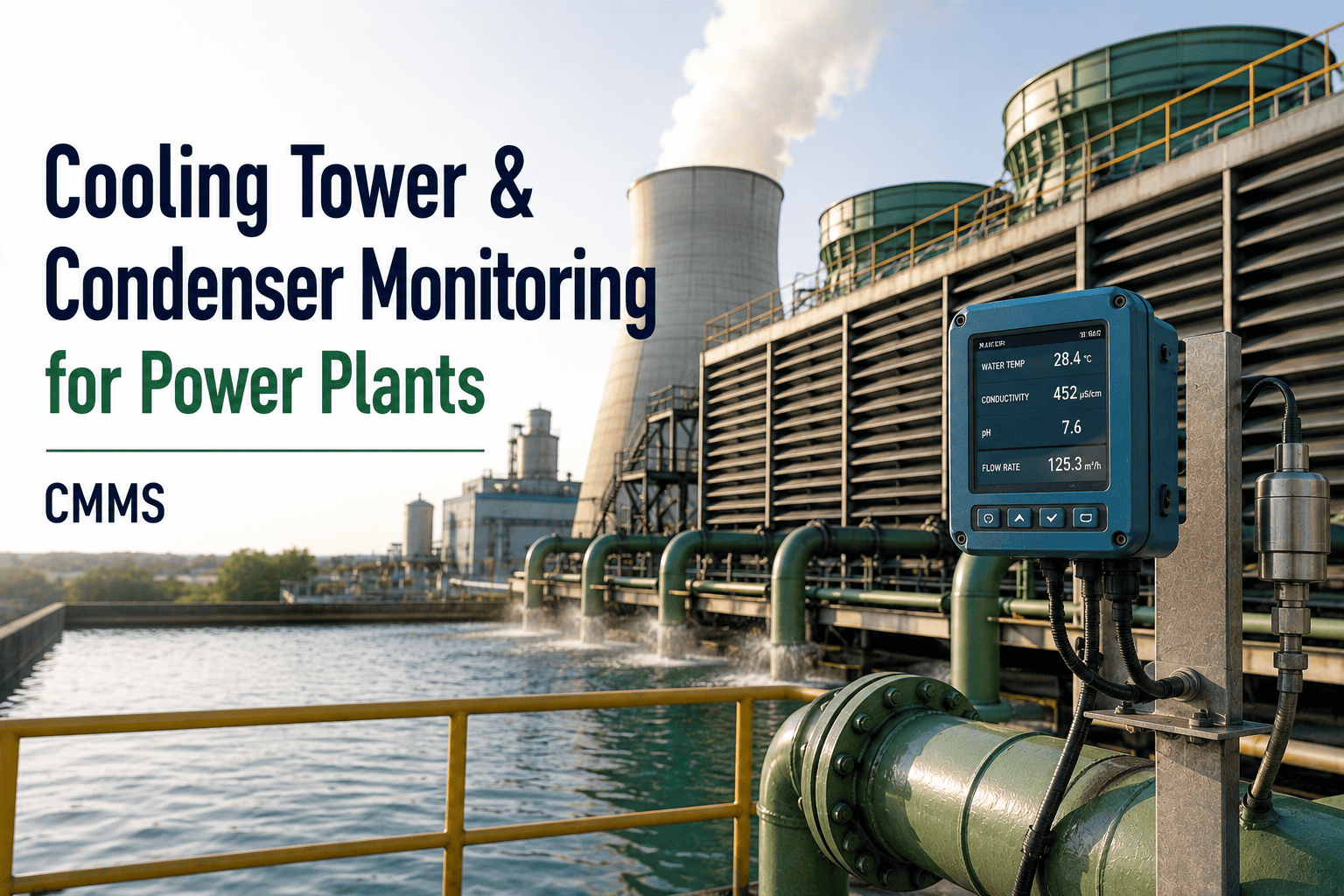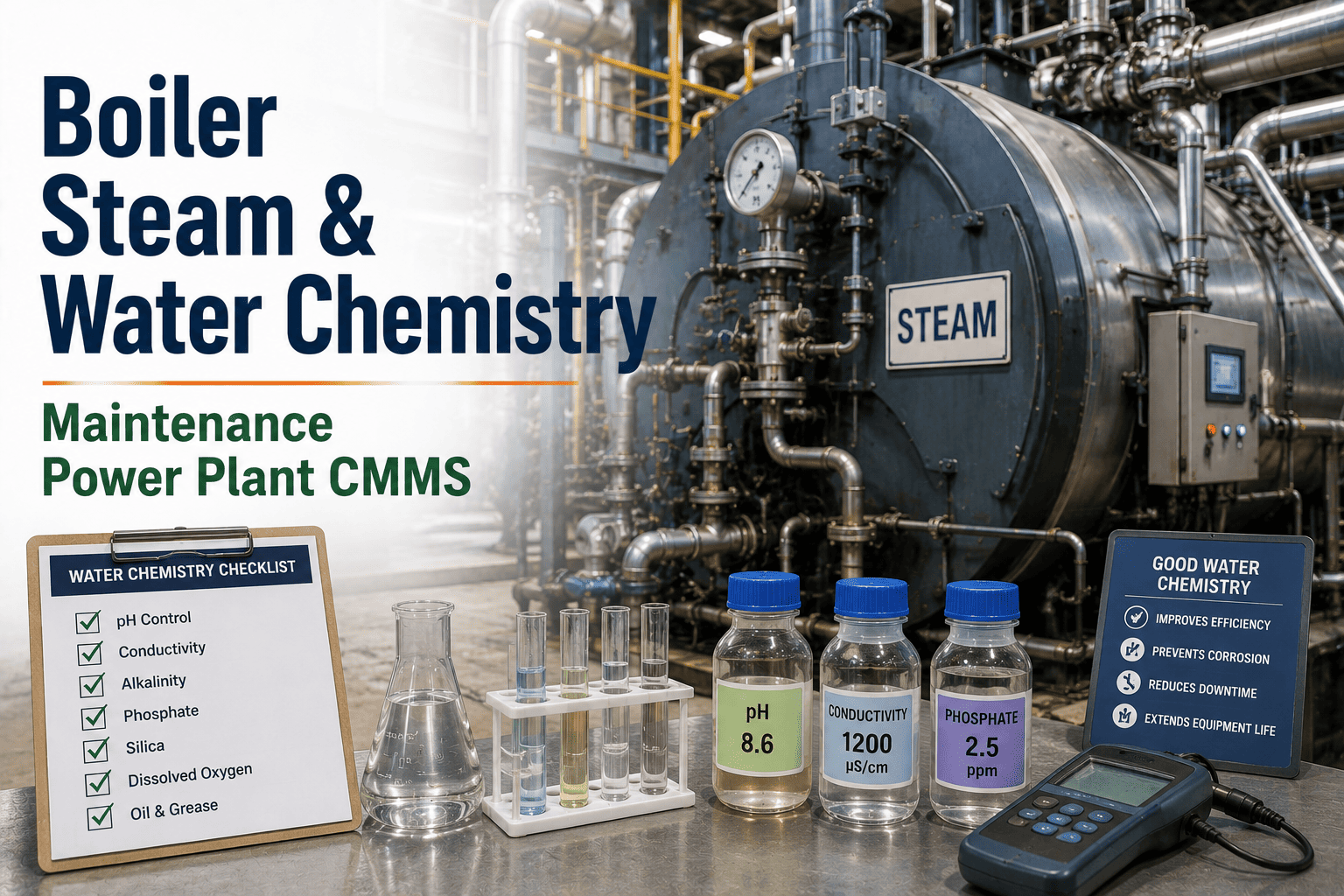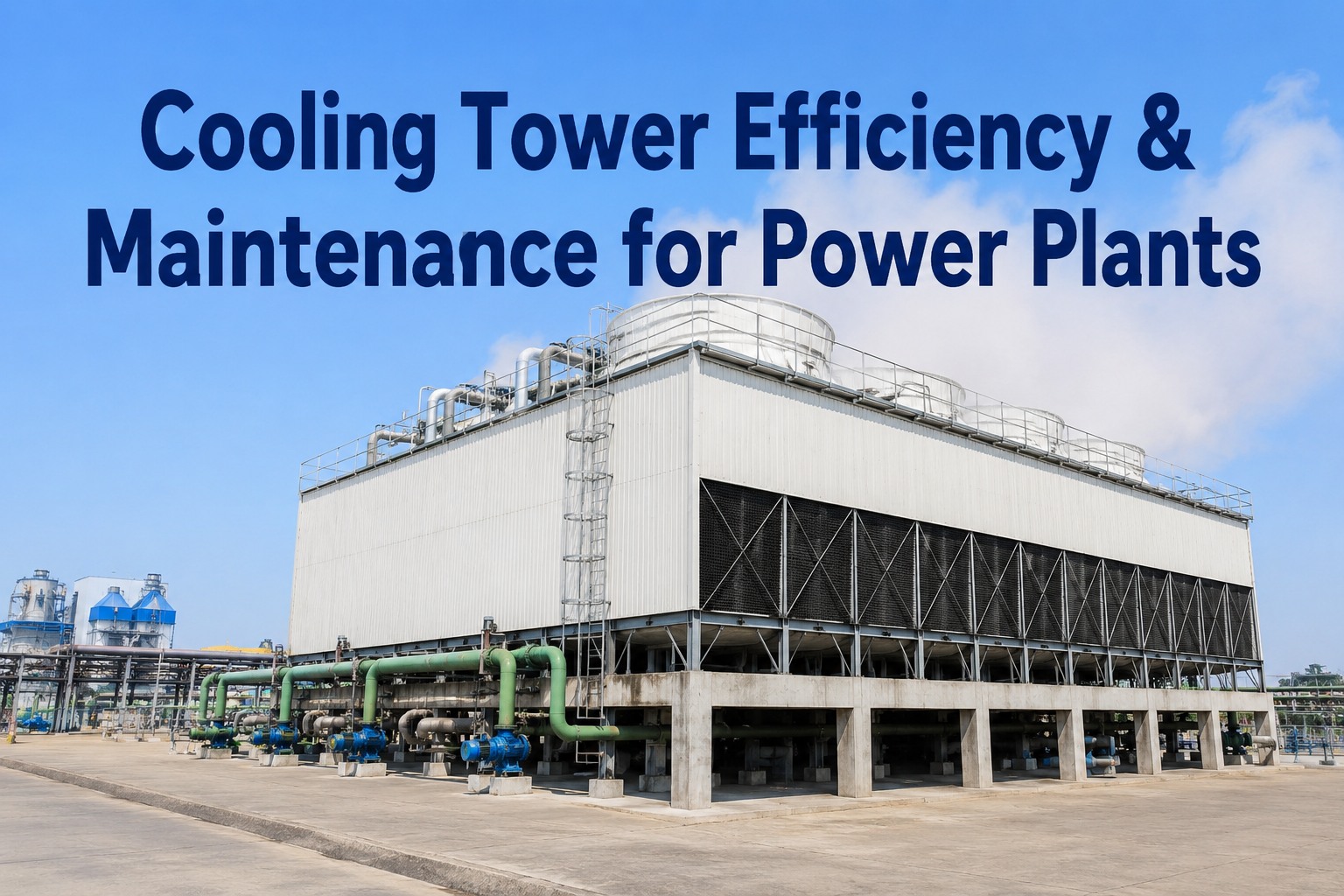
Cooling tower efficiency and maintenance directly determine a power plant's heat rate, fuel cost and availability — a fouled or poorly maintained tower can raise condenser back-pressure enough to cut net generation by 2–5% and add thousands of dollars per day in lost revenue. This guide walks reliability engineers and maintenance managers through the highest-impact levers: fill condition, fan and drivetrain performance, drift eliminator integrity, water chemistry control and the CMMS work-order engine that keeps every PM on schedule. If your team is still tracking cooling-tower PMs on spreadsheets or paper, Start Free Trial of OxMaint and digitize the entire preventive-maintenance workflow in under a week.
Is your cooling tower quietly draining 5% of plant output?
A single season of neglected fill, drift eliminators or water chemistry can lift approach temperature 3–7°F — translating to 2–5% lost generation and $40K–$120K/month in extra fuel costs for a mid-size power plant. OxMaint digitizes every PM trigger so your cooling-tower assets stay within design approach year-round.
What drives cooling tower performance in a power plant?
Cooling tower performance is governed by four physical variables: water-to-air contact time (fill condition), airflow volume (fan and stack), drift removal (eliminators) and heat-rejection capacity (water chemistry and flow). When any one degrades, approach temperature — the gap between cold-water temperature and ambient wet-bulb — rises, and every 1°F increase in approach can reduce turbine output by roughly 0.3–0.5%.
Cooling tower PM checklist: fill, fan, drift eliminators, water chemistry
A defensible cooling tower PM program breaks inspection and maintenance tasks by component and cadence. Below is the same tiered checklist OxMaint ships as a pre-built template — assign it to technicians, attach photos, and auto-trigger the next task on closure.
Fill & Distribution
Weekly – Monthly- Inspect fill decks for scale, biological fouling and physical damage
- Verify hot-water distribution nozzles are clear and uniformly flowing
- Check cold-water basin for sediment buildup above 2 in
- Record approach temperature vs. wet-bulb at design flow
- Replace fill sections when pressure drop rises 20% above baseline
Fan & Drivetrain
Monthly – Quarterly- Inspect fan blades for erosion, cracking and tip clearance
- Check gearbox oil level, sample for metals, change per OEM hours
- Vibration-read motor and fan bearings; trend in CMMS
- Verify fan stack and shroud alignment
- Test VFD response and calibration against wet-bulb setpoint
Drift Eliminators
Quarterly – Semi-annual- Inspect eliminator blades for warping, scale and biofilm
- Verify drift rate stays below 0.005% of circulating flow
- Replace damaged sections to maintain PM10 compliance
- Check seal strips and edge gaps for bypass airflow
- Clean and document with timestamped photos in work order
Water Chemistry
Daily – Weekly- Maintain conductivity within 1,200–2,400 µS/cm (site-specific)
- Control pH between 7.5 and 8.5 to minimize scale and corrosion
- Dose oxidizing biocide and non-oxidizing alternates on schedule
- Pull and review weekly Legionella and TPC samples
- Log all readings to CMMS; auto-flag excursions to supervisor
Cooling tower maintenance schedule: monthly, quarterly, annual
Mapping each PM task to the right cadence is what separates a 98%-available tower from one that loses 5% efficiency every summer. Use this timeline as the backbone of your cooling tower CMMS calendar — OxMaint auto-generates every recurring work order from these intervals.
Walk-down inspection & chemistry log
Visual check of fill, nozzles, basin and drift eliminators; record pH, conductivity and biocide residual. OxMaint auto-flags any reading outside control limits to the shift supervisor within seconds.
Fan vibration survey & gearbox check
Collect vibration data on motor and fan bearings, check gearbox oil for water and metals, verify fan tip clearance. Trend all readings in OxMaint dashboards to catch bearing degradation weeks before failure.
Deep clean, drift eliminator audit & VFD tune
Drain and power-wash the cold-water basin, inspect every drift-eliminator blade, recalibrate VFD control curves against current wet-bulb data. Attach before/after photos to the closed work order for audit trails.
Fill replacement evaluation & gearbox overhaul
Measure fill pressure drop vs. baseline; replace sections exceeding 20% delta-P. Pull gearbox for internal inspection, change oil and seals. OxMaint ties each task to OEM manuals, parts inventory and downtime windows.
How to calculate and benchmark cooling tower efficiency
Three formulas tell you everything about tower health: approach, range and cycles of concentration. Trend them weekly in your CMMS and you'll catch degradation long before the turbine feels it.
Design approach is typically 5–10°F. Every 1°F above design costs ~0.3% in turbine output. If your approach climbs from 7°F to 12°F, that's roughly 1.5% of nameplate — about $45K/month on a 500-MW gas-fired unit at $5/MMBtu.
Range should match condenser heat load. A shrinking range at constant flow signals reduced heat rejection — often fill fouling or insufficient airflow. Baseline at commissioning and compare monthly.
Higher cycles save water and chemicals but risk scale. Most power towers run 4–8 cycles. OxMaint logs makeup and blowdown conductivity daily and auto-calculates CoC trends so you optimize the water-chemistry sweet spot.
A 500-MW plant spending $42K/month on excess fuel — and the 90-day fix
Consider a 500-MW combined-cycle plant in the Southeast running two counterflow induced-draft towers. Over 18 months, operations noticed gradual output decline during peak summer months but had no digitized PM trail to diagnose root cause. A reliability audit found approach temperature had drifted from 7°F to 13°F — a 6°F degradation driven by scaled fill, one cracked fan blade and drift eliminators with 15% bypass gap.
Reactive, spreadsheet-tracked PMs
- Approach temperature: 13°F (6°F above design)
- Net output loss: ~3% (15 MW derate in summer)
- Excess fuel cost: $42,000/month at $5/MMBtu
- PM compliance: ~60% on-time, no audit trail
- Drift rate: 0.012% (2.4× permit limit risk)
Digitized PM + predictive triggers
- Approach temperature: 7.5°F (within 0.5°F of design)
- Output restored: 15 MW recovered, $42K/month saved
- PM compliance: 97% on-time, full photo audit trail
- Vibration alerts caught bearing fault 3 weeks early
- Drift rate: 0.003%, comfortably within permit
"After deploying OxMaint for our cooling-tower PMs, we recovered 12 MW of summer derate within one quarter. The vibration-trending alone paid for the platform by preventing a gearbox failure."
— Reliability Manager, 1,200-MW combined-cycle plantHow OxMaint CMMS optimizes cooling tower maintenance
OxMaint turns the checklist, formulas and timeline above into an automated, auditable workflow. Each capability below maps directly to a cooling-tower failure mode — so you prevent downtime instead of documenting it after the fact.
Auto-generated PM work orders
Pre-built cooling-tower templates trigger weekly, monthly, quarterly and annual work orders automatically — with checklists, OEM manuals and safety permits attached. Technicians complete tasks on mobile, capturing photos and readings that close the loop instantly.
Outcome: 97% on-time PM compliance, zero missed inspectionsPredictive vibration & temperature analytics
OxMaint's AI engine trends vibration, oil-analysis and approach-temperature data across every fan, gearbox and cell. It alerts reliability engineers when a bearing's RMS velocity deviates from baseline — typically 2–4 weeks before failure.
Outcome: 30–50% reduction in unplanned fan/gearbox downtimeSpare-parts inventory tied to assets
Every fill section, fan blade, gearbox seal and drift-eliminator blade is linked to its parent asset. When a work order opens, OxMaint checks stock, reserves parts and auto-generates a purchase request if below min — no more waiting 6 weeks for a gearbox rebuild kit.
Outcome: 40% faster mean-time-to-repair, 20% lower parts inventory carrying costCompliance & audit dashboards
Every work order, chemistry log, drift measurement and inspection photo is timestamped and searchable. Generate a full Legionella-management or NPDES-permit audit report in two clicks — no more scrambling through three-ring binders when the regulator arrives.
Outcome: Audit prep cut from 3 days to 30 minutes, zero compliance findingsSee OxMaint on your cooling tower assets — book a 30-min demo
We'll load your tower hierarchy, PM cadence and spare-parts list into a live sandbox so you can see exactly how much downtime and fuel cost you'll recover.
Cooling tower maintenance FAQs
How often should a power plant cooling tower be inspected?
A cooling tower should receive a visual walk-down and water-chemistry log weekly, a fan vibration survey and gearbox check monthly, a deep clean and drift-eliminator audit quarterly, and a full fill-condition evaluation with gearbox oil change annually. OxMaint auto-generates each of these as recurring work orders so no cadence slips — Book a Demo to see the pre-built template.
What is the ideal cooling tower approach temperature?
Design approach temperature for most power-plant cooling towers is 5–10°F above ambient wet-bulb. An approach above 10°F typically signals fouled fill, insufficient airflow, or a drift-eliminator bypass problem. Every 1°F above design can reduce turbine output by 0.3–0.5%, so trending approach weekly in your CMMS is the fastest way to catch efficiency drift early.
How does a CMMS improve cooling tower maintenance?
A CMMS like OxMaint eliminates missed PMs by auto-generating work orders on the right cadence, attaching OEM checklists and safety permits, trending vibration and temperature data for predictive alerts, and linking spare-parts inventory to each asset. Plants typically lift on-time PM compliance from 55–65% on spreadsheets to 95–98% with a CMMS, cutting unplanned downtime 30–50%.
What are the most common causes of cooling tower efficiency loss?
The top four causes are scale and biofilm fouling on fill (raises approach 3–7°F), degraded or cracked fan blades reducing airflow, warped drift eliminators allowing bypass airflow, and poor water-chemistry control leading to corrosion and scale. OxMaint's analytics module trends approach temperature, vibration and chemistry readings to flag each failure mode before it impacts generation.
How much does cooling tower maintenance software cost?
OxMaint CMMS for cooling tower maintenance starts with a free 14-day trial — no credit card required. Pricing scales by asset count and user seats, with most mid-size power plants recovering the annual subscription cost within 2–3 months through avoided fuel penalties and reduced unplanned downtime. Start Free Trial or book a demo for a customized ROI estimate based on your tower count and heat rate.
Stop losing megawatts to cooling-tower neglect
Digitize every PM, trend every vibration reading, and catch efficiency drift before it hits your heat rate. Your cooling towers are the cheapest megawatts you'll ever recover — let OxMaint show you how.
Free 14-day trial · No credit card required