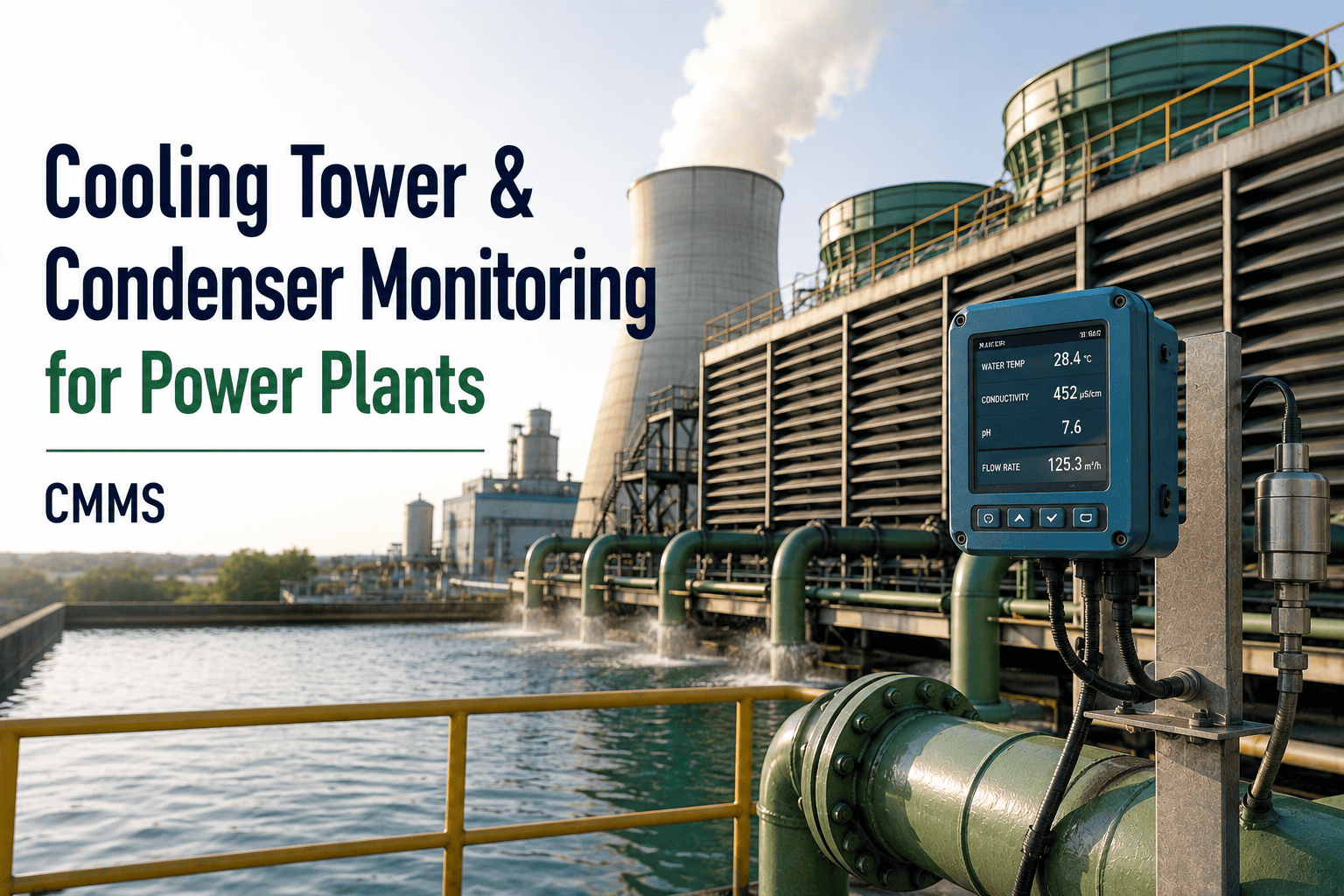
Cooling towers are among the most critical — and most difficult to inspect — assets in any power plant. Standing 30 to over 200 metres tall, these massive structures endure constant thermal stress, moisture exposure, and chemical degradation. Traditional inspections demand scaffolding builds that cost tens of thousands of dollars, rope-access teams working at dangerous heights, and full or partial plant shutdowns that bleed revenue by the hour. A single natural-draft cooling tower inspection using conventional methods can take 10 or more days and put workers in confined spaces with fall risks, poor visibility, and exposure to biological hazards like Legionella. Drone-based inspection is eliminating these constraints entirely — delivering faster, safer, and far more detailed assessments while the plant keeps running. When paired with a maintenance management platform like Oxmaint's CMMS, every drone finding becomes an actionable, tracked work order within minutes of detection.
Stop Climbing. Start Flying. Inspect Cooling Towers in Hours, Not Weeks.
Drones capture 4K visual, thermal, and LiDAR data across every surface of your cooling tower — interior and exterior — without scaffolding, rope access, or plant shutdowns.
Why Cooling Towers Are So Hard to Inspect
Every power plant maintenance team knows the challenge. Cooling towers combine extreme height, confined interior spaces, constant moisture, and aggressive chemical environments into a single asset that demands regular inspection but resists every traditional method. Understanding these challenges explains why drones have become the preferred inspection approach across nuclear, thermal, and gas-fired power plants worldwide. If your facility still relies on manual methods, exploring modern maintenance management solutions alongside drone technology can transform your entire inspection workflow.
Extreme Height
Natural-draft towers reach 100-200+ metres. Scaffolding construction alone takes 5-7 days and costs $30,000-$80,000 per setup. Every hour a worker is at height is a fall risk that demands extensive safety protocols.
Confined Interior Spaces
Fill media zones, water distribution decks, and basin areas create tight, wet, poorly lit environments. Inspectors face slip hazards, biological exposure (Legionella), and limited escape routes during emergencies.
Thermal & Chemical Attack
Constant wet-dry cycling, chemical treatment residue, and thermal gradients cause concrete carbonation, rebar corrosion, fill degradation, and shell cracking that must be detected before they become structural failures.
Massive Downtime Cost
Taking a cooling tower offline for inspection forces load reduction or full unit shutdown. For nuclear plants, each offline day can cost $1-3 million in lost generation. Mechanical-draft towers supporting multiple units amplify the impact.
How Drone Inspections Work: From Takeoff to Work Order
Modern cooling tower drone inspection follows a structured workflow that turns a week-long manual process into a same-day operation. Here is the end-to-end process that leading power plants are using today, with inspection findings flowing directly into Oxmaint for automated work order creation:
Pre-Flight Planning
Define inspection scope: exterior shell survey, interior fill assessment, basin condition, or full tower audit. Create waypoint flight paths based on tower geometry. No scaffolding, no rope rigging, no confined space permits for the drone operator.
External Shell Inspection
Outdoor drone equipped with 4K camera and thermal sensor flies a programmed spiral pattern around the tower exterior. Captures concrete condition, crack mapping, surface spalling, water staining patterns, and thermal anomalies indicating internal leaks — all in 1-3 hours versus days of scaffolding work.
Internal Structure Inspection
Confined-space drone (collision-tolerant, with protective cage) enters through access doors or fan openings. Inspects fill media condition, water distribution nozzles, drift eliminators, structural supports, and basin floor — areas that previously required workers in harnesses inside wet, dark spaces.
Data Processing & 3D Modelling
LiDAR point clouds and photogrammetry create detailed 3D models of the entire tower. Defects are geo-tagged with precise coordinates. Thermal overlays reveal hidden moisture intrusion, delamination, and insulation failures invisible to the naked eye.
CMMS Integration & Work Orders
Classified findings — cracks, corrosion, fill damage, nozzle blockage — are pushed to Oxmaint via API. Each defect becomes a prioritised work order with location coordinates, severity rating, supporting images, and recommended repair action. No manual data entry. No findings lost in PDF reports.
Turn Every Drone Finding Into a Tracked Repair. Automatically.
Oxmaint connects directly to your drone inspection data, creating prioritised work orders with images, location tags, and severity ratings the moment a defect is identified.
What Drones Inspect: Key Cooling Tower Zones
A comprehensive drone inspection covers every critical zone of the cooling tower, each presenting unique challenges and defect types that require different sensor payloads:
Shell & Structure
Fill Media & Distribution
Cold Water Basin
Fan, Gearbox & Drive
Real-World Results: Drone vs. Traditional Inspection
The numbers tell a compelling story. Power plants that have switched to drone-based cooling tower inspections are seeing dramatic improvements across every metric that matters — time, cost, safety, and data quality. Managing these improvements starts with the right maintenance management platform to capture and act on the data drones produce.
Why Inspection Data Without a CMMS Is Wasted Data
Drones generate extraordinary volumes of high-quality inspection data. But data sitting in a folder or buried in a PDF report does not fix cooling towers. The gap between finding a defect and completing a repair is where most power plants lose value. Oxmaint closes that gap by turning every drone finding into a managed maintenance action — automatically prioritised, assigned, scheduled, tracked to completion, and recorded in the asset's history for trending and compliance. Schedule a walkthrough to see how your drone data becomes completed repairs.
Thermal anomaly, crack, fill damage, or blocked nozzle identified and geo-tagged during flight
Finding arrives via API with images, coordinates, severity classification, and asset linkage
Prioritised and assigned automatically based on severity, asset criticality, and team availability
Completion verified, before/after photos captured, asset history updated for compliance and trending
Your Drones Find the Problems. Oxmaint Makes Sure They Get Fixed.
From drone detection to completed repair — every step tracked, every finding resolved, every asset updated. That is what a connected maintenance platform delivers.
Frequently Asked Questions
Can drones inspect a cooling tower while it is still operating?
Yes, in many configurations. For mechanical-draft towers with multiple cells, drones inspect one cell at a time — the fan in that cell is turned off while remaining cells continue operating. The plant maintains most of its cooling capacity throughout. For natural-draft towers, external shell inspections require no shutdown at all. Internal inspections may require reduced flow or brief shutdown of water distribution in the inspection zone, but this can often be coordinated during low-demand periods rather than requiring a full unit outage.
What types of defects can drones detect that manual inspections miss?
Drones equipped with thermal cameras detect subsurface delamination, hidden moisture intrusion, and insulation failures that are invisible to the naked eye. LiDAR scanning measures millimetre-level structural deformation and settlement that manual visual checks cannot quantify. Systematic coverage is the biggest advantage — drones follow programmed flight paths that cover 100% of the surface area, while manual inspectors typically cover 60-70% due to access limitations. This means drones routinely find defects in areas that were simply never inspected before.
How does Oxmaint handle the volume of data from drone inspections?
Oxmaint receives classified findings, not raw sensor dumps. The drone inspection platform processes images and sensor data using AI-based defect classification, then sends structured findings (defect type, severity, location, supporting images) to Oxmaint via REST API. Each finding becomes a work order linked to the specific asset in your equipment hierarchy. Historical findings are tracked over time, allowing Oxmaint to show degradation trends — for example, tracking a crack's progression across quarterly inspections — so maintenance planners can make data-driven repair and replacement decisions.
What is the ROI timeline for switching to drone-based inspection?
Most power plants see full payback within 3-6 months. The calculation is straightforward: eliminate scaffolding costs ($30K-$80K per setup), reduce inspection time from 10+ days to 1-2 days (recovering plant availability worth $50K-$300K+ per day for baseload units), cut inspection labour by 60-70%, and reduce fall-from-height risk exposure to near zero (avoiding injury costs of $100K-$500K+ per incident). Plants with multiple cooling towers see the ROI compound because a single drone team can inspect 4x more towers per year than a traditional crew.
Do we need our own drones and pilots, or can we outsource?
Both models work. Outsourcing to specialised drone inspection firms is the fastest way to start — companies with FAA Part 107 certified pilots and confined-space drone experience can be contracted per inspection. Building an in-house programme makes sense for plants with 3+ cooling towers or quarterly inspection cycles, as the per-inspection cost drops significantly. Either way, Oxmaint integrates with both approaches — whether findings come from your in-house team or a third-party provider, the CMMS receives structured data and generates work orders through the same automated pipeline.
Ready to Modernise Your Cooling Tower Inspections?
Oxmaint gives your drone inspection data a home — and a workflow. Every defect tracked, every repair completed, every asset protected.