Coal and gas power plants both depend on reliable operation of high-temperature equipment under strict regulatory oversight, but their maintenance priorities differ. Coal plants focus on emissions systems like ESPs, FGD scrubbers, and SCR reactors, while gas plants prioritise turbine combustion systems and HRSG pressure parts. A CMMS that tracks both asset types — from turbine starts to emissions control inspections — is essential for mixed-fuel operations. OxMaint is configured for both fuel types with pre-built templates for turbine inspections, HRSG monitoring, ESP/FGD/SCR maintenance, and CEMS calibration tracking.
Power Generation · Coal & Gas · 2026
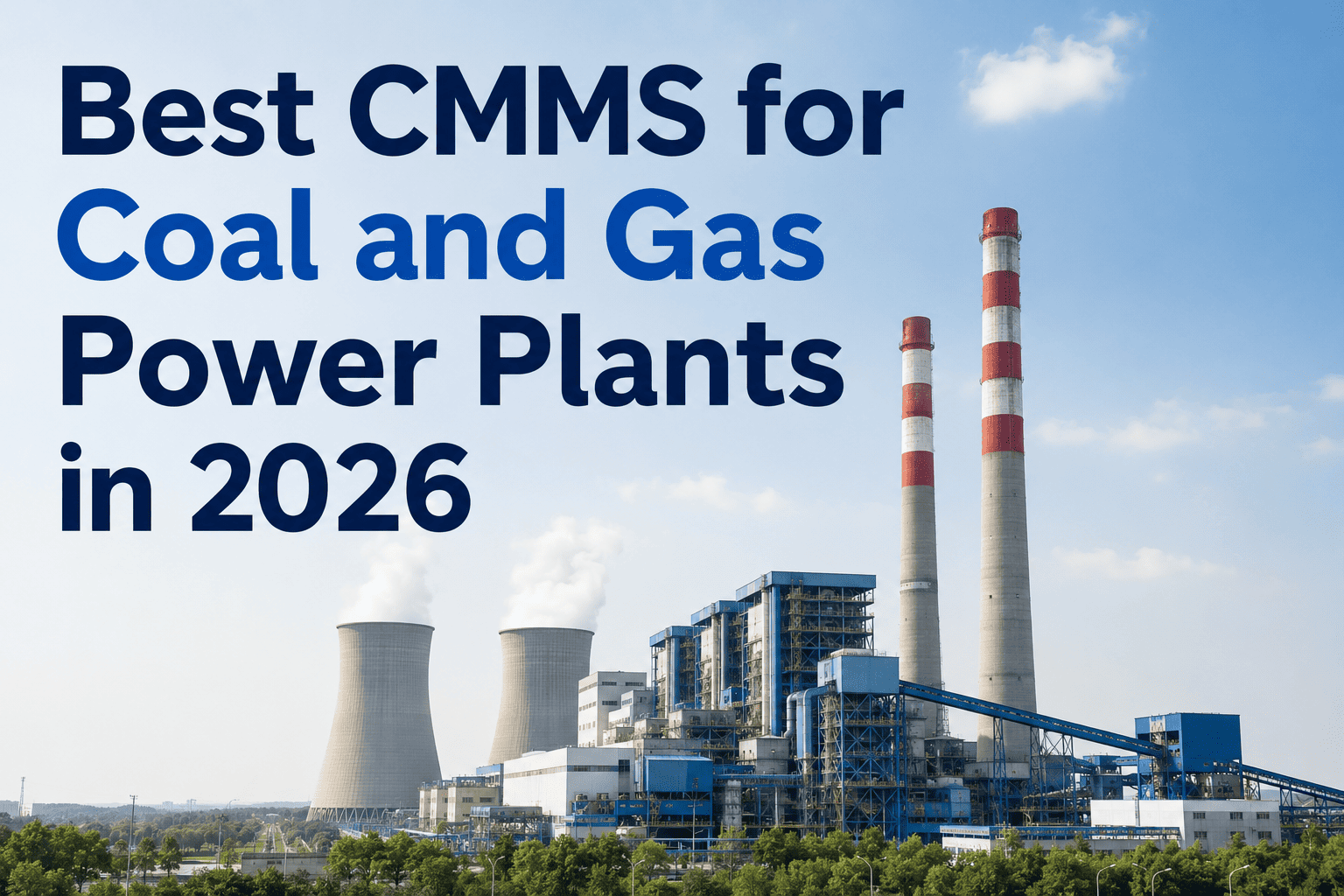
Best CMMS for Coal and Gas Power Plants in 2026
Boiler, HRSG, gas turbine, condenser, ESP, FGD, and SCR — the complete asset-by-asset CMMS evaluation for thermal generation operators managing coal, gas, or a mixed-fuel fleet in 2026.
Coal Power Plant
$28.4M
Cost of single HRSG tube failure — Texas 2025
Highest risk: Boiler / HRSG · ESP · FGD · SCR
VS
Gas Power Plant
$1.2M
Revenue loss per unplanned turbine trip day
Highest risk: Gas Turbine · HRSG · Generator · BOP
Why Coal and Gas Plants Need Different CMMS Configurations
The maintenance priorities — and therefore the CMMS configurations — for coal and gas plants diverge sharply across four dimensions: the primary failure modes that drive unplanned outages, the regulatory frameworks governing documentation, the OEM inspection intervals that must be tracked, and the emissions control equipment that requires its own PM programme running in parallel to generation asset maintenance. Understanding these differences is the first step to evaluating whether a CMMS vendor truly understands thermal generation — or is offering a generic work order system with a power plant logo on the home page.
Asset-by-Asset CMMS Requirements — Coal Plant
Coal plant maintenance programmes are defined by the parallel complexity of managing generation assets — boiler, steam turbine, generator — alongside a full emissions control train that has its own regulatory calendar, its own failure modes, and its own audit exposure. A CMMS that covers one without the other leaves a documentation gap that EPA inspectors find in the first hour of a Title V permit audit.
Primary failure: Tube leak — economiser, superheater, reheater sections. Avg forced outage: 15–30 days, $2–28M cost.
CMMS requirement
UT inspection scheduling per tube zone · Stack temp and feedwater outlet delta trending · Drum chemistry work orders · Superheater visual inspection calendar · Attemperator condition tracking
OxMaint auto-generates HRSG inspection work orders when stack temperature rise or feedwater outlet delta exceeds configurable threshold — the exact signal the Texas HRSG failure showed for 11 months before the tube failed.
Primary failure: Electrode fouling, rapper failure, discharge wire breakage — direct EPA particulate exceedance. MATS penalty exposure per event.
CMMS requirement
Rapper system PM calendar · Electrode inspection and cleaning schedule · Collection plate condition tracking · Power supply voltage/current trending · Outlet opacity correlation
OxMaint tracks ESP electrode inspection cycles and rapper system PM — correlating ESP performance data with outlet opacity readings to flag degradation before a permit exceedance is recorded by CEMS.
Primary failure: Pump impeller wear, absorber tray fouling, reagent feed system failure — SO₂ removal drops below 90%, triggering Title V permit exceedance.
CMMS requirement
Slurry pump bearing and seal PM · Absorber spray nozzle inspection · Reagent (limestone) feed system calibration · Mist eliminator wash schedule · Oxidation air blower PM
Pre-built FGD maintenance templates in OxMaint cover all major component types — slurry pumps, absorbers, reagent systems — with configurable intervals matching OEM recommendations and permit requirements.
Primary failure: Catalyst poisoning or plugging, ammonia injection grid malfunction — NOx removal falls below permit limit. Catalyst replacement: $500K–2M+ per unit.
CMMS requirement
Catalyst activity testing schedule · Ammonia injection grid inspection · Soot blower PM calendar · Inlet distributor condition tracking · Catalyst replacement life tracking
OxMaint tracks SCR catalyst life against operating hours and inlet temperature history — generating replacement cost projections that feed directly into CapEx planning cycles before catalyst performance falls below permit requirements.
Primary failure: Blade erosion, bearing wear, seal degradation — capacity derating before forced outage. Long-lead spare parts: 12–18 months.
CMMS requirement
Vibration trending per bearing · Steam purity chemistry PM · Seal system condition tracking · Gland steam system maintenance · Outage scope planning by stage
OxMaint links steam turbine vibration data from SCADA historian to condition-based PM triggers — converting declining bearing MTBF into a work order before the turbine enters forced derating territory.
Asset-by-Asset CMMS Requirements — Gas Plant
Gas plant maintenance is dominated by the fired-hour and start-count logic of gas turbine OEM inspection intervals — and by the thermal coupling between the gas turbine and HRSG that means a defect in either system creates loading stress in the other. A CMMS for a combined-cycle gas plant must track both sides of that coupling simultaneously.
Primary failure: Blade degradation, combustion instability, compressor fouling — $1.2M+/day in lost generation revenue per forced trip.
CMMS requirement
Fired hours counter per unit · Start count tracking · CI / HGP / Major inspection interval management · Compressor wash scheduling · Exhaust temperature spread trending · Vibration and bearing health monitoring
OxMaint tracks fired hours and start counts directly from DCS feed — triggering Combustion Inspection work orders at OEM-specified intervals (typically every 8,000 fired hours or 600 starts, whichever comes first) without manual hour-tracking spreadsheets.
Primary failure: Tube fatigue cracking from thermal cycling — driven by the number of gas turbine start-stop events, not calendar time. Avg outage: 23+ days.
CMMS requirement
Thermal cycle count linked to gas turbine starts · Tube UT inspection schedule · Economiser condition trending · Header thickness measurement tracking · Safety valve test calendar
OxMaint links HRSG inspection intervals to gas turbine start count — not calendar date. As cycling frequency increases with flexible dispatch requirements, HRSG PM intervals automatically compress to match actual thermal fatigue accumulation.
Primary failure: Tube fouling and backpressure exceedance — pushes LP turbine exhaust moisture fraction beyond design limits, accelerating last-stage blade erosion. LP turbine damage cost: $2M+.
CMMS requirement
Eddy current tube survey on 2-year cycle · Backpressure trending with mandatory inspection escalation · Tube cleaning schedule · Hotwell chemistry PM · Air in-leakage testing calendar
OxMaint auto-generates a condenser inspection work order when backpressure exceeds configurable threshold above design — the early signal that condenser fouling is beginning to stress downstream steam turbine stages.
Primary failure: Stator winding insulation failure, exciter failure, hydrogen seal degradation — major outage 30–90 days. Generator rewind cost: $3–8M.
CMMS requirement
Stator winding temperature trending · Exciter PM calendar · Hydrogen seal system inspection · Cooling water system PM · Rotor condition assessment scheduling
OxMaint's generator asset template includes all major PM tasks aligned to OEM intervals — with winding temperature trending linked to condition-based inspection triggers before thermal degradation reaches stator insulation failure thresholds.
Pre-Built Templates for Every Asset — Coal and Gas
OxMaint ships with pre-configured asset templates for gas turbine CI/HGP/Major intervals, HRSG tube monitoring, ESP/FGD/SCR PM calendars, and CEMS calibration tracking. Deploy in 2–4 weeks — not 6 months.
Emissions Compliance — The Coal Plant CMMS Layer Most Vendors Miss
Most CMMS vendors design their platforms around generation asset maintenance and treat emissions control equipment as an afterthought. At a coal plant, that is backwards. A single CEMS data gap lasting more than four hours can trigger an excess emissions report. An ESP opacity exceedance can trigger a Notice of Violation under MATS. An SCR NOx permit exceedance can trigger a capacity reduction order. These are not maintenance problems — they are compliance emergencies that start with a missed PM on an emissions control component.
CEMS
EPA 40 CFR Part 75
4-hour data gap = excess emissions report filing required
Daily zero/span calibration work orders · RATA pre-scheduling 30 days before deadline · Drift-triggered corrective work orders before regulatory threshold breach
ESP
EPA MATS / NSPS
Electrode fouling = opacity exceedance = MATS Notice of Violation
Rapper system PM at configurable intervals · Electrode inspection calendar · Outlet opacity correlation monitoring · Power supply performance tracking
FGD Scrubber
EPA Title V / NSPS
SO₂ removal below 90% = permit exceedance fine exposure
Slurry pump PM · Absorber nozzle inspection · Reagent feed calibration · Mist eliminator wash schedule · All linked to Title V permit record automatically
SCR Reactor
EPA MATS / State Air Permits
Catalyst deactivation = NOx permit breach = capacity curtailment order
Catalyst activity testing schedule · AIG inspection calendar · Soot blower PM · Catalyst replacement life tracking with CapEx projection
Regulatory Compliance Coverage — Coal vs Gas Plant CMMS Requirements
OxMaint coverage status across all primary regulatory frameworks for thermal generation
"
We operate two coal units and one combined-cycle gas unit on the same site. Before OxMaint, each unit ran a completely separate maintenance programme in separate spreadsheets. Now the HRSG inspection on the gas unit, the ESP rapper schedule on Unit 1 coal, and the FGD pump bearing PM on Unit 2 are all in one platform, sharing the same parts inventory and the same technician pool. Our EPA Title V audit last quarter was the easiest we have ever had — every record the inspector asked for was in the system.
Plant Maintenance Manager — 3-Unit Thermal Site (Coal + CCGT), Pennsylvania, USA
Frequently Asked Questions
Does OxMaint track gas turbine fired hours and start counts from DCS automatically?
Yes. OxMaint integrates with DCS and SCADA via OPC-UA and standard historian protocols to ingest fired hours and start counts in real time. Combustion inspection, Hot Gas Path, and Major inspection work orders are triggered automatically at OEM-specified intervals — typically every 8,000 fired hours or 600 starts, whichever comes first. No manual hour-tracking spreadsheets.
Start free and connect your first gas turbine asset today.
How does OxMaint handle ESP, FGD, and SCR maintenance alongside boiler PM?
OxMaint includes pre-built asset templates for all four emissions control system types — ESP, FGD scrubber, SCR reactor, and CEMS. Each template includes the correct PM intervals, checklist items, and regulatory linkage. Completed work orders auto-link to the relevant Title V permit condition and MATS compliance record — generating the audit trail EPA inspectors require without additional administrative effort.
Book a demo to see the emissions compliance template in action.
Can OxMaint manage a mixed coal-and-gas fleet on a single platform?
Yes. OxMaint supports multi-unit, multi-fuel-type asset hierarchies with unit-level maintenance calendars, shared parts inventory, and cross-unit technician dispatch. Coal unit boiler and emissions system PM, gas unit turbine fired-hour tracking, and HRSG cycle-count-based inspections all run in the same platform with a unified work order queue and shared compliance dashboard.
How does OxMaint help prevent HRSG tube failures in combined-cycle gas plants?
OxMaint links HRSG inspection intervals to gas turbine start count — not calendar date — because HRSG tube fatigue is driven by thermal cycles, not elapsed time. As cycling frequency increases with flexible dispatch, inspection intervals compress automatically. Stack temperature trending and feedwater outlet delta monitoring auto-generate Priority-1 work orders when fouling indicators cross configurable thresholds.
How quickly can OxMaint be deployed at a coal or gas plant without replacing existing systems?
Most thermal plants achieve full deployment in 2–4 weeks using OxMaint's pre-built coal and gas plant templates. DCS and SCADA integration via OPC-UA or historian API typically completes in the same window. No existing control system hardware or software is replaced — OxMaint runs alongside your existing DCS, SCADA, and ERP systems as the maintenance management layer.
One Platform for Coal, Gas, and Everything In Between
OxMaint covers every asset class in your thermal fleet — gas turbine fired-hour tracking, HRSG cycle-count PM, boiler tube inspection scheduling, and ESP/FGD/SCR compliance calendars — free to start, deployed in weeks, no system replacement required.