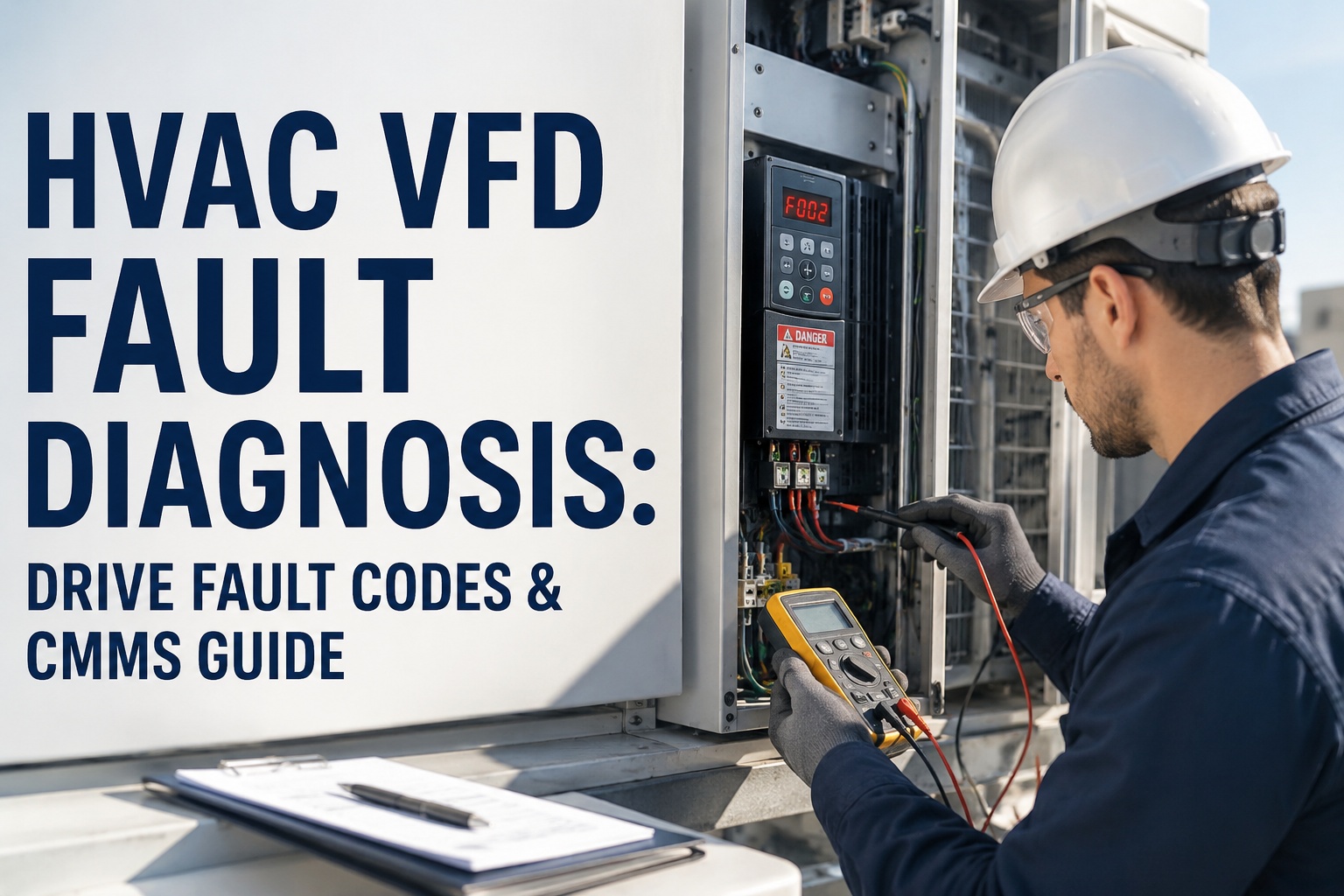
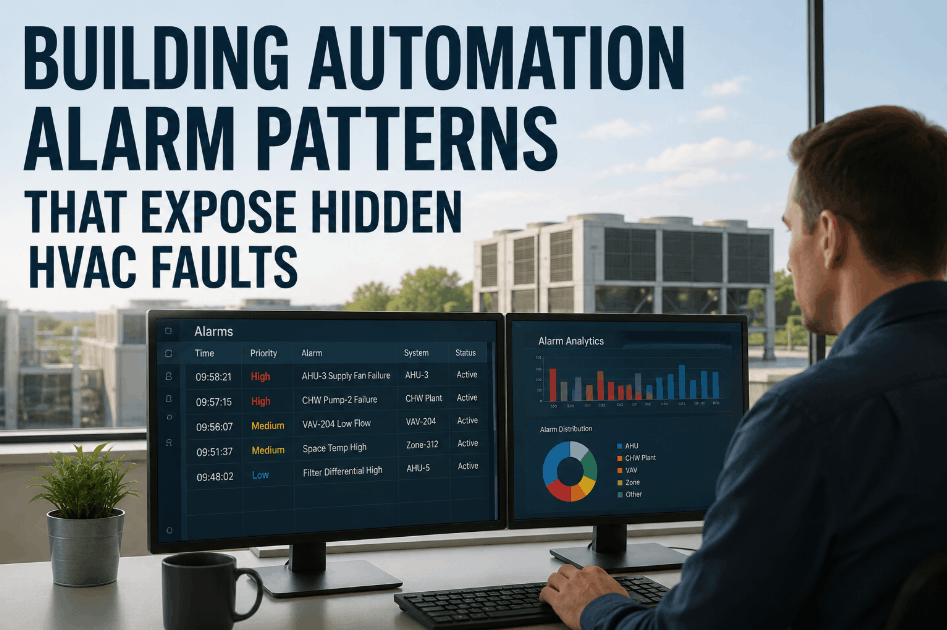
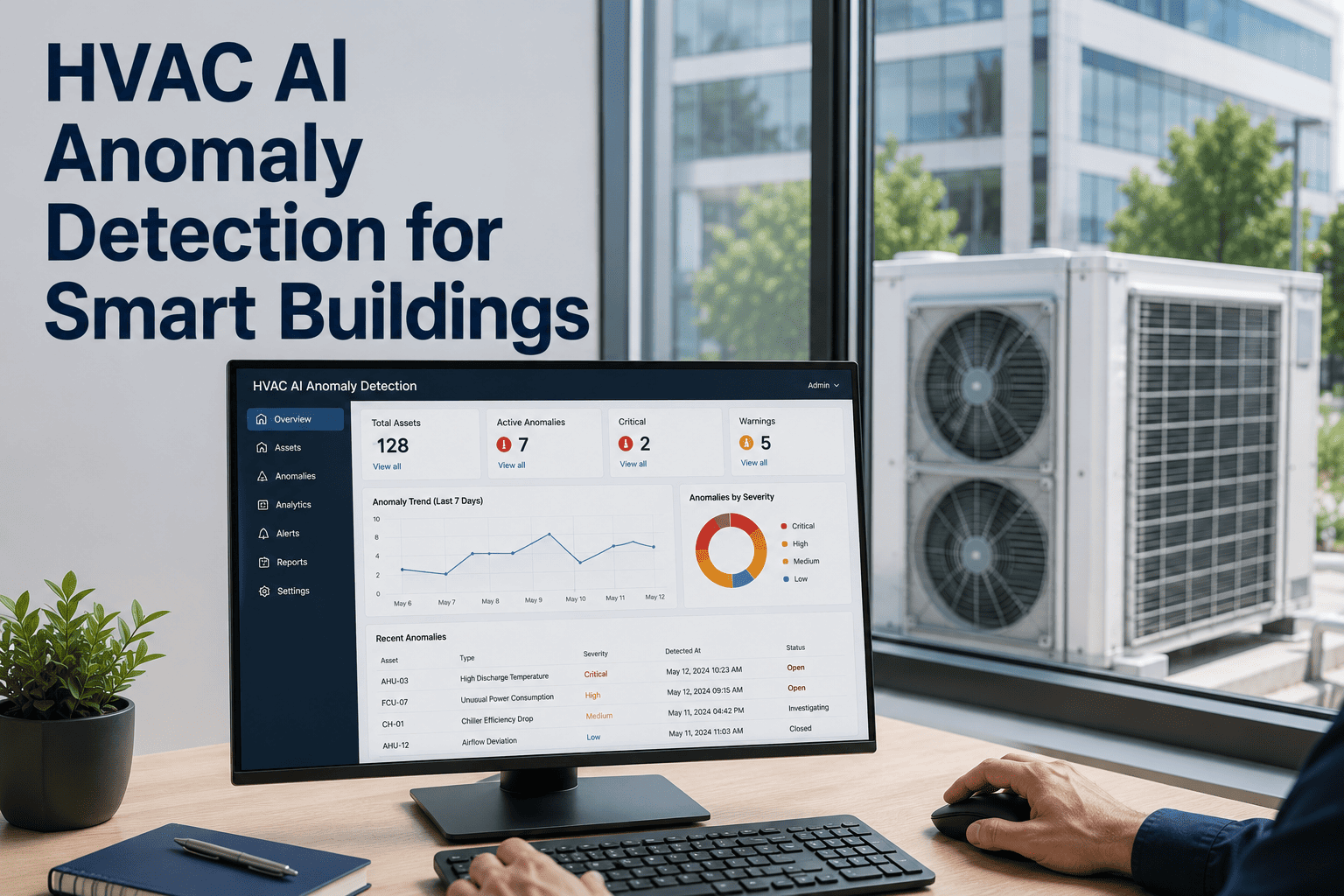
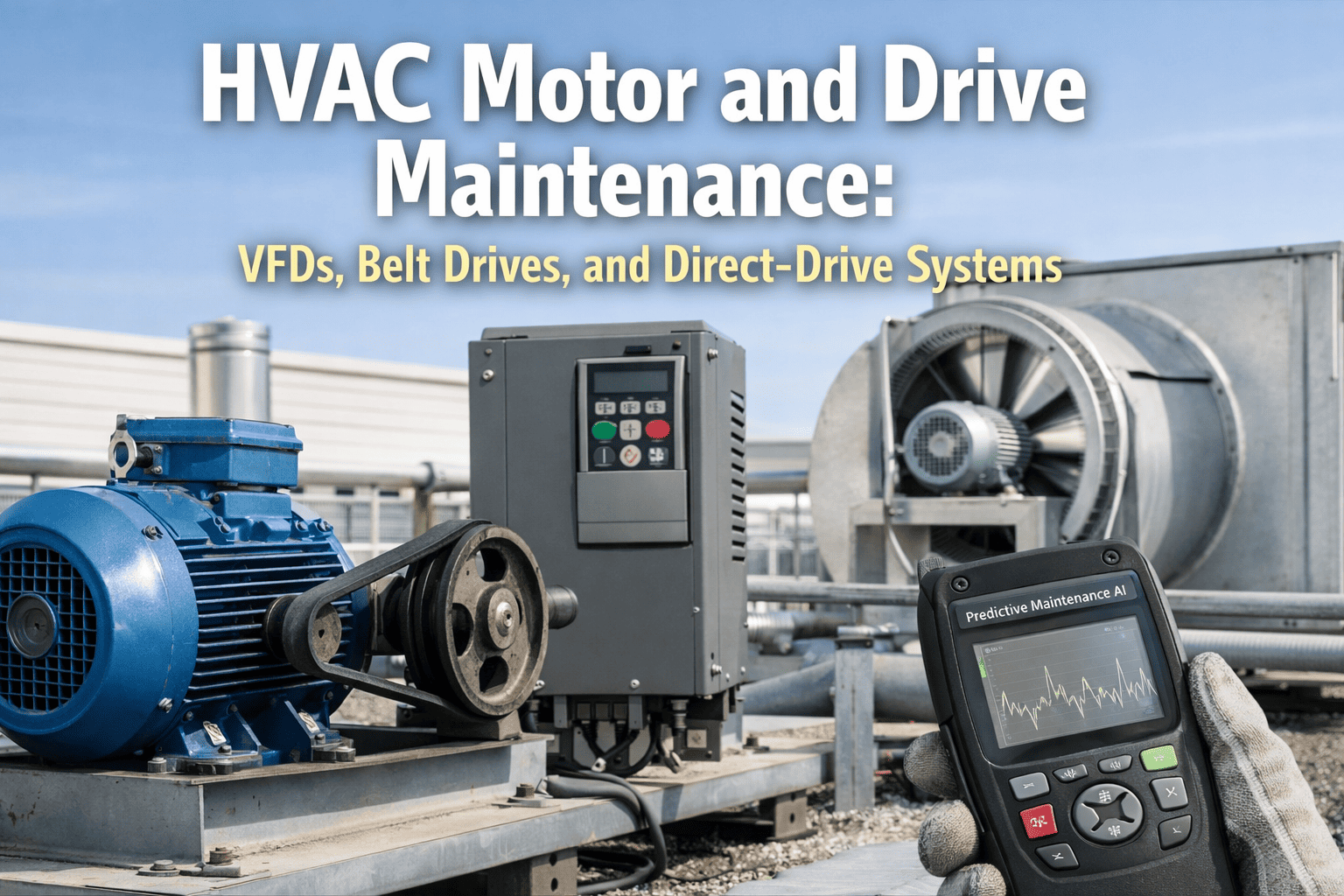
Variable frequency drives control the speed of every major HVAC motor in a modern building — AHU supply fans, return fans, chilled water pumps, condenser water pumps, and cooling tower fans. When a VFD faults or fails, it does not just stop one motor: it stops the system that motor serves, and in a large commercial building that means uncontrolled zone temperatures, occupant complaints, and escalating repair costs within hours. Despite their critical role, VFDs are among the least systematically maintained assets in most HVAC programmes — monitored when they alarm, inspected when they fail, and replaced when the cost of the repair exceeds the cost of a new drive. OxMaint's work order automation platform changes that pattern by tracking every VFD fault code, auto-scheduling PM tasks, correlating drive faults with downstream motor and system performance, and creating work orders before the fault escalates to a failure.
Blog · Electrical HVAC · Work Order Automation
VFD Maintenance and Fault Tracking for HVAC Systems
Fault Code Logging · Overheating Alerts · Harmonic Monitoring · PM Scheduling · Auto Work Orders
Live VFD Fault Feed · Building Systems
VFD-AHU-03
F005 · Overcurrent
WO Auto-Created
VFD-CHW-01
F021 · Heatsink Temp 78°C
Alert Sent
VFD-CT-Fan-2
PM Due · Filter Clean
Scheduled
VFD-AHU-07
F034 · Ground Fault
Priority 1 WO
$8,400
Average cost of an unplanned VFD replacement including downtime — vs $320 for planned PM servicing
60%
Of VFD failures are caused by overheating — directly preventable with regular cooling fan and filter PM
3.2x
Longer VFD service life in facilities with structured PM programmes vs reactive-only maintenance
Auto
Work orders created by OxMaint when VFD fault codes breach defined thresholds — zero manual step
Most Common VFD Fault Codes — What They Mean and What to Do
F005
Overcurrent / OC Trip
Motor mechanical overload, short circuit, incorrect acceleration ramp setting, or motor winding failure
Check motor current draw, mechanical load, and ramp parameters. Inspect motor windings. Do not reset and ignore.
Priority 1 — Immediate WO
F021
Heatsink Overtemperature
Blocked cooling fan, clogged air filter, ambient temperature above drive rating, or IGBT degradation
Clean drive cooling fan and filter. Verify ambient temp within rating. If recurring — check IGBT health.
Priority 2 — Same-Day WO
F034
Ground Fault
Motor winding insulation failure, cable damage, moisture ingress into motor terminal box
Isolate and insulation-test motor and cable. Do not run until fault source identified and remediated.
Priority 1 — Electrical Isolation Required
F012
DC Bus Overvoltage
Rapid deceleration without braking resistor, supply voltage spike, or incorrect deceleration ramp
Extend deceleration ramp time. Check supply voltage quality. Add braking resistor if high-inertia load.
Priority 2 — Check Within 24 hrs
F044
Communication Timeout
BMS/BACnet communication loss, cable fault, or incorrect baud rate configuration
Check BMS connection, cable continuity, and communication settings. Drive continues on last setpoint.
Priority 3 — Schedule within 1 week
F008
Motor Stall / Underload
Belt failure, coupling disengaged, fan blocked, or load disconnected from motor shaft
Inspect drive end mechanically. Check belt, coupling, and fan wheel are intact and engaged.
Priority 2 — Inspect Within 4 hrs
VFD Preventive Maintenance Schedule — OxMaint Auto-Generated
| PM Task |
Detail |
Frequency |
Risk if Skipped |
| Cooling fan inspection |
Check drive internal cooling fan operation and airflow — replace if noisy or reduced flow |
Quarterly |
Heatsink overtemp → drive shutdown |
| Air filter clean / replace |
Clean or replace inlet air filter — critical in dusty or high-lint environments |
Monthly–Quarterly (environment-dependent) |
Blocked airflow → overtemp → IGBT failure |
| Capacitor health check |
DC bus capacitor visual and capacitance check — reform if drive has been stored or unused |
Annually |
Capacitor failure → full drive replacement |
| Terminal torque check |
Retorque all power and control terminals to OEM specification — vibration loosens over time |
Annually |
Loose terminal → heat, arc, insulation damage |
| Harmonic analysis |
Measure total harmonic distortion at drive input — flag if THD exceeds 5% (IEEE 519) |
Annually |
High THD → capacitor damage, transformer heating |
| Firmware and parameter backup |
Back up drive parameter set and check for available firmware updates from OEM |
Annually |
Parameter loss after fault → extended downtime |
| Fault log review |
Download and review complete fault history — identify recurring codes that indicate developing issues |
Quarterly |
Pattern faults missed → preventable failure |
VFD Fault Frequency — Performance Impact Comparison
Unplanned downtime from VFD faults
VFD maintenance cost per drive/year
Repeat fault occurrence rate
Every VFD Fault Logged. Every PM Scheduled. Every Failure Prevented.
OxMaint tracks fault codes, auto-schedules VFD PM tasks, and creates work orders before the fault becomes a failure — giving your HVAC electrical team the structure to manage drives proactively, not reactively.
"
Variable frequency drives are the most underserviced critical component in most commercial HVAC systems I review. Facilities teams understand that a chiller needs an annual full service, but the same discipline rarely extends to the VFDs controlling the chilled water pumps and AHU fans that make that chiller useful. A drive running with a clogged cooling filter in a 35°C plant room will fail within 18 months. The same drive on a quarterly filter clean programme will last 12–15 years. The difference in cost between those two outcomes over the asset lifecycle is substantial — and the intervention is trivial. OxMaint closes the gap by making VFD PM as systematically visible as any other asset on the register. When the quarterly filter clean work order appears on the technician's phone for VFD-AHU-03, it gets done. Without that system, it gets forgotten — and the failure that follows is entirely predictable and entirely avoidable.
Mark Ellison, IEng MIET
Senior Electrical Maintenance Engineer · Commercial Building Services Group · 21 Years VFD and Motor Drive Maintenance, BMS Integration, and Electrical HVAC Asset Management · Incorporated Engineer (IET) · Member of the Institution of Engineering and Technology · Specialist in variable speed drive commissioning, fault analysis, harmonic survey, and CMMS-integrated electrical PM programme design
Frequently Asked Questions
How does OxMaint capture VFD fault codes — does it integrate directly with BMS or drive systems?
OxMaint supports two modes of VFD fault capture. For facilities with BMS or SCADA integration, OxMaint can receive fault code data via API, BACnet, or Modbus — automatically logging fault events to the relevant drive asset record and triggering work orders based on configured fault code rules. For facilities without direct integration, technicians can manually log fault codes during inspections or reactive visits using the OxMaint mobile app, with the fault logged against the drive, timestamped, and linked to the work order. Over time, both methods build a complete fault history per drive that enables pattern analysis — identifying recurring fault codes that indicate a developing problem before the drive reaches end of life.
Start a free trial and configure VFD fault tracking for your HVAC drives.
Can OxMaint track VFD overheating trends to predict failure before it occurs?
Yes — OxMaint's asset condition tracking logs heatsink temperature readings (entered manually by technicians or received via sensor integration) against each drive record over time, building a temperature trend visible in the asset dashboard. As heatsink temperature trends upward over successive inspections — from 45°C to 58°C to 72°C — the system generates a condition alert that triggers a PM work order for cooling fan inspection and filter clean before the drive reaches the thermal trip threshold. This trend-based approach identifies the 60% of VFD failures caused by overheating weeks before the failure occurs, giving the maintenance team time to schedule the intervention during a planned access window rather than a 3 AM emergency.
Book a demo to see OxMaint's drive condition trending in action.
How does OxMaint handle VFD fault work orders differently from standard reactive maintenance?
OxMaint allows each VFD fault code to be configured with a specific response classification — Priority 1 faults such as ground faults and overcurrent trips auto-create immediate work orders with safety isolation instructions and motor testing requirements attached, while Priority 3 faults such as communication timeouts create scheduled work orders for the next available visit. Each auto-created fault work order links back to the fault log entry, includes the drive's full fault history for context, and can include OEM troubleshooting procedures attached as a PDF. This structured fault response replaces the informal reset-and-observe pattern that causes most drive failures to escalate, and creates an audit trail showing that every fault was assessed, assigned, and resolved in accordance with the defined response protocol.
Explore OxMaint's fault code work order configuration with a free trial.
OxMaint · VFD Maintenance & Fault Tracking
Stop Resetting VFD Faults and Hoping. Start Tracking, Trending, and Preventing.
OxMaint gives your HVAC electrical team a structured fault log, auto-PM scheduling, and work order automation for every VFD in the building — so drive failures become the exception, not the expectation.