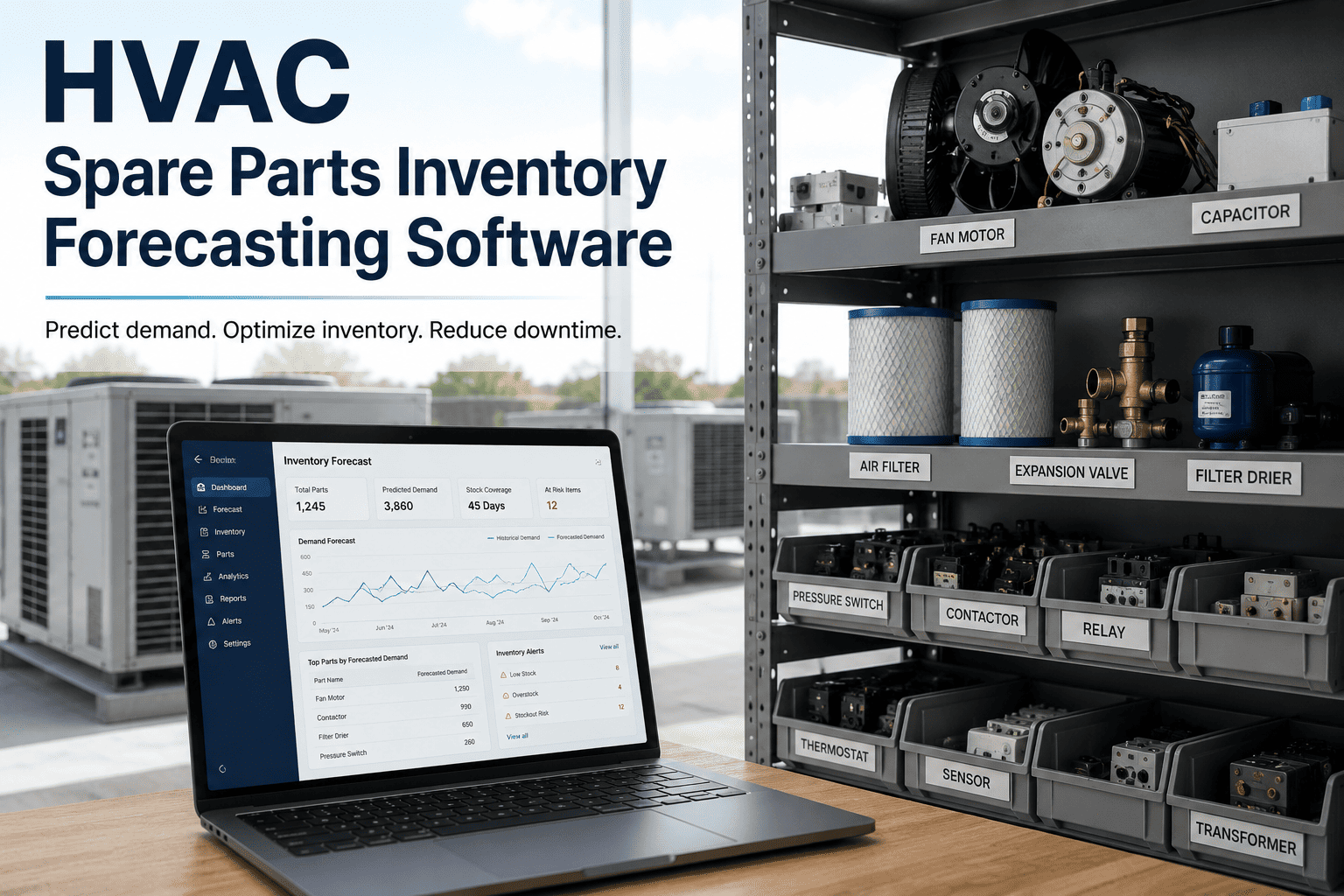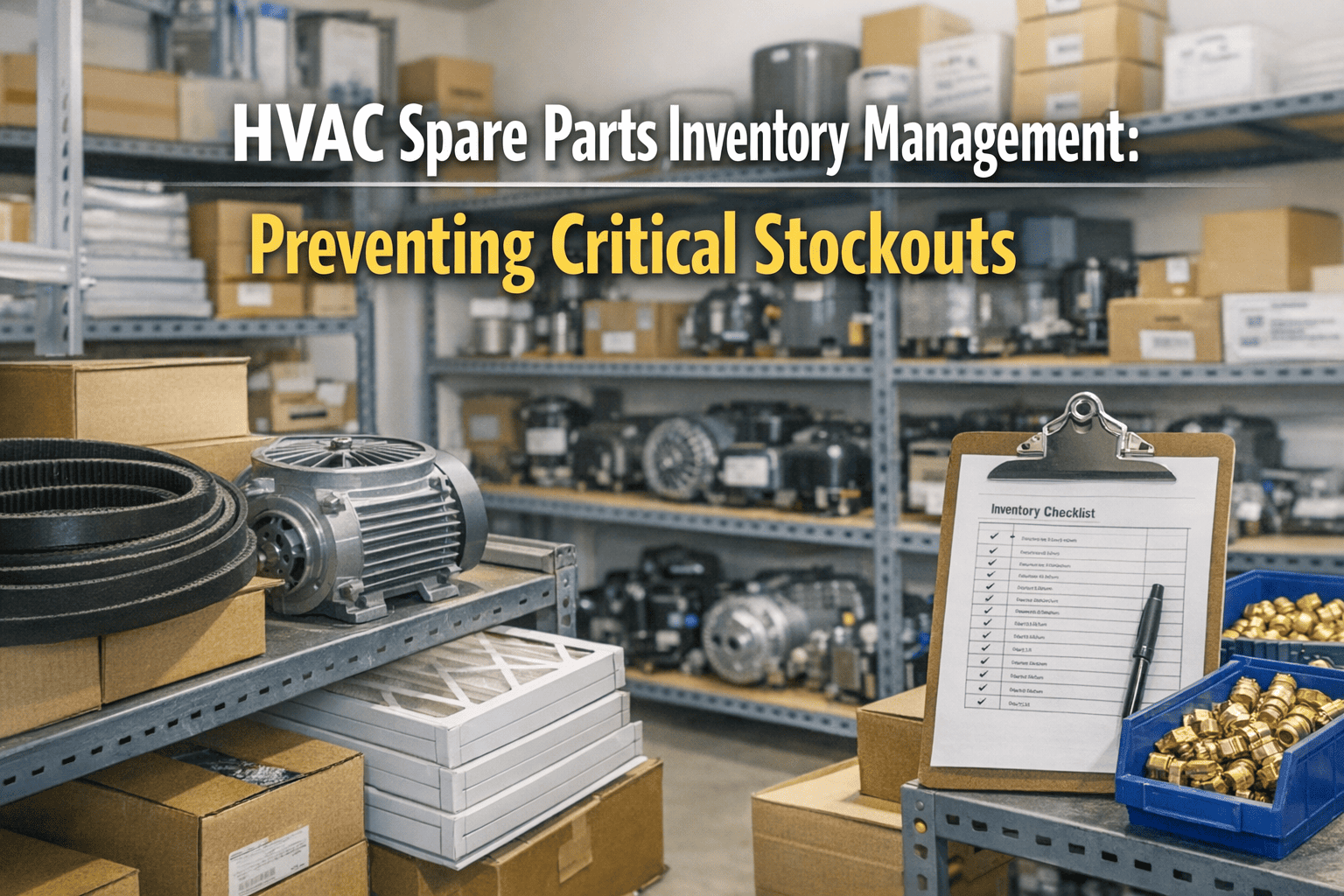
HVAC spare parts teams live and die by a handful of numbers — turnover rate, stockout frequency, dead inventory, and lead-time gaps — yet most warehouses still track them in spreadsheets that go stale the moment a part is pulled for an emergency call. When those metrics drift unnoticed, technicians wait on parts that should have been on the shelf, while capital sits frozen in compressors and control boards nobody has touched in years. Sign Up Free on Oxmaint to link parts consumption directly to HVAC asset records and work order history, or Book a Demo to see how AI-driven inventory tracking turns these metrics into a daily operating signal instead of a quarterly spreadsheet exercise.
Why Turnover and Stockout Metrics Define HVAC Parts Performance
Inventory metrics matter more in HVAC service operations than almost any other trade, because failures are weather-driven, urgent, and rarely scheduled in advance. Book a Demo to see how Oxmaint surfaces turnover and stockout patterns by comparing parts consumption against live work order and asset data.
Five Metrics Every HVAC Spare Parts Team Should Track
A short list of metrics, tracked consistently, tells a spare parts team more than a full physical count ever will. Sign Up Free to start building this metric set directly from your existing parts and work order records in Oxmaint.
Turnover Rate by Part Category
How often a SKU is consumed and replenished over a fixed period. Compressors and motors naturally turn slower than filters and belts — judging all parts against one turnover target hides real problems.
Stockout Frequency
How often a technician opens a work order and finds the required part unavailable. Tracking this against specific SKUs and sites pinpoints exactly where reorder points are set too low.
Dead Inventory Ratio
The share of total parts value with zero consumption over 12–24 months. Rising ratios signal equipment retirements or model changes that purchasing habits haven't caught up with.
Lead-Time Gap
The difference between vendor delivery promises and actual arrival, measured per part. Persistent gaps on critical SKUs justify higher safety stock even if turnover looks acceptable.
Critical Spares Coverage
Whether high-impact, long-lead-time parts — compressors, control boards, specialty refrigerants — are stocked at a level that matches asset criticality, not just historical usage.
HVAC Parts Risk Profile by Category
Different HVAC part categories behave differently in turnover models, and treating them identically is what causes both overstocking and stockouts at the same time. Book a Demo to see how Oxmaint applies category-specific reorder logic across your parts catalog.
| Parts Category | Common Failure Pattern | Turnover Behavior | Stockout Risk | Oxmaint Management Lever |
|---|---|---|---|---|
| Compressors & Motors | Long replacement cycle, high cost | Slow, high-value turnover | High if unstocked | Asset-linked PM flags upcoming replacement need |
| Refrigerant, Filters & Belts | Frequent scheduled replacement | Fast, predictable turnover | Low with reorder triggers | Consumption-rate reorder alerts in Parts & Inventory |
| Control Boards & Sensors | Intermittent, model-specific failure | Irregular, slow-moving | High due to model variation | Asset records track compatible part numbers |
| Fan & Blower Bearings | Wear-based, seasonal load | Moderate, seasonal turnover | Medium | PM schedule-linked consumption forecasting |
| Thermostats & Controllers | Tied to upgrade cycles | Slow, project-driven | Medium | Work order history separates install vs. replacement demand |
What Poor Inventory Metrics Cost HVAC Service Teams
Weak turnover visibility doesn't just sit quietly in a warehouse report — it shows up directly in service delivery and technician productivity. Sign Up Free to connect parts consumption to work order outcomes and see exactly where these costs are concentrated.
Building a Turnover Improvement Program with Oxmaint
Pull Consumption History by Asset and Part
Use Oxmaint's Parts & Inventory records linked to work orders to see exactly which SKUs are moving against which HVAC assets, and which are not moving at all.
Calculate Turnover Rate and Flag Stockout Patterns
Run turnover and stockout frequency by category through Oxmaint's analytics and reporting to identify SKUs that need reorder point adjustments.
Segment Critical vs. Non-Critical Spares
Use asset criticality data in Oxmaint's asset management module to separate parts that protect uptime from parts that can tolerate lead-time variance.
Set AI-Driven Reorder Points
Let Oxmaint's AI-driven inventory engine recommend reorder thresholds based on real consumption trends rather than static annual estimates.
Review Quarterly Against PM Schedule Changes
Recheck turnover assumptions every quarter as preventive maintenance schedules shift, so reorder logic keeps pace with changing equipment demand.
Frequently Asked Questions: HVAC Inventory Turnover Metrics
What is a good inventory turnover rate for HVAC spare parts?
Target turnover varies by part category — fast-moving consumables should turn several times a year, while critical low-frequency spares like compressors turn far slower by design.
How is stockout frequency calculated for service teams?
Stockout frequency is the share of work orders where a required part was unavailable at the time of dispatch, tracked per SKU and per site over a fixed period.
What counts as dead inventory in an HVAC parts warehouse?
Parts with no consumption activity over 12 to 24 months, and no confirmed demand from upcoming maintenance plans, are typically classified as dead inventory.
How does Oxmaint help reduce lead-time gaps?
Oxmaint tracks actual vendor delivery performance against promised lead times per part, helping teams adjust safety stock for SKUs that consistently arrive late.
How often should HVAC parts turnover metrics be reviewed?
Monthly reviews for fast-moving consumables and quarterly reviews for critical spares give teams enough signal to adjust reorder logic without overreacting to short-term noise.