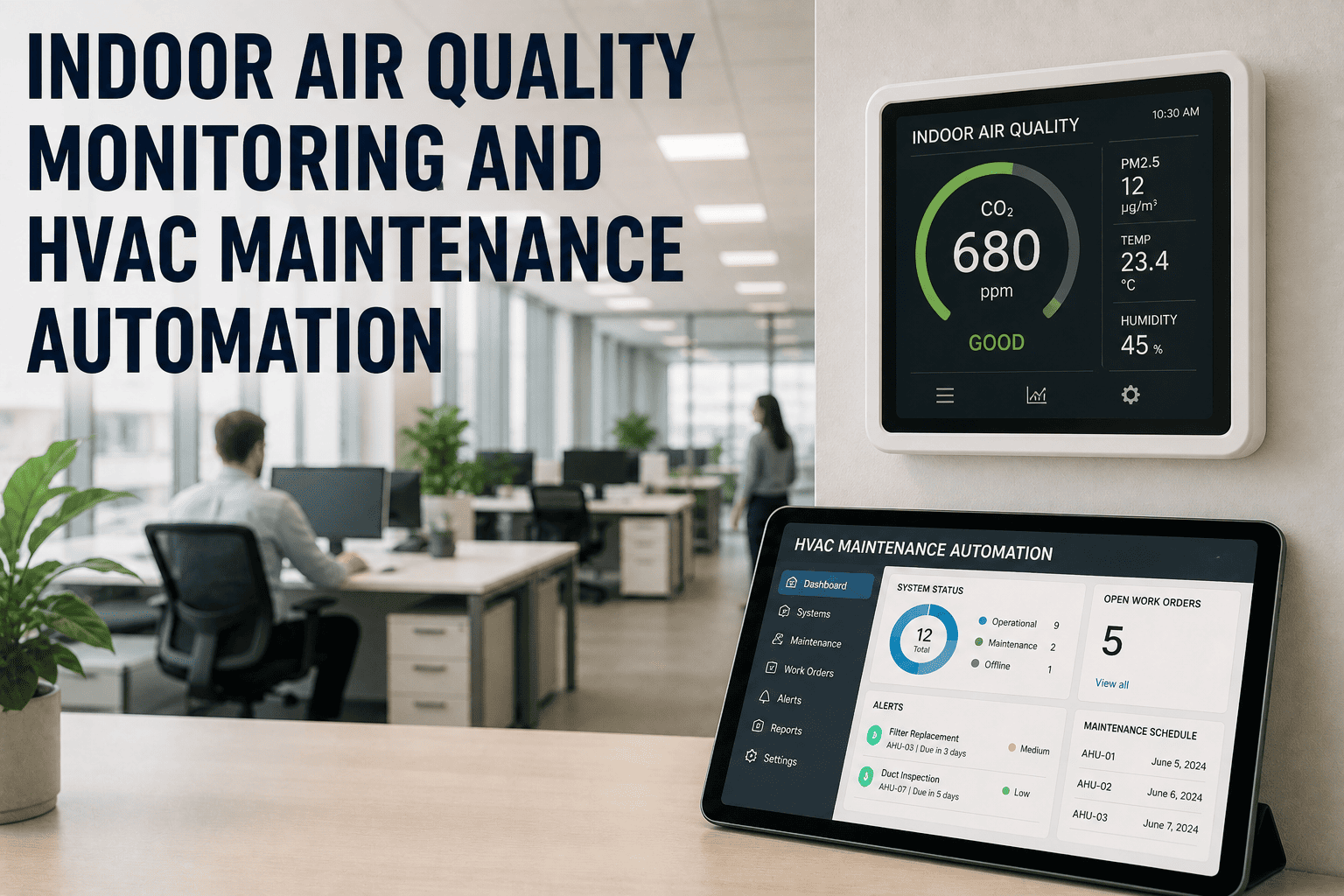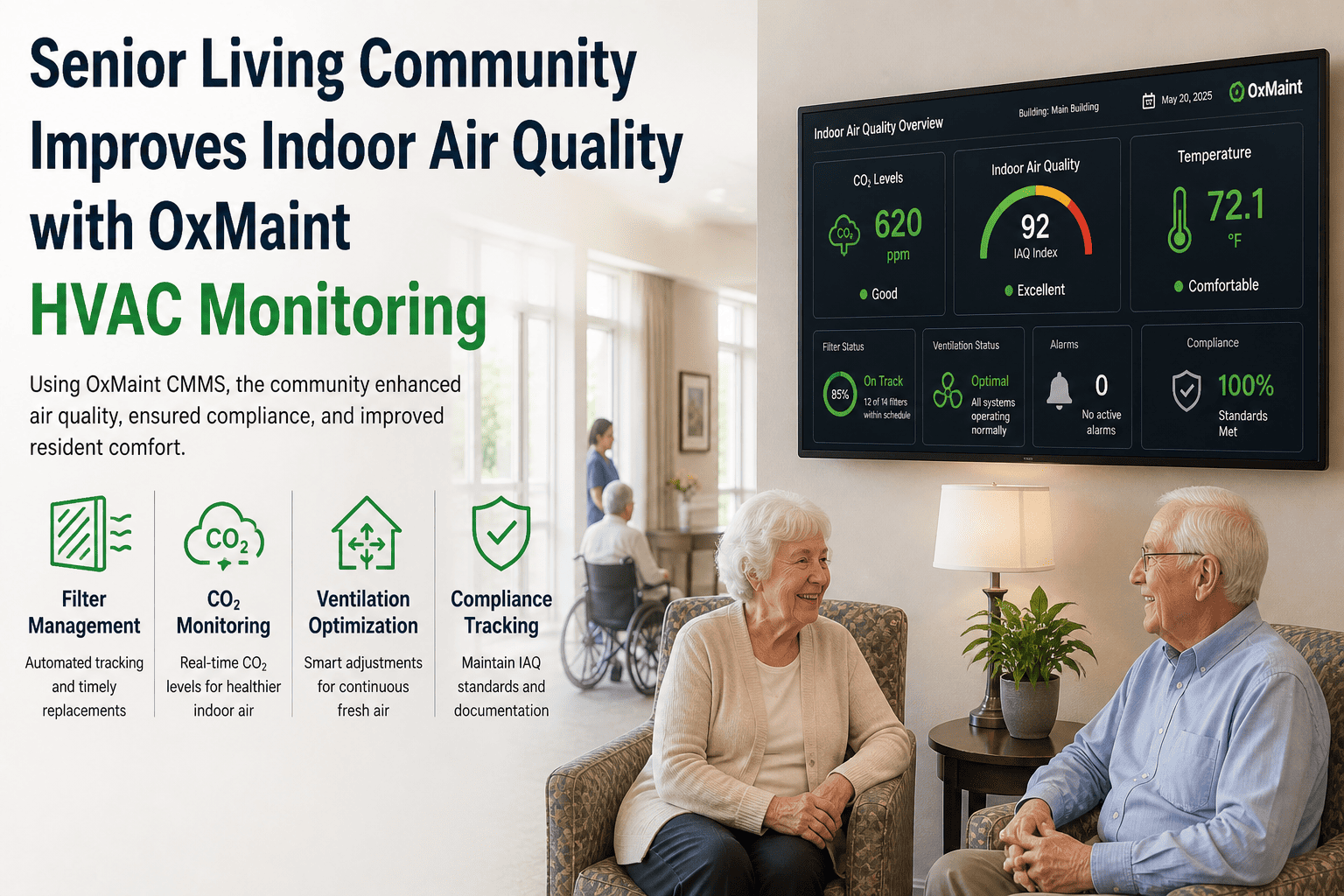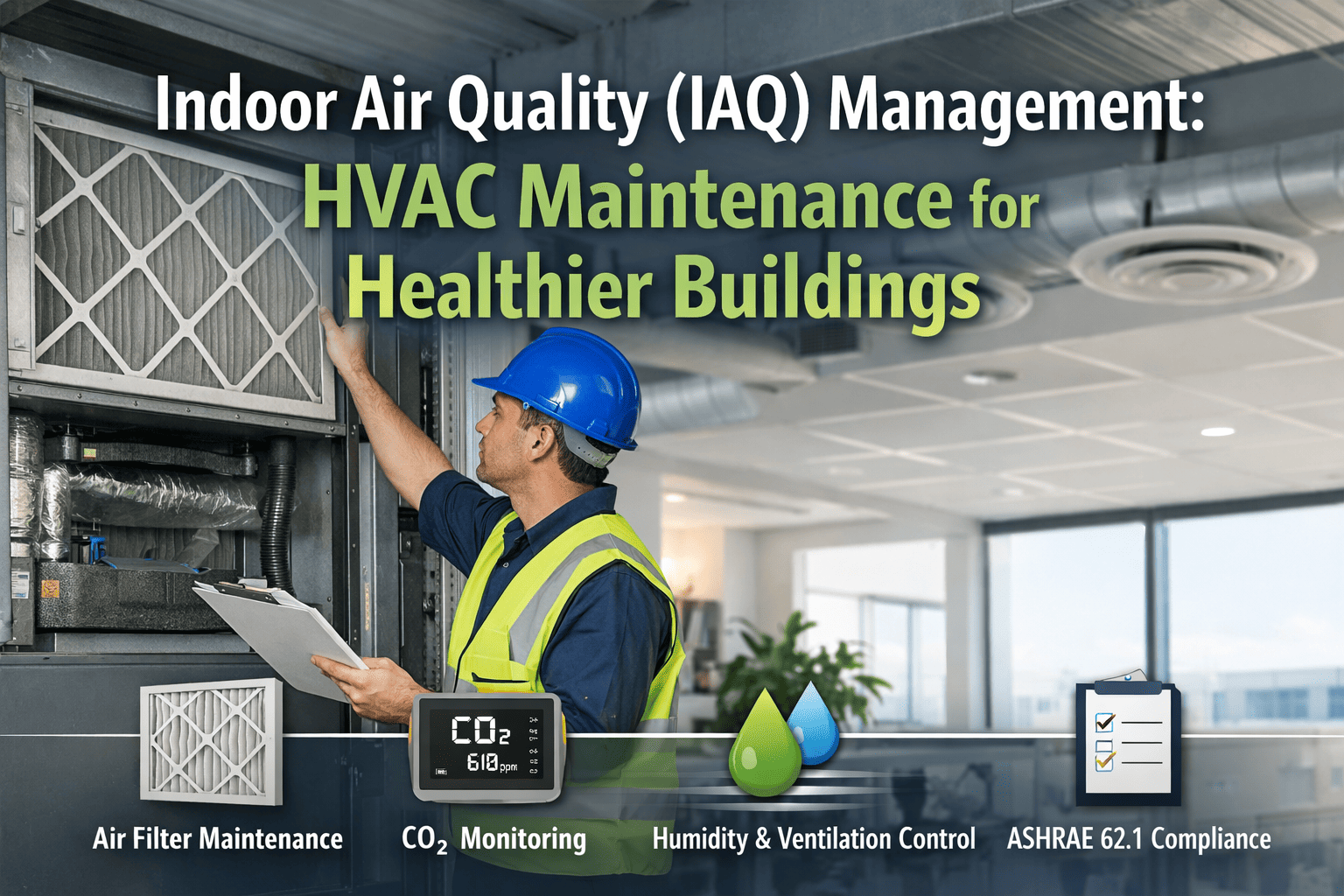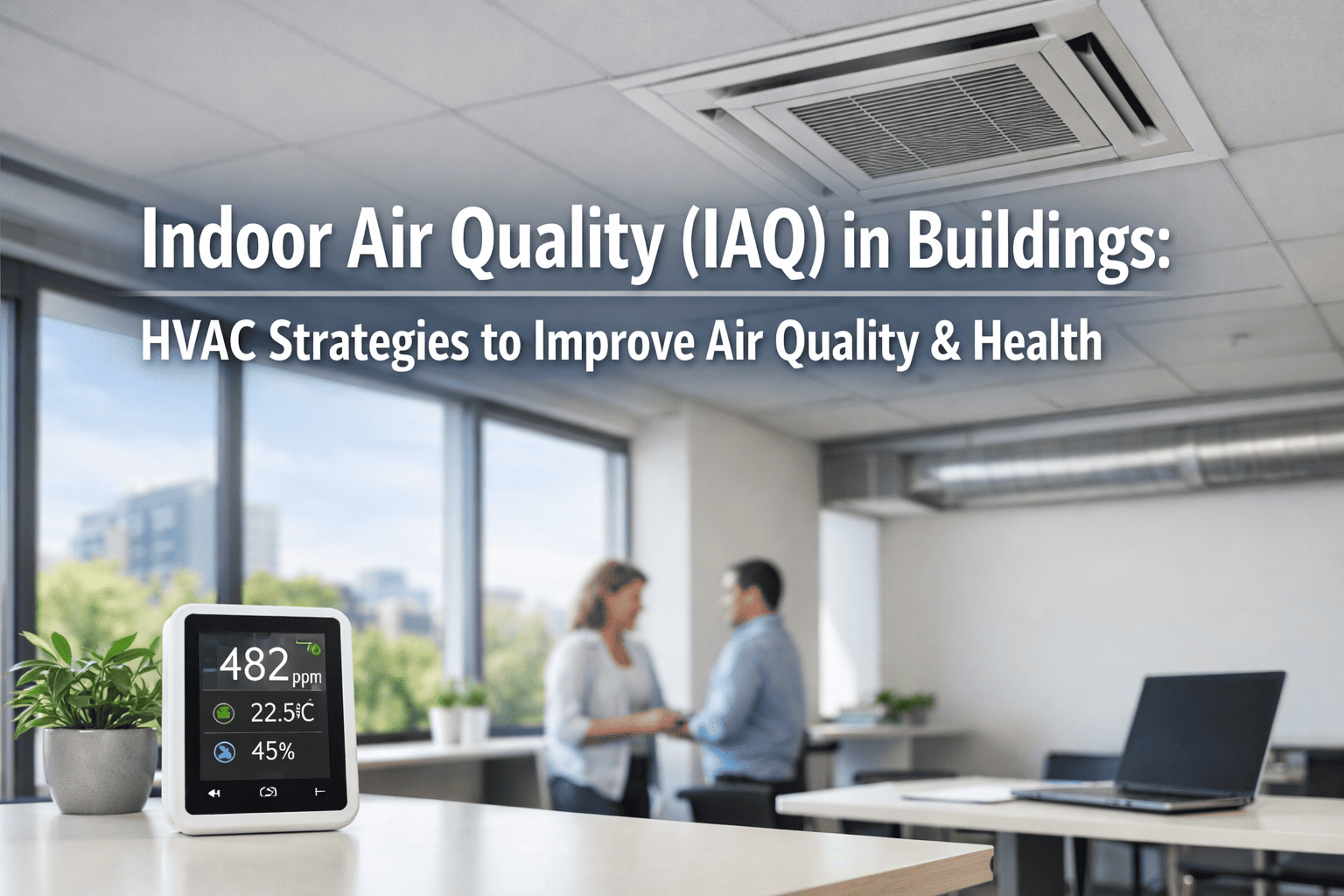
HVAC indoor air quality complaints are not a comfort issue — they are a legal and operational liability. Unresolved IAQ complaints in commercial buildings have resulted in tenant litigation, regulatory citations, and building closure orders, all of which trace back to maintenance programs that lacked systematic investigation capability. In 2026, facility managers and building engineers are under increasing pressure to close IAQ complaints with documented root cause evidence, not just corrective actions that mask symptoms. Sign Up Free to start logging IAQ complaint investigations, air quality readings, and corrective work orders in OxMaint's mobile CMMS — creating the audit-ready documentation that protects building owners and facility teams from liability exposure. The gap between buildings that resolve IAQ complaints permanently and those that face repeat complaints and escalation is almost always a documentation and investigation discipline problem, not an equipment problem.
Close IAQ Complaints with Documented Evidence
OxMaint gives facility maintenance teams mobile work orders, IAQ inspection checklists, HVAC asset history, and real-time PM dashboards — built for building engineers managing air quality compliance in 2026.
Why IAQ Complaint Investigation Requires a Structured Sequence
The most dangerous IAQ complaint response is the one that improves comfort without identifying root cause. A building that smells better after HVAC filter replacement has not resolved a CO2 accumulation problem, a mold reservoir, or a VOC source — it has only deferred the liability event. Book a Demo to see how OxMaint's CMMS work order and inspection modules help building maintenance teams structure IAQ investigations, capture air quality readings against asset records, and close complaints with full corrective documentation. Facilities that investigate IAQ complaints systematically — following a repeatable sequence that rules out causes in priority order — resolve issues faster, avoid repeat complaints, and generate the documentation record that prevents complaint escalation into legal action. The investigation sequence determines both the outcome and the liability exposure.
12 Root Causes of HVAC Indoor Air Quality Complaints
Inadequate Outdoor Air Ventilation
Insufficient outside air delivery is the single most common IAQ root cause in commercial buildings. CO2 accumulation from occupants in under-ventilated spaces causes headaches, fatigue, and cognitive impairment — complaints that are frequently misattributed to sick building syndrome rather than corrected at the AHU level.
Elevated CO2 Concentration
CO2 above 1,000 ppm is a direct indicator of ventilation deficiency relative to occupant load. ASHRAE 62.1 targets below 700 ppm above outdoor baseline. Elevated CO2 alone does not cause health symptoms but is a reliable proxy for the accumulation of other bioeffluents and contaminants in occupied spaces.
Mold and Microbial Growth in HVAC Components
Mold colonization on cooling coils, drain pans, AHU liners, and ductwork distributes spores building-wide with every system cycle. Musty odor complaints combined with respiratory symptoms are the clinical signature of active mold in the HVAC distribution system — requiring coil cleaning, drain pan treatment, and moisture source elimination.
VOC Off-Gassing from Building Materials
New flooring, carpet, adhesives, paints, and furniture introduce volatile organic compounds that accumulate in spaces with insufficient fresh air dilution. VOC complaints spike in the weeks after renovations or new tenant fit-outs — require increased outdoor air delivery and VOC source documentation before symptom attribution is possible. Book a Demo to see how OxMaint links IAQ work orders to space renovation history.
Humidity Imbalance — High or Low
Relative humidity above 60% promotes mold growth and dust mite proliferation. Below 30%, occupants report dry air, throat irritation, and static discharge. Both extremes generate IAQ complaints but require opposite corrective actions — misdiagnosis leads to the wrong humidity correction and complaint recurrence within weeks.
Dirty or Bypassed Air Filters
Overloaded filters reduce airflow volume, increase particulate carryover, and create pressure differentials that route unfiltered air around filter banks. A building with a filter bypass condition distributes accumulated duct contamination into occupied spaces on every HVAC cycle — a mechanical fault that explains persistent dustiness and respiratory complaints.
Blocked or Dirty Cooling Coils
Fouled evaporator coils reduce heat and moisture removal capacity while providing a wet, nutrient-rich surface for microbial growth. Coil fouling simultaneously degrades dehumidification performance and introduces biological contamination — two IAQ fault mechanisms from a single maintenance deficiency.
Drain Pan Contamination and Standing Water
Stagnant water in condensate drain pans is a primary mold and Legionella growth environment. Blocked drain lines cause pan overflow and create moisture damage that spreads contamination to surrounding insulation and structural materials — turning a maintenance deficiency into a building remediation event. Sign Up Free to schedule OxMaint drain pan inspection PM work orders on all AHUs.
Pressure Imbalance and Exhaust Deficiency
Spaces under negative pressure relative to corridors, stairwells, or adjacent areas draw in unfiltered air through gaps in the building envelope. Restroom and kitchen exhaust deficiencies allow odors and contaminants to migrate into adjacent occupied spaces through pressure-driven infiltration — an IAQ cause that is invisible without pressure mapping.
Carbon Monoxide Ingestion from Combustion Equipment
CO migration from parking garages, loading docks, generator exhaust, or combustion heating equipment entering HVAC outdoor air intakes creates the most safety-critical IAQ scenario. CO complaints require immediate occupant evacuation, source identification, and CO monitoring before re-occupancy — not an HVAC filter inspection.
Duct Contamination and Debris Accumulation
Accumulated construction debris, biological growth, and particulate in ductwork is redistributed to occupied spaces after system restarts following renovation work or extended shutdown periods. Duct inspection is frequently overlooked in IAQ investigations because contamination is not visible at supply diffusers — requiring camera inspection of main trunk lines.
Chemical Cross-Contamination from Adjacent Spaces
Cleaning chemicals, pesticides, laboratory solvents, or printing emissions from adjacent spaces can migrate through shared HVAC systems or building envelope penetrations. Chemical IAQ complaints typically cluster near the source space and follow occupancy patterns — a diagnostic signature that distinguishes chemical cross-contamination from systemic ventilation deficiency. Sign Up Free to document IAQ complaint source mapping in OxMaint's asset and space records.
IAQ Complaint Investigation KPIs: What to Measure in Every Building
Air quality data collected without structured documentation creates compliance risk rather than reducing it. Book a Demo to see how OxMaint's mobile inspection checklists capture IAQ measurements at the space and asset level — creating the timestamped evidence record that closes complaints and satisfies regulatory inquiries.
| IAQ Parameter | What It Reveals | Acceptable Range | Complaint Threshold |
|---|---|---|---|
| CO2 (ppm) | Ventilation adequacy relative to occupancy | <700 ppm above outdoor | >1,000 ppm — ventilation fault |
| Relative Humidity (%) | Moisture control and mold risk level | 30%–60% RH | >60% — mold risk; <30% — dry air |
| Total VOC (ppb) | Off-gassing and chemical contamination | <500 ppb | >1,000 ppb — source investigation |
| PM2.5 (µg/m³) | Particulate filtration effectiveness | <12 µg/m³ (24hr avg) | >35 µg/m³ — filter or source fault |
| Carbon Monoxide (ppm) | Combustion gas ingestion risk | <9 ppm (8hr avg) | >35 ppm — evacuate, source identify |
| Outdoor Air CFM | Ventilation rate vs. ASHRAE 62.1 target | Per occupancy category | Below design — damper or AHU fault |
| Space Pressure (Pa) | Infiltration and cross-contamination risk | Positive vs. corridor | Negative pressure — exhaust imbalance |
IAQ Complaint Investigation Sequence: Phase-by-Phase
Complaint Intake and Symptom Mapping
Log the complaint with timestamp, affected space, symptom description, and occupancy pattern. Map whether complaints cluster spatially or temporally — zone-specific complaints indicate localized HVAC faults while building-wide complaints point to central system deficiency or outdoor air intake contamination.
Baseline Air Quality Measurement
Deploy portable IAQ meters to measure CO2, relative humidity, temperature, TVOC, PM2.5, and CO in affected spaces and adjacent zones. Record measurements at occupied hours and after 8 hours of unoccupied operation to separate occupant-generated pollutants from building-source contamination.
HVAC System Inspection and Verification
Verify outdoor air damper position and actuator operation, filter condition and bypass status, cooling coil and drain pan cleanliness, and supply/return airflow balance in affected zones. Document findings with photos attached to the OxMaint work order against each HVAC asset record. Book a Demo to see OxMaint's mobile photo capture in inspection workflows.
Corrective Action and Verification Measurement
Implement corrective actions in order of confirmed root cause priority. Re-measure IAQ parameters in affected spaces after corrections under full occupancy load conditions. Document pre- and post-correction readings in the CMMS work order — this comparison record is the evidence that closes the complaint and satisfies any regulatory inquiry.
Reactive IAQ Response vs. Structured Investigation Program
Manage Every IAQ Complaint from Investigation to Resolution
OxMaint gives building maintenance teams mobile work orders, digital IAQ inspection checklists, HVAC asset history tracking, and PM scheduling — purpose-built for facility teams managing air quality compliance in commercial buildings.
IAQ Complaint Investigation Checklist: Intake, Inspection, and Closure
A standardized IAQ investigation checklist ensures every complaint receives the same structured response regardless of which technician handles it. Digital checklists captured in OxMaint create the timestamped, asset-linked records that satisfy tenant, management, and regulatory documentation requirements. Sign Up Free to deploy OxMaint's mobile IAQ inspection forms to your building maintenance team today.
-
Record complainant name, space, date, and symptomLog in CMMS immediately — timestamp establishes investigation initiation and is required for any subsequent regulatory response
-
Map complaint to specific zone and HVAC equipmentLink complaint to AHU, VAV, or FCU serving the affected space in the CMMS asset record — enables pattern identification across multiple complaints
-
Check for prior IAQ complaints on same assetReview OxMaint work order history — a second complaint on the same zone within 90 days indicates an unresolved root cause from the prior investigation
-
Note any recent renovation or occupancy changesNew materials, increased density, or modified space use are leading IAQ change drivers — document before entering the space for measurement
-
Determine if emergency CO response is requiredHeadache, dizziness, or nausea complaints require CO spot check before investigation proceeds — do not defer CO screening to later investigation phases
-
Measure CO2, RH, temperature, TVOC, PM2.5Record at occupied and unoccupied conditions — measurement under both conditions separates occupant-source pollutants from building and HVAC-source contamination
-
Verify outdoor air damper position and operationPhysically confirm damper actuator is responding to BAS commands — a damper stuck closed explains CO2 elevation and odor complaints simultaneously
-
Inspect cooling coil and drain pan conditionCheck for visible microbial growth, scale, and standing water — photographically document any findings and attach to the OxMaint asset inspection record
-
Verify filter condition and bypass-free installationPull and inspect filters — check filter housing frame seals for bypass gaps; a filter with a bypass gap has an effective MERV rating near zero regardless of the filter's rated efficiency
-
Measure space pressure relative to adjacent zonesUse digital manometer at closed door gap — negative pressure in complaint zone relative to corridor indicates supply/exhaust imbalance driving contaminant infiltration
-
Document root cause in CMMS work orderRecord the primary confirmed cause with supporting measurement data — not a description of the corrective action taken; root cause documentation is what prevents recurrence
-
Record pre- and post-correction IAQ measurementsPost-correction readings under occupied conditions are the only evidence that the corrective action actually resolved the IAQ parameter that caused the complaint
-
Schedule follow-up PM on affected HVAC assetsIAQ complaints are a PM schedule trigger — any HVAC asset associated with a resolved IAQ complaint should receive a 30-day follow-up inspection work order
-
Notify complainant with documented resolution summaryProvide written confirmation of root cause, corrective action, and post-correction measurements — this communication record is essential if the complaint is subsequently escalated
-
Review for building-wide pattern across recent IAQ complaintsMonthly review of all IAQ work orders in OxMaint identifies systemic patterns — a cluster of mold complaints on one AHU indicates a programmatic coil cleaning deficiency, not isolated events
Frequently Asked Questions: HVAC Indoor Air Quality Complaints
What are the most common causes of indoor air quality complaints in commercial buildings?
Inadequate outdoor air ventilation, elevated CO2, mold in HVAC components, VOC off-gassing, and humidity imbalance account for the majority of commercial building IAQ complaints. Most trace back to HVAC maintenance deficiencies rather than building envelope or occupant behavior factors.
How do I document an IAQ complaint investigation to protect against liability?
Document complaint intake with timestamp, baseline air quality measurements before and after corrective action, root cause determination with supporting data, and complainant notification. A CMMS like OxMaint creates timestamped, asset-linked records that satisfy both tenant and regulatory documentation requirements.
What is sick building syndrome and how does HVAC maintenance affect it?
Sick building syndrome describes non-specific symptoms — headaches, fatigue, throat irritation — correlated with time spent in a building without an identifiable clinical cause. HVAC maintenance deficiencies, particularly inadequate ventilation and microbial growth in air handling systems, are the primary correctable contributors to sick building syndrome.
What CO2 level triggers an HVAC IAQ investigation?
CO2 above 1,000 ppm in occupied spaces indicates ventilation deficiency relative to occupant load and should trigger an outdoor air delivery verification. ASHRAE 62.1 targets levels below 700 ppm above outdoor baseline concentration as the acceptable ventilation performance threshold.
How does a CMMS improve IAQ complaint management?
A CMMS like OxMaint links IAQ complaints to specific HVAC assets, stores measurement data and corrective action history, and generates the audit trail documentation required for regulatory compliance. Teams with CMMS-driven IAQ programs resolve complaints faster and demonstrate due diligence if complaints escalate to legal action. Sign Up Free to start building your IAQ investigation program today.
Can preventive HVAC maintenance reduce IAQ complaints?
Facilities with structured HVAC PM programs — regular coil cleaning, filter replacement, drain pan treatment, and outdoor air verification — report significantly fewer IAQ complaints than buildings on reactive maintenance. Most IAQ root causes are detectable during routine PM inspections before they generate occupant symptoms.
Ready to Close Every IAQ Complaint with Documented Evidence?
OxMaint gives building maintenance managers the tools to investigate, document, and resolve indoor air quality complaints — mobile work orders, digital inspection checklists, HVAC asset records, and PM scheduling built for facilities that cannot afford IAQ liability in 2026.