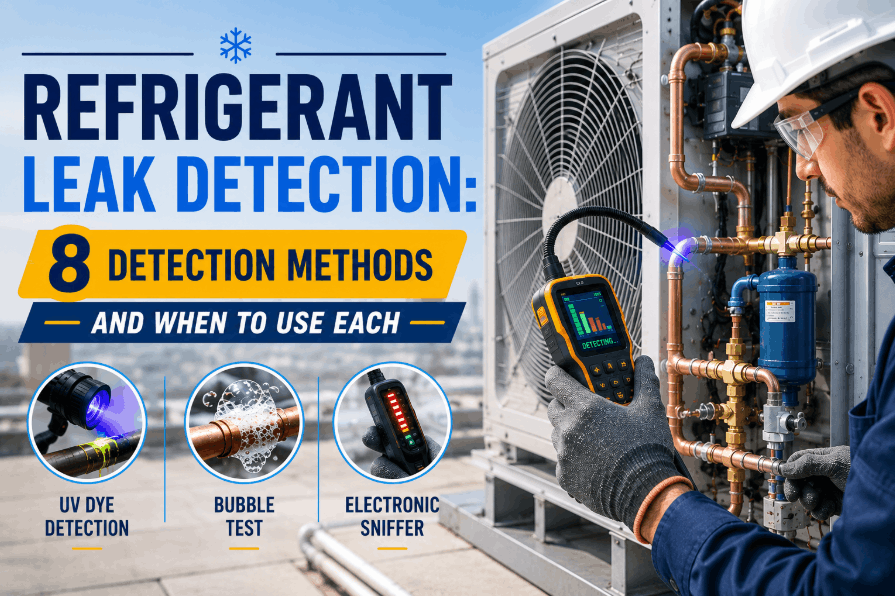
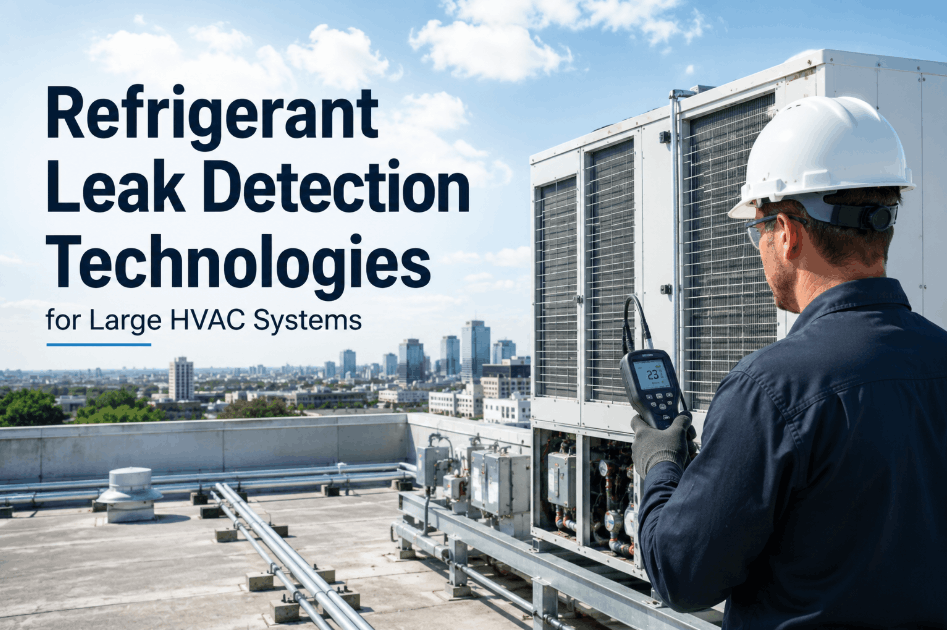
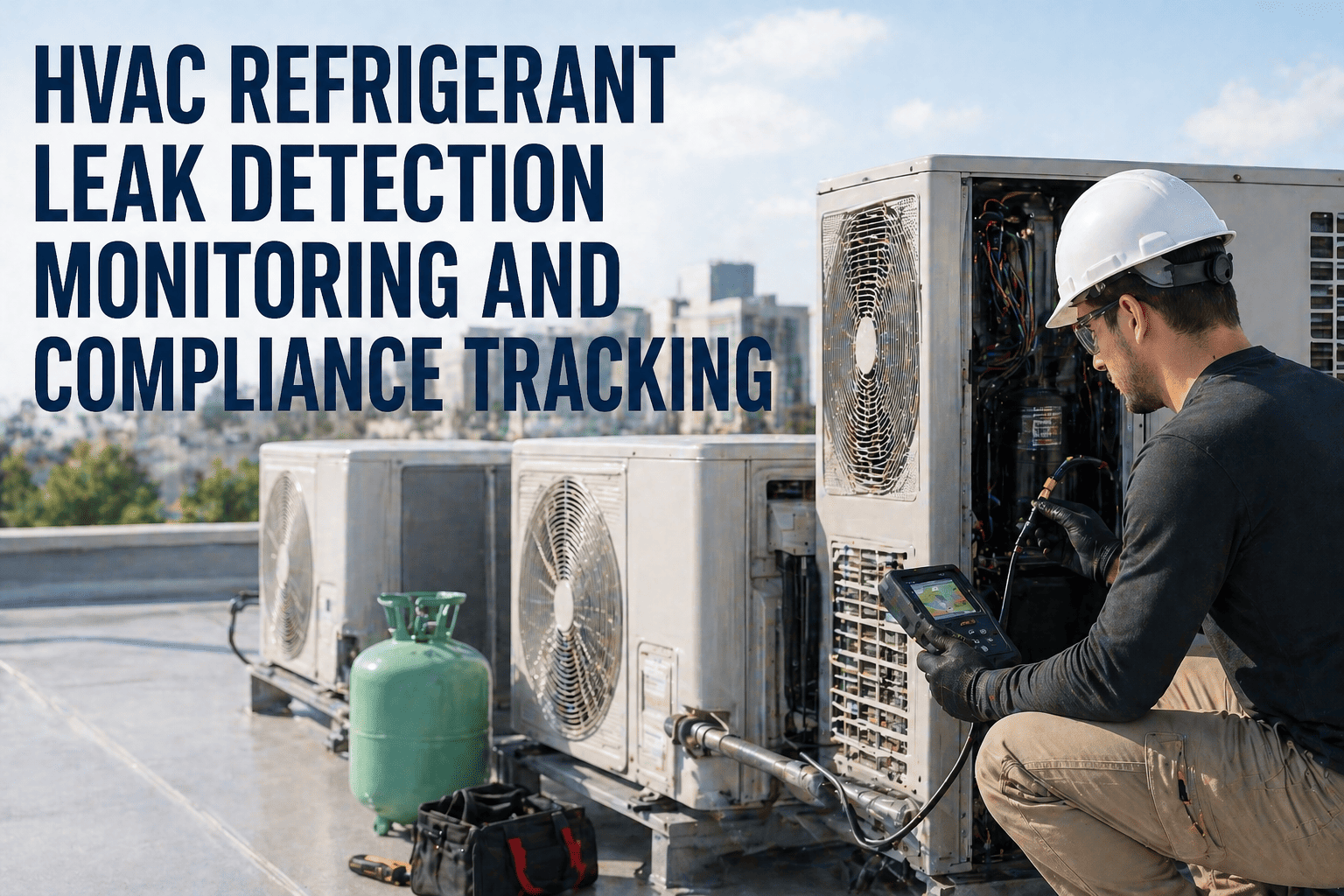
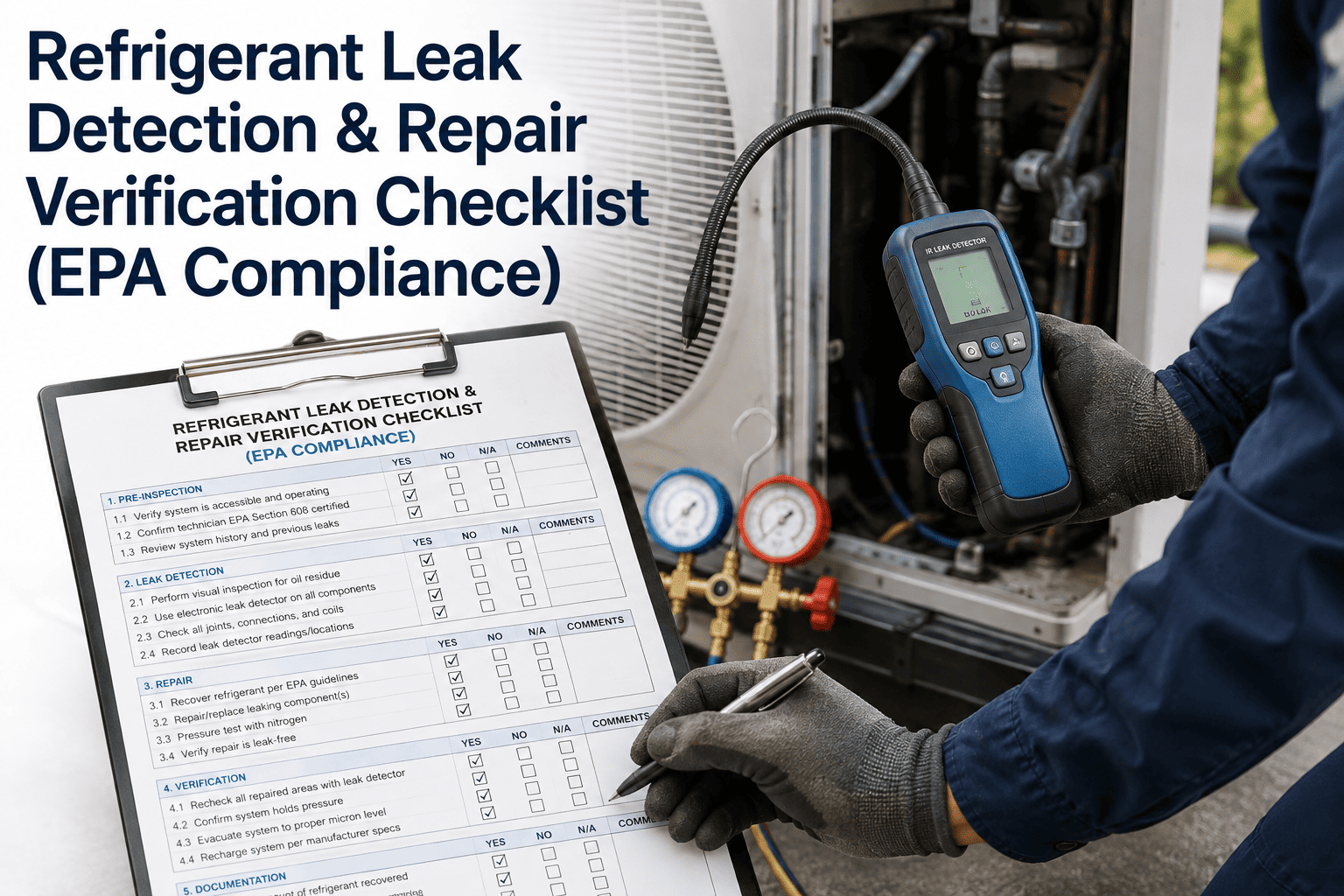
Refrigerant leaks are one of the most expensive and compliance-critical failures in commercial HVAC operations. EPA Section 608 violations alone can cost facilities up to $44,000 per day per violation — and that's before counting lost cooling capacity, compressor damage, and emergency service charges. The challenge isn't just finding leaks; it's selecting the right detection method for each system type, refrigerant, and facility environment. Facilities using Sign Up Free with Oxmaint build structured leak inspection workflows into their PM schedules, log detection method outcomes by asset, and track recharge histories to flag repeat-leak equipment before regulatory exposure accumulates. This guide covers all 8 refrigerant leak detection methods used in commercial HVAC, when each method applies, and how predictive maintenance infrastructure reduces leak-related downtime and compliance risk. Teams ready to eliminate reactive leak response can Book a Demo and see how condition-based monitoring works across a full commercial HVAC fleet.
OXMAINT CMMS FOR COMMERCIAL HVAC COMPLIANCE
Stop Refrigerant Leaks Before They Become EPA Violations
Oxmaint gives HVAC maintenance teams structured leak inspection workflows, refrigerant recharge tracking, and automated PM scheduling — so leak detection becomes a proactive compliance activity, not a reactive emergency.
Why Refrigerant Leak Detection Requires a Structured Method
Commercial refrigerant systems — rooftop units, chillers, split systems, VRF networks — operate under pressure cycles that stress brazed joints, Schrader valves, and fittings over time. A single undetected leak in a large-tonnage chiller can result in refrigerant loss rates exceeding EPA's 35% annual leak rate threshold for appliances over 50 lbs, triggering mandatory repair timelines and documentation requirements. The right detection method depends on refrigerant type, system accessibility, leak rate magnitude, and ambient conditions. Facilities that Book a Demo with Oxmaint implement detection method logging by asset — ensuring technicians apply the correct method for each system and that findings are captured in searchable fault history rather than paper service tickets.
EPA Section 608 non-compliance penalties reach $44,539 per day per violation — systematic refrigerant leak detection and logged recharge records are your first line of legal defense.
8 Refrigerant Leak Detection Methods: When to Use Each
All 8 commercial HVAC leak detection methods — each with the right use case, applicable refrigerant types, and primary limitation your technicians need to know before selecting a method on-site.
Electronic Detector — Heated Diode
Best ForPM sweeps, RTUs, air handlers
RefrigerantsHFCs, HFOs, HCFCs
SensitivityHigh
Sensor degrades — calibrate on schedule or expect false negatives.
Electronic Detector — Infrared
Best ForHigh-accuracy field pinpointing
RefrigerantsHFCs, HFOs
SensitivityVery High
Higher unit cost; best ROI on large commercial fleets.
Ultrasonic Leak Detection
Best ForNoisy rooms, high-pressure systems
RefrigerantsAll types
SensitivityHigh
Requires sufficient pressure to generate detectable turbulence.
Fixed-Point Monitoring System
Best ForMechanical rooms, chiller plants
RefrigerantsSensor-specific
SensitivityContinuous
Permanent install — higher upfront cost; ASHRAE 15 / IFC required in many applications.
UV Fluorescent Dye Detection
Best ForUnlocalized leaks, DX / RTU systems
RefrigerantsDX, split, RTU
SensitivityModerate
OEM-approved dye only — mismatched dye voids compressor warranties.
Bubble / Soap Solution Test
Best ForPost-service joint confirmation
RefrigerantsAll types
SensitivityLow
Gross leaks only — misses slow micro-leaks below visible bubble threshold.
Nitrogen Pressure Testing
Best ForNew installs, post-repair verification
RefrigerantsN/A — pre-charge only
SensitivityHigh
Circuit must be evacuated — never use air or oxygen as test gas.
Trace Gas (H₂ / N₂ Mix) Detection
Best ForMicro-leaks, concealed piping runs
RefrigerantsAll — pre-charge
SensitivityVery High (<1g/yr)
Specialized equipment required — H₂ must stay below 4% flammability threshold.
Refrigerant Leak Detection: Method Selection Reference
| Detection Method |
Best Application |
Refrigerant Types |
Sensitivity |
Primary Limitation |
| Electronic (Heated Diode) |
PM sweeps, joint inspection |
HFCs, HFOs, HCFCs |
High |
Sensor degrades over time |
| Electronic (Infrared) |
High-accuracy field detection |
HFCs, HFOs |
Very High |
Higher unit cost |
| Ultrasonic |
High-pressure systems, noisy environments |
All refrigerant types |
High (pressure-dependent) |
Requires audible turbulence |
| Fixed-Point Monitoring |
Mechanical rooms, compliance monitoring |
Application-specific sensors |
Continuous |
Installation cost |
| UV Fluorescent Dye |
Unlocalized leak search |
DX, split, RTU systems |
Moderate |
OEM compatibility required |
| Bubble Solution |
Post-service joint confirmation |
All |
Low (gross leaks only) |
Misses micro-leaks |
| Nitrogen Pressure Test |
New install / post-repair verification |
N/A (pre-charge) |
High (circuit integrity) |
Requires evacuated circuit |
| Trace Gas (H2/N2) |
Micro-leak pinpointing, concealed piping |
All (pre-charge) |
Very High (<1g/year) |
Specialized equipment required |
HVAC KPIs That Indicate Active or Developing Refrigerant Leaks
Suction Pressure Trending Below Design
Gradual suction pressure decline at known load conditions is a primary indicator of refrigerant undercharge caused by slow system leaks — detectable weeks before performance impact becomes visible.
Elevated Superheat at Evaporator Outlet
Rising superheat above design setpoint at consistent operating conditions signals refrigerant shortage — a direct leak indicator on fixed-orifice and TXV-controlled systems alike.
Recharge Volume History Per Asset
Tracking refrigerant additions by unit over time reveals chronic leak patterns invisible on a single service visit. Repeat recharge on the same asset without confirmed leak repair is an EPA compliance risk.
Compressor Discharge Temperature Rise
Higher-than-design discharge temperature at low-load conditions indicates refrigerant undercharge — the compressor runs hotter as refrigerant mass flow through the circuit decreases.
System Capacity vs. Design Benchmark
Gradual capacity degradation measured against design-day conditions flags refrigerant loss before it reaches compressor safety thresholds — particularly useful on large-tonnage chiller circuits.
Oil Level and Contamination Checks
Moisture contamination in compressor oil — detected by sight glass color or acid test kit — often co-occurs with leak events where atmospheric air has entered the low-pressure side of the circuit.
OXMAINT FOR REFRIGERANT COMPLIANCE & HVAC ASSET MANAGEMENT
Track Every Leak Detection Event and Recharge Record Across Your Fleet
Oxmaint connects refrigerant recharge logging, PM inspection workflows, and fault history into one platform — giving your team the compliance documentation and performance trending needed to stay ahead of EPA thresholds and eliminate repeat leak events.
Refrigerant recharge volume logging per asset with EPA compliance documentation
Scheduled leak detection PM tasks triggered by recharge history or suction pressure trends
Repeat defect flagging on chronic-leak assets across multi-site portfolios
Frequently Asked Questions: Refrigerant Leak Detection in Commercial HVAC
What is the most accurate refrigerant leak detection method for commercial HVAC?
Infrared electronic detectors and trace gas (hydrogen/nitrogen) methods offer the highest sensitivity. For routine PM inspections, calibrated infrared or heated diode detectors are the industry standard. Trace gas is reserved for micro-leak pinpointing on inaccessible piping runs.
How often should refrigerant leak detection be performed on commercial HVAC systems?
EPA Section 608 requires leak inspections whenever a system loses refrigerant above threshold rates. Best practice is to include structured leak detection in semi-annual PM visits for systems over 50 lbs charge, with continuous monitoring in enclosed mechanical rooms. Facilities using
Sign Up Free on Oxmaint automate PM scheduling for leak inspections based on asset recharge history.
What are the EPA requirements for refrigerant leak detection in commercial buildings?
EPA Section 608 requires that systems with a charge of 50 lbs or more be repaired when leak rates exceed 20% per year for commercial/industrial refrigeration and 30% for comfort cooling. Records of refrigerant additions must be maintained for three years. Violations carry per-day, per-violation penalties.
Can UV dye damage commercial HVAC compressors?
Unapproved or incompatible UV dye formulations can contaminate compressor oil and void manufacturer warranties. Always verify that the dye is OEM-approved for the specific refrigerant and lubricant type in the system before injection. Log dye type and injection date in the asset's service record.
How does a CMMS help manage refrigerant leak detection compliance?
A CMMS like Oxmaint centralizes refrigerant recharge logs, leak inspection records, and repair histories by asset — enabling compliance reporting and flagging chronic-leak units before EPA thresholds are breached. Teams that
Book a Demo can see how automated recharge tracking works in practice.
Is ultrasonic detection effective for all refrigerant types?
Yes. Ultrasonic detectors respond to the turbulent sound of pressurized gas escaping — not the refrigerant chemistry — making them effective for all refrigerant types including ammonia, CO2, HFCs, and HFOs. However, they require a minimum leak rate sufficient to generate detectable ultrasonic frequencies.
SMART HVAC MAINTENANCE WITH OXMAINT
Make Refrigerant Leak Detection a Scheduled Activity, Not a Compliance Emergency
Every refrigerant leak in this guide produces measurable performance trends before it reaches EPA reporting thresholds. Oxmaint puts recharge tracking, leak inspection PM scheduling, and fault documentation in one platform — with compliance-ready records from day one.