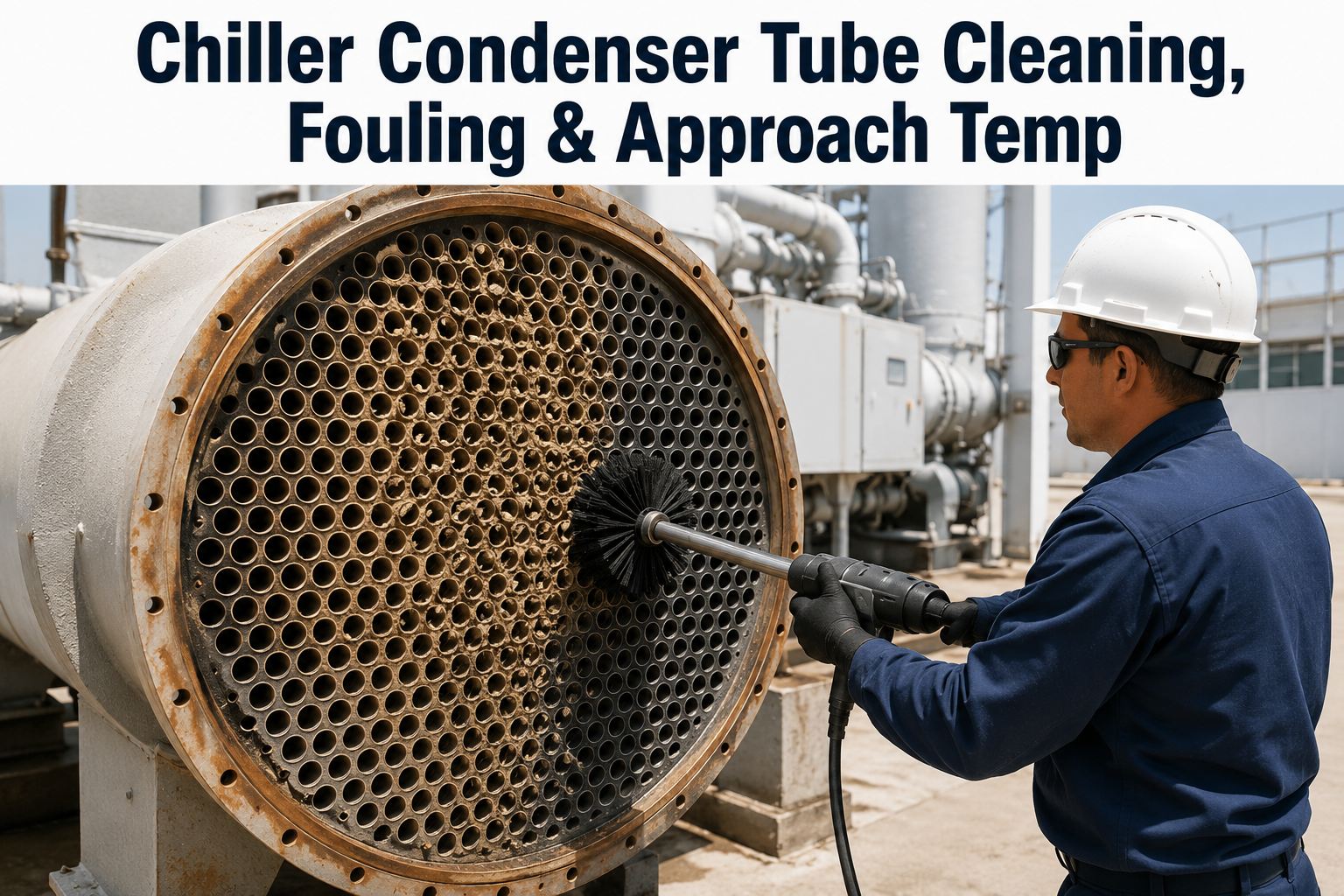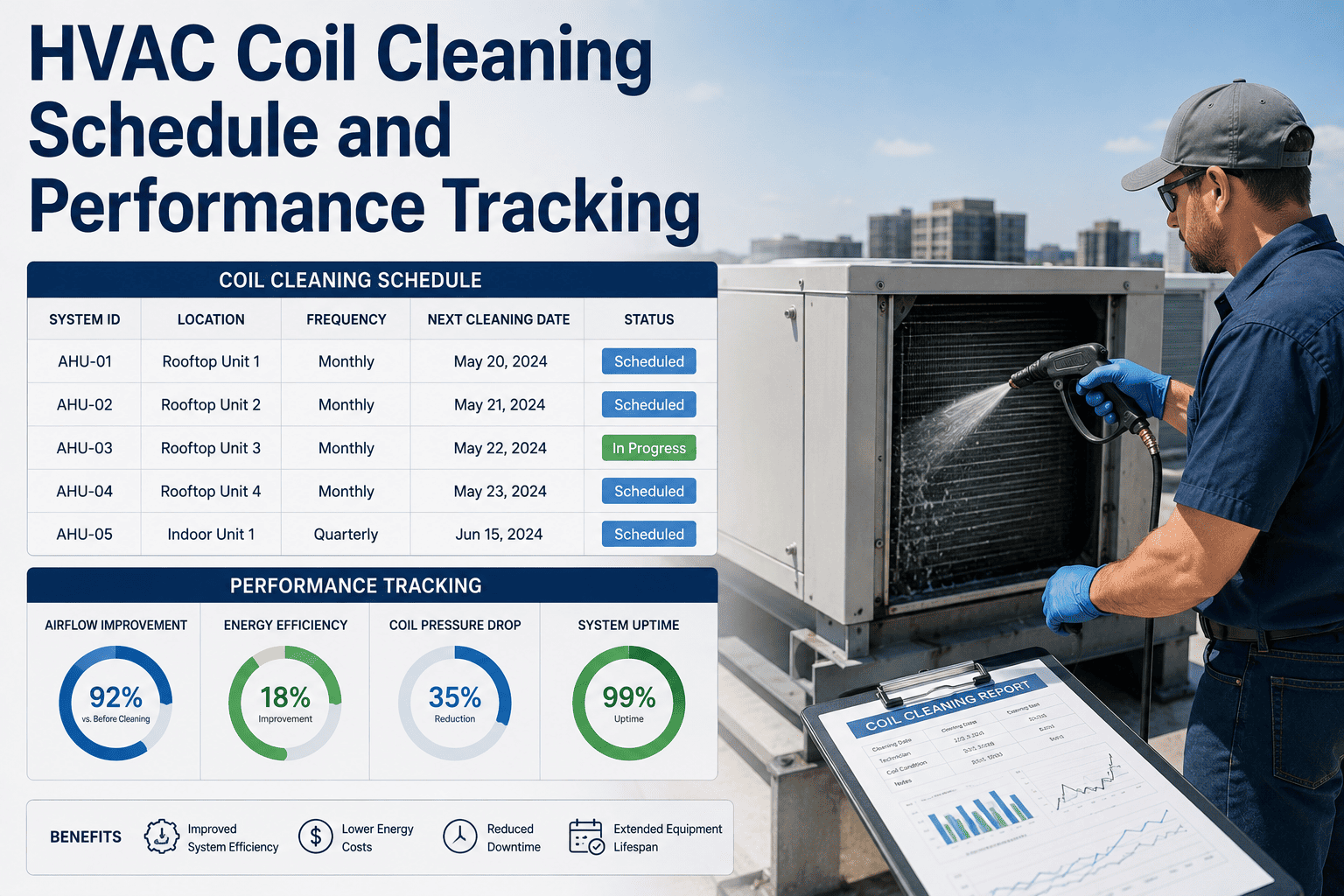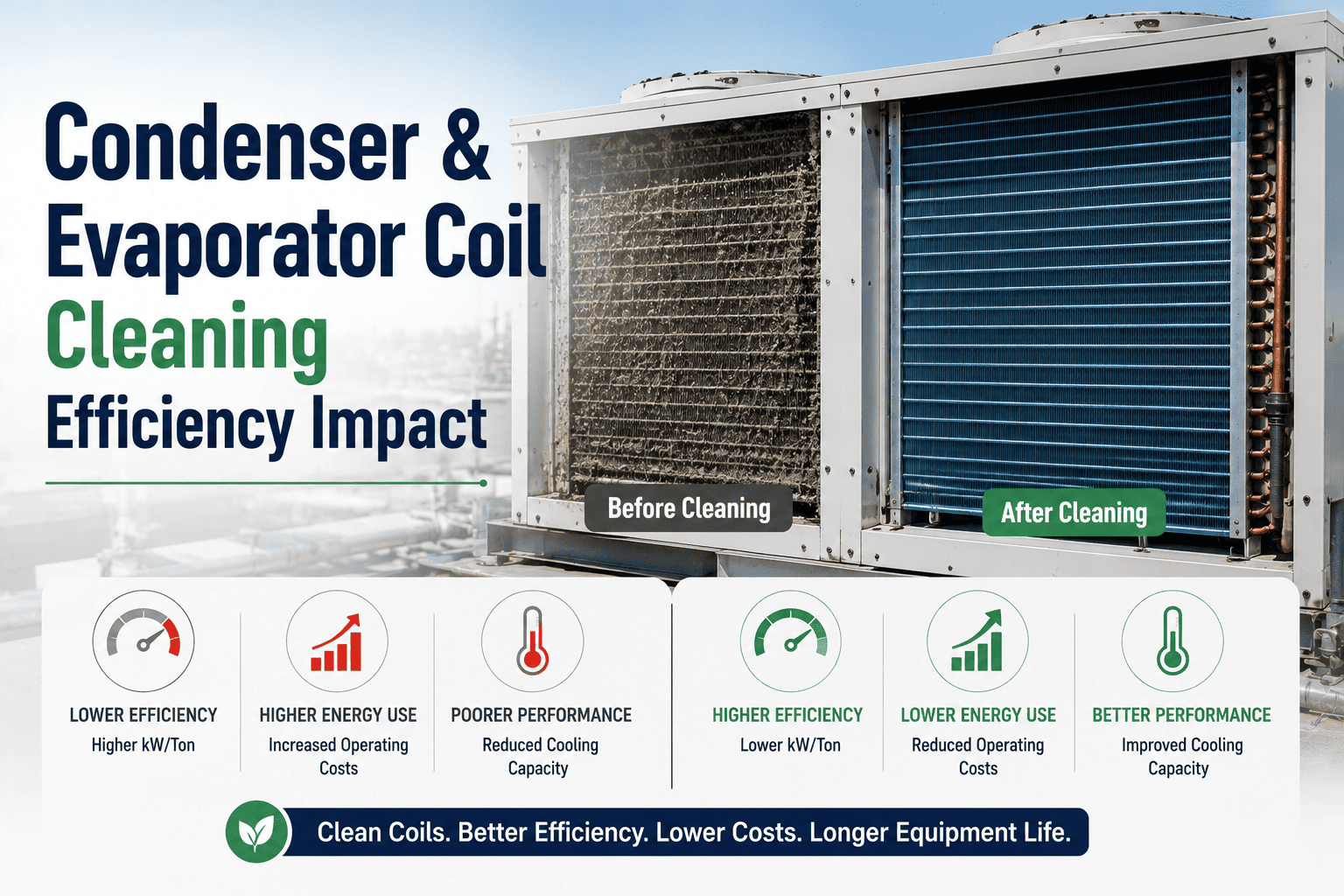
Dirty condenser and evaporator coils act as an unwanted layer of insulation on your HVAC equipment, forcing compressors to work harder and driving up energy consumption by as much as 30%. Even a microscopic 0.001-inch layer of scale or biological fouling on a coil can increase energy usage by 10%, which is why establishing strict coil cleaning intervals is critical for maintenance and reliability teams. Coil fouling energy impact directly degrades system efficiency, shortens asset lifespan, and inflates operational costs. By implementing a CMMS-based coil cleaning schedule, teams can automate preventive maintenance, track asset degradation, and eliminate the energy waste caused by neglected condenser coil cleaning and evaporator coil maintenance. Ready to stop wasting energy and start tracking coil efficiency impact automatically? You can Start Free Trial today.
Is coil fouling silently draining your energy budget?
A fraction of a millimeter of scale on your condenser or evaporator coils forces compressors to run longer and work harder, wasting thousands of dollars in energy annually and accelerating equipment failure.
How dirty coil energy waste impacts your bottom line
When dust, grease, and biological growth accumulate on condenser and evaporator coils, they create an insulating barrier that restricts heat transfer. The compressor compensates by drawing more amperage for longer cycles.
For every 1 psi increase in discharge pressure, expect roughly a 0.5% drop in compressor efficiency. Dirty condenser coils can raise head pressure by 30–50 psi.
A 0.015-inch layer of dirt on an evaporator coil can decrease overall cooling capacity by 15%, forcing the system to run 20% longer to meet the setpoint.
A 180-asset plant spending $42K/yr on cooling
Consider a manufacturing facility running 180 HVAC rooftop units. If just 40% of those units experience moderate coil fouling (adding an average 12% energy penalty), the plant wastes over $2,000 annually on avoidable electricity costs. If left unresolved, that same fouling triggers premature compressor failures, turning a $200 coil cleaning task into a $4,500 emergency compressor replacement per unit. Tracking condenser coil maintenance via a CMMS prevents this cascade of failure.
What are the best coil cleaning intervals for commercial HVAC?
Coil cleaning frequency depends on environmental particulates, equipment location, and operating hours. Use these benchmarks to establish a CMMS coil cleaning schedule.
| Environment / Asset Type | Condenser Coil Cleaning | Evaporator Coil Cleaning | Energy Waste Risk |
|---|---|---|---|
| Light Commercial (Offices) | Every 6 months | Annually | 5–10% efficiency loss |
| Industrial / Manufacturing | Quarterly | Every 6 months | 15–20% efficiency loss |
| Food Processing / Grease-heavy | Monthly | Quarterly | 25%+ efficiency loss |
| Coastal / High Dust & Debris | Monthly | Every 6 months | Corrosion + 15% efficiency loss |
Step-by-step coil cleaning guide for maintenance teams
Standardizing your evaporator coil maintenance and condenser coil cleaning process ensures consistent results and verifiable energy savings.
Inspect and Document Baseline Metrics
Record suction pressure, discharge pressure, and amperage before cleaning. Log these values in your CMMS to establish a baseline for measuring coil efficiency impact post-cleaning.
Isolate Power and Protect Components
Disconnect power to the unit. Cover electrical components, motors, and control panels to prevent moisture damage during the condenser coil cleaning process.
Apply Chemical Cleaner and Rinse
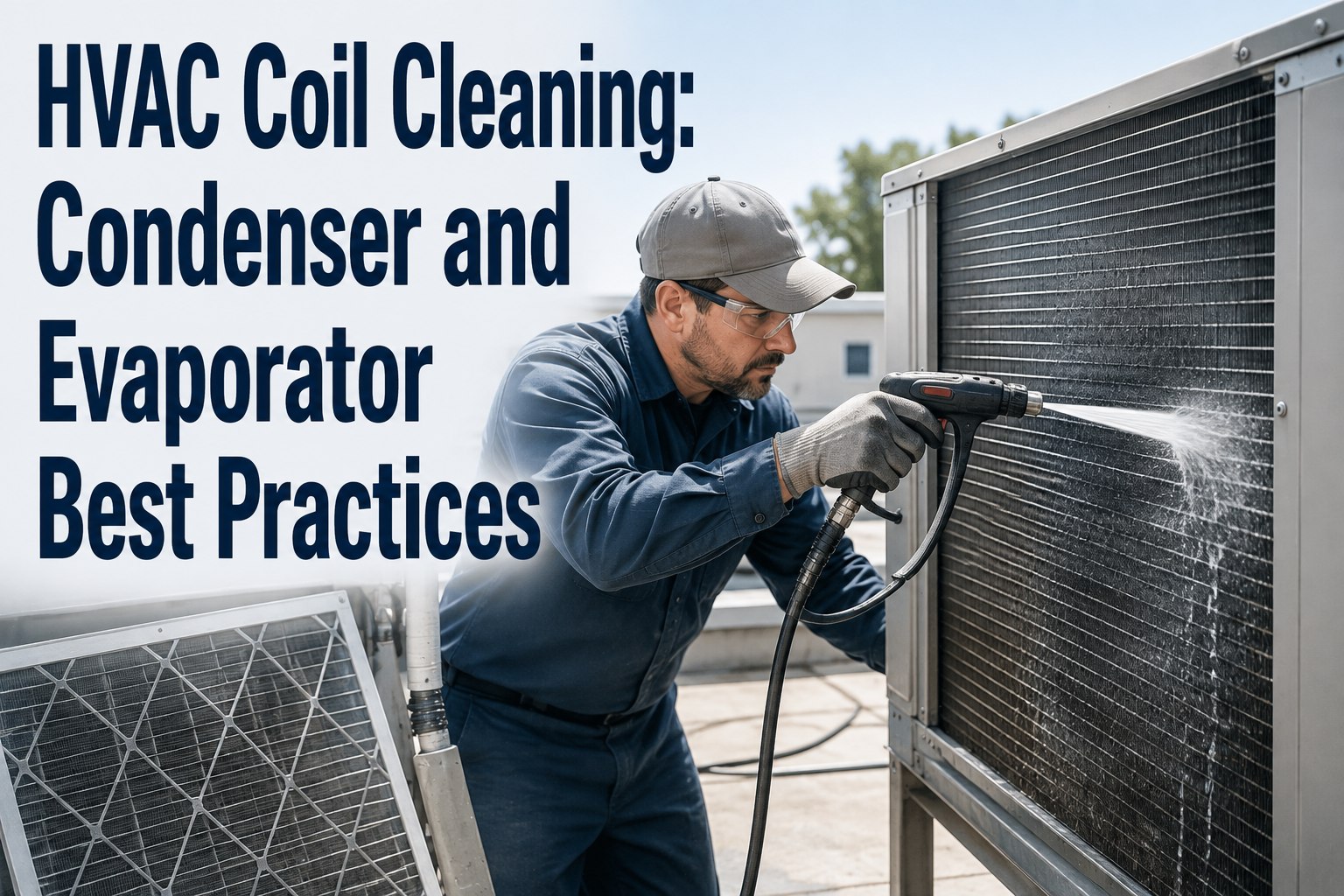
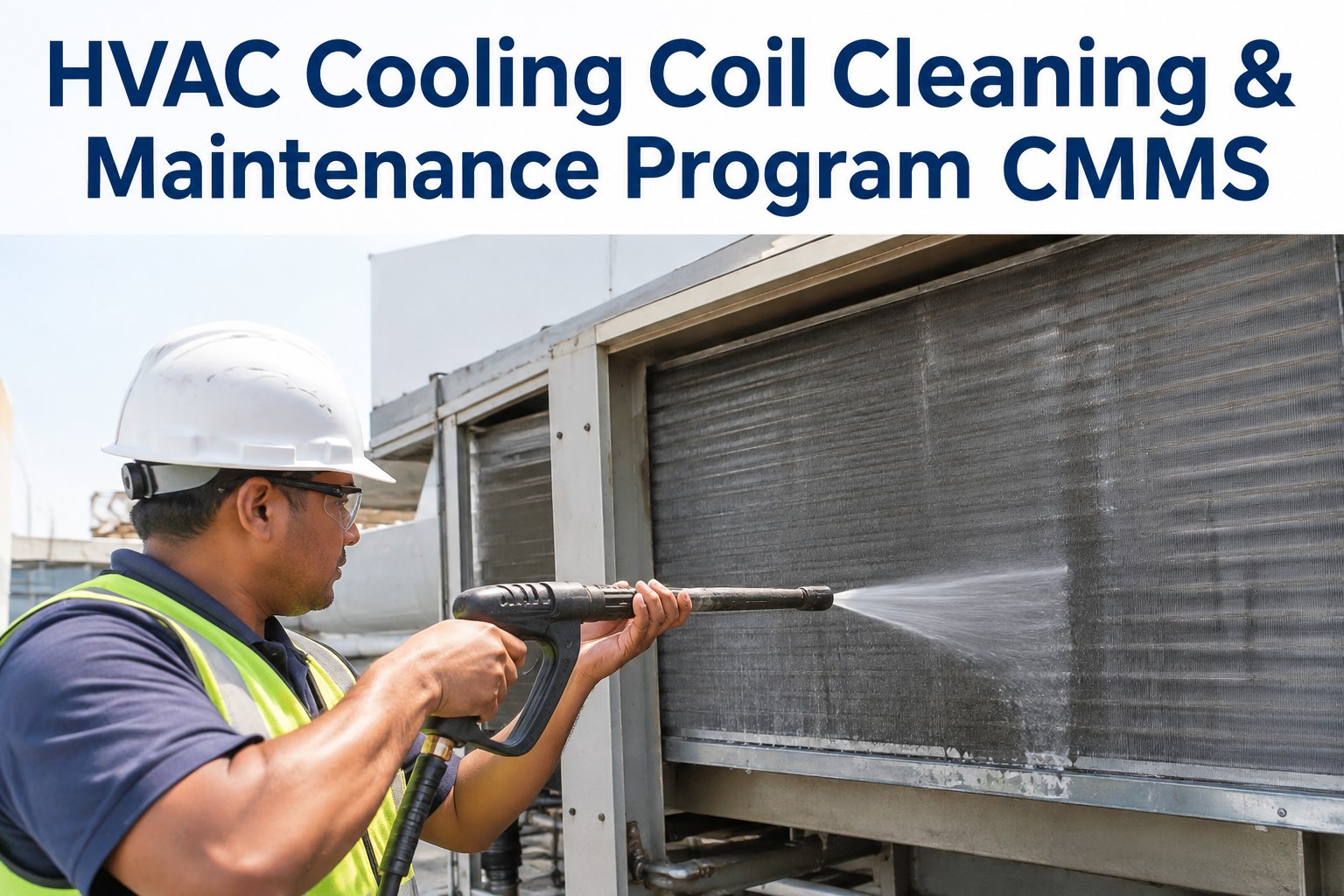
Apply an alkaline or acid-based coil cleaner (foaming or non-foaming depending on soil type) from the inside out. Let it sit for 5–10 minutes, then flush thoroughly with low-pressure water.
Verify Performance and Close Work Order
Restart the system and confirm that head pressure has dropped and suction pressure has normalized. Close the work order in your CMMS, attaching before/after readings to the asset history.
Stop letting dirty coils drain your energy budget
See how OxMaint automates your coil cleaning schedule and tracks real-time efficiency gains.
How OxMaint helps you manage coil efficiency impact
Transitioning from reactive cleaning to a predictive, CMMS-driven coil cleaning schedule eliminates missed maintenance windows and ensures zero energy waste from fouling.
Automated Preventive Scheduling
Auto-generate work orders for condenser coil maintenance and evaporator coil cleaning based on runtime hours, calendar dates, or condition triggers—eliminating missed intervals and reducing manual admin by 80%.
Condition-Based Triggers
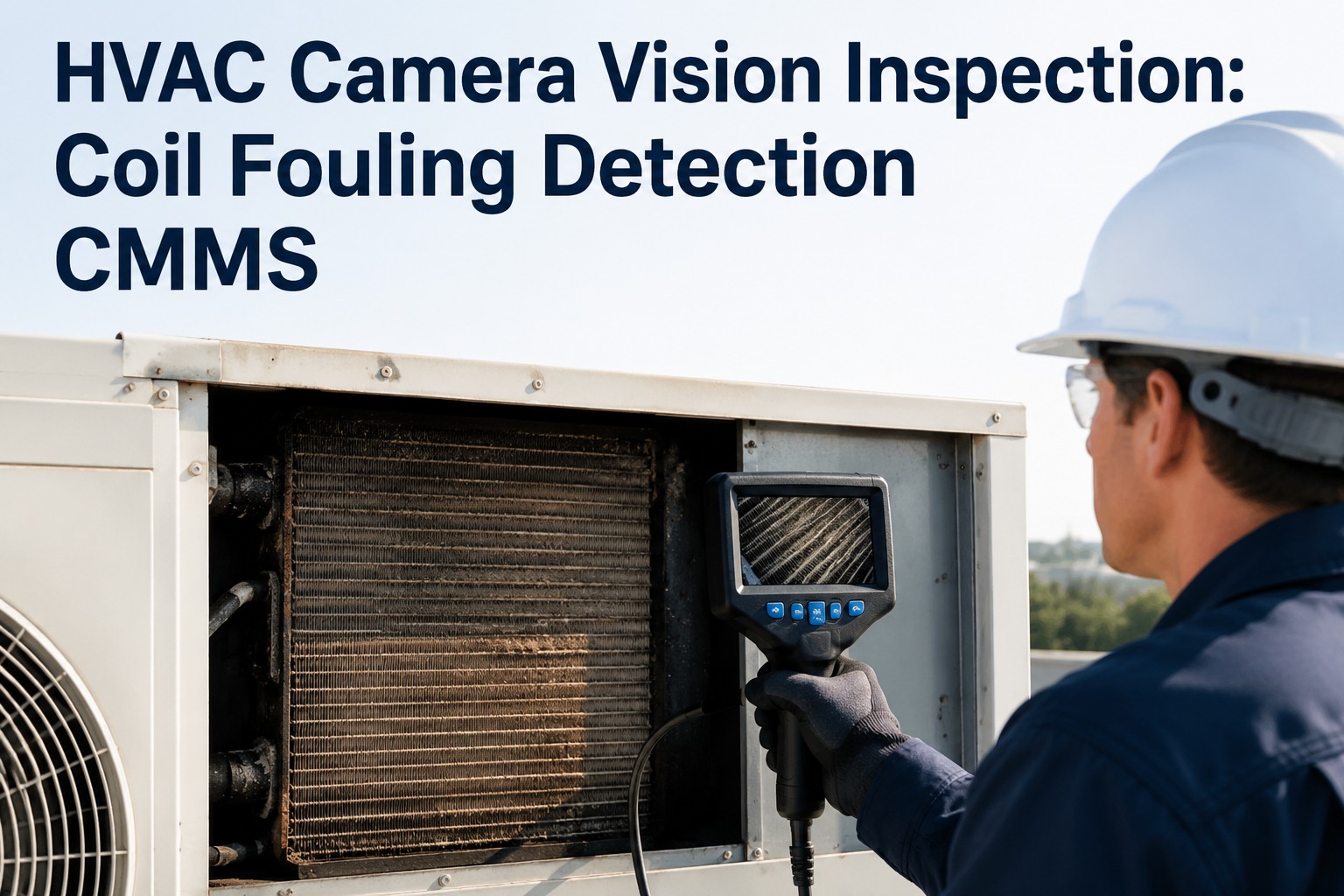
Use IoT sensor data to trigger a cleaning work order when discharge pressure rises above baseline. Catch coil scale buildup weeks before it impacts energy consumption.
Asset History & Compliance
Attach before/after pressure readings and photos directly to the asset record. Maintain audit-ready compliance logs for ISO 55000 and internal energy efficiency standards.
Maintenance Analytics Dashboard
Visualize energy savings and track coil cleaning ROI across your entire facility. Identify which assets are chronic fouling offenders and prioritize replacement vs. maintenance.
CMMS coil cleaning and efficiency FAQs
How much does dirty coil energy waste actually cost?
Dirty coils can increase HVAC energy consumption by 10% to 30% depending on the thickness of the fouling. For a commercial rooftop unit running 2,000 hours a year, a 20% efficiency penalty can add hundreds of dollars in wasted electricity annually. Over a multi-asset facility, this scales to thousands of dollars. You can Start Free Trial to track these exact savings automatically.
How often should condenser coil cleaning be scheduled?
Condenser coil cleaning should generally be scheduled every 1 to 6 months depending on the environment. Industrial and high-particulate facilities require quarterly cleaning, while light commercial offices can often stretch to bi-annual intervals. A CMMS coil cleaning schedule ensures these intervals are never missed.
What is the difference between condenser and evaporator coil maintenance?
Condenser coils are located outdoors and are exposed to dirt, pollen, and debris, requiring frequent pressure washing and chemical cleaning. Evaporator coils are indoors and primarily collect dust and biological growth, requiring gentler evaporator coil maintenance to protect the fin structure and drain pan.
How does a CMMS improve coil cleaning efficiency?
A CMMS automates work order generation based on calendar intervals or runtime hours, tracks asset history, and logs performance metrics. This eliminates forgotten cleanings and provides data to optimize future coil cleaning intervals. See exactly how it works when you Book a Demo.
Can predictive maintenance catch coil scale buildup before it wastes energy?
Yes. By integrating IoT pressure and temperature sensors with an EAM platform, system head pressure is monitored continuously. If pressure rises above a baseline, the system automatically triggers a cleaning work order, catching fouling before the 0.001-inch scale threshold that causes a 10% energy increase.
Optimize your coil cleaning schedule today
Join maintenance teams using OxMaint to automate work orders, track efficiency, and cut energy waste across all HVAC assets.
Free 14-day trial · No credit card