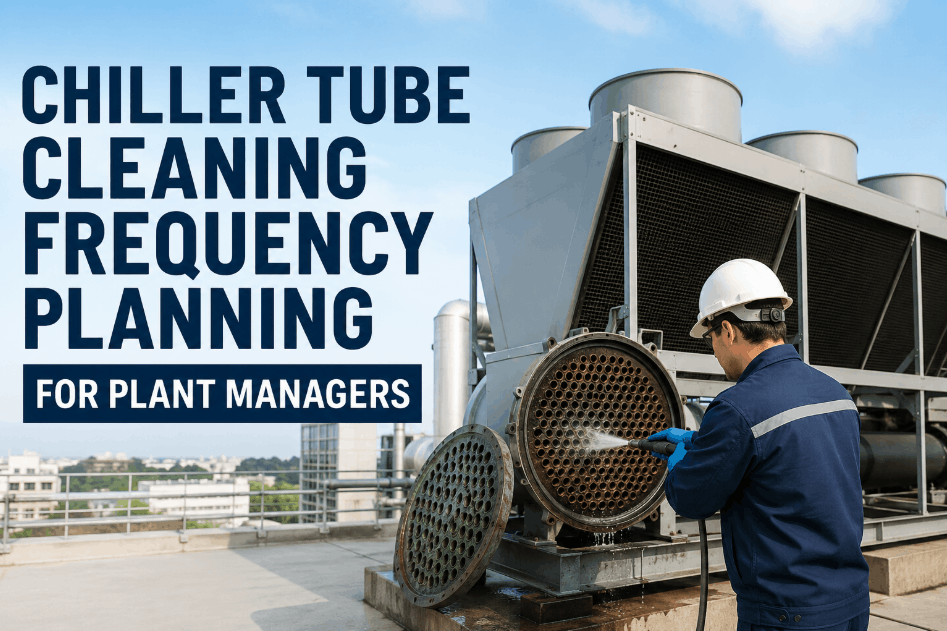
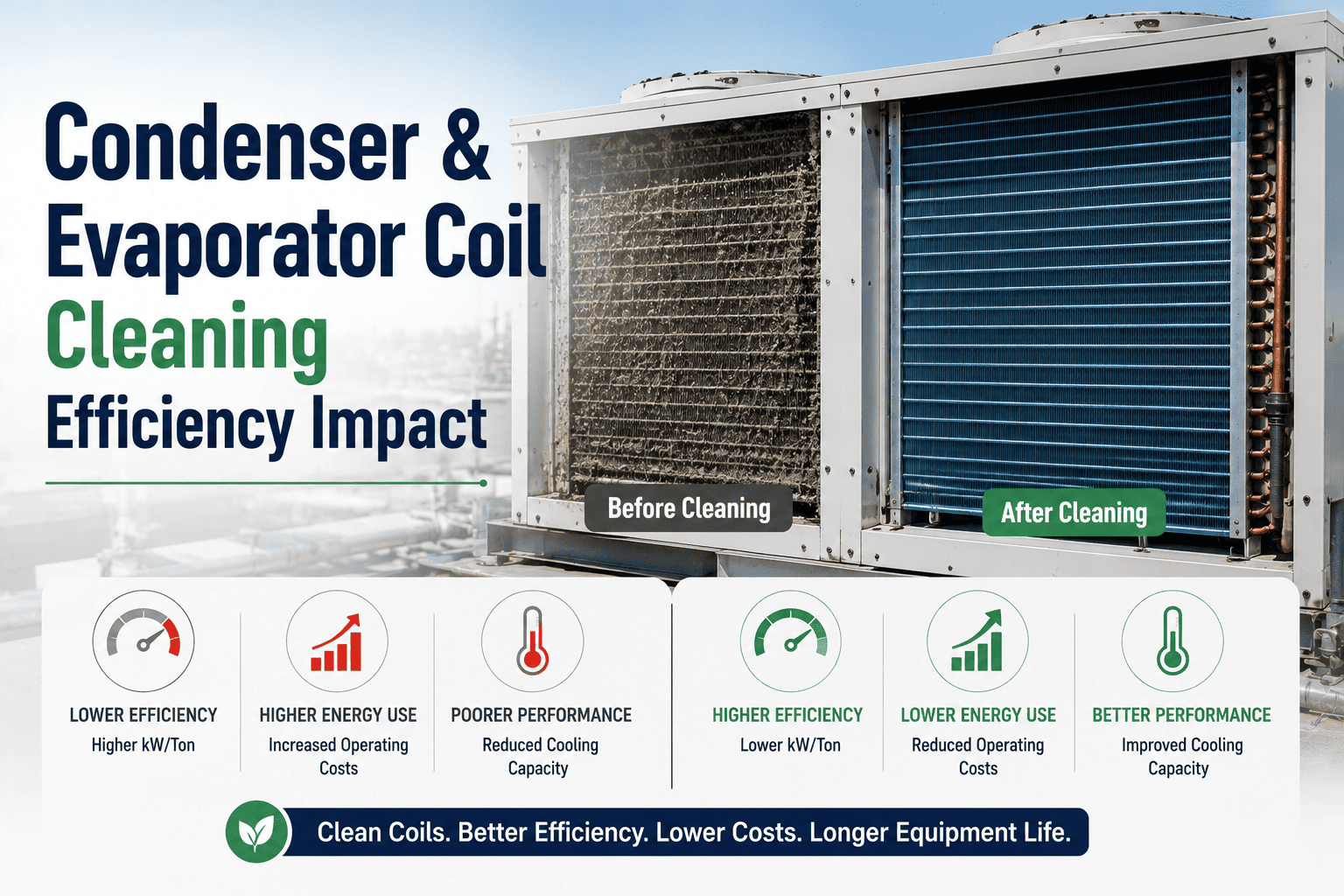
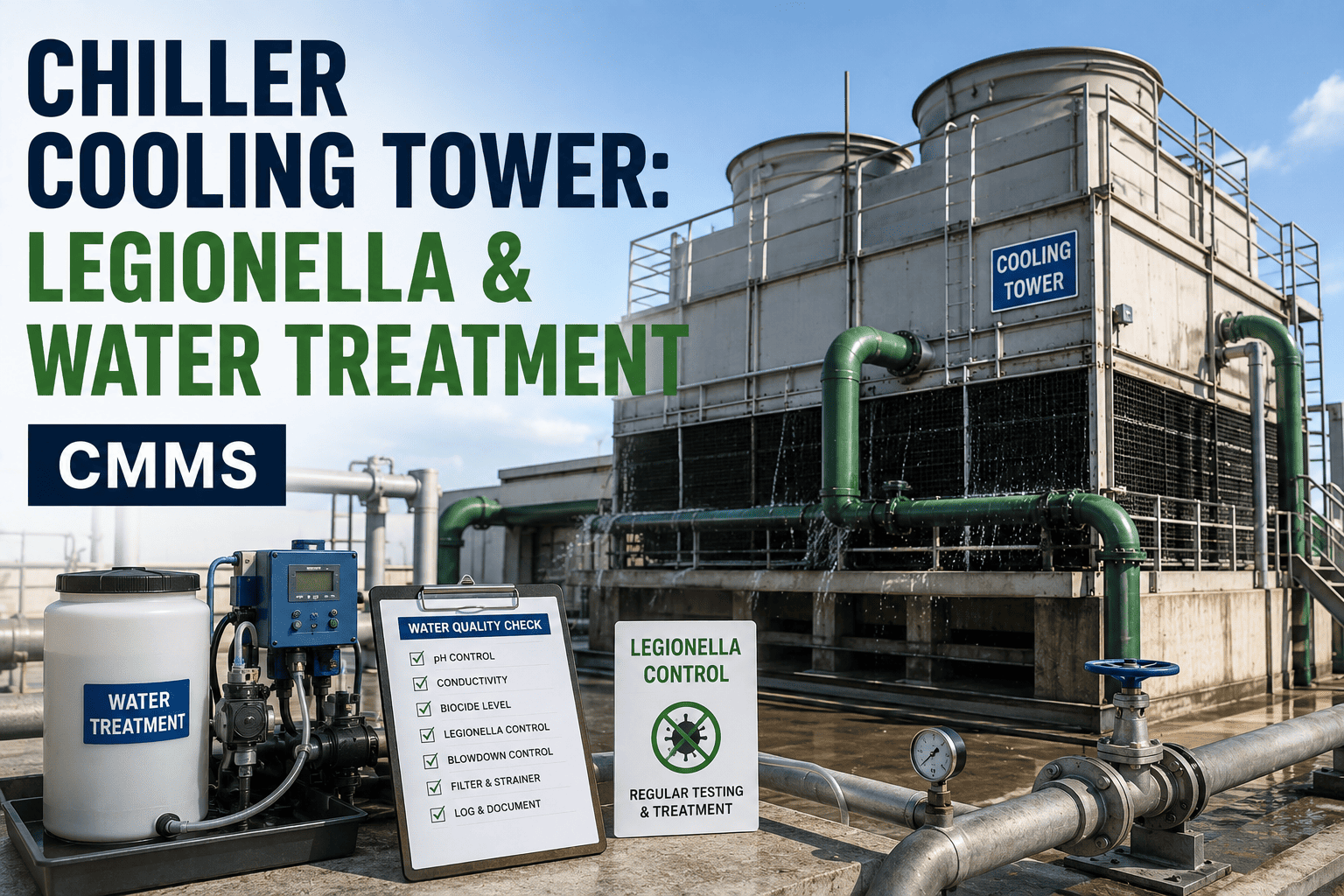
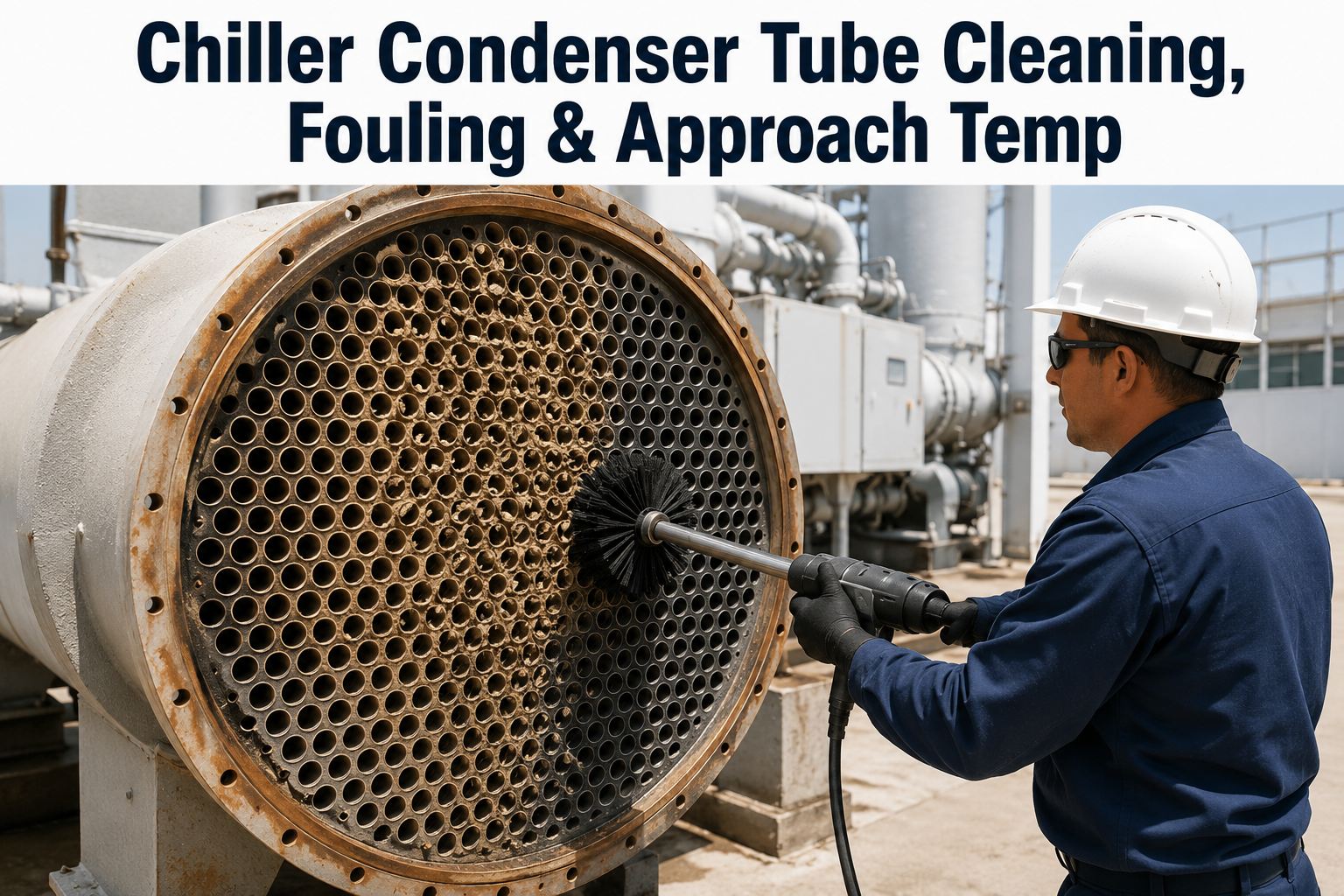
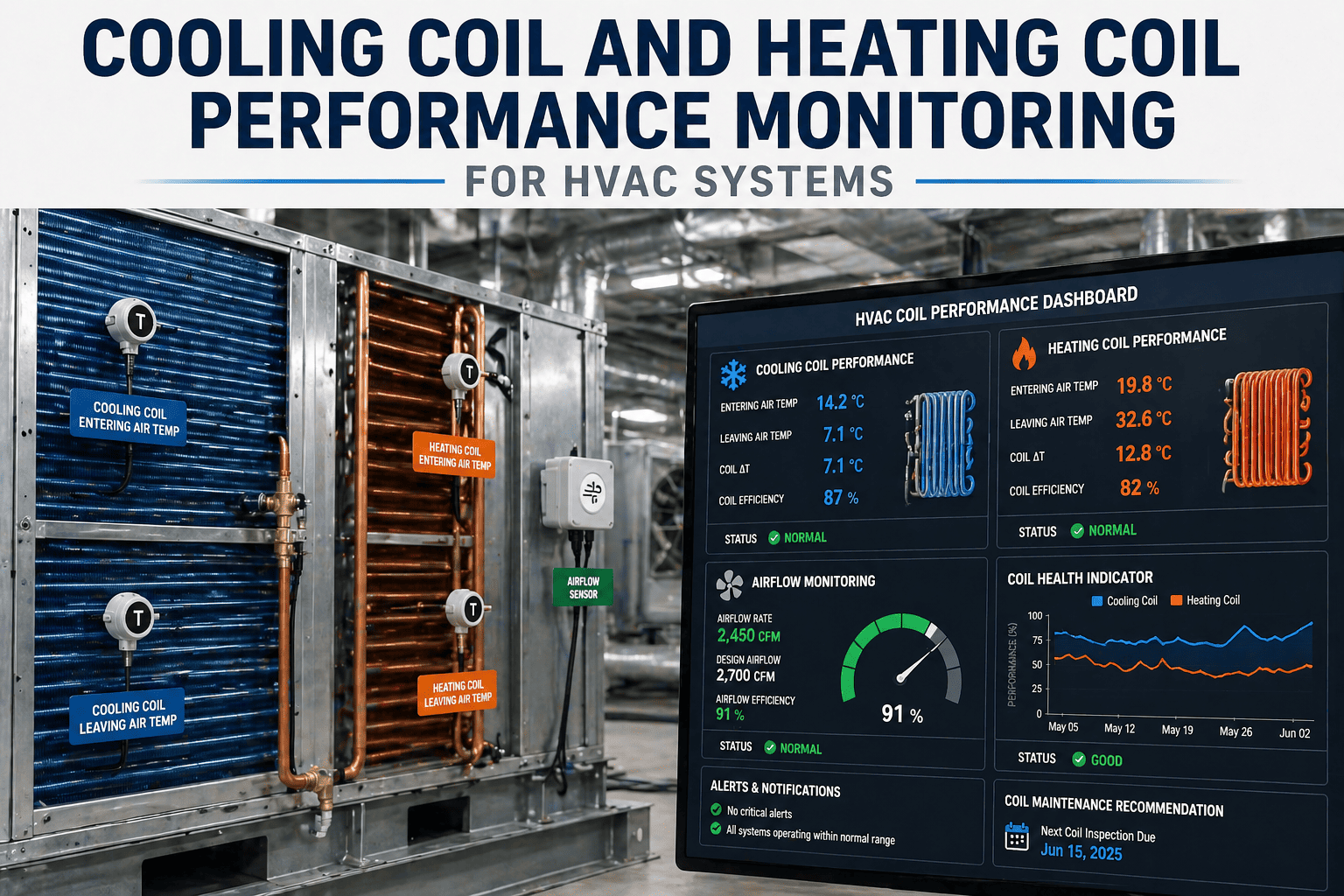
Chiller tube cleaning frequency planning is the difference between a schedule that protects efficiency and one that wastes labor cleaning tubes that aren't fouled yet, or worse, runs past the point where approach temperature has already crept up. Fixed-interval cleaning ignores water quality, load history, and the actual fouling rate building inside each chiller, so plant managers either over-clean on a calendar or discover efficiency loss only after the energy bill reflects it. Sign Up Free to start tracking fouling indicators and cleaning history by chiller, or Book a Demo to see how Oxmaint ties condenser performance data to a cleaning schedule that adjusts to actual conditions. Oxmaint gives plant teams the sensor data, maintenance history, and analytics to plan tube cleaning around fouling rate instead of the calendar.
Plant & Utility Operations · Chiller Efficiency · 2026
Chiller Tube Cleaning Frequency Planning for Plant Managers
Track approach temperature drift, water quality, and load history per chiller — so tube cleaning happens when fouling actually demands it, not just on a fixed calendar.
71%Of plants clean chiller tubes on a fixed calendar regardless of fouling rate
−24%Energy loss reduction when cleaning is triggered by approach temperature drift
2.6×Faster fouling detection with continuous condenser performance tracking
88%Cleaning schedule accuracy with sensor-based fouling indicators
6 Signals That Fixed-Interval Cleaning Schedules Miss
Fouling rarely follows a calendar, even though most cleaning schedules assume it does. The six signals below are the fouling and scheduling gaps Oxmaint helps plant teams track so cleaning frequency reflects actual chiller condition. Sign Up Free to start tracking these signals across your fleet of chillers.
Approach Temperature Drift
Pattern: Condenser approach temperature rises steadily between cleanings
Efficiency Risk
Gradual drift is the earliest reliable sign of fouling, but it stays invisible without continuous tracking.
Fixed-Interval Waste
Pattern: Tubes cleaned on a set calendar regardless of actual condition
Schedule Risk
Clean tubes get cleaned anyway, burning labor and downtime that fouled units needed more urgently.
Water Quality Variability
Pattern: Source water quality shifts seasonally without being logged
Efficiency Risk
Fouling rate changes with water chemistry, so a schedule built on last year's water quality runs blind.
Load-Based Fouling Acceleration
Pattern: High-load periods aren't factored into cleaning timing
Schedule Risk
Tubes foul faster under sustained high load, but the cleaning interval stays the same either way.
Missed Cleaning Windows
Pattern: Planned shutdown windows pass without a scheduled cleaning
Efficiency Risk
A missed window pushes the next cleaning past the point where efficiency has already eroded.
Efficiency Loss Before Detection
Pattern: Energy cost increase is the first sign anyone notices
Schedule Risk
By the time the utility bill shows it, the chiller has likely been running fouled for weeks.
Chiller Tube Cleaning — Without vs. With Oxmaint
The gap between calendar-based cleaning and condition-based cleaning shows up in energy spend, technician hours, and how early a fouling problem actually gets caught. Book a Demo to compare your plant's current cleaning schedule against fouling-indicator-driven planning.
Chiller Tube Cleaning Maturity — Where Does Your Plant Sit?
Tube cleaning control ranges from a fixed calendar with no fouling data to condition-based scheduling tied to live sensor readings. The framework below helps plant managers locate the gap costing the most efficiency and labor today. Book a Demo to assess your plant's cleaning maturity with an Oxmaint solutions engineer.
Chiller Tube Cleaning Maturity
Score 5 = condition-based, sensor-driven cleaning · Score 1 = no structured tracking
5
Condition-Based, Sensor-Driven Cleaning
Approach temperature, water quality, and load history are tracked continuously, and cleaning is triggered by actual fouling indicators per chiller.
Profile: Cleaning labor and efficiency are both optimized — units are cleaned when condition actually requires it.
4
Trend-Monitored, Manually Scheduled
Approach temperature trends are tracked, but cleaning timing decisions are still made manually rather than triggered automatically.
Action: Connect fouling indicators to automatic work order generation to remove the manual decision lag.
3
Logged But Reactive
Cleaning events are recorded after the fact, but efficiency loss is usually noticed before the schedule adjusts.
Gap: Without trend tracking, fouling is confirmed only once it has already cost energy efficiency.
2
Fixed Calendar, No Fouling Data
Cleaning happens on a set interval, with no fouling rate or water quality data informing the timing at all.
Risk: Some chillers are being over-cleaned while others are running fouled between visits.
1
No Structured Tracking
Cleaning happens informally, and nobody can say how much efficiency loss occurred between cleanings.
Risk: Energy cost from fouling is already accumulating, it's simply unattributed to its real cause.
Plan Chiller Tube Cleaning Around Real Fouling Rate — Not the Calendar.
Oxmaint tracks approach temperature, water quality, and load history per chiller — giving plant managers the data to schedule cleaning by condition.
How Oxmaint Plans Chiller Tube Cleaning Frequency
Oxmaint connects to existing condenser sensors to track fouling indicators continuously, then turns that data into cleaning work orders scheduled by condition instead of date. Sign Up Free to start tracking fouling trends across your chiller fleet, or Book a Demo to see how condition-based scheduling maps to your plant.
Predictive Maintenance
Fouling Trend Analysis
Approach temperature trends analyzed continuously
Predictive models track condenser approach temperature and runtime data to flag fouling before efficiency visibly drops.
Preventive Maintenance
Condition-Based Scheduling
Cleaning tasks triggered by fouling indicators
Cleaning work orders are generated when fouling indicators cross a threshold, instead of running on a fixed calendar.
PLC & Sensor Integration
Live Condenser Data
Approach temperature and load fed in real time
Condenser performance data flows directly into Oxmaint, so fouling rate reflects actual operating conditions, not assumptions.
Analytics & Reporting
Per-Chiller History
Cleaning history and efficiency trend by asset
Cleaning frequency, water quality, and efficiency trends are tracked per chiller for planning and compliance reporting.
"
We used to clean every chiller on the same 90-day schedule no matter what the water was doing that quarter. After we started tracking approach temperature through Oxmaint, we found two units fouling twice as fast under summer load and one that barely needed cleaning at all. We adjusted both schedules and cut unnecessary cleaning labor while catching the real fouling earlier.
Plant Maintenance Manager — Industrial Cooling Plant, Texas, USA
Frequently Asked Questions
What is chiller tube cleaning frequency planning?
It's the process of setting cleaning intervals based on actual fouling rate, water quality, and load history, rather than applying the same fixed calendar to every chiller.
Why does fixed-interval cleaning waste resources?
Some chillers foul faster than others depending on water chemistry and load, so one fixed schedule either over-cleans light-fouling units or under-cleans heavily fouled ones.
How does Oxmaint detect chiller fouling before it affects efficiency?
Predictive maintenance models track condenser approach temperature trends fed in from sensors, flagging fouling before energy cost visibly increases.
Can Oxmaint automatically schedule cleaning work orders?
Yes — cleaning work orders can be generated automatically when fouling indicators cross a set threshold, with parts and crew scheduling tied to the task.
How quickly can fouling-based cleaning tracking be set up?
Most plants connect existing condenser sensors and configure fouling-indicator-based scheduling within a day, with no hardware changes required.
Stop Cleaning By Calendar — Start Cleaning By Condition.
Oxmaint tracks fouling indicators, water quality, and cleaning history per chiller — giving plant managers a schedule built on real condition, not the date.