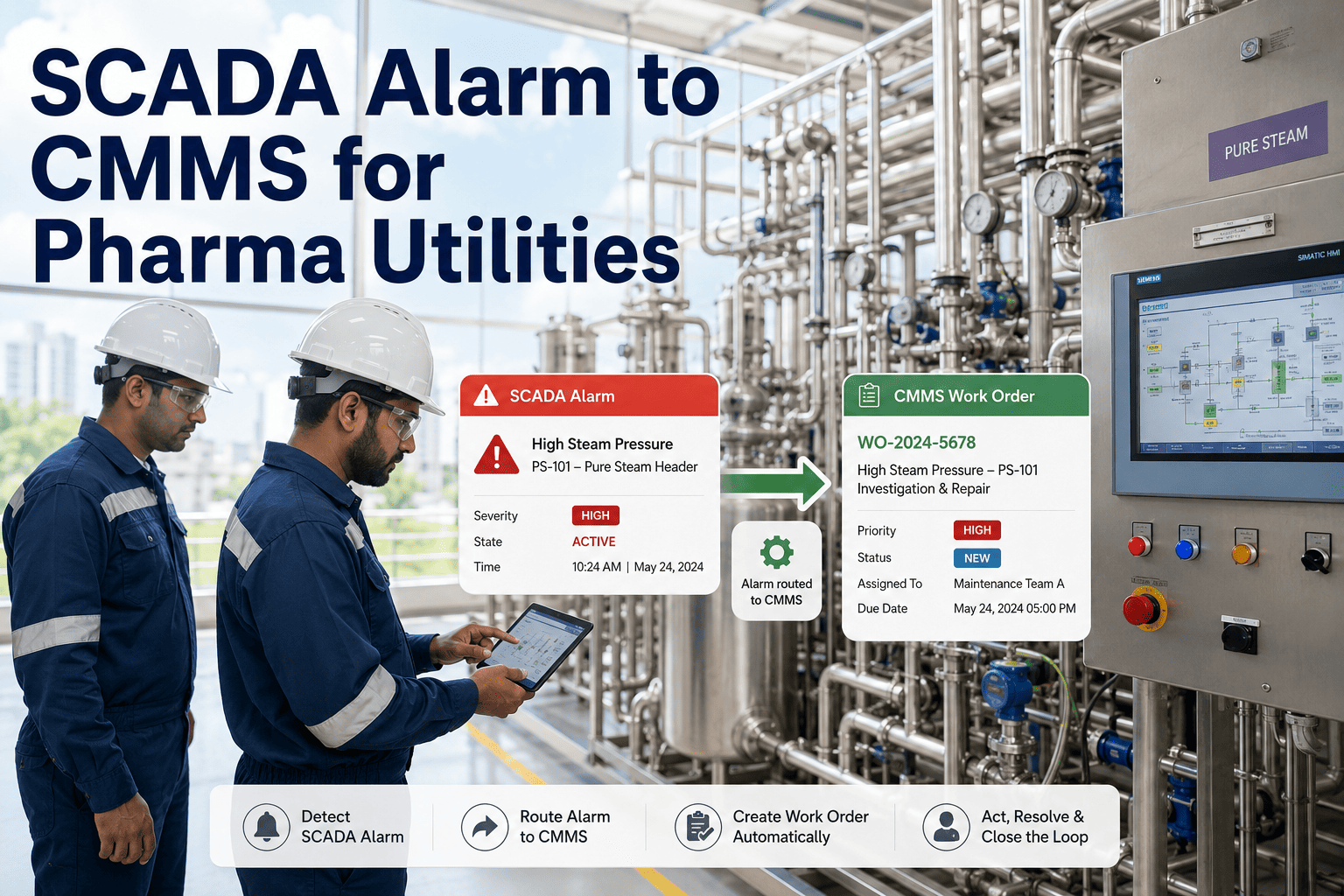
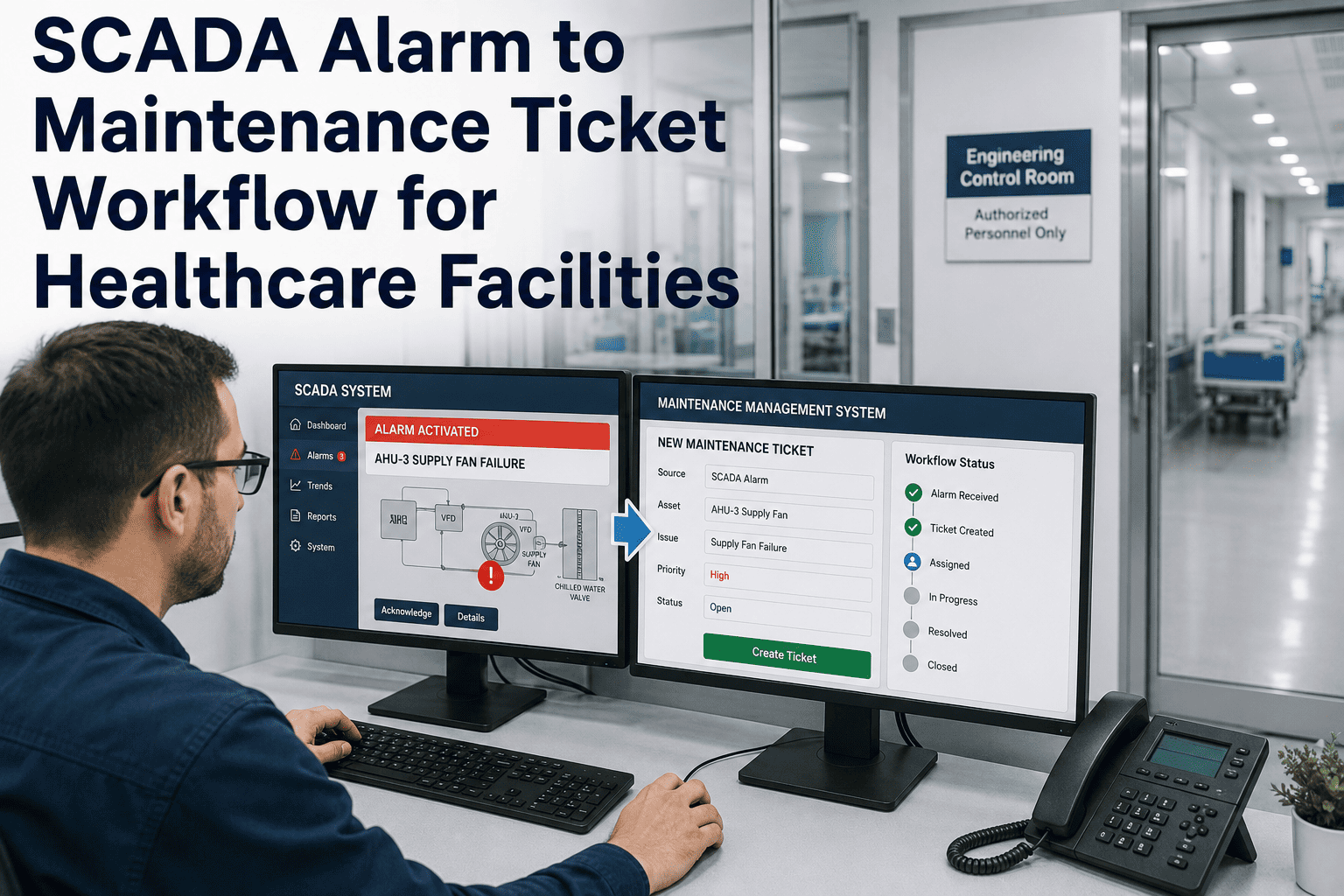
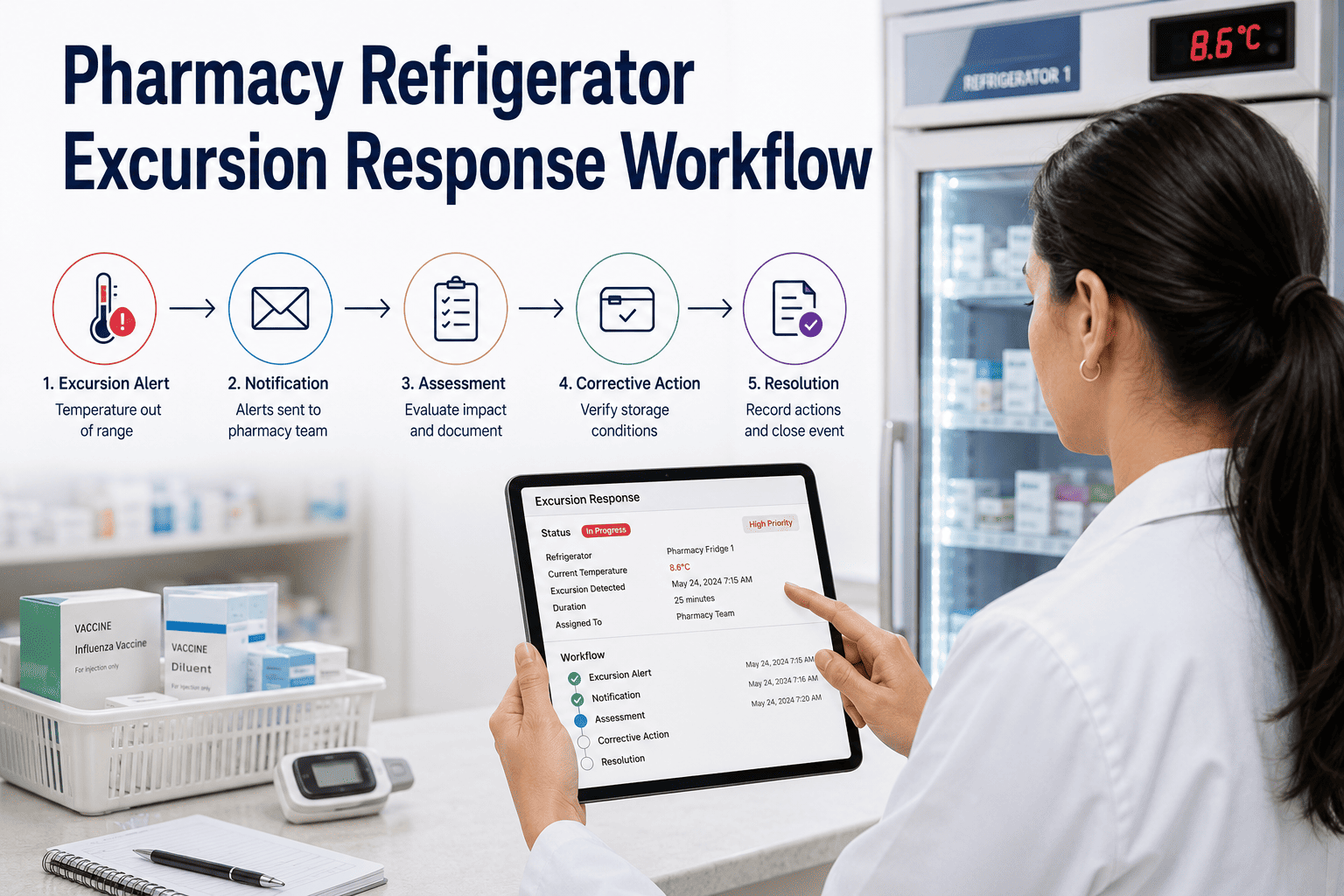
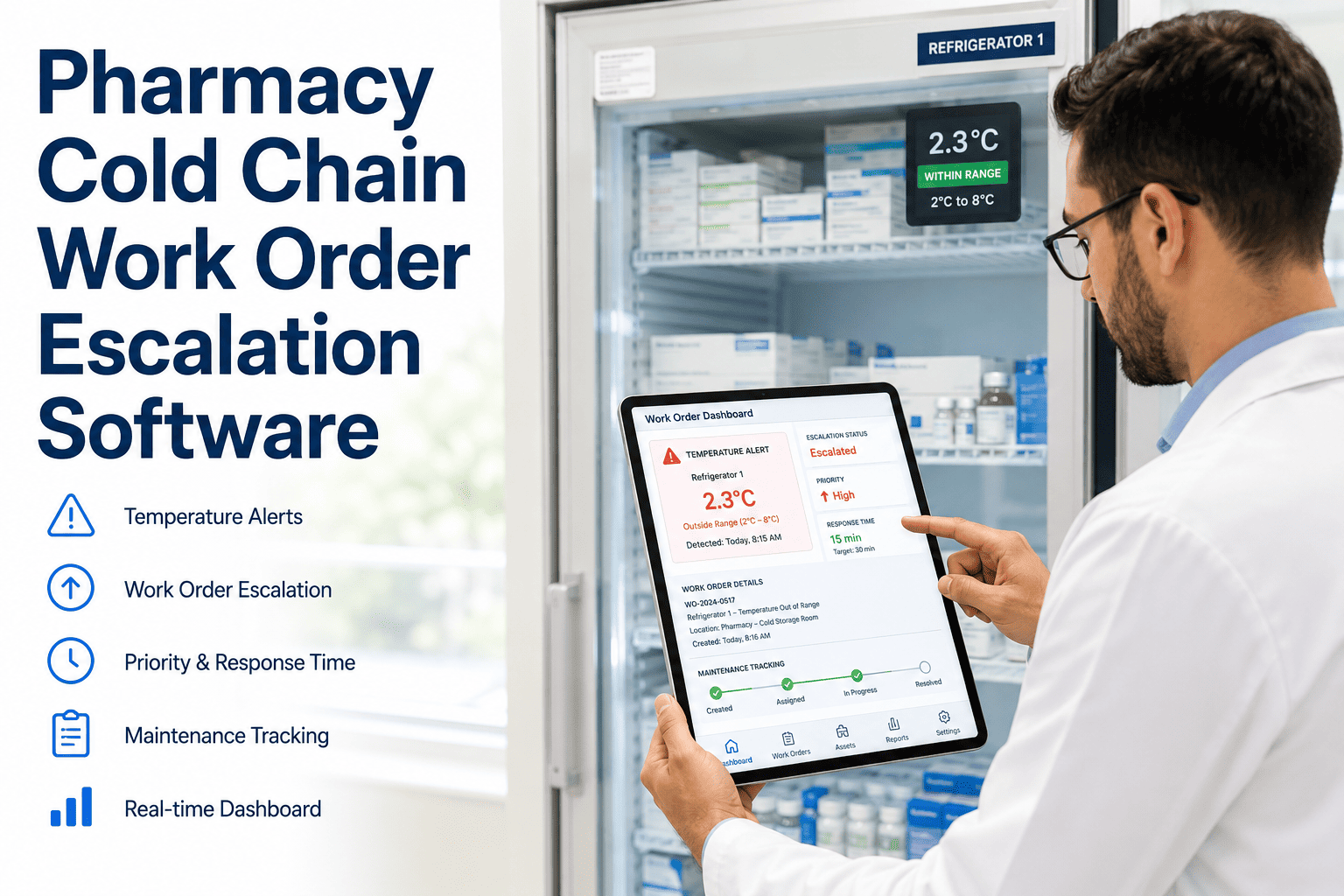
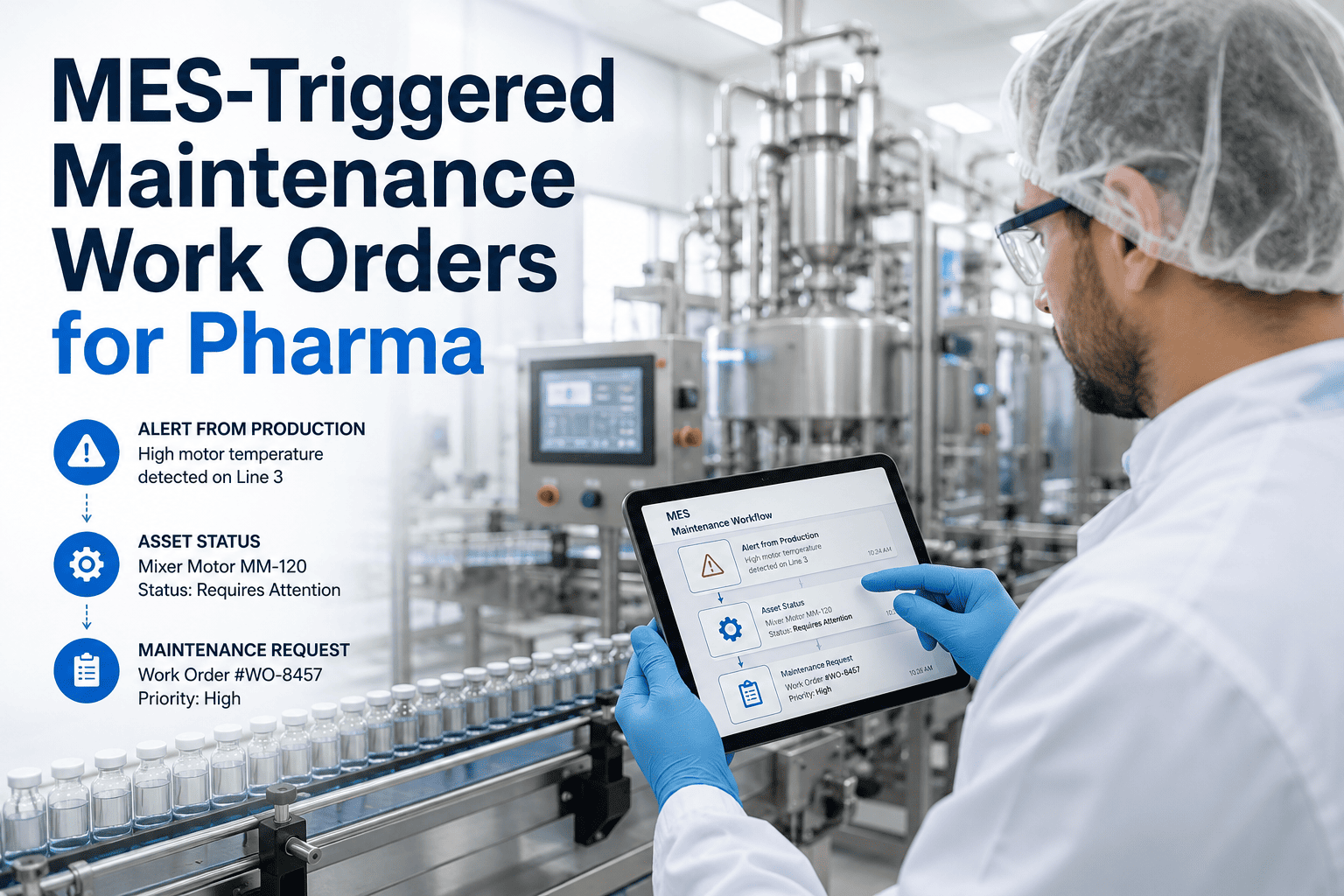
In GMP-regulated pharmaceutical manufacturing, a SCADA utility alarm is not just an operational alert — it is the start of a compliance event. When a chiller fails, a cleanroom HVAC system deviates, or a WFI loop loses temperature control, regulators expect a documented response: who was notified, when the work order was issued, what the repair action was, and when the system was returned to validated state. OxMaint's SCADA-to-CMMS integration converts every qualifying utility alarm into a prioritized work order with response SLAs, escalation logic, and closure evidence — fully traceable for FDA 21 CFR Part 11, EU GMP Annex 11, and internal QA audit requirements. Pharma utilities teams using structured CMMS response workflows report 55% faster SLA compliance rates and up to 80% reduction in manual compliance documentation effort. Start free on OxMaint and bring your pharma utility SCADA alarms into a compliant, documented response workflow from day one.
Pharmaceutical Utilities · SCADA Integration · GMP Compliance
SCADA Alarm to CMMS for Pharma Utilities
Convert every utility alarm into a prioritized, SLA-tracked work order. Close with evidence. Stay audit-ready — automatically.
55%
Faster SLA compliance rate with auto-dispatched SCADA work orders
80%
Reduction in manual compliance documentation per utility event
<60s
SCADA alarm to OxMaint work order generation time
100%
Work orders linked to originating SCADA alarm for audit trail
Regulatory Context
Why Pharma Utility SCADA Responses Require Documented Workflows
Pharmaceutical utility systems — HVAC, water systems, compressed gases, steam — are classified critical systems under GMP. Regulators audit not just whether they failed, but whether your team responded correctly.
FDA 21 CFR Part 211
Equipment maintenance records must be available for inspection. Corrective actions must be documented with timestamps, responsible persons, and completion evidence.
EU GMP Annex 11
Computer-managed equipment systems require audit trails for all deviations and maintenance events, with electronic records that are attributable, legible, and contemporaneous.
ICH Q10 / ISO 55001
Pharmaceutical quality systems require defined maintenance response workflows with SLAs, escalation procedures, and documented closure criteria for critical utility equipment.
Integration Workflow
How SCADA Alarms Become Compliant CMMS Work Orders
SCADA / BMS Layer
Chiller supply temperature deviation
Cleanroom differential pressure loss
WFI loop conductivity exceedance
Steam pressure below setpoint
Clean compressed air dewpoint alarm
API / Webhook
Integration
OxMaint — Auto Work Order
Priority tier assigned (Critical / High / Routine)
Response SLA clock started
Qualified technician auto-assigned
GMP checklist attached to WO
Alarm event ID linked for audit trail
Compliance Record Generated
Repair action documented
Parts and labor logged
Photo evidence attached
Return-to-service sign-off
Deviation report linked (if required)
See the SCADA-to-CMMS Integration Running Live
Walk through a live OxMaint demo built for pharma utility operations — from SCADA alarm receipt to fully documented compliance closure, including SLA tracking and escalation rules.
Response SLAs
Pharmaceutical Utility Alarm — Response SLA Reference Table
OxMaint enforces these SLAs automatically — escalating to supervisors and QA managers if response thresholds are not met within the defined window.
| Utility System |
Alarm Type |
GMP Classification |
Response SLA |
Escalation Trigger |
Closure Evidence Required |
| HVAC — Cleanroom |
DP / temp / RH deviation |
Critical |
30 min |
15 min — QA alert |
Repair log + DP restoration proof |
| WFI / PW Loop |
Conductivity / TOC exceedance |
Critical |
1 hour |
30 min — QA + site director |
Lab result + sanitization record |
| Clean Steam |
Pressure / superheat alarm |
High |
2 hours |
1 hour — utilities supervisor |
Repair log + pressure trend export |
| Compressed Air / N2 |
Dewpoint / oil contamination |
High |
4 hours |
2 hours — QA notification |
Filter change log + dewpoint verification |
| Chiller / Cooling Water |
Supply temp deviation |
High |
4 hours |
2 hours — engineering manager |
Repair completion + temp trend log |
| SCADA RTU / Instrument |
Communication loss |
Routine |
8 hours |
4 hours — instrument tech lead |
Calibration / reconnection log |
Expert Review
Pharma Utilities Compliance Perspective
FDA inspectors reviewing utility systems look specifically at whether the site has a defined, documented, and consistently followed response workflow for critical system alarms. Paper logs and email chains routinely fail this test during inspections — either because records are incomplete, response times are unverifiable, or escalation procedures weren't followed. A SCADA-connected CMMS that enforces SLAs, captures escalation events, and generates timestamped closure records transforms compliance from a documentation burden into an automated output of the maintenance operation itself.
Common Questions
Frequently Asked Questions
Does OxMaint create an audit trail that satisfies 21 CFR Part 11 electronic records requirements?
OxMaint work orders generate timestamped, user-attributed electronic records for every action — work order creation, assignment, field update, and closure sign-off. Records are immutable after closure and include the originating SCADA alarm reference. For 21 CFR Part 11 compliance, all user actions are logged with authenticated credentials and the system prevents backdating or deletion of completed records.
Review audit trail documentation in a demo.
How does OxMaint handle SCADA alarms that require a deviation report?
OxMaint allows QA-defined alarm categories to automatically flag a work order as requiring a linked deviation or CAPA record at closure. If the technician closes the work order without attaching the required deviation reference, the system blocks closure and re-escalates to the QA manager. This ensures that no critical utility event is closed without the required quality management linkage — a common finding in FDA utility system audits.
Sign up to configure your deviation rules.
Can OxMaint enforce that only qualified technicians are assigned to GMP utility work orders?
Yes. OxMaint's technician qualification module links training records and certification status to work order assignment rules. If a technician's GMP utility qualification is expired or incomplete, the system prevents assignment to restricted work order types and flags the gap to the maintenance supervisor and training coordinator. This replaces manual checking of qualification matrices — a process that is frequently error-prone in high-turnover utility environments.
See qualification enforcement in a live demo.
What SCADA platforms does OxMaint integrate with for pharma utility alarm intake?
OxMaint integrates with major pharmaceutical SCADA and BMS platforms including Siemens Desigo, Honeywell EBI, Rockwell FactoryTalk, Emerson DeltaV, and ABB 800xA via REST API and OPC-UA data connectors. For legacy systems without API support, OxMaint's Modbus gateway and email-to-work-order parser can convert alarm notification emails into structured work orders. Most pharma utility integrations are fully operational within 3–5 weeks.
Start your free account and begin the integration assessment.
GMP Utility Compliance — Automated from the Alarm
Every SCADA Alarm. Every Work Order. Every Compliance Record.
OxMaint converts pharmaceutical utility SCADA alarms into SLA-tracked, evidence-backed, audit-ready work orders — with zero manual documentation effort from your utilities team.