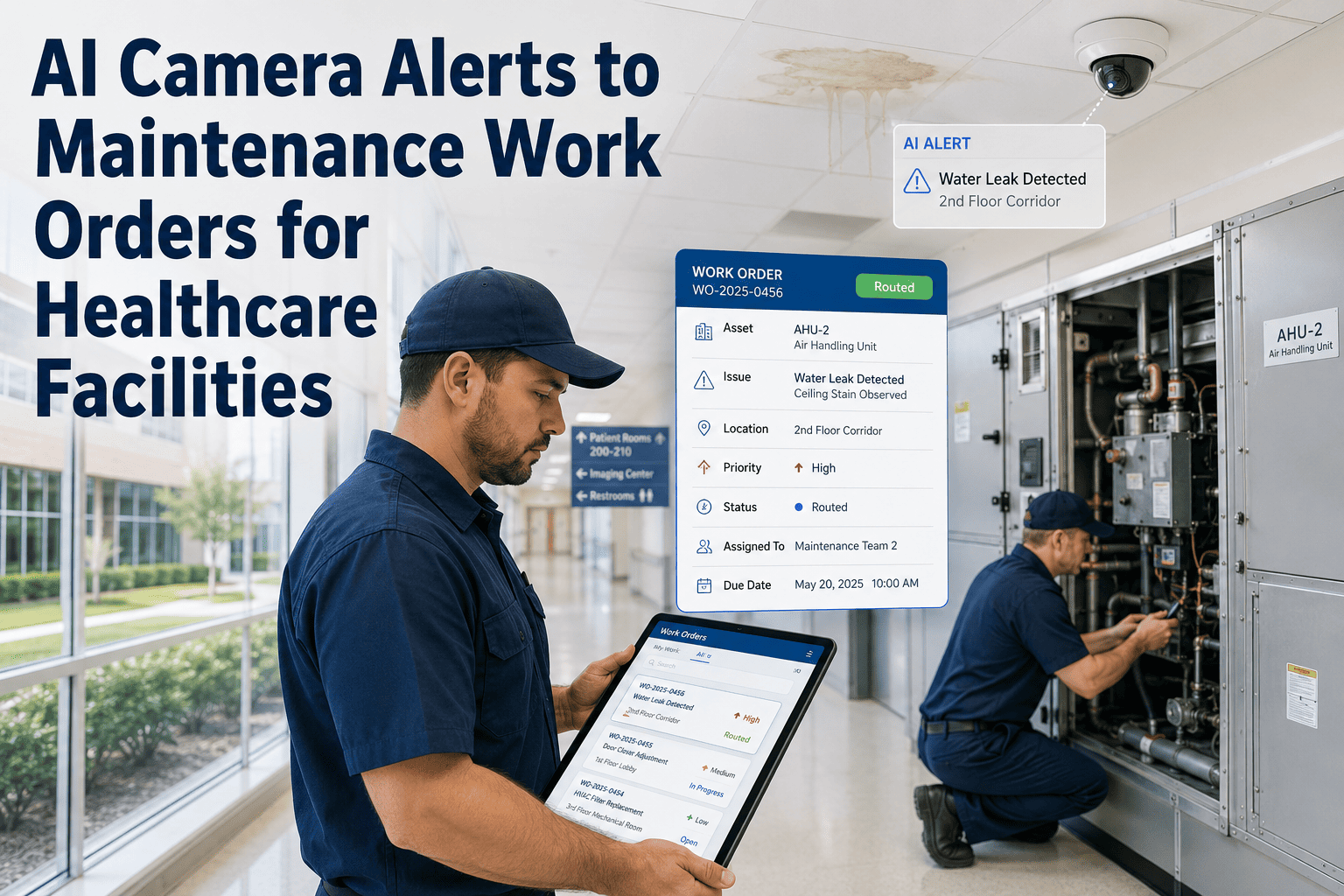
A conference room projector complaint from a department head reaches the top of the maintenance queue before a chiller serving an entire patient wing, simply because one request came with a phone call and the other came through a form. This is what happens without a defensible priority framework: political pressure quietly outranks operational consequence, and nobody can explain why the sequencing turned out the way it did. A priority matrix fixes this by scoring every request on the same two factors every time, so the chiller always outranks the projector regardless of who called whom. Sign up for Oxmaint to score your maintenance queue automatically, or book a demo to see a priority matrix built around your hospital's asset list.
Stop Letting the Loudest Phone Call Win the Maintenance Queue
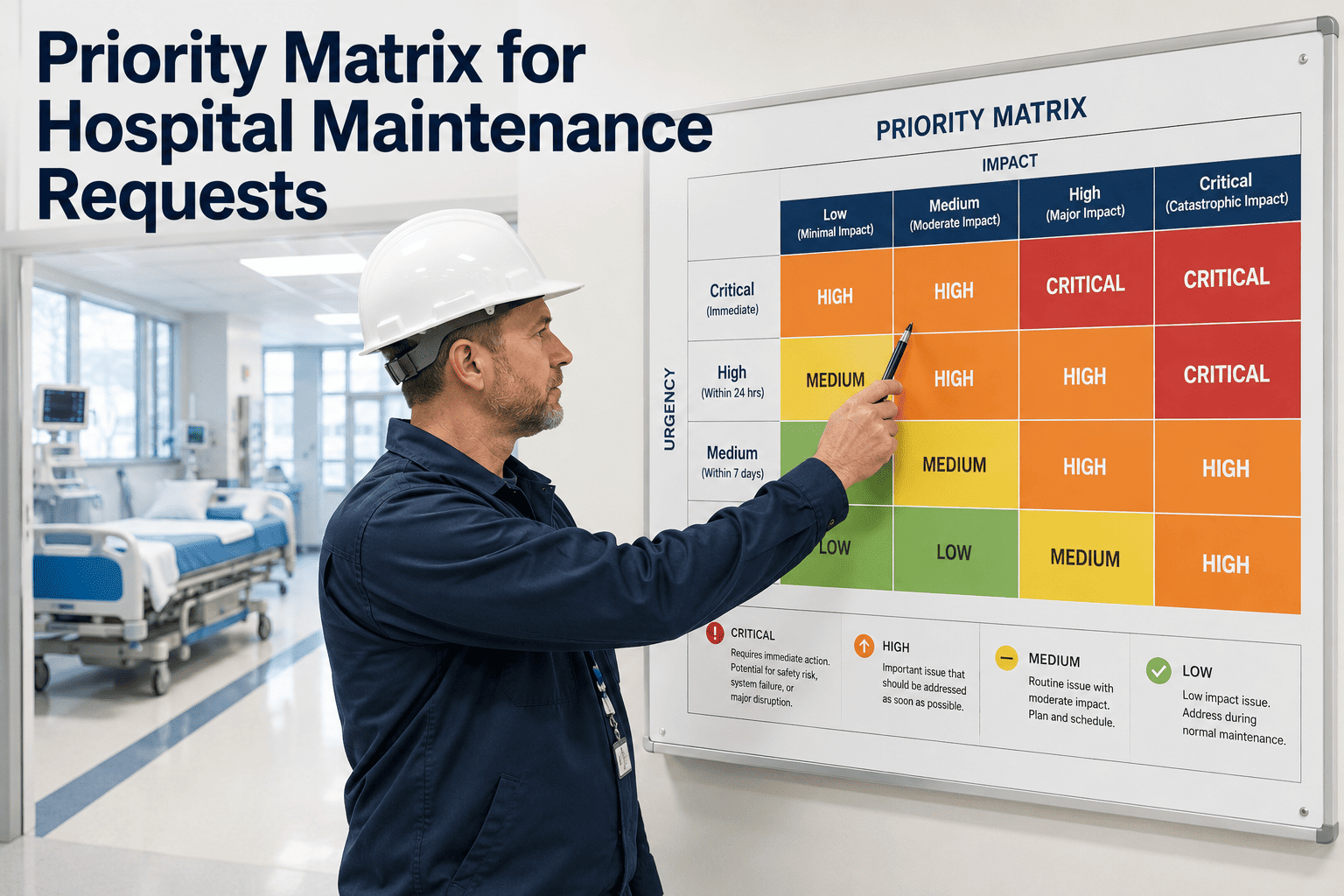
A priority matrix scores every request on impact and urgency together, so sequencing becomes a calculation instead of a negotiation. The same two factors, applied consistently, every time.
Impact and Urgency Plotted Together
Every hospital maintenance request falls into one of four quadrants depending on how severe the consequence is and how quickly it needs to be addressed.
Let the Score Decide, Not the Phone Call
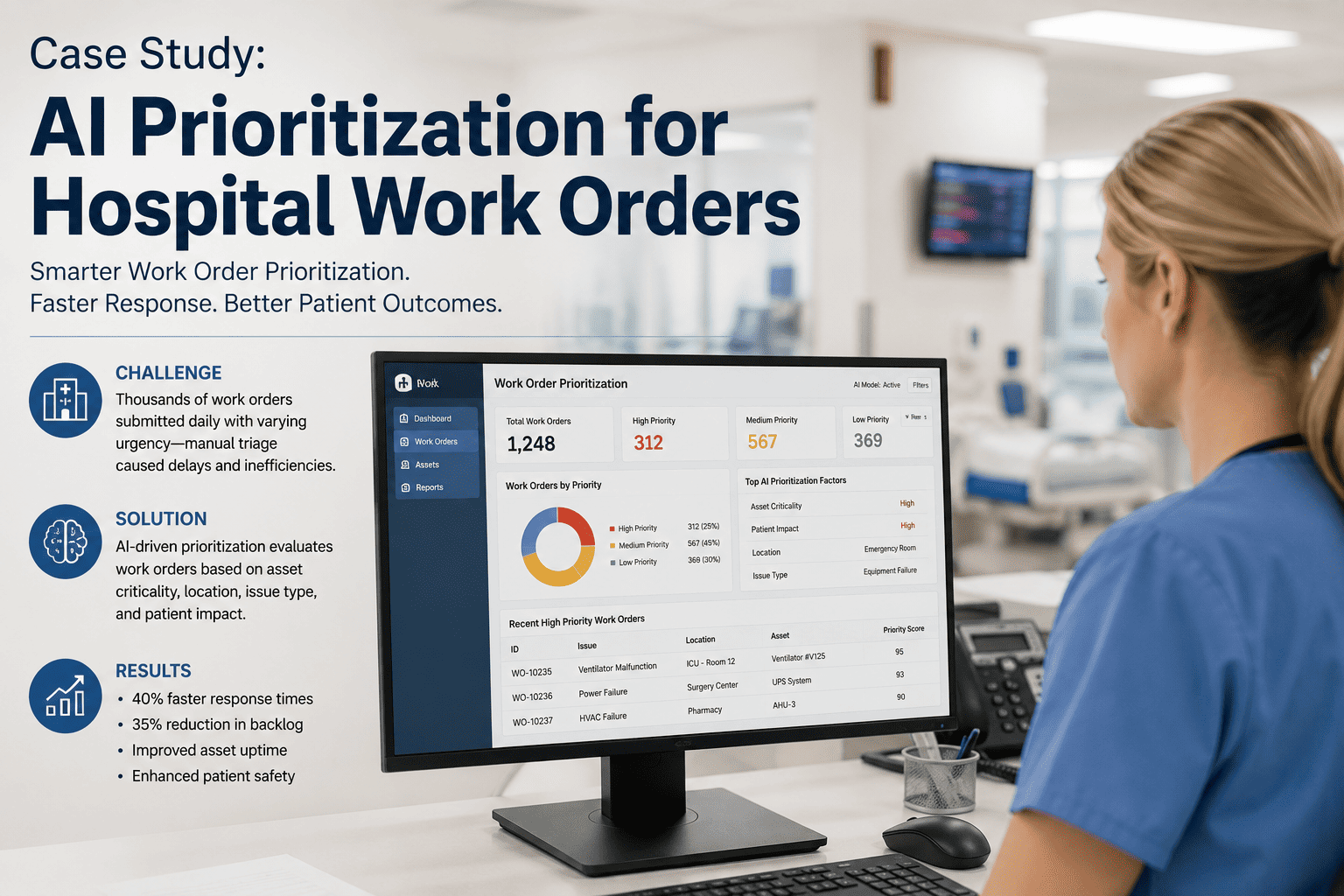
Oxmaint scores every incoming request against asset criticality, safety flags, and compliance relevance automatically, so the queue reflects actual consequence instead of who asked loudest.
The Inputs Behind Every Priority Score
Relationship-Driven Sequencing Compared to a Scored Matrix
| Factor | Subjective, Relationship-Driven | Oxmaint Scored Priority Matrix |
|---|---|---|
| Who gets served first | Whoever calls the director directly | Whatever scores highest on impact and urgency |
| Consistency across requests | Varies by relationship and mood | Same weighted criteria every time |
| Defensibility during review | Hard to justify after the fact | Documented score for every decision |
| Risk of missed critical issue | High, depends on who speaks up | Low, criticality is scored automatically |
Reviewed by Oxmaint's healthcare facilities engineering team, who design weighted priority scoring frameworks alongside hospital facilities directors managing high-volume maintenance request queues.
Priority Matrix for Hospital Maintenance — Frequently Asked Questions
Yes. The relative weight given to safety, criticality, compliance, and space classification can be configured to match how your facility actually defines risk, rather than using a fixed formula that doesn't fit your environment. Book a demo to see weighting options for your facility.
If a request lacks enough detail to score accurately, the rule is simple: it isn't defined well enough yet to schedule, and the system prompts for the missing detail before assigning a final priority. Sign up to see how incomplete requests are handled.
No. Immediate safety, environmental, or regulatory threats are flagged and acted on first, with scoring applied afterward for documentation purposes rather than as a gate to action. Book a demo to see emergency override rules in the matrix.
Department heads can still flag urgency, and that input feeds into the score, but it no longer single-handedly jumps a request to the top of the queue without being weighed against actual impact and criticality. Sign up to set up balanced input from department requestors.
Make Your Maintenance Queue Defensible, Not Political
Oxmaint scores every hospital maintenance request automatically on impact and urgency, so the chiller always outranks the projector.