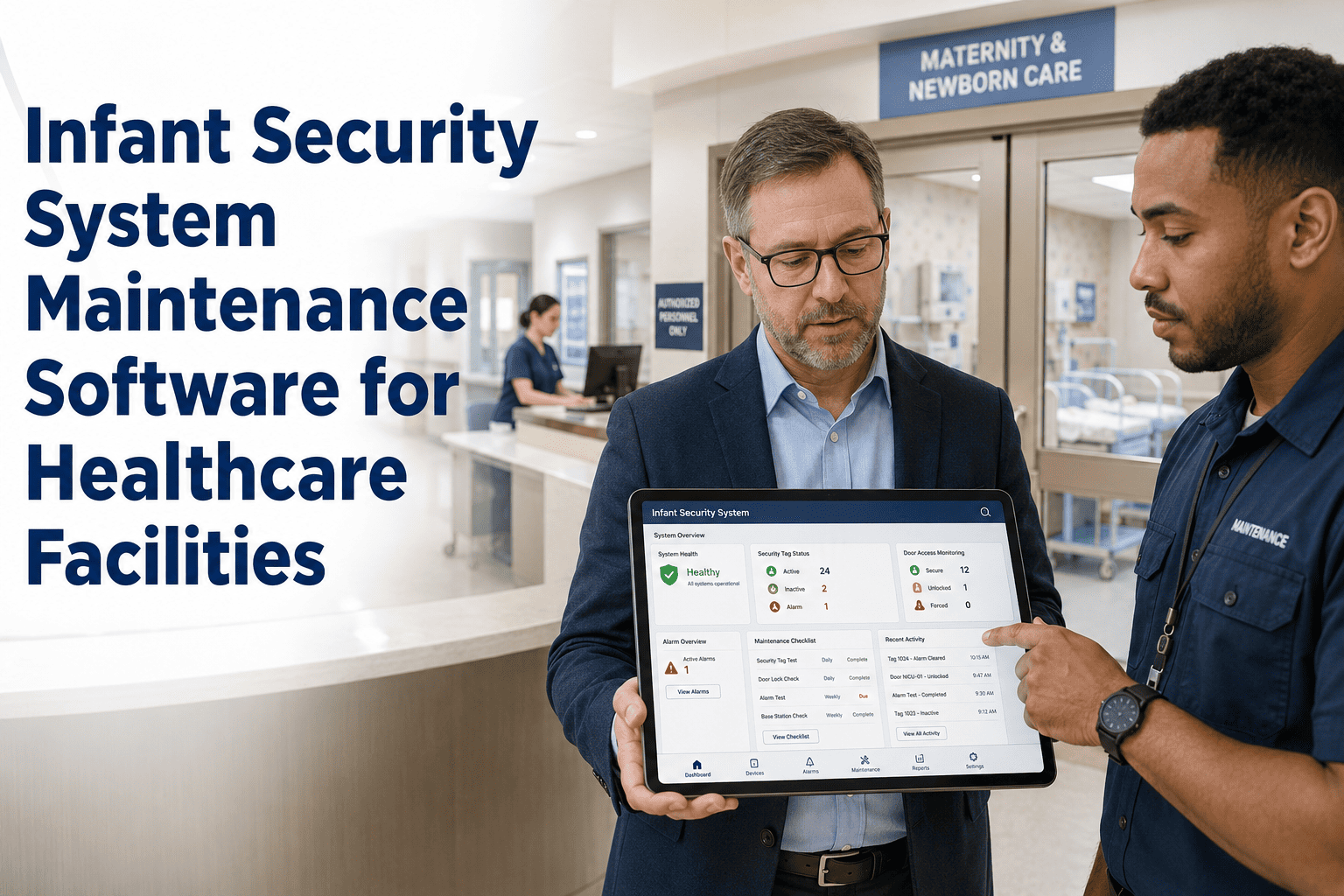
Infant security systems are among the most zero-tolerance assets in any hospital — the consequences of a system failure or missed maintenance cycle aren't measured in productivity loss, they're measured in patient safety incidents that carry federal investigation, litigation, and permanent reputational damage. Hospital maintenance software purpose-built for clinical environments manages infant security hardware as a distinct, high-priority asset class — with dedicated inspection checklists, automated escalation, mobile evidence capture, and audit trails that satisfy The Joint Commission, CMS, and state health department requirements simultaneously. Book a demo with OxMaint to see how pediatric and maternity units are managing infant security hardware checks, camera verification, access control testing, and band reader maintenance in a single mobile-first CMMS workflow — and producing inspection records that protect both patients and the facility under any level of regulatory scrutiny.
Pediatric Safety · Access Hardware · Healthcare CMMS
Infant Security System Maintenance Software for Healthcare Facilities
Access hardware checks, camera verification, band reader testing, mobile proof of inspection, and audit trails — all managed in one platform built for hospital-grade compliance.
Infant abductions from healthcare facilities — though rare — are almost always linked to security system failures or maintenance gaps, not personnel error alone
TJC EC.02.06.01 requires documented proof of infant security system testing — missing records are an immediate citation regardless of actual system function
Band reader failures that are not caught in scheduled testing have a mean detection lag of 11 days at paper-dependent facilities — a critical window
Asset Coverage
Infant Security Assets OxMaint Tracks and Maintains
01
Infant Band Readers / Transponders
Reader unit function, band detection range, false-positive rate, battery status. Weekly testing with digital checklist and photo proof per reader unit.
02
Access Control Hardware (NICU/Nursery)
Door locking mechanism, card reader function, keypad integrity, backup power engagement. Monthly testing with technician credential capture and escalation log.
03
Security Camera Coverage (L&D / Nursery Zones)
Camera angle verification, recording continuity, blind spot assessment, tamper-evident seal check. AI vision integration flags coverage gaps automatically.
04
Emergency Alert / Panic Hardware
Alert trigger response time, receiver confirmation, silent alarm function, staff notification routing. Monthly activation test with documented response time log.
05
Elevator Lockdown Integration
Elevator lockdown trigger function, floor restriction confirmation, reset procedure verification. Quarterly testing coordinated with facilities engineering and security teams.
06
Communication & Intercom Hardware
Unit-to-unit intercom clarity, nurse call response routing, backup power function during lockdown simulation. Monthly test with audio quality documentation.
Infant Security Maintenance Should Not Depend on a Clipboard.
OxMaint enforces structured digital inspection workflows for every infant security asset — with mandatory evidence capture, auto-escalation, and audit records that satisfy TJC and CMS requirements.
OxMaint Workflow
How OxMaint Structures Infant Security System Maintenance
| Maintenance Activity |
Frequency |
OxMaint Action |
Evidence Produced |
| Band reader function test |
Weekly |
Auto-generated WO → mobile checklist → photo proof |
Pass/fail + timestamp + photo |
| Access door lock verification |
Monthly |
Scheduled WO with technician credential required at closure |
Credential + checklist + sign-off |
| Camera coverage audit |
Monthly / AI continuous |
AI vision monitors live; scheduled audit confirms angle & recording |
Screenshot evidence + AI alert log |
| Emergency alert activation test |
Monthly |
Scheduled WO with timed response documentation |
Response time log + receiver confirmation |
| Elevator lockdown drill |
Quarterly |
Coordinated WO with multi-team sign-off required |
Multi-party completion record |
| Full system inspection (TJC prep) |
Annual |
Audit export package with all assets, all records, all photos |
TJC-formatted compliance package |
"
Infant security system maintenance is not just an engineering matter — it is a patient safety matter that engineering teams often manage in isolation from the clinical context that gives it urgency. When I evaluate facilities under TJC accreditation, the most common finding is not that the testing was not performed — it is that the testing was performed but the documentation is insufficient, incomplete, or not retrievable in a format the surveyor can evaluate. A CMMS that enforces structured digital inspections, captures photographic evidence at each checklist step, and produces a retrievable audit package transforms infant security maintenance from a documentation risk into a documented strength. No surveyor should ever find a gap in this category — and with the right platform, none of them need to.
Patricia Bourne, RN, CPHQ, CPHRM
VP Patient Safety & Regulatory Affairs · 26 years in pediatric and women's health hospital leadership · TJC Accreditation Specialist · ASHRM Fellow
FAQ
Infant Security System Maintenance — Questions Facilities Teams Ask
Does OxMaint support both proprietary infant security systems (e.g., Hugs, Cuddles) and custom access hardware?
OxMaint manages infant security assets as named items in the asset register — regardless of the underlying system vendor. Whether the facility uses Hugs, Cuddles, or a custom OEM access control system, each hardware unit is tracked individually with its own inspection schedule, service history, and compliance status. OxMaint does not require integration with the infant security vendor's proprietary software — it functions as the maintenance management layer on top of any system. This means new assets can be added to OxMaint as security hardware is upgraded or replaced without any reconfiguration of the core CMMS.
Book a demo to see how the asset register is structured for security hardware.
How does OxMaint handle the escalation chain when a band reader or access hardware fails inspection?
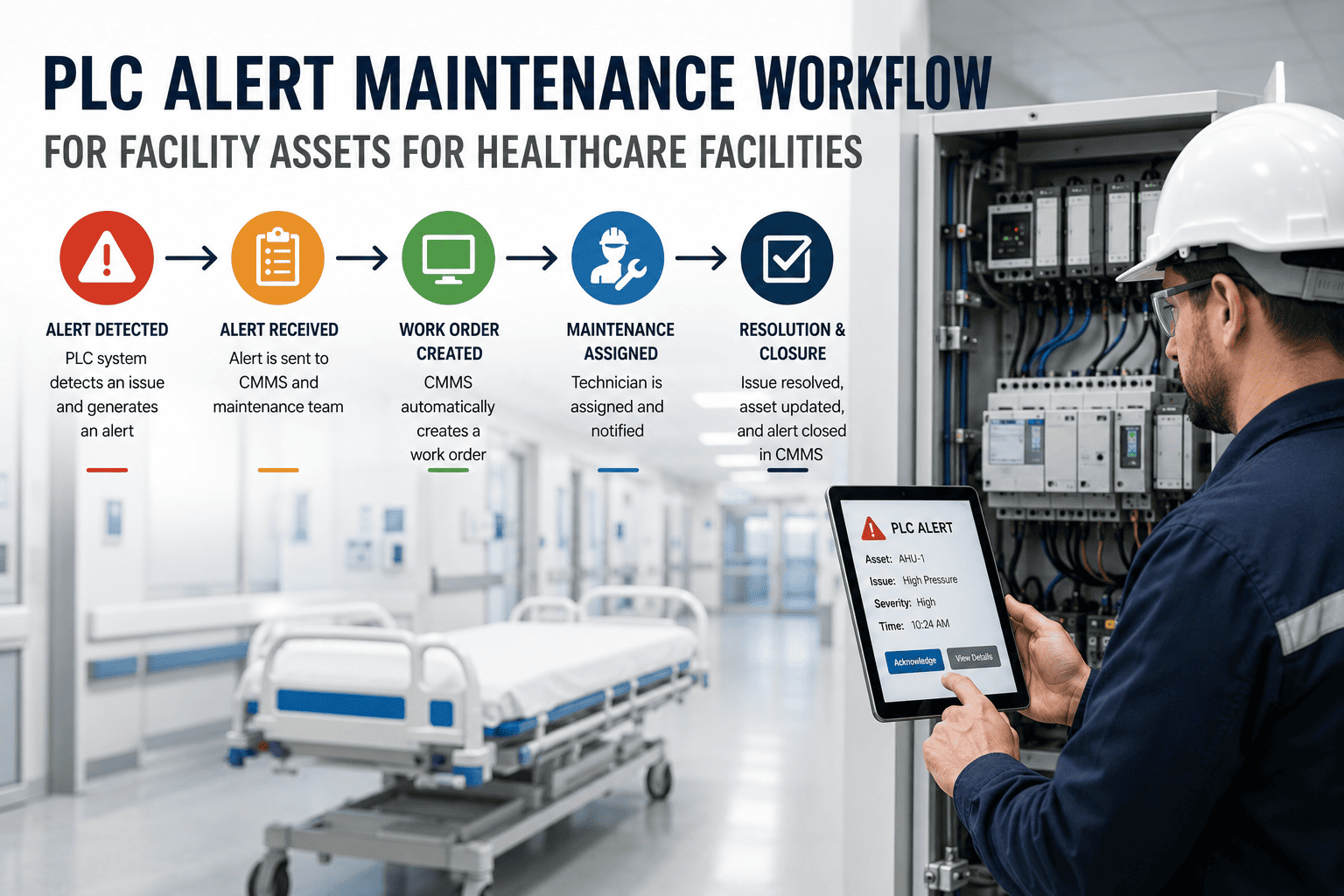
When a technician marks a band reader or access control component as failing inspection in OxMaint, the system immediately classifies the WO as Critical and initiates the escalation sequence: the charge engineer receives a push notification within 90 seconds, the facilities director receives a parallel alert, and if no acknowledgment is received within a configurable window (typically 10 minutes for critical security hardware), the notification escalates to hospital administration. Every notification, acknowledgment, and response action is time-stamped and logged against the asset record — creating the documented escalation chain that TJC expects to see when a critical security component requires corrective action.
Start a trial to configure your escalation thresholds.
Can OxMaint's AI vision capability actively monitor infant security camera coverage between scheduled inspections?
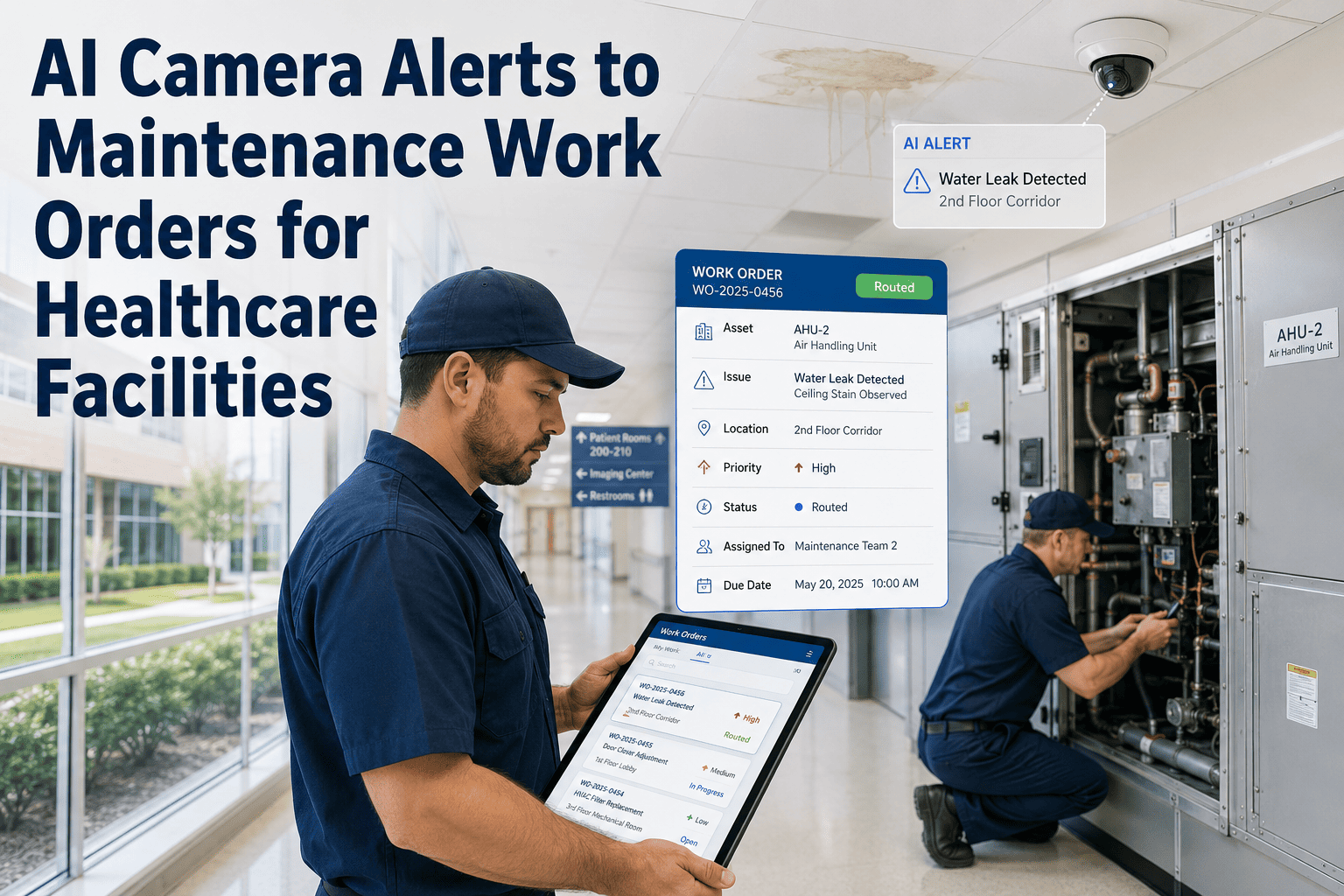
Yes. OxMaint's AI vision module connects to the camera feeds covering NICU, nursery, and L&D access zones and performs continuous coverage monitoring — detecting angle drift, recording interruptions, lens obstruction, and blind spot expansion between scheduled manual audits. When an anomaly is detected, OxMaint auto-generates a work order with a timestamped screenshot and routes it to the on-shift security or facilities technician. This gives pediatric units continuous coverage assurance rather than point-in-time inspection confidence — a significant upgrade in risk posture for high-stakes camera zones.
What does the TJC compliance documentation package include for infant security systems?
OxMaint's TJC compliance export for infant security systems includes: inspection records for every hardware unit (dates, technician credentials, checklist responses, photos), corrective WO history with escalation logs and resolution timestamps, a compliance summary showing percentage of assets current vs overdue by inspection type, and the full service history for each component going back to CMMS go-live. The package is formatted to align with TJC EC.02.06.01 documentation requirements and can be exported in minutes — typically reducing survey preparation time from one to two days of manual file assembly to under 90 minutes.
See the TJC export workflow in a live demo.
Can nursing staff or security coordinators submit fault reports for infant security hardware directly in OxMaint?
Yes. OxMaint supports QR-code-based fault reporting that allows any authorized staff member — nursing, security, or unit coordinator — to scan a QR code posted on or near the security hardware and submit a fault report from their personal or unit device without downloading an app. The fault report auto-populates the asset ID, location, and timestamp, and creates a work order immediately that is routed to the on-shift facilities technician. This closes the detection-to-dispatch gap that exists when staff must call a facilities desk to report a security hardware issue — reducing the mean time to dispatch to under three minutes in most implementations.
OxMaint · Infant Security · Healthcare CMMS
Manage Infant Security Maintenance With the Rigor This Asset Class Demands.
Access hardware checks, camera monitoring, escalation workflows, and TJC-formatted audit records — OxMaint gives pediatric and maternity units a structured, defensible infant security maintenance system.
.png)
