Granulation is where active ingredients become manufacturable — and where unplanned downtime hits hardest. High-shear granulators, fluid bed processors, conical mills, and planetary mixers each carry distinct failure modes, GMP documentation requirements, and cleaning validation demands. A 2024 FDA enforcement report identified granulation equipment as one of the top five sources of 483 observations in oral solid dosage facilities. Start a free trial on OxMaint or book a 30-minute demo to see how pharma maintenance teams digitize every granulator PM, cleaning record, and deviation link in one platform.
Pharma Guide · Granulation Equipment · GMP Maintenance
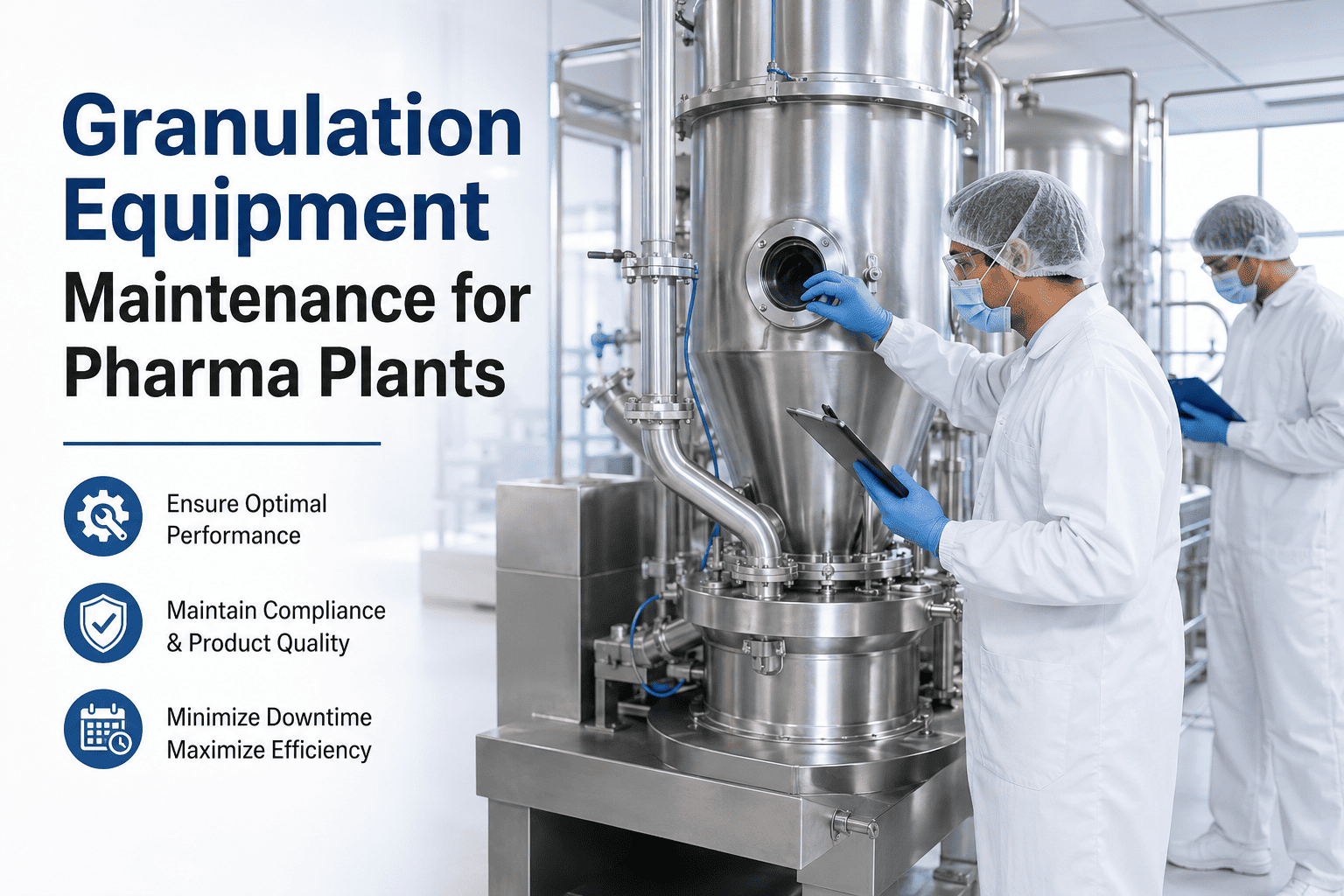
Granulation Equipment Maintenance for Pharma Plants
The complete GMP maintenance guide for high-shear granulators, fluid bed processors, conical mills, and mixers — with PM schedules, failure modes, cleaning requirements, and audit-ready records.
High-Shear Granulators
Fluid Bed Processors
Conical Mills
Planetary Mixers
Top 5
FDA 483 source: granulation equipment in OSD plants (2024)
68%
Of granulation failures traceable to missed PM or cleaning gaps
3.6K
Monthly searches for granulation equipment maintenance guidance
4–6 hrs
Average unplanned downtime per granulator breakdown event
Equipment Coverage
Four Equipment Types — Four Maintenance Profiles
Each granulation machine class has a different failure anatomy. Treating all four the same PM template is the fastest way to a 483 observation or a batch failure investigation.
01
High-Shear Granulator
Impeller and chopper blade wear directly affect granule size distribution. Seal integrity prevents cross-contamination. Bowl gasket condition determines containment.
WeeklyImpeller torque check, seal inspection
MonthlyChopper blade wear gauging, bearing temp
AnnualFull drive gearbox oil change, blade replacement
02
Fluid Bed Processor
Filter bag integrity, inlet air temperature uniformity, and atomizing nozzle condition control product quality. Bag blockage is the leading cause of unplanned stoppages in fluid bed units.
Per BatchFilter bag visual, nozzle flow check
MonthlyInlet filter replacement, airflow verification
AnnualExpansion chamber inspection, blower PM
03
Conical Mill (Comil)
Screen mesh wear and impeller clearance are the primary quality variables. Screen damage allows oversized particles through, causing downstream compression problems. Bearing condition drives noise and vibration signals.
Per RunScreen integrity check, clearance verification
QuarterlyBearing lubrication, impeller wear inspection
AnnualFull screen change, motor current baseline
04
Planetary Mixer
Blade attachment integrity and bowl seal condition affect homogeneity. Gearbox oil contamination from API-laden environments is the most common silent failure mode in wet granulation mixing.
WeeklyBlade attachment torque, oil level check
QuarterlyGearbox oil sampling, bowl seal swap
AnnualFull gearbox service, motor insulation test
PM Frequency Reference
GMP Maintenance Schedule — At a Glance
| Equipment |
Critical Failure Mode |
Early Warning Signal |
PM Interval |
GMP Record Required |
| High-Shear Granulator |
Impeller seal breach |
Torque spike, temperature rise |
Weekly inspection |
Seal integrity log, batch record link |
| Fluid Bed Processor |
Filter bag rupture |
Pressure differential drop |
Per-batch visual |
Bag integrity form, airflow certificate |
| Conical Mill |
Screen mesh wear-through |
Particle size out-of-spec |
Per-run check |
Screen qualification record |
| Planetary Mixer |
Gearbox oil contamination |
Oil particle count rise |
Quarterly oil sample |
Oil analysis report, deviation if OOS |
| Spray Nozzle (FBP) |
Partial blockage / drift |
Uneven moisture profile |
Every batch |
Nozzle flow verification form |
Cleaning Validation
Cleaning Schedule Is a Maintenance Record — Not QA's Alone
Step 1
Pre-Clean Inspection
Maintenance verifies all product-contact surfaces, gaskets, and seals are accessible and intact before cleaning crew begins. Any damage triggers a deviation before cleaning proceeds.
Step 2
Cleaning Execution Log
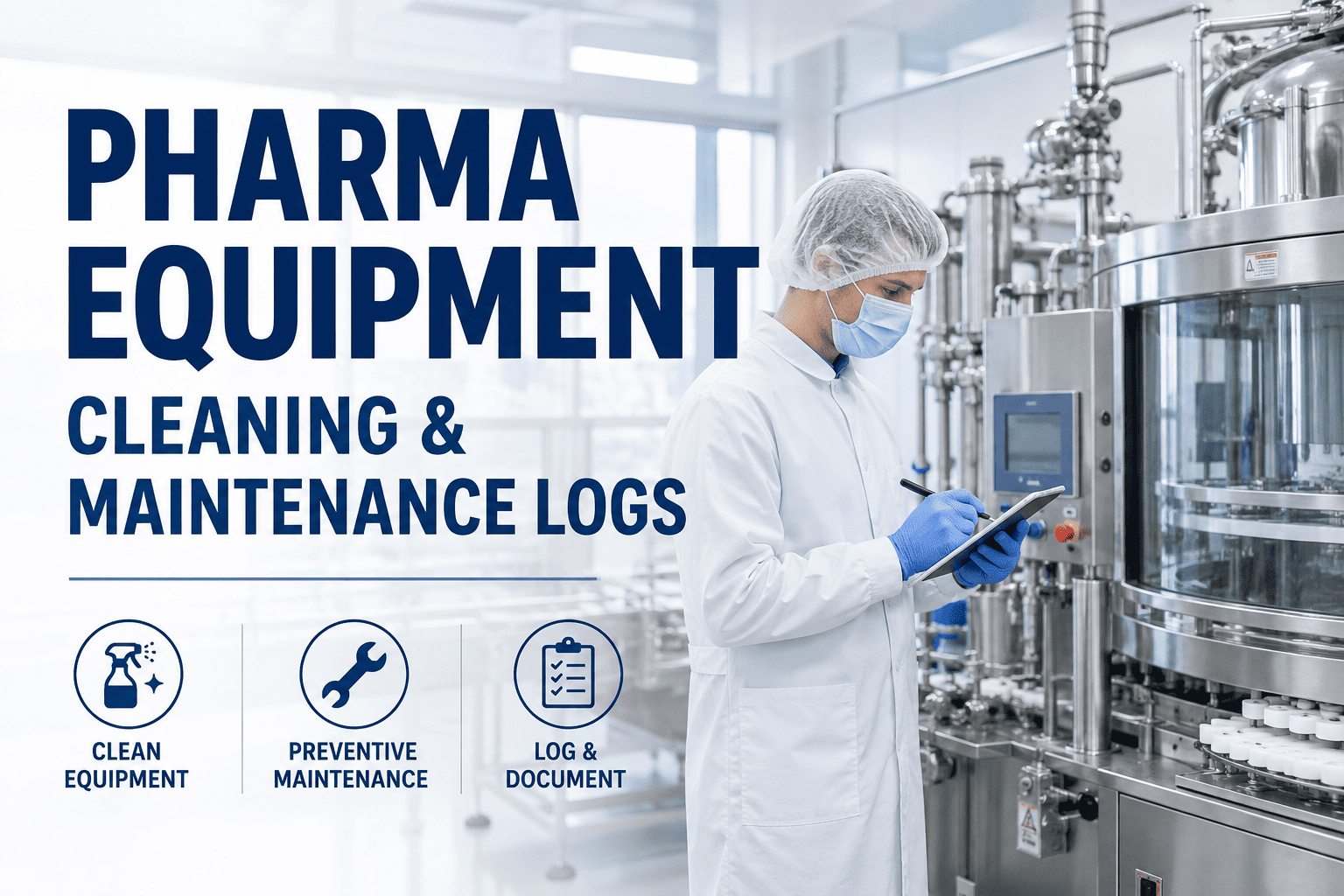
Detergent concentration, contact time, rinse volume, and operator ID are captured against the equipment record — not on paper handed to QA three days later.
Step 3
Post-Clean Verification
Swab or rinse sampling results link directly to the work order. Pass or fail — the record stays attached to the asset history for every future batch review.
Step 4
Equipment Status Tag
Cleaned, released status logged in CMMS. QA can verify equipment status before releasing the next batch without calling maintenance to confirm.
Expert Review
"The most common finding we see during granulation equipment audits is not a broken machine — it's a broken record chain. The impeller was serviced but the seal replacement wasn't logged. The fluid bed bag was changed but no qualification record was created. GMP maintenance is 50% the work and 50% the evidence."
Rajiv Mehta
Pharmaceutical Equipment Validation Specialist · 18 Years OSD Manufacturing
Run Every Granulator PM on One Platform — With Full GMP Evidence
OxMaint gives pharma maintenance teams pre-built PM templates for high-shear granulators, fluid beds, mills, and mixers — with cleaning record links, deviation triggers, and audit-ready work order history.
Failure Mode Reference
What Actually Breaks — and What the Signal Looks Like
High-Shear Granulator
Impeller Seal Failure
Motor current spike; product leak at bowl base; temperature alarm
Critical
Fluid Bed Processor
Filter Bag Rupture
ΔP drop across filter bank; product dust in exhaust duct
High
Conical Mill
Screen Mesh Wear-Through
Particle size distribution widening; oversize fraction increase
High
Planetary Mixer
Gearbox Oil Contamination
Oil sample particle count above baseline; gearbox noise change
Medium
Fluid Bed Processor
Spray Nozzle Partial Blockage
Moisture uniformity drift; spray pattern asymmetry
Medium
Frequently Asked Questions
Granulation Equipment Maintenance — What Teams Ask Most
How often should high-shear granulator impeller seals be replaced?
Seal replacement intervals depend on run frequency, product abrasiveness, and OEM specification — but most pharma plants set a 6-month or 500-batch replacement trigger, whichever comes first. Condition-based inspection using torque monitoring and visual checks at each weekly PM allows earlier replacement when wear is detected. Replacing seals proactively costs a fraction of the batch investigation triggered by a seal breach.
Track seal change history per equipment in OxMaint.
What GMP records must be generated for every granulation equipment PM?
At minimum: the work order itself with technician ID and timestamp, parts replaced with lot numbers, any deviations from the planned procedure, equipment status change (under maintenance → released), and the link to cleaning verification if a full clean was performed. For critical equipment like high-shear granulators, the seal and gasket replacement records must be retrievable during batch record review and should link to the batch numbers produced after the maintenance event.
See how OxMaint structures GMP records in a 30-minute demo.
How do you prevent fluid bed processor filter bag failures from causing batch loss?
The most effective approach is a per-batch pre-run inspection logged in the CMMS, combined with differential pressure trending across the filter bank. When ΔP begins climbing above historical baseline before reaching the replacement interval, an early-warning work order is triggered. Most fluid bed bag failures that cause batch loss are preceded by two to three batches of elevated ΔP readings that were never escalated — structured PM logging closes that gap entirely.
Can OxMaint handle equipment shared between multiple production lines or products?
Yes. OxMaint tracks equipment by asset record, not by line or product, so shared granulators, mills, or fluid beds carry their full maintenance and cleaning history regardless of which line they were assigned to in each campaign. When a shared asset is released for use on a new product, the QA team can verify the last cleaning record, PM status, and any open deviations directly from the asset page without contacting maintenance separately.
Try OxMaint free — no credit card required.
Free Trial · GMP-Ready · Live in Under 60 Minutes
Stop Managing Granulation PMs on Paper and Spreadsheets
OxMaint connects every granulator PM, cleaning record, deviation, and parts replacement into one audit-ready platform — built for pharma maintenance teams who can't afford a 483 over a missing record.