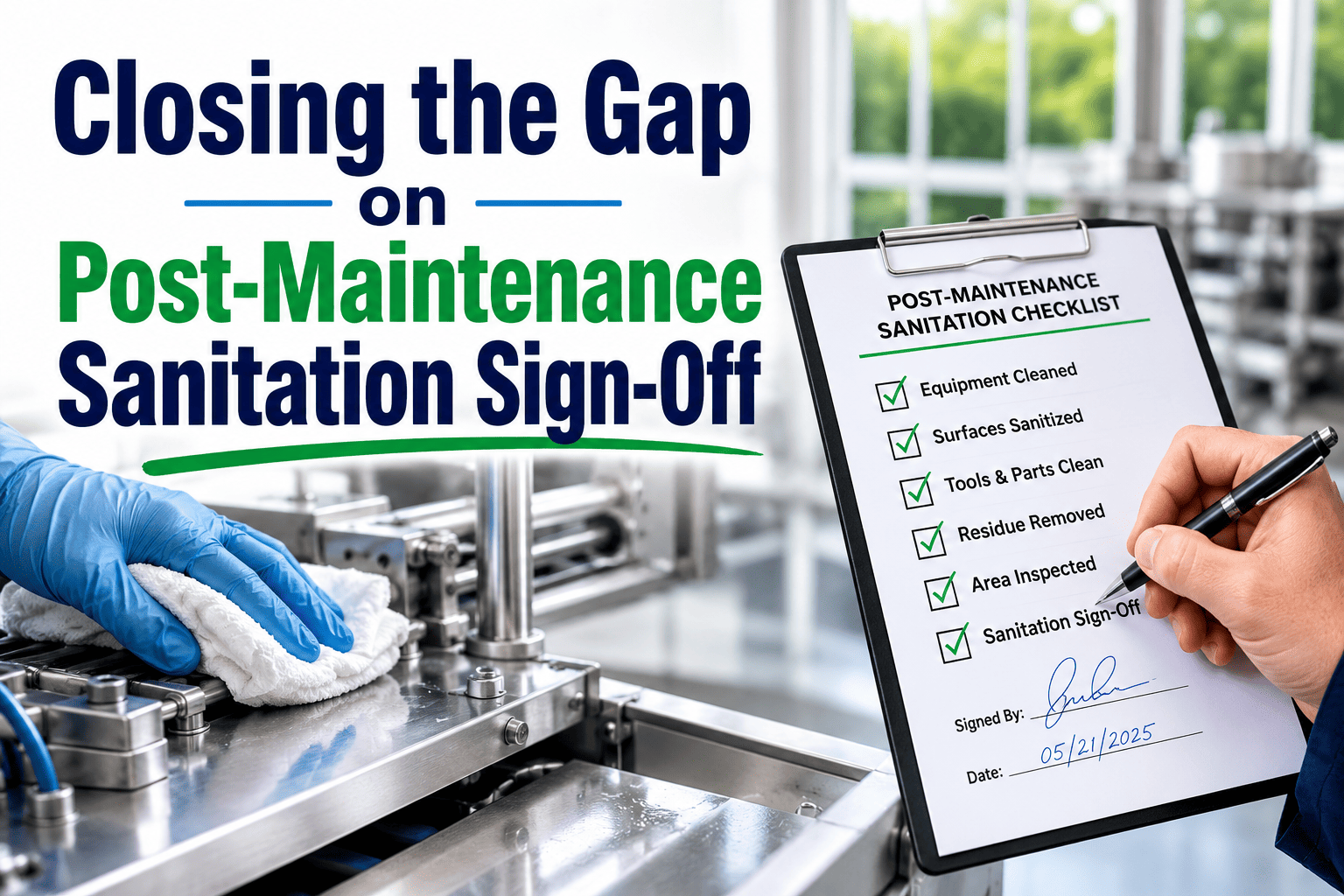
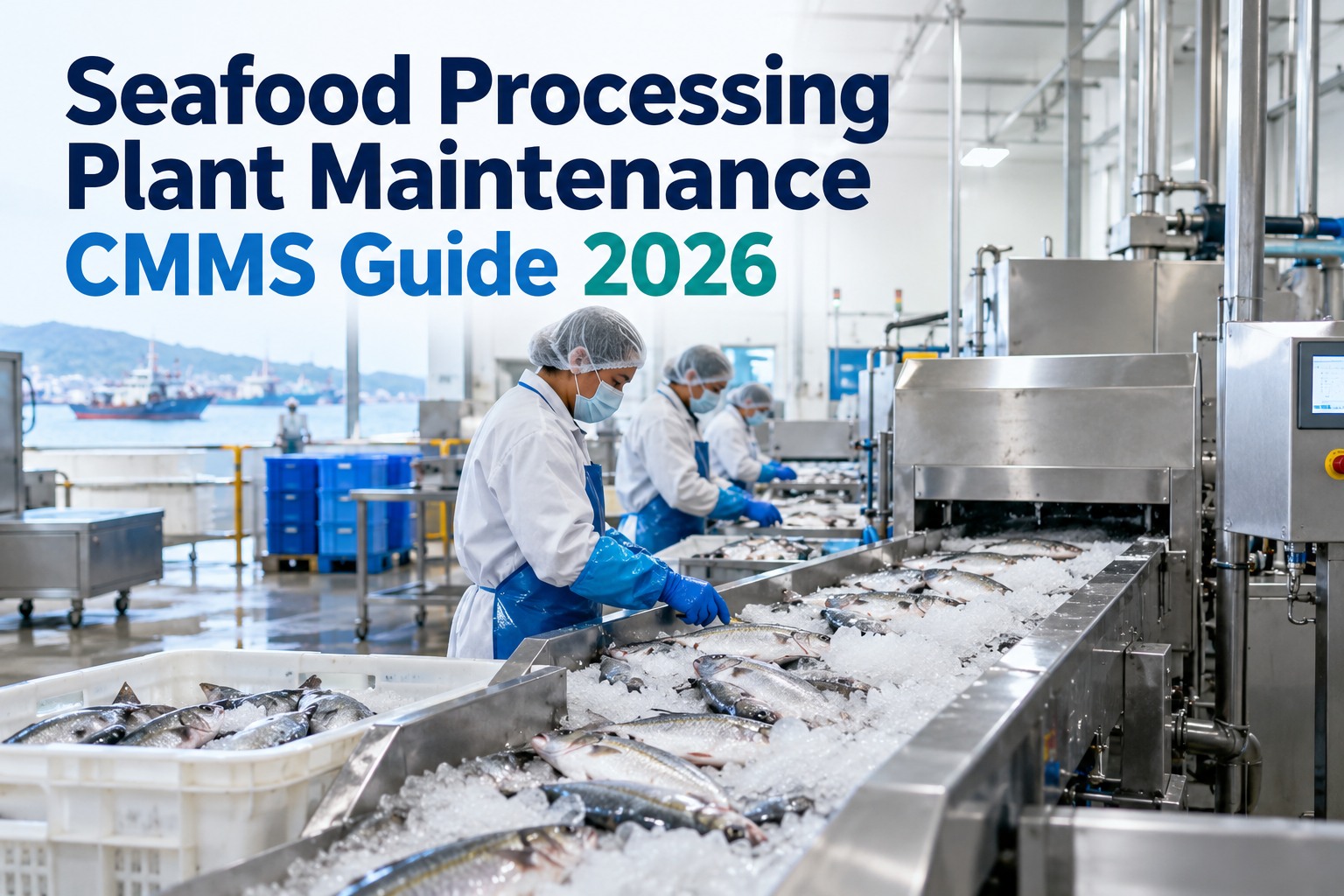
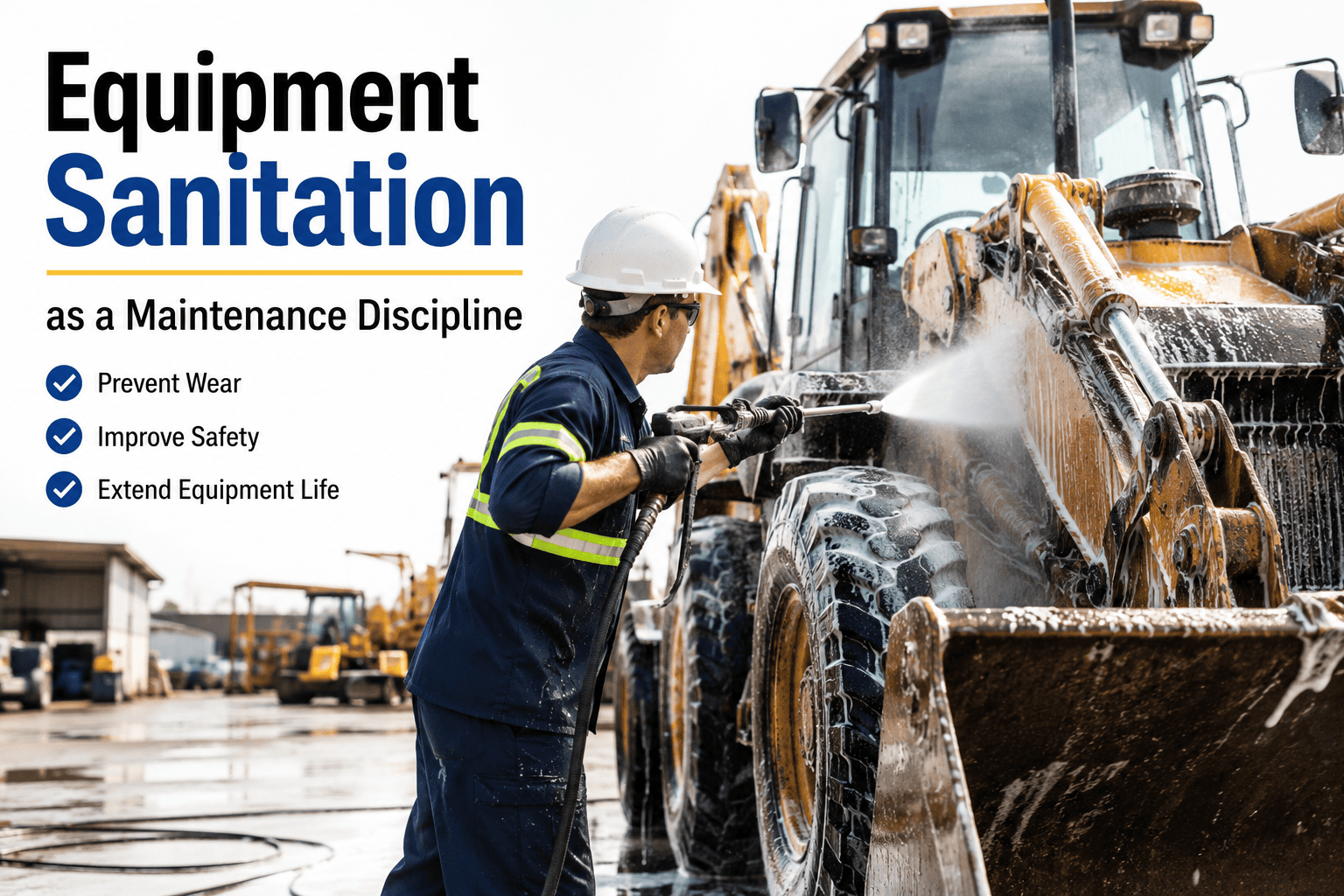
Closing the Gap on Post-Maintenance Sanitation Sign-Off
By Corin Hale on July 6, 2026
Every food manufacturing facility runs maintenance on food-contact equipment — but the equipment often goes back into production without a verified sanitation step between the wrench work and the first product run. This gap is one of the most cited root causes in FDA 483 observations and SQF audit findings across the food industry. OxMaint closes it by making post-maintenance sanitation a mandatory gate on every work order. Book a demo to see sanitation-gated work orders in action, or start a free trial today.
Post-Maintenance Sanitation Verification and Sign-Off: How CMMS Gates Work Order Closure on Confirmed Sanitation
Gate every maintenance work order on food-contact equipment with a mandatory sanitation verification step — digitally recorded, operator-signed, timestamped — before the line restarts.
Of food recalls originate from operational mistakes including sanitation failures — not ingredient contamination
$10M
Average direct cost per food recall — with indirect costs including brand damage, lawsuits, and lost contracts pushing totals far higher
73%
Increase in FDA warning letters to food facilities in the second half of 2025 — enforcement is accelerating, not easing
12K
Domestic FDA inspections conducted annually — nearly all unannounced — and post-maintenance sanitation records are a frequent inspection target
What Is Post-Maintenance Sanitation Verification
Post-maintenance sanitation verification is the documented confirmation that food-contact equipment has been properly cleaned, sanitised, and verified safe for production after any maintenance activity — before the first product contacts the surface. Under 21 CFR Part 117 Subpart B, food-contact surfaces must be cleaned and sanitised as frequently as necessary to prevent contamination, and after any interruption during which surfaces may have become contaminated. Maintenance is exactly that interruption — tools, lubricants, replacement parts, technician hands, and open equipment cavities all introduce contamination vectors that did not exist during normal production. Without a structured verification step between maintenance completion and production restart, the plant operates on assumption rather than evidence. Start a free trial and build sanitation gates into every maintenance workflow on your food-contact equipment.
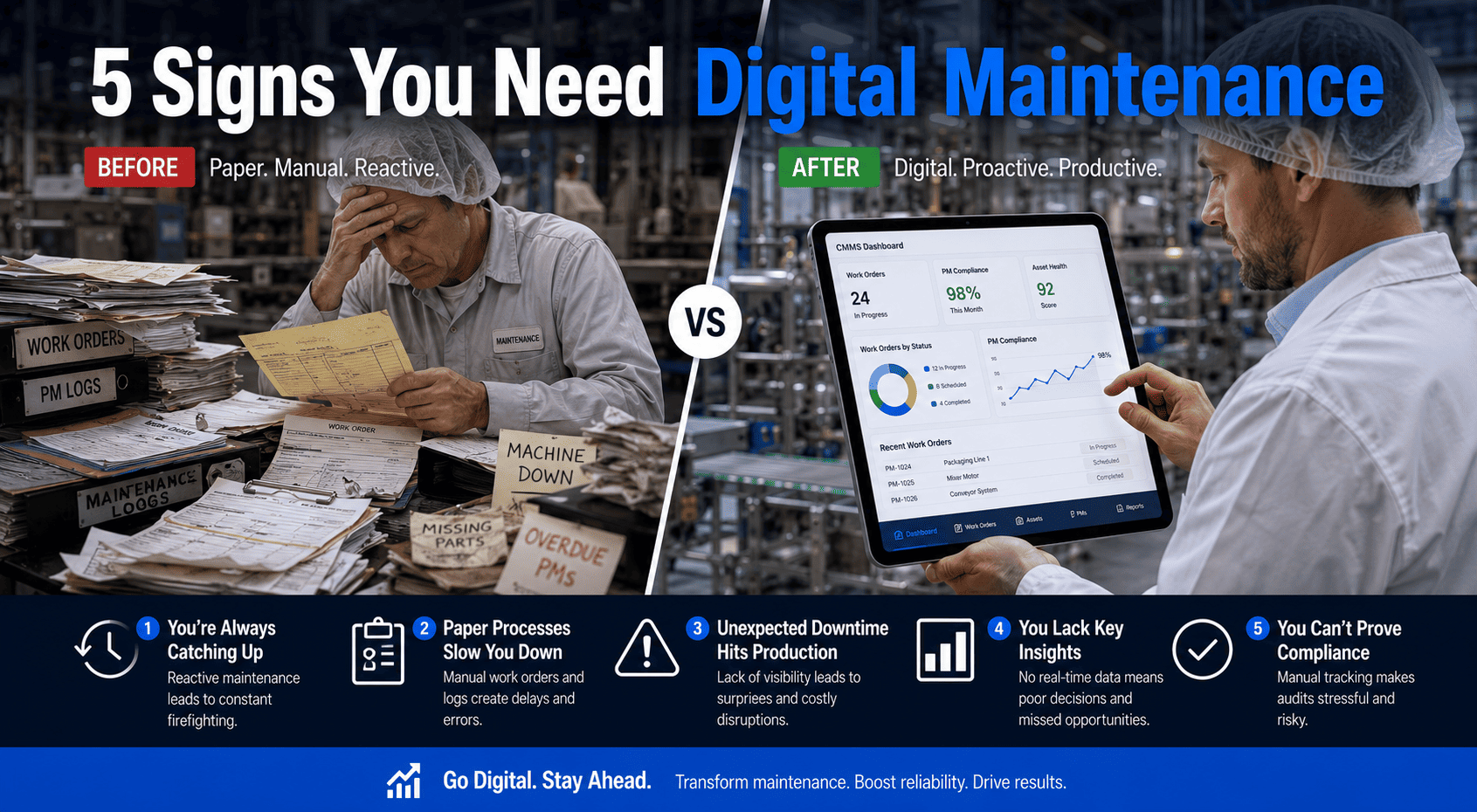
The verification itself is not complicated — visual inspection, sanitiser concentration check, ATP swab, operator sign-off. What is complicated is making it happen consistently, on every work order, across every shift, on every piece of food-contact equipment, and producing the documentation that proves it happened. Paper-based systems fail here not because people are negligent but because the process has no enforcement mechanism. A CMMS with a sanitation gate makes the verification step non-optional — the work order cannot close, the equipment cannot return to "available" status, and production cannot restart until the sanitation record is complete. Book a demo to see how OxMaint enforces this workflow.
The Sanitation Gate — How It Works in OxMaint
Step 1
Maintenance Work Order Triggers Sanitation Requirement
Any work order completed on equipment tagged as "food-contact" or "regulated" automatically generates a mandatory sanitation verification task. The maintenance technician cannot mark the work order complete without initiating the sanitation workflow.
Step 2
Sanitation Team Receives Mobile Notification
The assigned sanitation operator receives the verification task on their mobile device — with the equipment location, maintenance activity summary, and the specific sanitation checklist required for that equipment type and maintenance category.
Step 3
Verification Checklist Completed On-Site
The sanitation operator completes the digital checklist at the equipment — visual inspection, sanitiser application, concentration verification, contact time confirmation, and rinse verification. Every field is required. Incomplete checklists cannot be submitted.
Step 4
Digital Sign-Off with Timestamp
The operator signs off digitally — recording who verified, when they verified, what they verified, and the result. The sign-off is timestamped and linked permanently to the original maintenance work order, creating the connected audit record.
Step 5
Equipment Released to Production
Only after the sanitation verification is complete and signed does the equipment status change to "available for production." Production scheduling systems and line supervisors see the equipment as cleared — no ambiguity, no assumptions, no gaps.
Where Post-Maintenance Sanitation Fails Without a CMMS Gate
Maintenance Closes, Nobody Sanitises
The maintenance technician finishes the repair and marks the work order complete. Production restarts the line. The sanitation step between maintenance and production never happens — because nothing in the system required it. This is the single most common post-maintenance contamination scenario in food manufacturing, and it produced the Taylor Farms 483 observations that followed the 2024 E. coli outbreak linked to McDonald's onions.
Sanitation Happens, Nobody Documents It
The sanitation team actually cleaned the equipment after maintenance. But no record was created — no timestamp, no operator name, no verification of sanitiser concentration. When the FDA inspector asks for post-maintenance sanitation documentation, the facility cannot produce it. The FDA treats incomplete records as equivalent to no records, and the 483 observation follows regardless of whether the sanitation was actually performed.
Documentation Exists but Is Not Linked
The maintenance record lives in the CMMS. The sanitation record lives in a paper logbook or a separate system. No connection exists between the two. An auditor reviewing the maintenance work order has no way to verify that post-maintenance sanitation occurred for that specific event. The documentation gap is structural — it exists by design in any system where maintenance and sanitation records are managed separately.
Night Shift Skips the Step Entirely
Emergency maintenance at 2 AM on a filler head. The maintenance tech finishes, notifies the line lead, and production restarts. The sanitation step was skipped because the urgency of restoring production overrode the sanitation protocol. Without a system-enforced gate that physically prevents the equipment from returning to production status, human urgency will always override procedural discipline on off-shifts.
The Taylor Farms FDA Form 483 cited three major observations — all sanitation-related: failure to implement sanitation preventive controls, missing sanitation verification records, and operations conducted under conditions that did not prevent contamination. The outbreak sickened 104 people across 14 states.
Reactive vs. CMMS-Gated: Post-Maintenance Sanitation Compared
Sanitation Activity
Paper / No Gate
OxMaint Sanitation Gate
Sanitation trigger after maintenance
Verbal handoff or none
Automatic — triggered by work order
Verification documentation
Paper log, often incomplete
Digital checklist with required fields
Operator identity on record
Illegible signature or missing
Digital sign-off with user ID and timestamp
Link to maintenance event
No connection between records
Sanitation record linked to work order
Production restart control
Manual — relies on human memory
System-enforced gate blocks restart
Audit record retrieval
Hours searching binders
Complete linked record in seconds
Off-shift compliance
Frequently skipped under pressure
Same enforcement on every shift
Stop Relying on Memory. Start Gating on Verification.
Every maintenance event on food-contact equipment needs a sanitation record. OxMaint creates it automatically — no clipboards, no gaps, no findings.
What OxMaint Records for Every Post-Maintenance Sanitation Event
01
Maintenance Event Link
Every sanitation verification record is permanently linked to the triggering maintenance work order — equipment ID, maintenance type, technician, and completion time are all connected in a single audit trail.
02
Sanitation Operator Identity
Digital sign-off captures who performed the sanitation verification — not an illegible signature on a paper form but a system-authenticated user ID that satisfies FDA data integrity requirements.
03
Timestamp and Duration
When the sanitation started, when each verification step was completed, and when the final sign-off was recorded — producing the timeline that auditors use to verify adequate contact time and process completion.
04
Verification Parameters
Sanitiser type, concentration, contact time, rinse verification, and visual inspection results — all recorded as structured data fields that can be trended, queried, and reported across facilities.
05
Deviation and Corrective Action
If any verification step fails — low sanitiser concentration, failed visual inspection, out-of-spec ATP reading — the system captures the deviation, the corrective action taken, and the re-verification result.
06
Equipment Release Confirmation
The final field: explicit confirmation that the equipment is released to production. This is the record that closes the loop — the documented proof that sanitation was verified before product contact resumed.
Regulatory Standards That Require Post-Maintenance Sanitation Records
FDA FSMA 21 CFR 117
Subpart B requires food-contact surfaces to be cleaned and sanitised after any interruption where contamination may have occurred. Subpart C requires sanitation controls with monitoring, corrective actions, and verification records.
SQF Edition 10
Sharpened language around cleaning effectiveness verification — auditors now probe whether verification methods are validated, not merely whether cleaning occurred.
BRC Global Standard
Section 4.11 requires documented cleaning and disinfection procedures with verification records that demonstrate cleaning effectiveness on food-contact surfaces.
HACCP Prerequisite Programs
Post-maintenance cleaning validation is a prerequisite program requirement — maintenance on food-contact surfaces must include post-work cleaning verification before equipment returns to production.
Results Teams Achieve with Sanitation-Gated Maintenance
100%
Post-Maintenance Sanitation Compliance
Every maintenance work order on food-contact equipment produces a linked sanitation verification record — no exceptions, no gaps, no missing documentation regardless of shift or urgency
85%
Reduction in Sanitation-Related Audit Findings
Digital records with timestamps, operator sign-offs, and linked work orders eliminate the documentation gaps that generate the majority of sanitation-related 483 observations
60 sec
Audit Record Retrieval
Complete post-maintenance sanitation records for any date range compiled instantly — replacing the 2-3 day paper record search that defines most pre-inspection preparation
$10M
Average Recall Cost Avoided
Each contamination event prevented by enforced post-maintenance sanitation avoids an average $10 million in direct recall costs — before accounting for brand damage and lost contracts
Frequently Asked Questions
How does OxMaint gate work order closure on sanitation verification
When a work order is completed on equipment tagged as food-contact, OxMaint automatically generates a mandatory sanitation verification task linked to that work order. The work order cannot be marked "closed" and the equipment cannot return to "available" status until the sanitation checklist is completed and signed off digitally. Start a free trial to configure sanitation-gated work orders.
Does this work for emergency and off-shift maintenance
Yes — the sanitation gate applies to every work order regardless of shift, urgency, or maintenance type. Emergency repairs at 2 AM follow the same enforcement logic as planned PM during day shift. The system does not have a bypass for urgency because the contamination risk does not decrease based on time of day. Book a demo to see off-shift enforcement.
Can OxMaint produce post-maintenance sanitation records for FDA or SQF audits
Yes — every sanitation verification record includes the linked maintenance event, operator identity, timestamp, verification parameters, and equipment release confirmation. For any audit requesting post-maintenance sanitation documentation over a specified date range, OxMaint compiles the complete linked record set in under 60 seconds. Start a free trial to build audit-ready records.
What happens when a sanitation verification step fails
If any verification parameter is out of specification — low sanitiser concentration, failed ATP swab, visual contamination — OxMaint captures the deviation and triggers a corrective action workflow. The equipment remains locked from production until re-cleaning, re-verification, and re-sign-off are completed and documented. Book a demo to see deviation handling.
How quickly can we implement sanitation-gated work orders
Most food manufacturing facilities configure their food-contact equipment registry, sanitation checklists, and gated work order workflows within 1-2 weeks. Pre-built sanitation verification templates accelerate setup significantly. By your next audit cycle, every maintenance event will have a linked, digital sanitation record. Start a free trial to begin configuration.
Post-Maintenance Sanitation — OxMaint
Every Work Order Gated. Every Sanitation Verified. Every Record Linked. Audit-Ready Before the Inspector Arrives.
Sanitation-gated work orders. Digital verification checklists. Operator sign-off with timestamps. Linked maintenance-to-sanitation audit trails. FDA, SQF, and BRC ready in one platform your team runs from the plant floor.
Work orders cannot close until sanitation is verified and signed
Every record linked — maintenance event to sanitation sign-off
Complete audit packages compiled in seconds, not days
Live in weeks. No consultant required. Works across multi-site food manufacturing portfolios.