Every contractor who walks through your food plant gate with a wrench, a welder, or a pressure vessel represents a risk your CMMS either controls or ignores. External contractors are responsible for a disproportionate share of serious industrial accidents in food manufacturing — the UK HSE consistently finds that over 50% of fatal workplace incidents in food and drink facilities involve contractors or maintenance workers, not production operators. Without documented PSSR sign-off, enforced LOTO procedures, and a CMMS-tracked permit-to-work system, a contractor on your site is operating in a control vacuum — and your facility bears full legal liability for the outcome. OSHA 29 CFR 1910.147 (USA), PSSR 2000 (UK), and equivalent regulations in Canada, Australia, UAE, and Germany make facility operators jointly responsible for contractor safety management. The documented permit-to-work record is your legal defence and your operational control simultaneously — start a free trial to deploy Oxmaint's contractor permit and LOTO management workflow at your facility today, or book a demo and we will map your contractor safety control gaps together.
See how much contractor safety liability you can eliminate from your food plant operations — before the next incident forces you to find out.
- Digital permit-to-work with LOTO, hot work, and confined space workflows
- Contractor onboarding, induction, and certification tracking in a single CMMS record
- PSSR written scheme management with inspection scheduling and compliance alerts
What Is Food Plant Contractor Management?
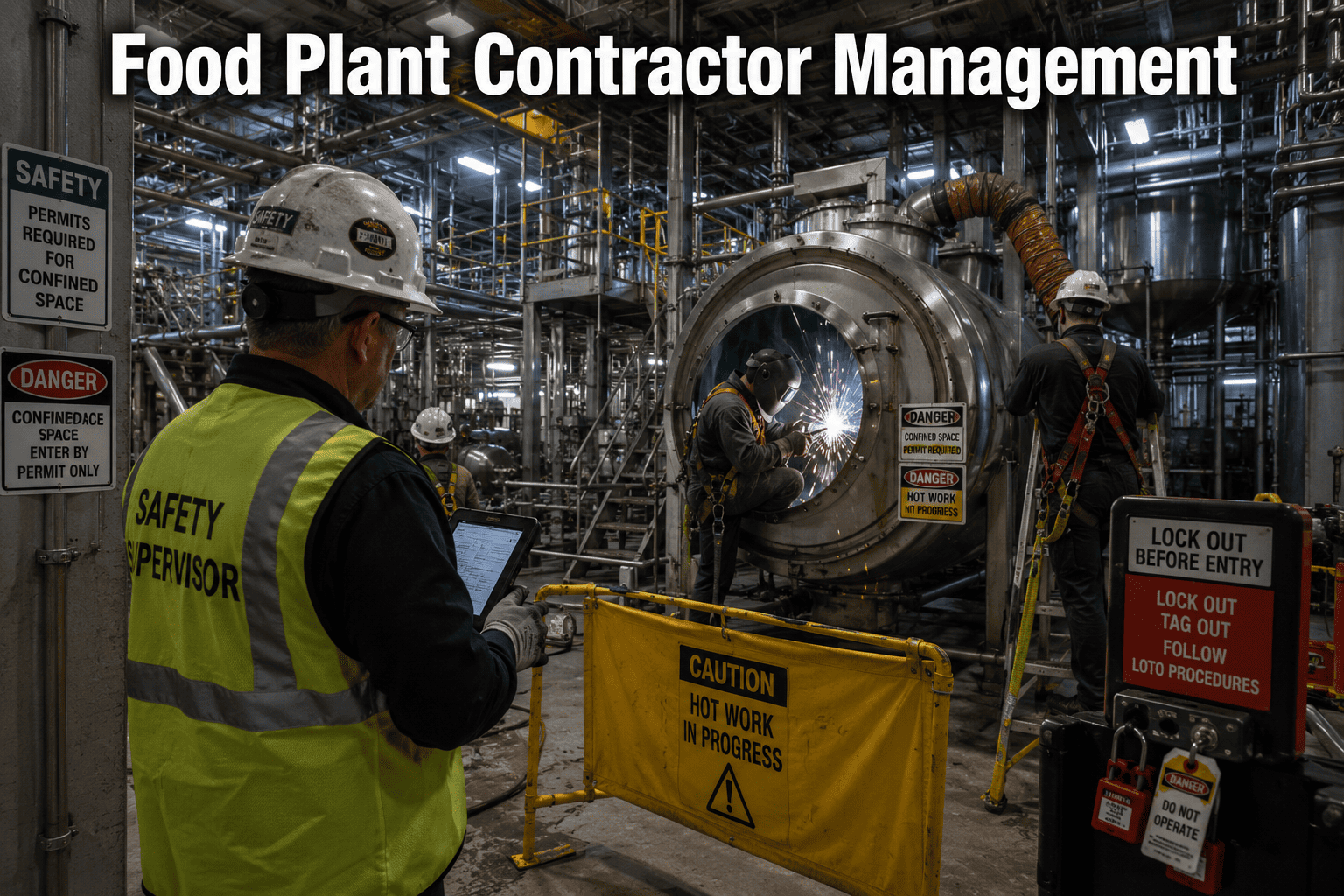
Food plant contractor management is the structured system of controls that governs how external contractors — engineering firms, refrigeration specialists, equipment OEM service teams, construction trades, and pest control operators — are selected, inducted, authorised, supervised, and documented when working within a food manufacturing facility. It encompasses four interlocking control areas: contractor selection and pre-qualification (verifying competence, insurance, and safety record before award); site induction and facility-specific safety training (communicating hazards, emergency procedures, and hygiene requirements before work begins); permit-to-work management (controlling access to hazardous activities including LOTO, hot work, confined space entry, and work on pressure systems); and post-work verification (confirming systems are restored to safe operating condition before production resumption).
The regulatory framework is demanding and multi-layered. In the USA, OSHA 29 CFR 1910.147 (Control of Hazardous Energy / LOTO) and 29 CFR 1910.119 (Process Safety Management) impose specific requirements for contractor LOTO procedures and host employer coordination. In the UK, PSSR 2000 (Pressure Systems Safety Regulations) requires a Written Scheme of Examination for all pressure systems and mandates that any contractor working on a pressure system is authorised under that scheme. CDM 2015 (Construction Design and Management Regulations) applies to any significant construction or maintenance project. In Australia, Work Health and Safety Regulations require documented safe work method statements (SWMS) from contractors for high-risk construction work. Across all jurisdictions, the host facility operator bears shared liability for contractor safety outcomes — an OSHA citation following a contractor LOTO incident on your site names your facility, not just the contractor — start a free trial to build a defensible, CMMS-tracked contractor safety management system in Oxmaint.
Beyond regulatory compliance, contractor management directly affects food safety. A contractor who bypasses an isolation procedure and restores a CIP system to service without a hygiene clearance sign-off, or a welder who performs hot work near an open product line, creates food contamination risks that are entirely outside your HACCP plan's control measures. The permit-to-work system is simultaneously a safety control and a food safety prerequisite programme control — it must be documented, enforced, and auditable.
Food Plant Contractor Safety and Permit Framework
Verification of contractor insurance (public liability, employer's liability), competency certifications, safety record, and GFSI or food safety awareness before any contractor is added to the Approved Contractor List. Re-verified annually.
Documented facility-specific induction covering emergency procedures, hygiene requirements, restricted zones, allergen awareness, and site rules — completed and signed by every contractor individual before commencing work, not just the company.
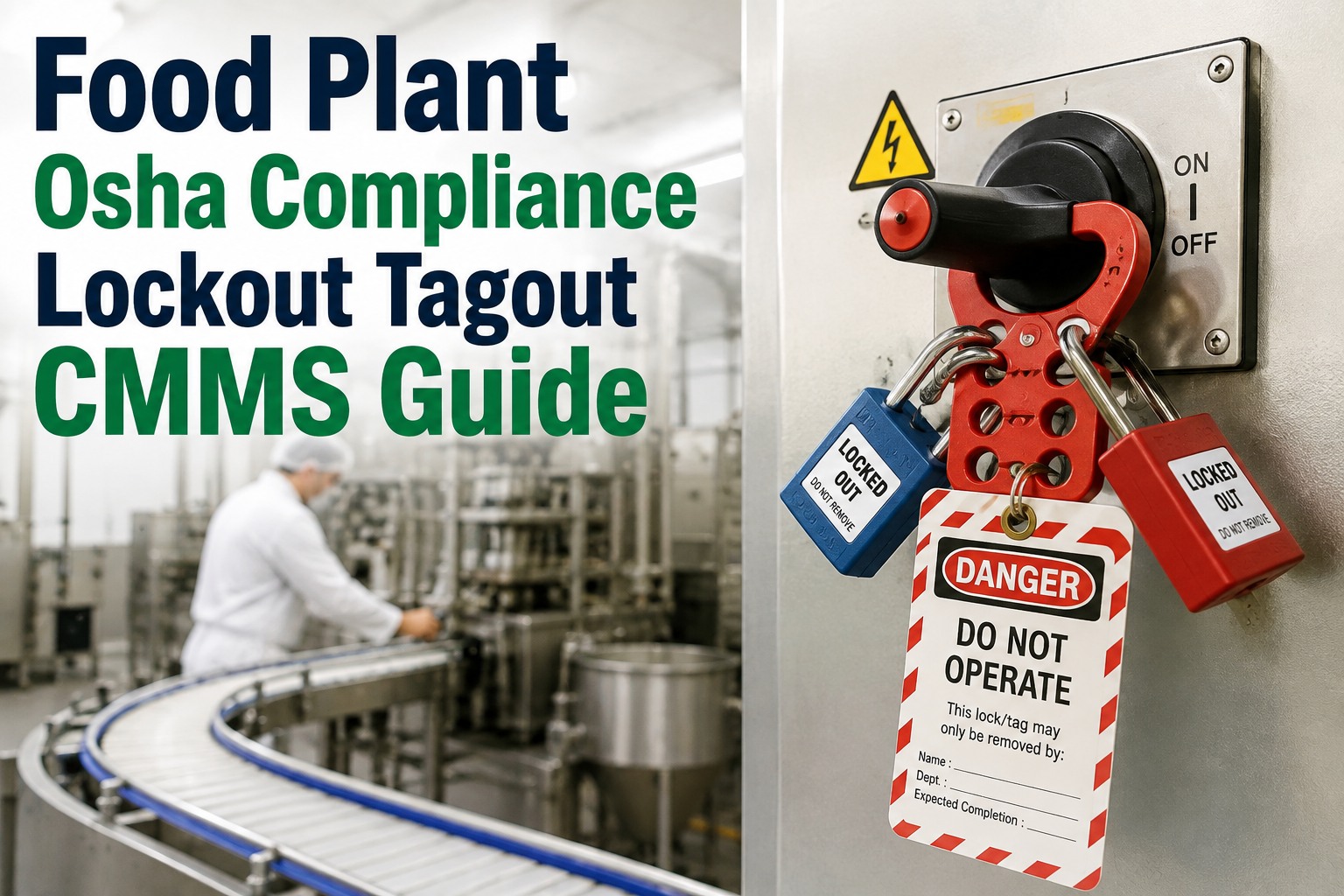
Energy isolation verification, lock application, tryout confirmation, and authorised reinstatement documented for every task involving contractor work on equipment with hazardous energy sources under OSHA 1910.147 requirements.
Pre-work fire risk assessment, firewatch designation, fire suppression equipment verification, 60-minute post-work firewatch, and authorised permit closure documented for all welding, cutting, grinding, and open-flame work near food production areas.
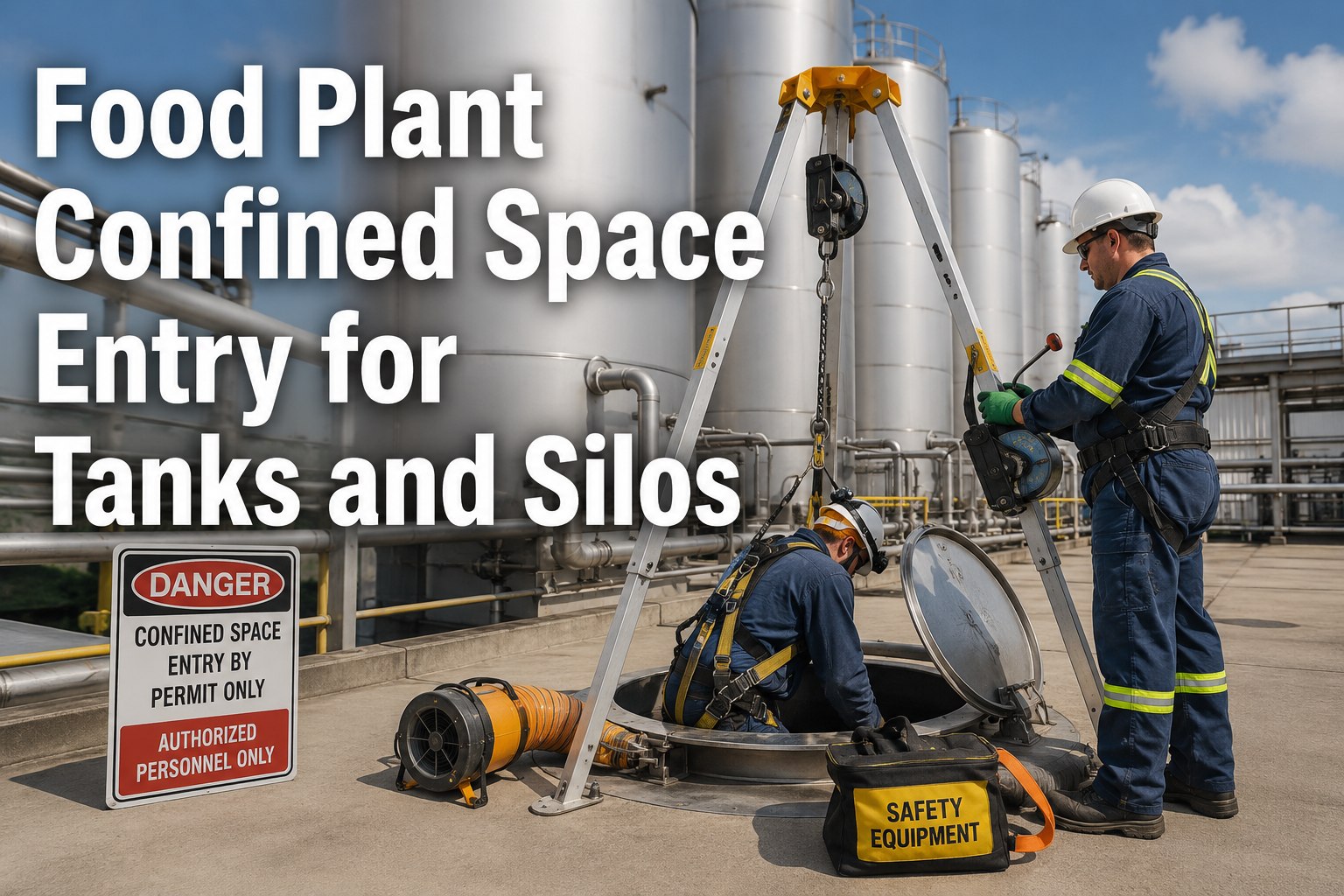
Atmospheric testing, rescue plan, standby person assignment, communication protocol, and gas monitor calibration records documented for every confined space entry in vessels, tanks, sewers, and confined plant areas under OSHA 1910.146.
UK PSSR 2000 Written Scheme of Examination covering all pressure vessels, steam systems, and compressed air lines — with scheduled thorough examination records, safe working pressure documentation, and authorised contractor sign-off for all pressure system work.
Contractor Management Pain Points in Food Plants
Paper permit-to-work systems fail at the point of enforcement. A contractor who is under time pressure and cannot immediately find a supervisor to sign a LOTO permit will often start work anyway — and facility managers have no visibility that this happened until an incident report lands on their desk. An OSHA 1910.147 citation following an energy control incident requires the facility to demonstrate not just that a procedure existed but that it was consistently enforced. Paper records cannot prove that.
When a refrigeration contractor's F-Gas certification or a pressure vessel inspector's CompEx qualification expires, paper-based contractor management systems have no automatic alert. The contractor continues working on site with an expired credential, creating an uninsured liability gap — discovered only when the certification is checked during an insurance claim investigation or regulatory audit, by which point the work has already been completed.
UK PSSR 2000 requires that every relevant pressure system has a Written Scheme of Examination and that thorough examinations are carried out at the frequency specified in that scheme. Facilities that manage PSSR compliance manually routinely miss examination due dates, operate pressure systems with expired certification, and cannot produce the written scheme for a specific vessel during an HSE inspection — each of which is a criminal offence under UK health and safety legislation. Book a demo to see how Oxmaint tracks PSSR examination schedules and alerts responsible persons 60 days before due dates.
The most dangerous moment in contractor work is not the work itself — it is the handback. A contractor who completes a repair, removes their LOTO locks, and declares the system ready for production without a documented plant engineer verification step has bypassed the last control before energy is restored. Food plants that lack a formal handback and clearance procedure have no documented evidence that a system was confirmed safe before production restart — which is both a safety failure and a regulatory violation.
Welding, cutting, and grinding operations within 10 metres of open food handling areas create both fire risk and chemical contamination risk from welding fumes, grinding sparks, and metal particulates. Without a hot work permit that requires pre-work area clearance, product isolation, and a post-work hygiene inspection before production resumption, a hot work event can contaminate product that has already been packed and distributed to retail.
Contractor insurance certificates in a procurement folder, induction records in an HR system, permit-to-work logs in a maintenance binder, and PSSR examination certificates in a QA filing cabinet — when a regulatory authority requests a complete contractor safety record for a specific work event, assembling this evidence takes days and routinely reveals gaps. CMMS-integrated contractor management eliminates this fragmentation. Start a free trial to unify your contractor records in a single searchable Oxmaint audit trail.
How Oxmaint Solves Food Plant Contractor Safety Management
Configure LOTO, hot work, confined space, and PSSR permit workflows in Oxmaint with mandatory step completion before work can commence. Supervisors receive mobile approval requests; permits cannot be bypassed or backdated. Every permit issuance, suspension, and closure is timestamped and user-attributed.
Upload contractor insurance certificates, competency cards, and PSSR examination records to each contractor's Oxmaint profile with expiry dates. Automated alerts notify the responsible manager 60 and 30 days before any certification expires — preventing expired credentials from reaching site unnoticed.
Register every pressure vessel, steam system, and compressed air line against its Written Scheme in Oxmaint. Scheduled thorough examination work orders auto-generate at the scheme-defined frequency, assign to the authorised examiner, and flag overdue examinations to the facilities manager before they become regulatory violations.
Store approved energy control procedures for every asset in Oxmaint. When a contractor LOTO permit is raised, the asset-specific procedure loads automatically on the technician's mobile device — eliminating the improvised isolation attempts that cause most LOTO incidents on unfamiliar equipment.
Conduct contractor site inductions via mobile, capturing digital signature, photo ID, and induction content confirmation for every individual. Records are linked to work permits, ensuring that no permit can be issued to a contractor individual who has not completed a valid site induction.
Configure mandatory post-work checklists in every permit type — requiring plant engineer verification of system restoration, energy re-isolation confirmation, and hygiene inspection sign-off before permit closure. No permit closes until all handback conditions are met. Start a free trial to configure Oxmaint's contractor permit workflows for your facility's specific hazard profile.
Reactive vs. Planned: Contractor Management and Permit Control
| Control Area | Reactive / Paper-Based Approach | Planned Oxmaint CMMS Approach |
|---|---|---|
| LOTO Permits | Paper forms; bypassed under time pressure; no supervisor visibility until post-incident review; OSHA citation risk | Digital mandatory gate; supervisor mobile approval required; asset-specific LOTO procedure auto-loads; every step timestamped |
| PSSR Examinations | Examination due dates tracked in spreadsheet; dates missed; vessels operated beyond examination interval; UK criminal liability | Written Scheme registered against each vessel; auto-scheduled examination work orders; 60-day advance alerts; zero missed examinations |
| Contractor Certifications | Checked at onboarding only; expiry dates not tracked; expired F-Gas or CompEx credentials accepted without detection | All certifications stored with expiry dates; auto-alerts at 60 and 30 days; expired certifications block permit issuance |
| Hot Work Permits | Issued informally; firewatch assignment undocumented; 60-minute post-work watch skipped; fire and contamination risk uncontrolled | Full hot work workflow with firewatch designation, post-work timer, and hygiene clearance mandatory before permit closure |
| Confined Space Entry | Gas monitor calibration records missing; standby person informally assigned; atmospheric test results unrecorded | Atmospheric test results, monitor calibration, standby person, and rescue plan documented in permit before entry authorised |
| Post-Work Handback | Verbal confirmation only; no documented plant engineer verification; production restarts on contractor's word | Mandatory handback checklist with plant engineer sign-off before permit closure; system restoration confirmed in writing |
ROI and Safety Outcomes from Structured Contractor Management
Food Plant Contractor Management: Frequently Asked Questions
What does OSHA 1910.147 require from food plants when contractors perform LOTO work?
What is a PSSR Written Scheme of Examination and who is responsible for maintaining it?
What elements must a hot work permit include for food manufacturing environments?
How should a food plant manage contractor inductions to meet GFSI audit requirements?
Stop Exposing Your Facility to Contractor Safety Incidents and Regulatory Liability
Turn every LOTO permit, hot work authorisation, PSSR examination, and contractor induction into a timestamped, OSHA and GFSI-ready compliance record with Oxmaint — and eliminate the documentation gaps that convert contractor incidents into facility liability.
- Digital permit-to-work with mandatory LOTO, hot work, and confined space gate controls
- PSSR Written Scheme management with auto-scheduled examinations and 60-day alerts
- Contractor certification tracking with expiry alerts and permit-linked induction verification