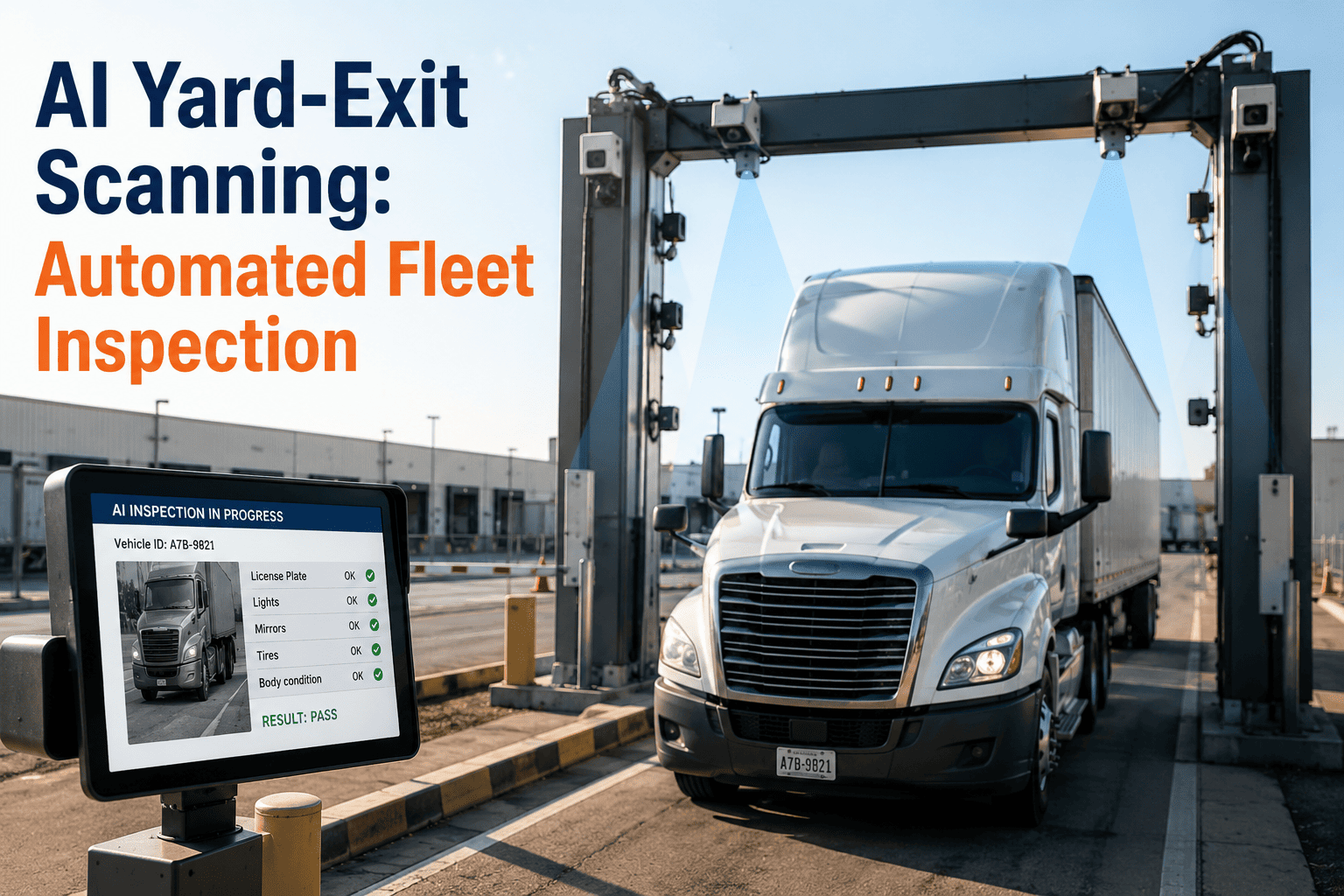
Six-forty in the morning, and the yard supervisor waves the truck through anyway. The DVIR was filed twelve minutes ago, nobody has looked at the AI scan alert on the rear axle, and dispatch already logged the load as "departed" because the appointment window closes at seven. This is what happens when "ready to roll" is a feeling instead of a standard — a truck leaves the gate carrying a defect nobody actually signed off on, and the fleet finds out the hard way, either at a roadside inspection or on the shoulder of a highway. A real yard-exit SLA closes that gap by defining, in writing, exactly what has to happen — and who has to approve it — before a vehicle is cleared to leave. See how Oxmaint enforces every stage of that SLA automatically, from pre-trip DVIR to dispatch sign-off.
Fleet Operations
Dispatch SLA
Yard Management
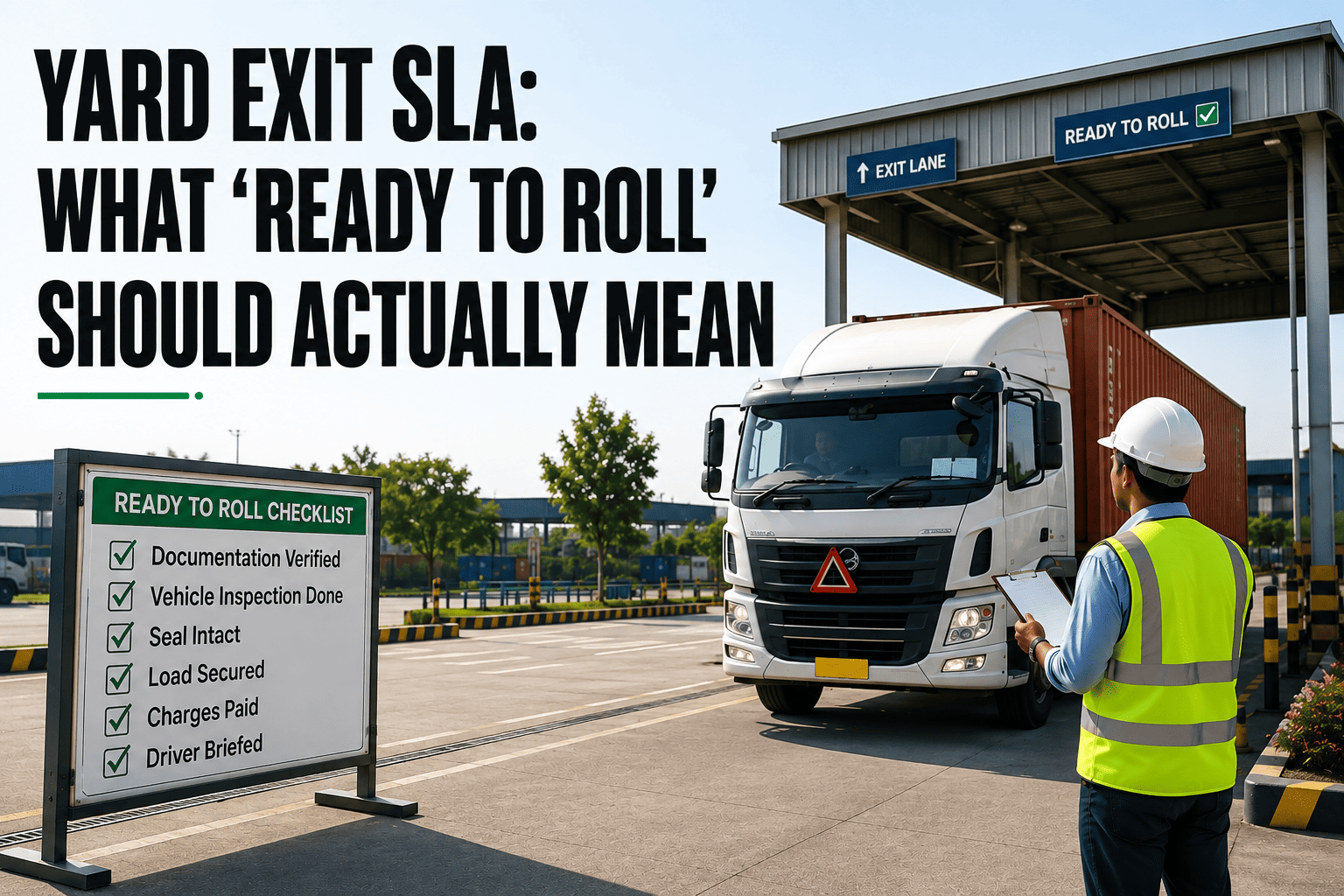
Yard Exit SLA: What "Ready to Roll" Should Actually Mean
Most fleets cannot say, in writing, what has to happen before a truck leaves the yard. Here is the four-stage standard — DVIR, AI scan, defect clearance, dispatch approval — that gets fleets to 96% on-time dispatch without skipping a single safety check.
The 2026 Yard Exit Reality
71%
DOT roadside pass rate for fleets still running paper-based pre-trip programs
60%
Fewer roadside out-of-service orders once a defined, enforced yard-exit standard is in place
18 min
Average time a dispatcher waits on an unresolved defect before overriding it and releasing the truck anyway
96%
On-time dispatch rate achievable once DVIR, AI scan, and approval are chained into one enforced SLA
The Problem
"Ready to Roll" Is Not a Feeling — It Is Four Approvals
Ask a dispatcher what "ready to roll" means at their yard and you will get a shrug, not a standard. The driver felt fine about the truck. The mechanic glanced at it between two other jobs. Nobody actually timed how long the vehicle sat between DVIR submission and gate clearance, and nobody can produce a record showing who approved it to leave. A yard exit SLA replaces that shrug with four measurable checkpoints, each with a target time and a named owner — so "ready to roll" becomes a timestamp instead of an assumption.
01
No Owner of the Clock
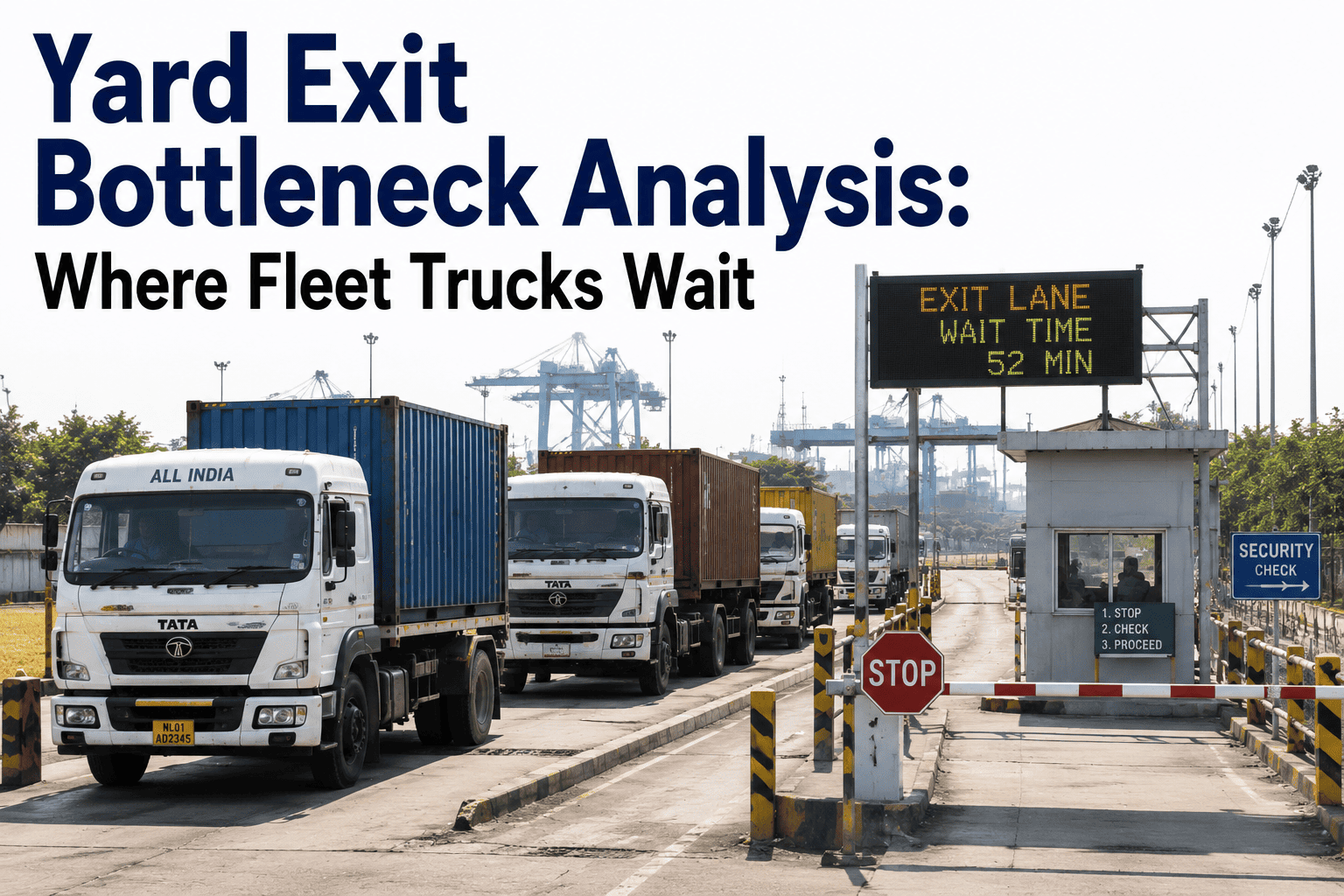
Most yards have no single point tracking the minutes between a driver submitting a DVIR and a truck actually clearing the gate. Without an owner and a target time, that gap silently expands until it eats the appointment window — and the fix becomes rushing the inspection instead of fixing the process.
02
The Override Culture
A driver who reports a defect and delays departure is the driver who gets a phone call from dispatch asking why the truck is not moving. After that call happens two or three times, defects stop getting reported — not because the trucks improved, but because the pressure to hit the departure window outweighs the incentive to flag a problem.
03
Untracked Wait Time
Even fleets that take inspection seriously rarely measure the handoff between stages — DVIR submitted, technician notified, defect certified, dispatch cleared. Each handoff is where trucks actually sit idle, and without a timestamp at every stage, nobody can tell whether the bottleneck is the inspection, the shop, or dispatch itself.
The Standard
The Four Stages Every Yard Exit SLA Needs
A working SLA does not try to make inspections faster than they should be — it makes every stage visible, timed, and owned. These four checkpoints, chained together with a timestamp at each one, are what separates a fleet that can prove a truck was safe to dispatch from one that is simply hoping it was.
1
Target: 10 minutes from arrival
Pre-Trip DVIR Submitted
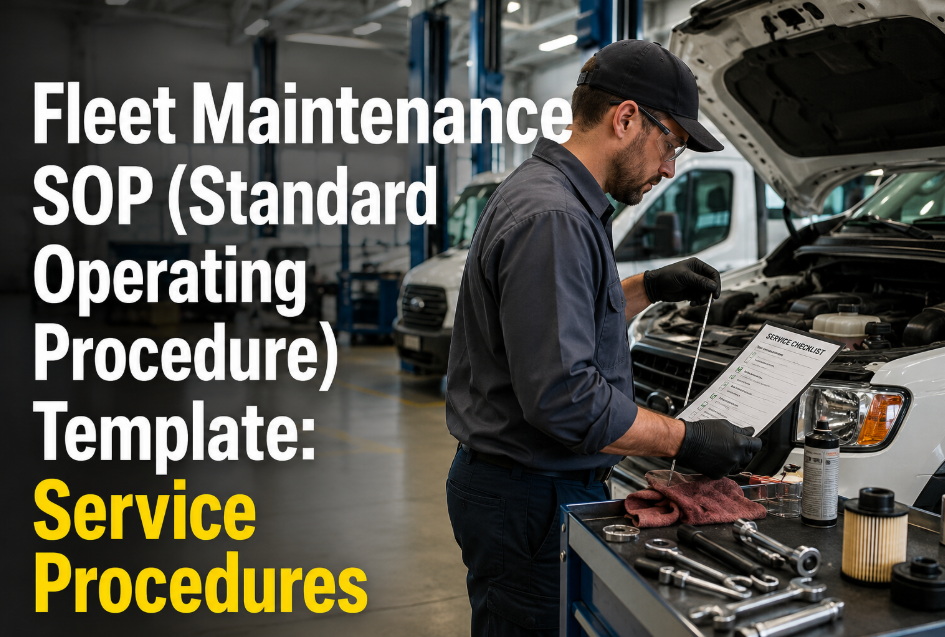
Driver completes a guided digital walkaround covering every FMCSA-required category — brakes, tires, lighting, coupling, steering — with a GPS-timestamped sign-off the moment it is submitted, not re-entered later from a paper form.
→
2
Target: under 90 seconds per vehicle
AI Undercarriage & Panel Scan
A camera array at the exit lane scans undercarriage, tires, and panels automatically, catching what a rushed walkaround at 4 a.m. misses — and attaches any flagged defect to the same DVIR record as additional evidence, not a separate report.
→
3
Target: 20 minutes for minor defects
Defect Clearance or Certification
Every flagged item — driver-reported or AI-detected — generates a work order automatically. A technician either certifies "no defect found" or signs off that a repair is complete. Verbal clearance does not count; the certification has to exist as a record.
→
4
Target: instant, once stages 1–3 close
Dispatch Approval Logged
The vehicle status flips to "ready to roll" only when all three prior stages carry a timestamp. Dispatch sees a live status per truck instead of relying on a phone call or a driver's word — and cannot override a hold without leaving a record of who did it and why.
Benchmark
The Yard Exit SLA Benchmark Table
Use this as the starting target set for your own yard. Fleets running all four stages inside these windows are the ones reporting the 96% on-time dispatch figure referenced above — the target times are tight enough to keep freight moving but honest enough that they do not require skipping a check.
| SLA Stage |
Target Time |
What Breaks It |
CMMS Enforcement |
| DVIR Submission |
10 minutes from arrival |
Driver skips items or the report is completed on paper and re-entered hours later, losing the real timestamp |
Guided mobile DVIR with GPS-timestamped, sequential sign-off |
| AI Scan Pass |
90 seconds per vehicle |
No camera coverage at the exit lane, or the scan is skipped entirely under time pressure |
Automated camera-array scan attached directly to the DVIR record |
| Defect Clearance |
20 minutes for minor defects |
A verbal "it's fine, go" from a supervisor with no certification behind it |
Work order auto-generated on every flagged defect; clearance blocked until a technician signs off |
| Dispatch Approval |
Instant once stages 1–3 close |
Dispatcher manually overrides a held vehicle to hit an appointment window |
System-locked status — dispatch cannot release a vehicle without a full digital clearance chain |
Scroll horizontally on smaller screens to view all columns
Stop Measuring Yard Exit by Guesswork
Oxmaint chains the DVIR, the AI exit-lane scan, defect certification, and dispatch approval into one enforced workflow — so every "ready to roll" status is backed by a timestamp, not a phone call.
Before vs After
What Changes When the SLA Is Enforced, Not Assumed
The comparison below reflects the practical difference between yards running on verbal clearance and yards running a defined, system-enforced yard exit SLA — based on outcomes reported by fleets within their first two quarters of enforcing all four stages.
Without a Defined SLA
Dispatch releases trucks based on a verbal assurance, not a timestamped clearance
Defects reported late in the shift get buried under pressure to hit the appointment window
No record exists showing exactly when a vehicle was actually cleared to leave
Roadside violations trace back to defects that were visible in the yard hours earlier
Average time from DVIR submission to gate clearance is unmeasured and unmanaged
Dispatchers and technicians blame each other after a breakdown, with no data to settle it
With an Enforced Yard Exit SLA
Every clearance carries a GPS-timestamped, four-stage digital chain of custody
The AI exit-lane scan catches undercarriage and panel defects a rushed walkaround misses
Dispatch sees a live "ready to roll" status per vehicle, not a phone call
96%+ on-time dispatch achieved without bypassing a single required check
Full audit trail available in seconds for a DOT review or a claims dispute
Technicians and dispatchers work off the same real-time clearance record
Failure Modes
Where Yard Exit SLAs Actually Break Down
Most fleets that fail an SLA did not fail to write one — they wrote a reasonable standard and then let it erode at one of four predictable points. These are the ones worth checking against your own yard before you assume the standard is holding.
The Silent Override
A dispatcher tells a driver to go before a flagged defect is certified as repaired, because the appointment window is closing. No record is created, so nobody outside that conversation ever knows the SLA was broken until something fails on the road.
The Untimed Scan
The AI exit-lane camera is installed, but it is not wired into the clearance workflow — it produces alerts that sit in a separate dashboard nobody checks before dispatch approves the load. The technology exists; the enforcement does not.
The Paper Gap
A DVIR is completed on paper in the yard and re-entered into the system hours later at shift change. The re-entry timestamp becomes the official record — hiding exactly how long the vehicle actually sat between submission and clearance.
The Missing Escalation Path
Minor defects have a clear path to a technician; critical ones often do not. A defect serious enough to hold a vehicle sits in the same queue as a routine one, with no defined trigger to pull a supervisor in immediately.
FAQ
Frequently Asked Questions on Yard Exit SLAs
What should a yard exit SLA actually measure?
It should measure elapsed time between four checkpoints — DVIR submission, AI scan completion, defect certification, and dispatch approval — with a timestamp at each one. A single "inspection complete" flag is not enough; the SLA has to show how long each stage actually took.
How fast should a DVIR-to-dispatch clearance realistically be?
For a vehicle with no defects, ten to fifteen minutes total is achievable when the DVIR, scan, and approval stages are digitally connected. Vehicles with a flagged defect should run longer by design — the SLA target is honesty about the wait, not artificial speed.
Does an AI exit-lane scan replace the driver's pre-trip inspection?
No — the driver's inspection responsibility remains regardless of what technology is layered on top. The scan exists to catch what a rushed human walkaround misses, not to remove the driver's sign-off from the chain.
Book a demo to see how the two are combined into one record.
What happens when dispatch overrides an unresolved defect?
In an enforced SLA, dispatch cannot release a vehicle without a completed digital clearance — an override has to be logged, timestamped, and attributed to a named person rather than happening silently.
See the override workflow configured for a real yard.
How do we move from paper DVIRs to an enforced yard exit SLA?
Start by digitizing the DVIR itself so every submission is timestamped, then connect defect flags to an automatic work order, and only then add the dispatch-approval lock once the first two stages are reliable. Most fleets phase this in over four to six weeks rather than switching everything at once.
Turn "Ready to Roll" Into a Timestamp, Not a Guess
Oxmaint connects DVIR submission, AI exit-lane scanning, defect certification, and dispatch approval into a single enforced SLA — so every truck that leaves the yard has a record proving it was actually ready.