The way fleets are managed has fundamentally changed. What once required manual logs, radio check-ins, and reactive repairs is now driven by sensors, satellites, and real-time intelligence. IoT — the Internet of Things — has transformed every vehicle into a data source, and every data source into an opportunity to cut costs, prevent breakdowns, and run a safer operation. The global IoT fleet management market stands at $9.17 billion in 2025 and is accelerating toward $17.35 billion by 2030, growing at a 13.1% CAGR. That growth isn't speculative — it's the result of fleets discovering, one operation at a time, that connected technology pays for itself faster than almost any other capital investment. If you're still running your fleet on spreadsheets and reactive maintenance schedules, this guide will show you exactly what you're leaving behind — and what's possible when IoT meets a purpose-built CMMS like OxMaint. Sign up free to see how connected fleet intelligence works in practice.
$9.17B
IoT Fleet Management Market in 2025
15.5%
Annual Market Growth Rate (CAGR)
25%
Reduction in Operating Costs with IoT
70%
Of Fleets Report Higher Efficiency Post-IoT
OxMaint · Connected Fleet Management Platform
Your fleet generates data every mile. OxMaint turns that data into decisions.
OxMaint connects IoT telematics, predictive maintenance, inspection workflows, and compliance reporting in a single cloud-native platform. No hardware lock-in. No IT project. Deploy in days and see measurable results within weeks.
25%Lower operating costs
25%Less unplanned downtime
15%Fuel savings per fleet
DaysTo full deployment
What IoT Actually Means for Your Fleet
IoT in fleet management means installing sensors, GPS trackers, and telematics devices on your vehicles — and connecting them to a platform that turns raw data into operational intelligence. Every vehicle becomes a live data source: reporting its location, engine health, fuel consumption, driver behaviour, tire pressure, and maintenance status in real time. Fleet managers stop guessing and start knowing. The shift from reactive to predictive operations is the core value proposition, and it's why more than 70% of businesses using fleet management solutions have reported increased operational efficiency after adoption.
GPS Trackers
→
Real-time location, geofencing, route history
OBD-II / Telematics
→
Engine diagnostics, fault codes, fuel data
IoT Sensors
→
Tire pressure, temperature, cargo condition
Driver Cameras
→
Behaviour scoring, fatigue detection, incident evidence
ELD Devices
→
HOS compliance, automated logbooks, audit-ready data
CMMS Platform
→
Work orders, PM schedules, compliance reports, analytics
6 Ways IoT Is Transforming Fleet Operations Right Now
01
Predictive Maintenance — End the Breakdown Cycle
IoT sensors continuously monitor engine temperature, vibration, fluid levels, and component wear patterns. When a reading drifts out of range, the system flags it — days or weeks before a breakdown would occur. Fleet operators using sensor-driven predictive maintenance cut unexpected downtime by 25% and repair costs by 20%. The difference between a $300 proactive repair and a $3,000 emergency roadside call is often just one sensor reading acted on in time. OxMaint ingests telematics data and automatically triggers work orders when thresholds are crossed — so nothing falls through the cracks.
25% less downtime · 20% lower repair costs
02
Fuel Efficiency — The Savings You Can See Immediately
Fuel is one of the largest and most controllable cost categories in fleet operations. IoT tracks consumption patterns at the vehicle level — identifying excessive idling, aggressive acceleration, and suboptimal routing. Fleets that pair IoT fuel monitoring with driver coaching programmes typically achieve 8–15% fuel cost reduction. PepsiCo reduced fleet fuel consumption by 18% using IoT-based monitoring and coaching. With telematics-connected platforms, fleet managers get fuel consumption dashboards by vehicle, driver, and route — and can act on inefficiencies the same day they appear.
8–15% fuel cost reduction · Actionable same-day data
03
Real-Time GPS and Route Intelligence
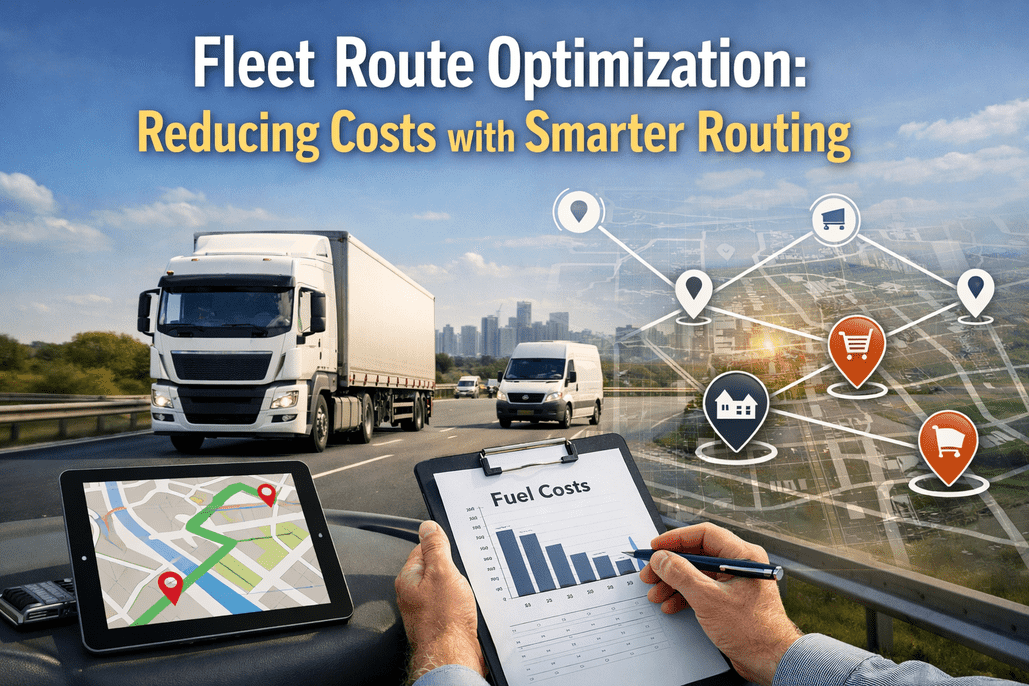
Modern IoT fleet tracking goes far beyond knowing where your vehicles are. GPS-enabled devices transmit location, speed, heading, and stop data continuously. When integrated with traffic and weather feeds, the platform can reroute vehicles dynamically — reducing travel time and fuel consumption by up to 15%. UPS built its ORION routing system on this principle and saves millions annually. For your fleet, real-time visibility means faster response to customer requests, better dispatch decisions, and elimination of unauthorized vehicle use — all visible from a single dashboard.
Up to 15% route efficiency gain · Full fleet visibility
04
Driver Behaviour Monitoring — Coach with Evidence, Not Guesses
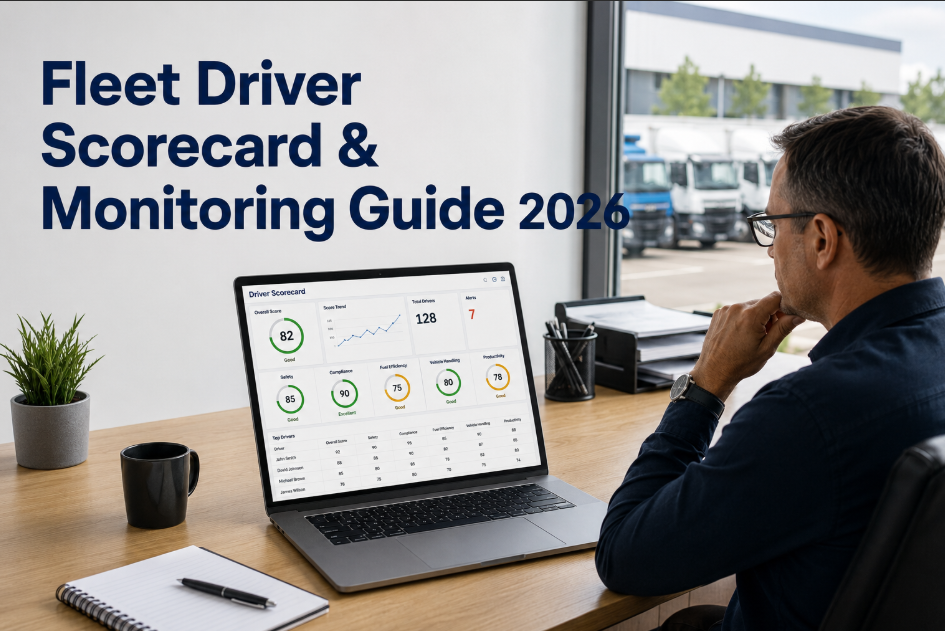
IoT devices track speeding, harsh braking, rapid acceleration, and sharp cornering for every driver on every trip. The data feeds into driver scorecards that make coaching conversations objective and productive. Fleets using behaviour monitoring reduce accidents by 22% — lowering liability exposure and insurance premiums simultaneously. When telematics data flows into a CMMS like OxMaint, you can link driver behaviour patterns directly to maintenance records — identifying whether aggressive driving is accelerating brake or tyre wear on specific vehicles.
22% fewer accidents · Lower insurance premiums
05
Compliance Automation — Audit-Ready Without the Paperwork
ELD mandates, DVIR requirements, hours-of-service rules, and emissions standards all demand documented evidence. IoT devices capture compliance-relevant data automatically — timestamped, driver-attributed, and tamper-evident. Digital inspection checklists on mobile replace paper forms, with defects flagged immediately and maintenance work orders created automatically. Violations that can cost up to $15,000 per incident become far less likely when compliance is built into the daily workflow rather than checked at the end of a shift. Book a demo to see OxMaint's compliance automation in action.
$15,000 per violation avoided · Instant audit trail
06
Fleet Analytics and AI — The Intelligence Layer
When IoT data accumulates over weeks and months, patterns emerge that individual vehicle checks never reveal. AI-driven analytics identify which vehicle models have the highest total cost of ownership, which routes produce the most wear, and which drivers need the most coaching. Fleets integrating IoT with AI analytics can amplify cost savings by up to 30% compared to basic telematics alone. By 2027, over 75% of large enterprises are expected to use digital twins and advanced analytics for fleet operations — making early adoption a competitive differentiator rather than a future option.
Up to 30% greater savings with AI · Predictive fleet intelligence
OxMaint · IoT-Connected Fleet CMMS
Connect your telematics data to a maintenance platform that acts on it — automatically.
OxMaint integrates with any GPS or telematics provider and turns sensor data into automated work orders, PM schedules, compliance reports, and driver scorecards. Hardware-agnostic. Cloud-native. Deployable in days.
AnyTelematics hardware
AutoWork order creation
100%Audit trail coverage
DaysTo go live
IoT vs. Traditional Fleet Management: What Changes
Area
Traditional Approach
With IoT + OxMaint
Maintenance Scheduling
Calendar-based, often overdue
Sensor-triggered, auto work orders
Breakdowns
Reactive — discovered on the road
Predicted 7–30 days in advance
Fuel Management
Monthly reports, no real-time data
Daily per-vehicle consumption dashboards
Driver Coaching
Based on manager observation only
Automated scorecards from trip data
Compliance
Paper logs, manual inspections
Digital DVIR, ELD integration, auto reports
Fleet Visibility
Phone calls and guesswork
Live map, real-time status, alerts
Reporting
Manual compilation, days delayed
Automated dashboards, instant export
Cost Visibility
Total cost per month only
Cost per vehicle, per mile, per driver
What to Look for in an IoT Fleet Management Platform
Not every platform that claims IoT capabilities actually delivers operational value. The difference between a tracking tool and a true fleet management platform comes down to what happens after the data is collected. Here are the four capabilities that separate platforms that reduce costs from those that just add more dashboards to ignore.
Hardware-Agnostic Integration
Your platform must accept data from any telematics provider, GPS tracker, or OBD device — without locking you into proprietary hardware. Vendor lock-in is expensive and limits your ability to negotiate on device costs as technology evolves.
Automated Maintenance Triggers
Raw sensor data is only valuable if it creates action. The best platforms automatically generate work orders, schedule PM services, and alert technicians when IoT thresholds are crossed — without manual review required.
Mobile-First for Field Teams
Drivers and technicians complete inspections, log issues, and view assignments from mobile devices. A platform that requires desktop access loses its value the moment someone drives away from the yard.
Compliance Documentation Built In
Compliance shouldn't require a separate tool. Digital DVIRs, ELD integration, maintenance logs, and audit-ready reports need to live in the same system as your work orders and vehicle records — not in a separate compliance-only app.
Frequently Asked Questions
What is IoT fleet management and how does it work?
IoT fleet management uses GPS trackers, telematics sensors, OBD-II devices, and connected cameras installed on vehicles to collect real-time data on location, engine health, driver behaviour, fuel consumption, and maintenance status. This data transmits to a cloud platform where it is analysed, visualised, and acted upon — through automated alerts, work orders, and compliance reports. OxMaint connects to any existing telematics hardware and adds the maintenance management layer that turns raw data into operational decisions.
Sign up free to connect your fleet data to OxMaint.
How much can IoT fleet management actually reduce my operating costs?
Fleets implementing IoT management typically see a 25% reduction in total operating costs within 18 months of deployment. This comes from three main sources: fuel savings of 8–15% through route optimisation and driver coaching, maintenance cost reductions of 20% through predictive rather than reactive repairs, and reduced downtime of up to 25% through early fault detection. The payback period for most fleets is well under 12 months.
Book a demo to get a cost-savings projection specific to your fleet size and type.
Does OxMaint work with my existing GPS or telematics hardware?
Yes. OxMaint is hardware-agnostic, meaning it integrates with data from any GPS tracker, telematics unit, or OBD-II device you already have installed. You do not need to replace existing hardware or purchase proprietary OxMaint devices. The platform ingests telematics data through open APIs and pre-built integrations, connecting your existing data streams to maintenance workflows, inspection checklists, and compliance reports.
Sign up free to start your integration.
What is predictive maintenance in fleet management and how is it different from preventive maintenance?
Preventive maintenance is scheduled based on time or mileage intervals — you service the vehicle every 5,000 miles regardless of its actual condition. Predictive maintenance uses IoT sensor data to service the vehicle when its condition actually warrants it — before failure, but not unnecessarily early. This approach cuts unexpected breakdowns by 25% and reduces over-servicing costs simultaneously. OxMaint supports both preventive and predictive maintenance workflows, with sensor-triggered work orders generated automatically when readings exceed defined thresholds.
Book a demo to see the predictive maintenance workflow live.
How does IoT help with fleet compliance and regulation?
IoT devices capture compliance-critical data automatically: electronic logging of hours-of-service, timestamped pre-trip and post-trip inspection records, emissions monitoring, and vehicle condition documentation. This removes the human error and missing documentation that typically causes compliance violations. OxMaint includes digital DVIR forms, inspection checklists, and audit-ready report generation — so your fleet is prepared for regulatory audits without additional preparation work. Compliance violations can cost up to $15,000 per incident; digital documentation eliminates most of that risk.
How quickly can we implement IoT fleet management with OxMaint?
Most fleets using OxMaint are creating digital work orders and running maintenance workflows within their first week. Full deployment including telematics integration, vehicle data import, PM schedule configuration, and team training typically takes one to three weeks depending on fleet size. Because OxMaint is cloud-native, there is no server installation, no IT infrastructure project, and no hardware procurement required from the OxMaint side.
Sign up free and your team can be operational before the end of the week. Or
book a demo to walk through the deployment process first.
OxMaint · Smart Fleet Management Platform
Every mile your fleet runs without IoT intelligence is a mile of missed savings.
The global IoT fleet management market is growing at 15.5% annually because connected fleets outperform disconnected ones on every measurable metric. OxMaint gives you the maintenance intelligence layer that turns IoT data into lower costs, fewer breakdowns, and a fleet that runs the way it should. Join over 1,000 operations already running on OxMaint.
25%Operating cost reduction
20%Lower repair costs
22%Fewer accidents
15%Fuel savings