
Route optimization for fleet operations is no longer a dispatch convenience — it is a measurable competitive advantage that separates fleets spending 38% of operating costs on fuel from those spending 28%. In 2026, the average fleet vehicle travels 11–14% more miles per route than the optimal path due to driver discretion routing, static planning that ignores real-time traffic, and maintenance scheduling that forces unplanned yard returns mid-route. Those excess miles translate directly into fuel burn, driver hours, vehicle wear, and missed delivery windows. AI-powered route optimization platforms like OxMaint address this by continuously calculating the minimum-cost path per vehicle — factoring in live traffic, dynamic re-routing, multi-stop sequence optimization, weather integration, and CMMS maintenance schedule coordination — so every dispatch decision reflects current conditions, not yesterday's plan.
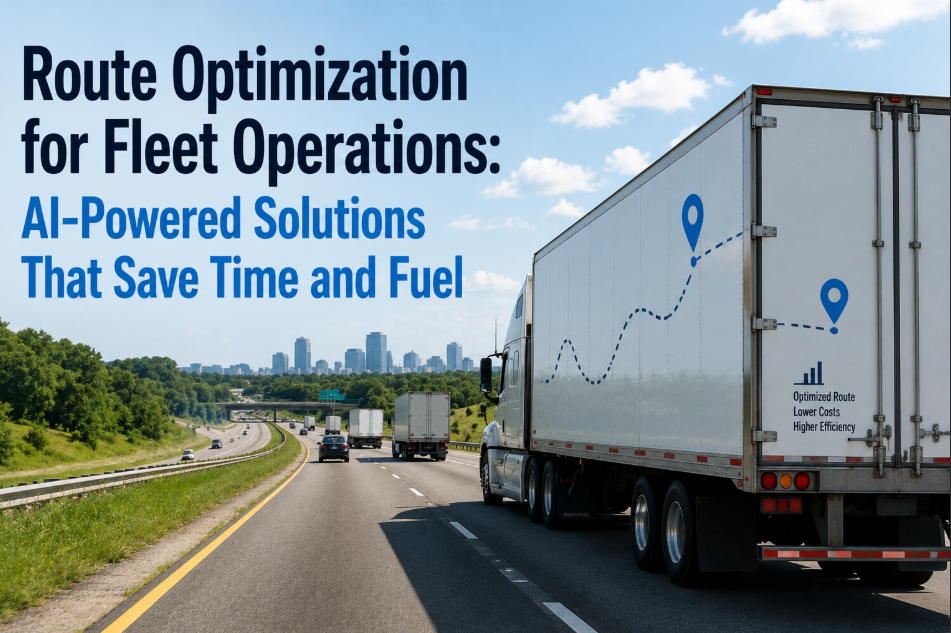
Route Optimization for Fleet Operations: AI-Powered Solutions That Save Time and Fuel
AI route optimization reduces fleet fuel costs by 12–18%, cuts delivery times by 20%, and eliminates 11–14% of excess mileage — through dynamic re-routing, multi-stop planning, traffic prediction, weather integration, and CMMS maintenance coordination in a single platform.
Why Static Route Planning Fails Modern Fleet Operations
Static route planning — building a route the night before, assigning it to a driver, and expecting it to hold through an 8–10 hour shift — made sense when traffic was predictable and delivery windows were loose. In 2026, neither is true. Peak urban congestion windows shift daily based on construction, events, and weather. Customer delivery windows have compressed to 2-hour slots in most B2C operations. A route optimized at 6 AM using yesterday's traffic data is already suboptimal by 8 AM. The gap between a static plan and the optimal real-time path compounds every hour — and the fleet pays for every mile of that gap in fuel, driver overtime, and failed delivery penalties.
- Route fixed at dispatch — no real-time adjustment
- Traffic data is historical, not live
- Driver discretion fills all unplanned gaps
- Multi-stop sequence set manually by dispatcher
- Maintenance needs discovered mid-route
- Weather impact addressed reactively after delay
- Fuel cost unknown until end-of-week report
- Live re-route triggered by traffic, incidents, weather
- Real-time traffic feeds updated every 2–5 minutes
- AI calculates optimal path for every condition change
- Multi-stop sequence optimized per load, time window, vehicle
- Maintenance windows pre-built into dispatch schedule
- Weather routing adjustments issued 4–6 hrs in advance
- Per-route fuel cost calculated and attributed in real time
Dynamic Re-Routing: How AI Responds to Real-Time Conditions
Dynamic re-routing is the highest-impact capability in AI fleet route planning — because it converts a static dispatch decision into a continuously optimized path that responds to conditions as they develop. When a traffic incident adds 22 minutes to a driver's current route, AI calculates the alternative and pushes updated directions to the driver's device without dispatcher intervention. OxMaint's dynamic routing engine re-evaluates every active route every 3–5 minutes against live traffic, incident reports, and updated delivery status — generating re-route recommendations only when the alternative saves meaningful time or fuel.
Multi-Stop Route Optimization: Beyond Simple Distance Ranking
Multi-stop route optimization is the discipline that most differentiates AI routing from dispatcher experience. The Traveling Salesman Problem — finding the optimal sequence for N delivery stops — has 40,320 possible sequences for just 8 stops. For 15 stops, that number exceeds 1.3 trillion. Human dispatchers solve this through experience and pattern recognition, producing sequences 15–25% longer than optimal for new route configurations. AI solves the full combination space in seconds, simultaneously factoring in customer time windows, vehicle load capacity, stop duration estimates, driver HOS, and fuel cost per sequence.
Weather Integration: Routing Around Risk Before It Hits
Weather is the most underestimated variable in fleet route planning. A 40% chance of afternoon thunderstorms forecasted for a highway corridor does not change a morning dispatch plan in most fleets — yet those storms generate 3–4× normal accident rates for heavy vehicles and add 25–45 minutes to affected routes. AI fleet routing software with weather integration ingests National Weather Service forecast data at the route-segment level — identifying which specific segments of which active routes will be affected, when, and at what severity — and generates alternative routing recommendations 4–6 hours before impact.
CMMS and Route Optimization: When Maintenance Meets Dispatch
The most operationally costly routing failure is not a traffic delay — it is a vehicle pulled from a route mid-shift for an unplanned maintenance event. When a vehicle breaks down on route, towing costs $400–$900, the cargo requires reassignment, and the delivery window is missed. The solution is upstream integration: CMMS-integrated route planning in OxMaint incorporates each vehicle's maintenance status, upcoming service windows, and AI-predicted failure risk into the dispatch decision before the vehicle leaves the yard.
Route Optimization ROI: Where the Savings Actually Come From
Fleet operations directors frequently underestimate route optimization ROI because they focus on fuel savings alone — missing the compounding value of driver hour reduction, vehicle wear extension, delivery penalty elimination, and customer retention improvement. A 12% reduction in fleet mileage is not just a 12% fuel saving; it is also 12% fewer driver hours, 12% less tyre wear, 12% lower service interval frequency, and measurably lower accident exposure per vehicle per year. These savings compound across a fleet of 30+ vehicles into a number that typically exceeds the AI platform cost by 8–12× within the first year.
Start Optimizing Every Route, Every Dispatch, Every Day
AI routing connects live traffic, weather, multi-stop planning, and CMMS maintenance data — 12–18% fuel reduction from day one. Free to start.
Static Planning vs. AI Route Optimization: The Full Comparison
Frequently Asked Questions
Your Fleet Is Burning 14% Extra Miles Every Day. AI Stops That.
OxMaint's AI route optimization connects live traffic feeds, weather data, multi-stop sequencing, and CMMS maintenance schedules into a single dispatch decision — so every vehicle leaves the yard on the lowest-cost path. Reduce fuel spend by 12–18%, cut delivery times by 20%, and eliminate mid-route breakdowns from day one. Free to start. No new hardware required.



.png)